
With America facing an opioid crisis led by fentanyl addiction, the traditional form of medicine known as homeopathy could have a role to play in helping patients recover from dependence on drugs, according to homeopathic practitioner Gabrielle Traub.
Traub told The Epoch Times why she thinks it’s important for those struggling with addiction to have homeopathy treatment as well as conventional medical care.
“[Homeopathy] aims to resolve the underlying factors that led an individual to develop substance dependence in the first place,” she said.
A single homeopathic medicine can support the whole person—addressing the physical, mental, and emotional contributors to addiction, as well as its effects, she added.
She said she saw firsthand how homeopathy can help those suffering from addiction when she worked on the Casa Palmera Rehab and Mental Health Treatment Center team in Del Mar, California.
“Every patient in the program received individualized homeopathic care,” she said. “We had an exceptional group of physicians and healers; they were leaders in their fields.”
She was the homeopath (homeopathic practitioner) on the treatment team, which also included physicians, a psychiatrist, a dietitian, psychologists, and other clinicians, who met to discuss the most effective ways to support each patient each week.
There’s no one-size-fits-all when it comes to treating addiction disorders, Traub said. With hundreds of homeopathic medicines to choose from, she noted that remedy selection depends on the type of substance use as well as each individual’s physical, mental, and emotional symptoms and the presence of any co-morbid conditions or underlying illnesses.
The clinical director of the center at the time, clinical psychologist James Spira, Ph.D., told The Epoch Times that he had brought a homeopath onto the team to provide optimal care and success for the patients.
“Homeopathy assisted many of our patients to overcome years of deep emotional scarring,” he said.
Spira’s interest in homeopathy came from a profound experience he had with the homeopathic remedy arnica, which he said released 20 years of scarring in his shoulder from a middle school gymnastics injury.
The injury caused pain throughout his high school and college wrestling career and later in martial arts training. One day while he was practicing kung fu saber, his injury flared up.
At the time, he was working at the Berkeley Holistic Health Center in Berkeley, California, and one afternoon while walking down the street he bumped into his friend Dana Ullman, a homeopath, who noticed his injury and convinced him to try Arnica 30c.
A few days later, Spira was able to straighten his arm up above his head and make circles for the first time since middle school. The pain never came back, he said.
Treating Those With Addiction
One of the patients Traub helped to treat was a 29-year-old man suffering from addiction, post-traumatic stress disorder, obsessive-compulsive disorder, and suicidal ideation. He struggled with dependence on fentanyl, tramadol, heroin, various street drugs, and alcohol. At one point he was taking up to 15 painkillers per day.
He also had a history of sex addiction and had experienced sexual abuse as a child. He had repressed his trauma, and it later manifested as flashbacks. His greatest fear was being humiliated by others.
Based on her analysis, she prescribed the homeopathic medicine Staphysagria.
She said after the patient took the remedy, he experienced a period of intense emotional release, expressing prolonged anger through screaming, followed by a breakdown and sobbing.
“After this cathartic episode, he became calmer, his obsessive thoughts diminished, and he reported feeling more in control. With continued homeopathic treatment, he was ultimately able to overcome his addictions,” she said.

Oxycodine pain medications sit on a table outside of Los Angeles, on June 4, 2025. (John Fredricks/The Epoch Times)
Another of Traub’s patients was a woman with multiple substance abuse and anorexia nervosa. She was using hundreds of dollars’ worth of crack cocaine daily, in addition to fentanyl, cocaine, and marijuana.
The patient’s background included fetal alcohol exposure from maternal alcoholism, causing mild intellectual disability; multiple developmental delays (including incomplete ovarian development); a head injury from a fall; and hip and rib injuries from a motor vehicle accident, resulting in chronic severe back pain.
She also exhibited anxiety, depression, and heavy reliance on others.
“Based on the totality of her presentation, I recommended Baryta carbonica. Although not a primary remedy for addictions themselves, Baryta carbonica is an important constitutional medicine for arrested physical and mental development, intellectual impairment, shyness, anxiety, and reliance on others,” Traub said.
After homeopathic treatment, Traub noted that the patient’s anxiety was noticeably reduced. She also gained independence and more of an ability to manage her pain.
Phillip’s Case of Addiction
Phillip, whose experience was described in the documentary “Introducing Homeopathy,” had an extreme case of addiction.
He was only comfortable sharing his first name as he has fully transformed his life and did not want his past to jeopardize his career.
Coming from a family with drug and alcohol addiction on both sides, he was addicted to heroin, other opiates, methamphetamine, cocaine, benzodiazepines, stimulants, Adderall, oxytocin, marijuana, alcohol, and cigarettes, with drug and alcohol abuse starting at 13.
He would steal clothes, money, and anything else of value to sell to buy drugs.
The life of addiction had landed him in prison multiple times for drugs, violence, theft, and not following judges’ orders to complete a drug program.
He had been in and out of multiple rehab programs and hospitals and had tried many psychiatric medicines, but he would repeatedly relapse.
It wasn’t until he added homeopathy into his treatment that he was able to get sober.
“I don’t have any experience with homeo remedies and staving off addiction symptoms, but I certainly know that I couldn’t have gotten sober until my mind was fully free, which is what the homeo remedy gave me access to,” Phillip said.
Homeopathy For the Whole Spectrum
“In my practice, I use homeopathy to support people across the full spectrum of substance use disorder, including opioid use disorder,” homeopathic practitioner Lise Battaglia told The Epoch Times. “This includes individuals who are actively using, those considering change, those withdrawing, and those at risk of relapse.”
She’s the founder of the company Recovery Naturally, which integrates homeopathy and substance use disorder recovery. As a certified addictions professional, Battaglia evaluates how to support people in coming off addiction across inpatient, residential, and outpatient treatment settings.
For individuals who are not ready or able to discontinue opioid use, she said her role is to assess where they are, support risk reduction, and address their symptoms.
For others, her focus may be on withdrawal support, as opioid withdrawal commonly involves insomnia, nausea, vomiting, constipation, anxiety, depression, and mood instability.
These symptoms she addresses on an individualized basis using homeopathy, she said.
(Shutterstock)
As a nationally certified homeopath, Battaglia said, “I focus on the physical, emotional, and spiritual pain that leads people toward opioids in the first place, sustains use, complicates withdrawal, and increases relapse risk.”
She mentioned that addiction for some individuals can happen due to opioid exposure from pain medication. She works with those individuals to address their pain and distress with homeopathy.
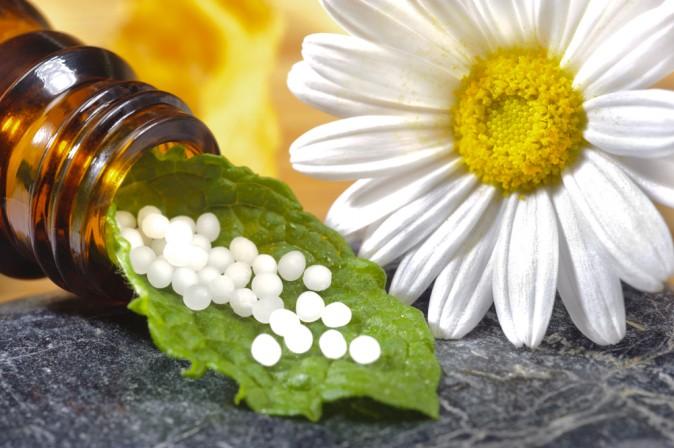
Homeopathic arnica has a long history of being used to relieve pain and as an anti-inflammatory, Traub noted.
According to a 2021 review published in the journal MDPI, when arnica was used for acute and chronic pain, it was comparable to ibuprofen and diclofenac and had fewer adverse effects.
Relapse
One of the most difficult moments for someone with opioid use disorder, Battaglia said, is the contemplation of coming off a substance.
“What will happen when the pain comes back? That question often keeps people stuck,” she said. “Homeopathy addresses that concern by supporting the person’s capacity to manage pain and distress without reliance on opioids or other substances, helping restore resilience and self-regulation.”
Relapse rates are extremely high when substance use disorders are treated solely with conventional approaches, Traub said. For opioid use disorders in particular, relapse rates are estimated to be around 78 percent.
Battaglia said that certain addiction medications—particularly opioid antagonists such as naltrexone—in her experience can create a dangerous situation for individuals who are not fully committed to stopping.
“When euphoric effects are blocked but cravings, pain, or emotional distress remain unaddressed, some individuals attempt to override the blockade by using larger amounts, which can significantly increase overdose risk,” she said.
In this context, she said, homeopathy can help prepare individuals for conventional treatments, stabilizing symptoms before and during withdrawal, reducing reliance on opioids for pain management, and supporting nervous system regulation during early recovery.
Nux Vomica for Withdrawal
Traub said any discussion of addiction within homeopathy would be incomplete without mentioning the well-established homeopathic remedy Nux vomica.
Nux vomica is widely known as a hangover remedy, helping those who suffer with symptoms such as headache, nausea, and irritability due to excess alcohol, food, and drugs.
According to a report in the journal Integrative and Complementary Therapies, a substance abuse treatment program in Boston gave Nux vomica to post-detoxed patients experiencing post-acute withdrawal syndrome (PAWS). Those who were treated with Nux vomica finished the six-month substance abuse treatment program at nearly twice the rate of those who were not treated.