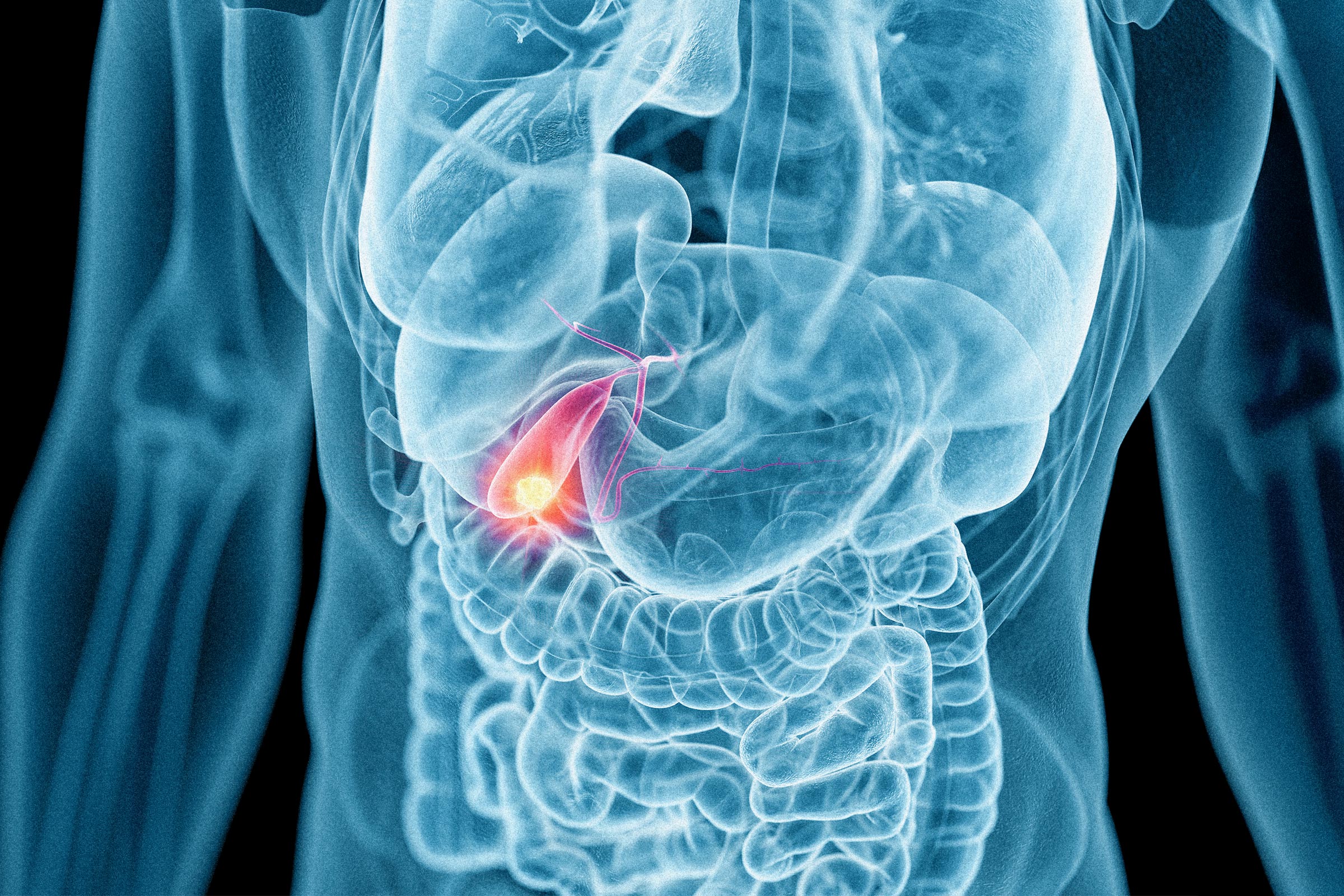
When gallbladder problems strike, surgery is often presented as the fastest and safest solution. However, licensed acupuncturist Deborah Graefer said she believes that for many patients, gallbladder removal may come too soon—before less invasive options are even discussed.
“The issue isn’t that surgery is never appropriate,” Graefer told The Epoch Times. “It’s that functional bile restoration—through diet, supplements, and lifestyle changes—is rarely explored before surgery becomes the only option.”
A Small Organ With a Big Role
The gallbladder is a small, pear-shaped organ that stores bile produced by the liver. Bile plays a crucial role in the digestion of fats, the absorption of fat-soluble vitamins, and the elimination of toxins.
From a physician’s perspective, Graefer acknowledges, gallbladder surgery can feel like a practical decision—especially when doctors worry about acute complications or potential legal liability.
“When fear of acute, life-threatening situations develops, surgery offers a fast, reliable solution,” she said. “Not removing the organ in many cases could be seen as malpractice.”
However, in her practice, she recommends lifestyle changes as a first treatment for people experiencing gallbladder issues.
When Is Gallbladder Removal Truly Necessary?
Graefer said the two most common reasons for gallbladder removal are gallstones and a low-functioning gallbladder. However, according to her research, neither of these is a reason for removal on its own, she said. Rather, she said she believes they may warrant removal when they become symptomatic.
“Cholecystectomy (gallbladder removal surgery) is generally not recommended with no symptoms, also not for low-functioning,” she said. “Some might think putting off removal in general is risky, but considering that most cases of gallbladder removal are elective, there is always time to try alternatives and still [have] the option to remove if you don’t get the desired result.”
Medical literature supports this approach. Many reviews have shown that most people with asymptomatic gallstones never develop symptoms, and watchful waiting is often recommended unless pain or complications arise.
Though Graefer prefers to preserve the gallbladder if possible, she did share some circumstances in which someone should consider having it removed.
“If they’re fed up. If they’ve had one attack after another and can’t handle it anymore. There is definitely a time when one should give in, regardless of how much they want to keep it. If they’ve made all the changes and the attacks don’t stop, it’s time to take it out,” she said.
“Symptoms of chills and fever, jaundice and/or itching require immediate attention if not removal, [and so do] large polyps, porcelain gallbladder, and obviously gallbladder cancer.”
Why Preserve the Gallbladder?
From a Western medical standpoint, without the gallbladder, bile still flows from the liver into the intestines and retains the ability to break down fats and to carry out toxins. Because of that, she said, some people assume the gallbladder isn’t necessary; however, bile from the liver is not the same as bile from the gallbladder.
“Even though the liver produces bile continuously, the digestive system does not need it delivered continuously. The gallbladder responds to the intake of food,” she said.
“By collecting bile between meals, it prevents bile from trickling constantly into the intestines, where it can become deconjugated by microbes too early. This means that it becomes less soluble and less effective at digesting fat, weakens antimicrobial activity, and allows bile acids to irritate the intestinal lining.”
The gallbladder not only concentrates bile, which makes it more effective, but also actively maintains the tone, timing, composition, and potency of bile in ways the liver alone cannot achieve, she added.
Highly concentrated bile released in waves from the gallbladder exerts an antimicrobial effect in the upper small intestine, helping suppress bacterial overgrowth, she said.
When bile instead drips continuously from the liver, antimicrobial activity is reduced, contributing to dysbiosis or symptoms of small intestinal bacterial overgrowth in some patients.
A 2024 study published in Scientific Reports states: “Surgical removal of the gallbladder has been shown to profoundly alter the enterohepatic circulation and the type and number of intestinal microbiota. Therefore, these changes in the body can affect lipid metabolism.”
Ancient Insight Meets Modern Science
Graefer also draws from traditional Chinese medicine (TCM), which views the gallbladder as part of a broader digestive and regulatory system rather than a stand-alone organ.
An ancient Chinese medical text, “The Yellow Emperor’s Inner Classic” (“Huang Di Nei Jing Su Wen”), describes the gallbladder as influencing decisiveness and courage. While this concept is symbolic rather than anatomical, it reflects a practical observation: When digestion is strained and bile flow is disrupted, people often feel tense, hesitant, or overwhelmed.
Modern research on the gut-brain axis supports this idea, showing that digestive function and stress regulation are closely connected.
“I trust that what exists in the body is there for reasons we may not yet fully understand,” Graefer said.
From her perspective, this ancient framework aligns with modern research showing strong connections between brain function, gut health, and digestion.
Western medicine is still mapping these connections. TCM has described these relationships for thousands of years, using a different language. “It’s important to know that we don’t yet know everything; we are always discovering new things about the body,” she said.
Lifestyle Changes
Graefer’s interest in digestion is personal. She experienced stomachaches from early childhood, and doctors were unable to help. She tried many alternative therapies, but it wasn’t until her 30s that she found real relief through a Chinese digestive formula.
That experience led her to study the herbs in the digestive formula and to enroll in the Pacific College of Oriental Medicine.
Graefer says that many patients are never offered meaningful lifestyle guidance before being referred for surgery.
“Doctors aren’t trained—or given the time—to teach diet and lifestyle medicine, but that doesn’t mean these approaches don’t matter.”
As an acupuncturist, Graefer first recommends exercising.
“Digestion depends on movement,” she said. “Exercise helps move blood and lymph. In TCM, we describe this as moving ‘qi,’ or vital energy. In practical terms, it means improving circulation and bile flow.”
Eating for Gallbladder Health
Diet, she noted, is equally critical. Fried foods, refined sugars, and large late-night meals place heavy demands on bile flow and can worsen inflammation.
She encourages patients to avoid or limit foods that strain the gallbladder, especially during flare-ups:
- Fried and greasy foods
- Highly processed foods
- Refined sugars and sweets
- Excessive saturated fats
- Alcohol
- Overeating, particularly at night
- Foods that trigger individual sensitivities or reactions
During an acute flare, when the gallbladder is inflamed or painful, a temporary liquid-only diet is often helpful, she said, as it reduces digestive demand and allows bile flow to settle.
Supportive options may include water, flaxseed tea, diluted beet juice, or dandelion tea.
Next, as symptoms calm, bitter foods can be gradually introduced, she said. Bitter compounds stimulate bile production and gallbladder contraction, supporting healthier bile flow. These include dandelion greens, artichoke, beets, parsley, spinach, and bitter melon.
Cruciferous vegetables—such as broccoli, kale, and cabbage—can also support bile metabolism, though tolerance varies.
Beyond Diet
In addition to food and movement, Graefer also recommends anti-inflammatory supplements for those with gallbladder disease and even sluggish bile, as well as weekly acupuncture treatments for support and regular massage to help move qi, blood, and bile.
Additionally, she recommends using castor oil packs for three consecutive days a week to reduce inflammation in the gallbladder, liver, and biliary tract.
“A gallbladder attack can be painful as well as a real motivator to change your diet and sedentary lifestyle. Once you’ve learned how to manage your symptoms with supplements, diet, and movement, you can expect to live your life symptom-free.”