

California gas prices are expected to spike even higher as the war in Iran strains global oil supplies, despite the state’s consumers already paying a hefty price at the pump.
The average price for a gallon of gas in California costs an average of 30 cents more as of March 2 than it did a month ago, according to the Automobile Club of Southern California.
The automobile club stated that it’s not known how the Middle East conflict will affect the state’s energy costs but that gas prices are rising and that consumers will likely pay more at the pump, especially as major refineries in California close and the state implements a mandatory transition to a special environmental summer blend.
“The unknown is how ongoing geopolitical tensions between the U.S. and Iran will impact crude oil prices, which remain elevated,” Marie Dodds, public affairs director for the American Automobile Association (AAA) in Oregon and Idaho, said in a statement. “Higher crude oil prices mean higher pump prices.”
California now imports about 64 percent of its oil—3.24 billion gallons in 2024—from overseas. About 31 percent of that is from the Middle East, according to the state.
California’s gas prices continue to be the highest in the country, according to AAA.
The average price for a regular grade gallon of gas in California was $4.66 on March 2, up by about one cent from the day before.
The average price is still slightly less than a year ago, when the average price was $4.78.
California’s gas prices are climbing for several reasons, according to Auto Club spokesperson Kandace Redd.
“The closures of the Valero Energy refinery in Benicia and Phillips 66 in Los Angeles have reduced refinery capacity, tightening fuel supplies statewide,” she said in a statement. “Seasonal refinery maintenance is also temporarily limiting gasoline production, with refineries such as PDB in Torrance undergoing planned work.
“In addition, California’s transition to summer-blend gasoline—which is more expensive to produce—is contributing to higher prices.”
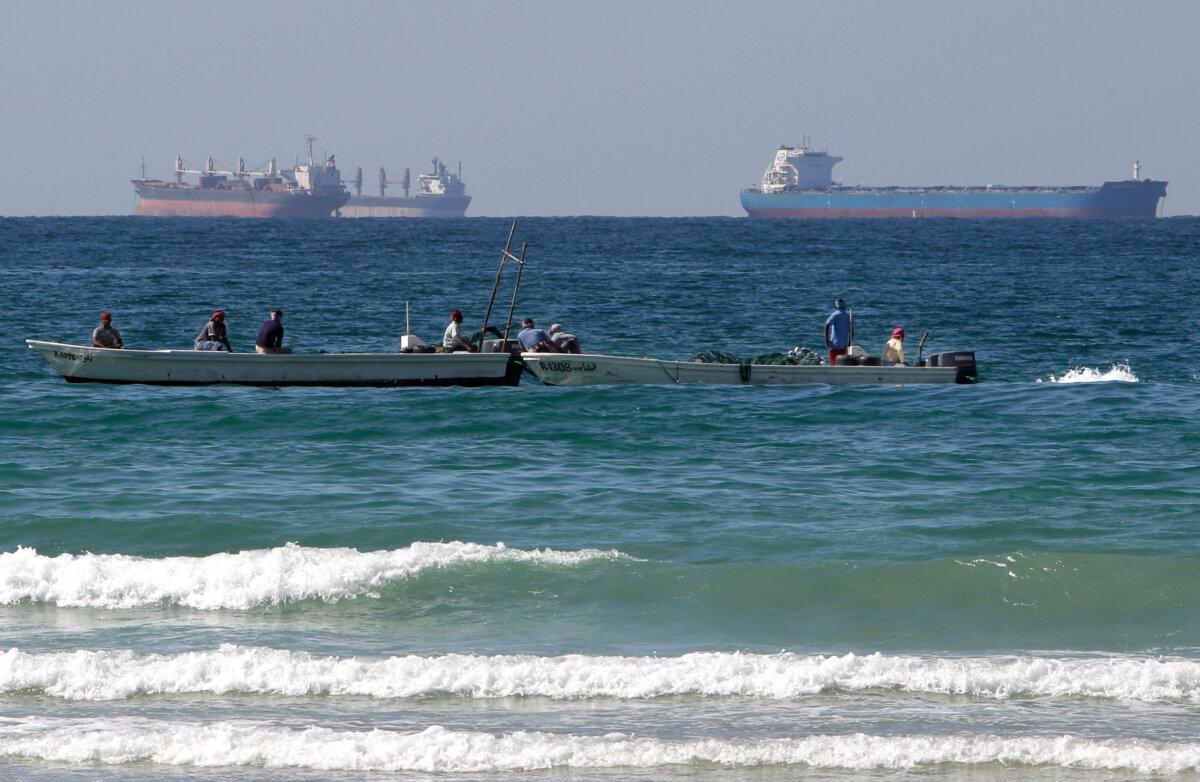
Fishermen work in front of oil tankers south of the Strait of Hormuz, offshore the town of Ras Al Khaimah, United Arab Emirates, on Jan. 19, 2012. (Kamran Jebreili/AP Photo)
Gov. Gavin Newsom told reporters on March 2 that the state’s energy team was on-call during the weekend to discuss the potential effects of the Iran conflict on the state’s oil supply.
“We had extensive conversations over the weekend gaming out worst-case scenarios as it relates to access to imports, as it relates to the ongoing issues around refineries, as it relates to past impacts of similar endeavors in the Middle East, and what we can anticipate,” Newsom said.
The team also talked about access to airline fuel, he said.
“This could be months and months of additional attacks,” Newsom said.
Compared with the national average price, Californians are paying about $1.66 more per gallon, according to AAA.
Gas prices jumped across the United States on March 2 as the conflict continued in the Middle East.
West Texas Intermediate (WTI), which is the benchmark crude for oil pricing in the United States, rose by 6.4 percent to $71.30 per barrel, while international Brent Crude rose by 7.2 percent to $78.12 per barrel.
“Pump prices are moving at rocket speed,” independent oil industry expert Tom Kloza reported on X on March 2.
The Oil Price Information Service, a Dow Jones-owned provider of fuel price data that Kloza co-founded, informed him that the national average surpassed $3.04 per gallon, according to his X post.
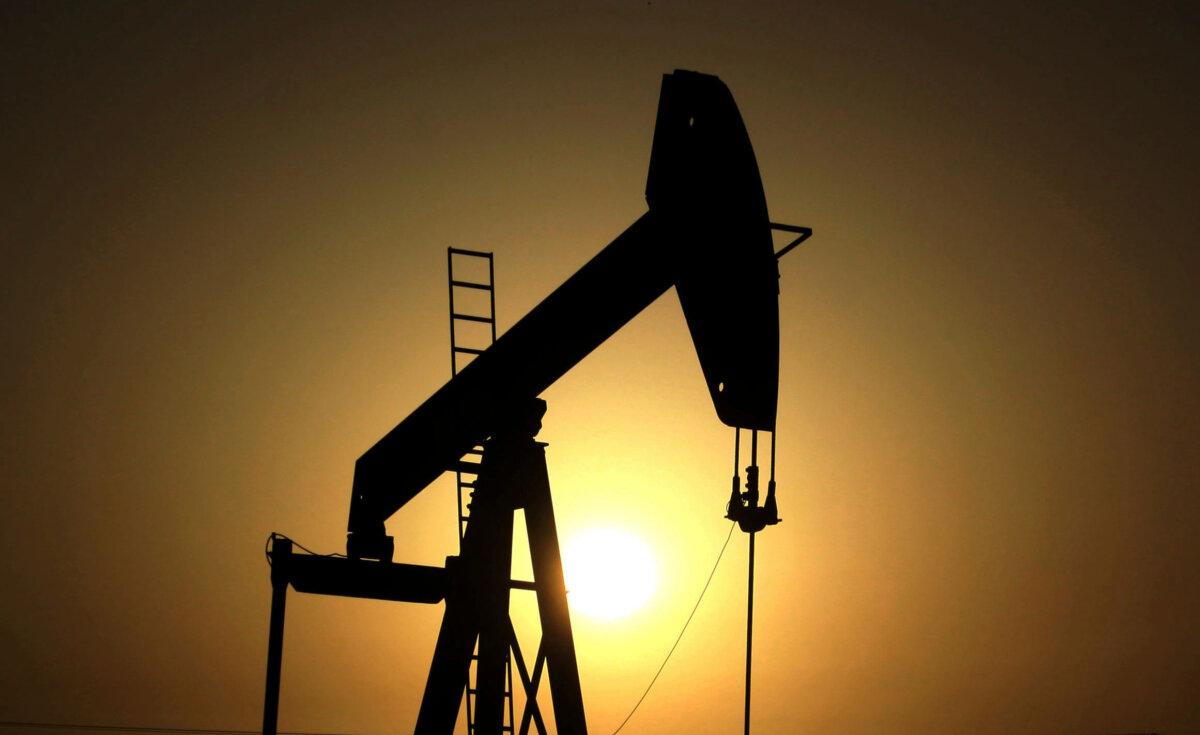
The sun sets behind an oil pump in the desert oil fields of Sakhir, Bahrain, on June 8, 2011. (Hasan Jamali/AP Photo)
Kloza said he expected the national average to reach $3.25 per gallon this week based on what happened in the past three days.
He was also expecting a spike in diesel prices after a shutdown of a Saudi plant at Ras Tanura. The average cost of a gallon of diesel reached $3.77 on March 2, but he said he expected it to move above $4.00 per gallon.
Disruptions to tanker traffic through the Strait of Hormuz and damage to other production facilities also drove energy prices higher.
A long-term closure to the strait could hurt the global economy and send prices higher, but the March 2 $5 to $10 per barrel price increase might not create long-lasting damage if the conflict is settled quickly, said Holger Schmieding, chief economist at Berenberg Bank.
“The key question for the global economy is obvious: Will the Strait of Hormuz be effectively closed for oil and gas exports for more than a few weeks?” Schmieding said. “If so, it would hurt global growth and raise global inflation noticeably. But I would expect Trump to go to great lengths to prevent a lasting surge in energy prices that could hurt him at home ahead of the U.S. midterm elections in November.”
Speaking to reporters on March 2, Secretary of State Marco Rubio said the United States would take action to mitigate the anticipated price spikes. Treasury Secretary Scott Bessent and Energy Secretary Chris Wright are expected to announce the plans on March 3.
The Associated Press contributed to this report.