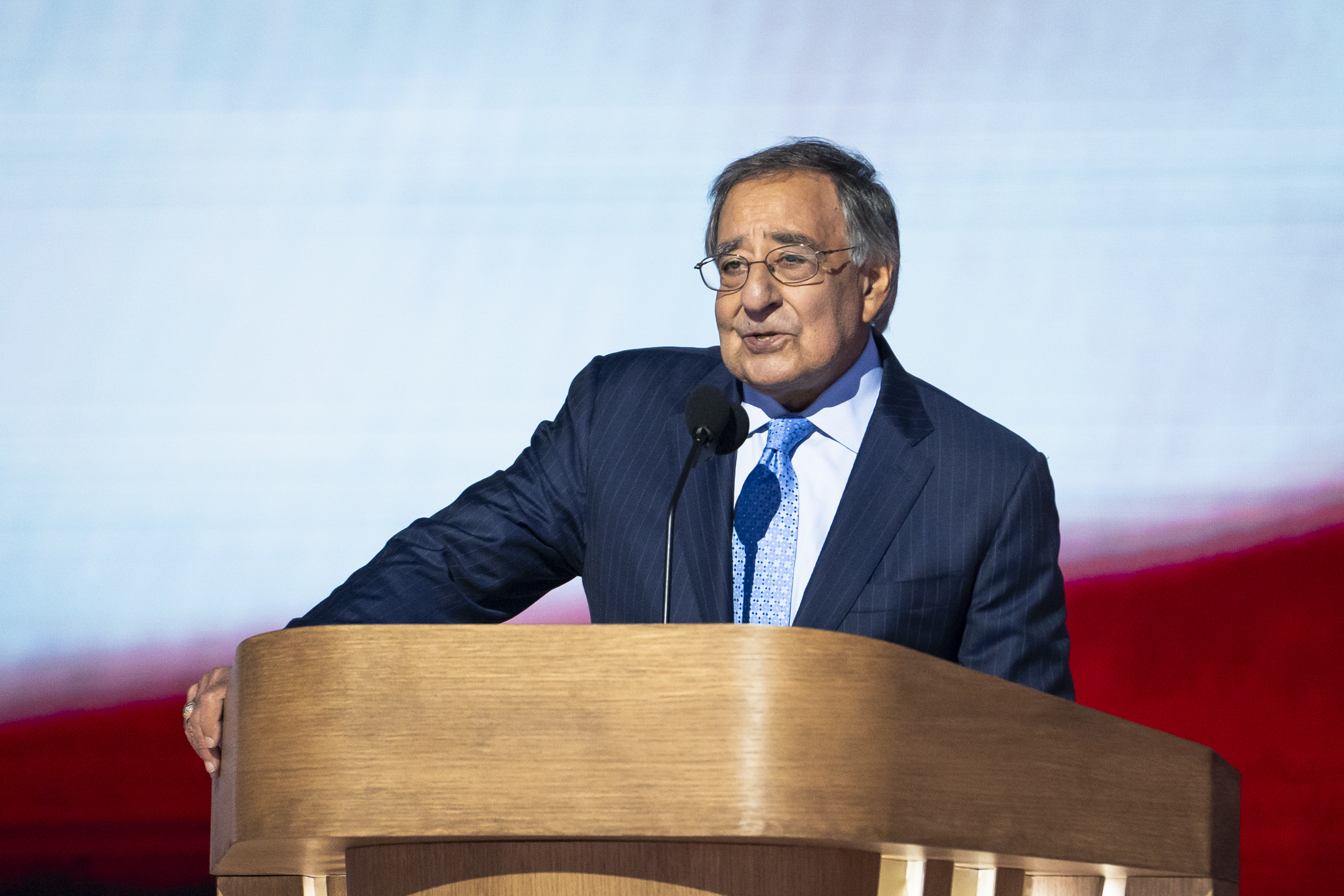
Former CIA Director Leon Panetta said when he was appointed by President Barack Obama and went to the Oval Office to meet with him, the president made it very clear that it was important to find Osama bin Laden.
On a recent episode of EpochTV’s “Bay Area Innovators,” Panetta reflected on his involvement in the operation and the subsequent capture of the terrorist and al-Qaeda leader.
“It was obviously probably one of the most important operations that I’ve ever been a part of as director of the CIA,” he said.
After being tasked with the mission by the president, he headed to the CIA office and asking staff there who was in charge of going after bin Laden.
“They all raised their hand, which is trouble,” he said. “So I knew I had to really create a task force to focus on going after bin Laden.”
This was about eight years after the Sept. 11, 2001 terrorist attacks on the Twin Towers in New York City, he said. People thought bin Laden was dead or in the mountains living in a cave, but nobody really knew where he was, Panetta said.
Panetta assigned two senior agents to head a task force that was to do nothing else but look for bin Laden and report in each week. Finding nothing was not an option.
He told them, “If you haven’t found anything, give me five new ideas about how you’re going to try to find bin Laden.”
Finding the Terrorist
The team ran into dead ends looking into bin Laden’s family connections, and they had no luck with technology. Then in 2010, intelligence gathering brought them a good lead on the whereabouts of one of bin Laden’s couriers, who carried messages from him to the public.
After locating the courier in Peshawar, Pakistan, they used drones to follow the courier’s movement to Abbottabad, where he drove to a compound.
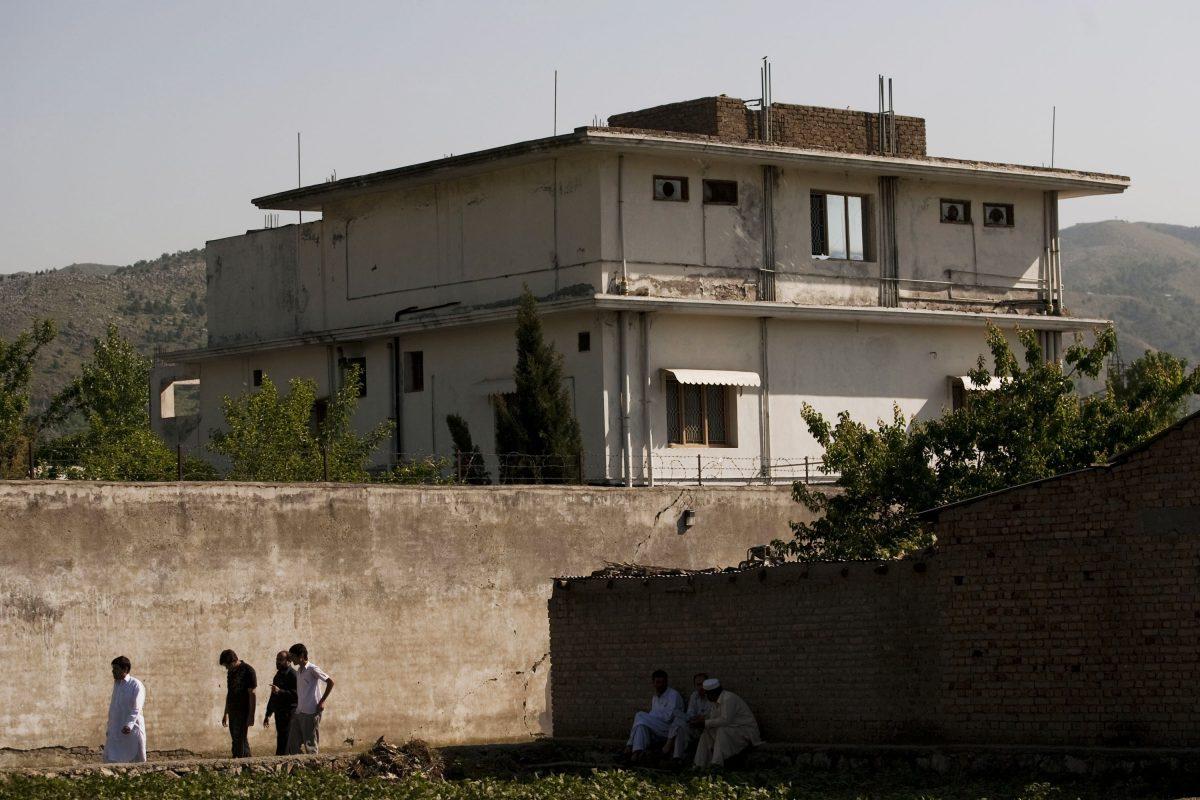
People walk past Osama Bin Laden's compound, where he was killed during a raid by U.S. special forces, Abbottabad, Pakistan, on May 3, 2011. (Getty Images)
The compound was about three times the size of other houses nearby, Panetta said. It had 18-foot walls on one side and 12-foot walls on another side, with barbed wire at the top; and there was a family living on the third floor of the house.
“I remember going to the president and telling him that there’s something we found that’s interesting. … There’s a family living there. It could be that bin Laden is there,” he said. “And the president said, I want you to do constant surveillance and to find out whether bin Laden really is there. We had to know.”
After the order came down, Panetta tasked his team with 24-7 surveillance of the compound using drones.
The constant supervision piqued interest when they noticed an older man who for a couple of days would come out of the house, walk in circles in the yard, and then go back inside.
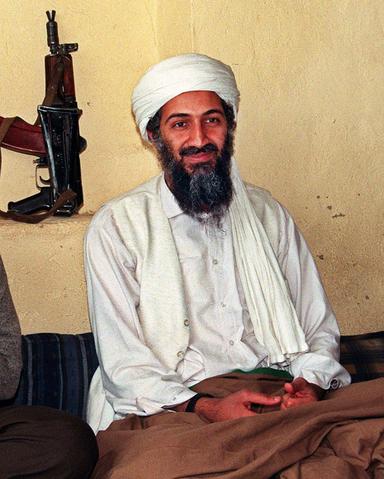
An undated file picture of Osama Bin Laden, in an undisclosed location inside Afghanistan. (AFP/Getty Images)
“I remember saying to the CIA, ‘For goodness’ sakes … that could be bin Laden. Give me a telescope; give me a camera; I need to get a facial ID on who that is,’” Panetta said. “And they said, ‘It’s very hard to do. We have 18-foot walls on one side, 12-foot walls on the other side.’ And I remember saying to them, ‘You know, I’ve seen movies where the CIA can do this.’ We laughed about it. And they never really were able to get a good view.”
Finally, he said, Obama asked for an operation to be developed to raid the compound, because he was concerned that the information might leak if they delayed.
Panetta went to Vice Admiral William McRaven, head of the Joint Special Operations Command at the time, to develop an operation and come up with a few different options. One idea was to blow up the compound with a B-1 bomber.
“Just wipe it out—which had an attraction,” Panetta said.
However, he noted that it would cause a lot of damage, and they might not know whether bin Laden was inside. Another option was a drone strike, but they could run into the same problem of not knowing.
The plan recommended by McRaven was to take two teams of SEALs, flying two helicopters 150 miles into Pakistan from Jalalabad, Afghanistan, and rappelling down to raid the compound. Obama decided that this was the best way to go, Panetta said.
However, after a consultation with the National Security Council, a lot of people were nervous, and some didn’t support the operation, saying more intelligence was needed, he said.
One of them was Bob Gates, secretary of defense, who expressed concern that the raid could end up like the failed Operation Eagle Claw in Iran in 1980, which was aimed at rescuing American hostages in Tehran but resulted in a collision in the Iranian desert, killing eight American soldiers. Gates was also in the White House when Eagle Claw happened, Panetta said.
The president asked Panetta what he thought. Panetta said he has a method for assessing situations like this.
“I’ve had an old formula I used when I was in the Congress, when I faced a tough vote, which is to pretend I’m talking to an average citizen in my district and saying, if you knew what I knew, what would you do?” Panetta said. “And if I told the average citizen we had the best evidence on the location of bin Laden since Tora Bora, I think that citizen would say we have to go. And that’s what I’m recommending to you.”
Obama didn’t make a decision then, but the next morning, Panetta said, he got a call from the White House saying that the president wanted to go ahead with the operation.
Operation Neptune Spear
With the SEALs already in Afghanistan, Panetta gave them the order to go.
The mission began on the evening of May 1, 2011, local time. The team flew for about two hours from Afghanistan to the compound in Abbottabad, with drones following behind for surveillance, Panetta said.
Once the helicopters got to the compound, things took an unexpected turn, he said. Since it was hot that night, the heat affected one of the helicopters, causing it to stall and go down.
There’s a picture of the people at the White House who were watching this unfold, he said. The drones over the compound were providing a feed to Obama and other officials in the Situation Room.
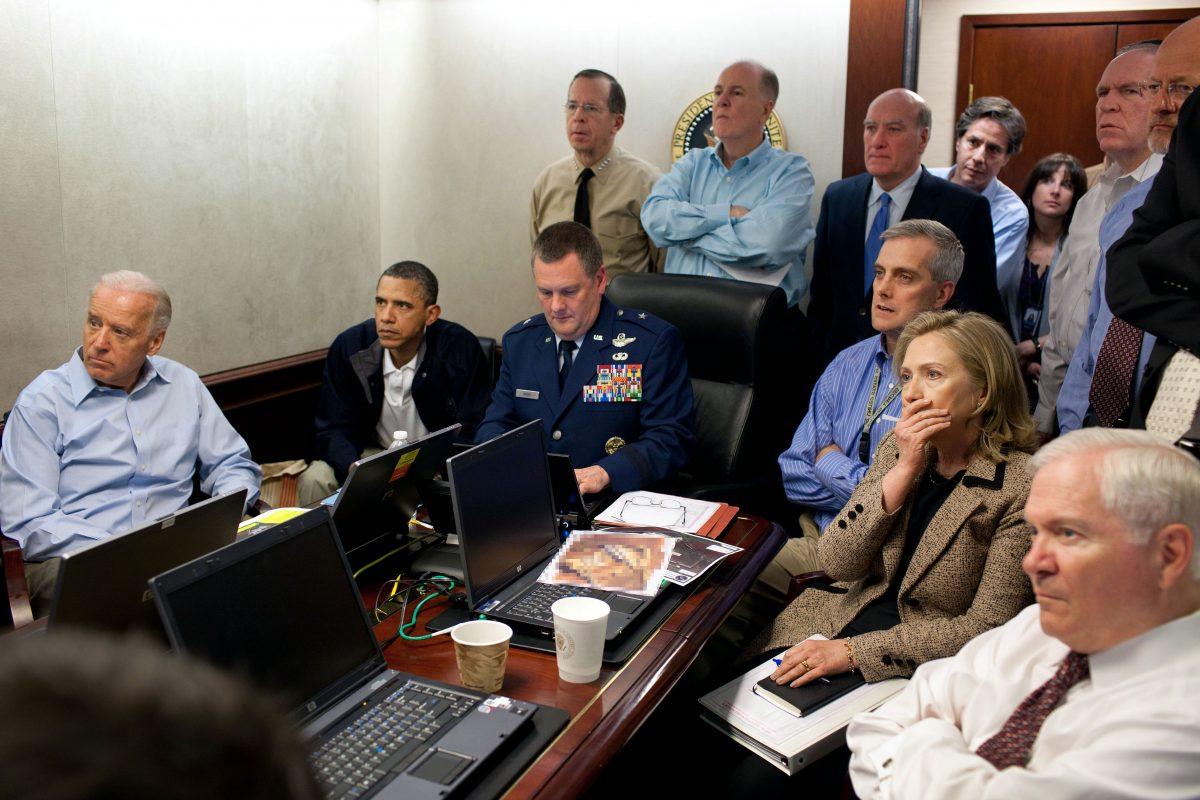
President Barack Obama and Vice President Joe Biden, along with members of the national security team, receive an update on the mission against Osama bin Laden in the Situation Room of the White House, May 1, 2011. (Pete Souza/The White House via Getty Images)
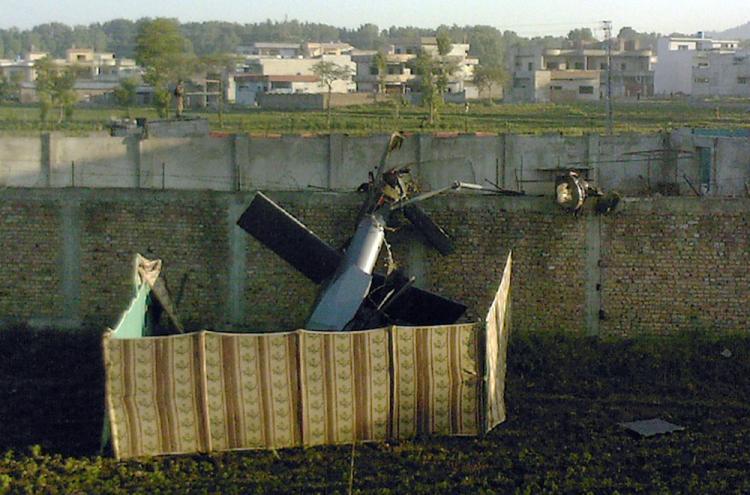
Stealth helicopter: A crashed military helicopter is seen near the hideout of al-Qaeda leader Osama bin Laden after a ground operation by U.S. Special Forces in Abbottabad, Pakistan, on May 2, 2011. (STR/AFP/Getty Images)
Panetta said he called Admiral McRaven, who was in Afghanistan, and asked what was happening.
“It’s that moment when your stomach is in your mouth,” Panetta said. “And he didn’t miss a beat. He said, ‘We’re going to go on with the mission. I’ve got another backup helicopter coming in. We’re going to breach through the walls. We’re going to go ahead.’ And I said, ‘God bless you.’”
The SEALs breached the wall and got into the compound. Panetta heard gunfire and then about 20 minutes of silence.
“Longest 20 minutes of my life,” he said. “Then McRaven came back, because I was in touch with him, and he said, ‘I think we have a Geronimo,’ which is the code word for finding bin Laden. And a few more seconds went by. And he came back and he said, ‘Yes, we have a Geronimo.’”
Bin Laden was killed in an upstairs bedroom.
However, the mission was still not over, Panetta said. There was worry that the Pakistanis would find out and go after them, and the SEAL team still had to gather materials for intelligence, get bin Laden’s body onto the helicopter, and fly back another two hours to Afghanistan.
At last, the team made it back safely.
“We told the president that the mission had been successful,” Panetta said. “I remember the president speaking to the American people and describing what happened. And soon after his address, there were crowds that were gathering in Lafayette Square and in the front side of the White House and on the back side of the White House, and they were yelling, ‘USA! USA! CIA! CIA!’ Never thought I would hear that.”
Soon after the mission was over, Panetta said his thoughts returned to the families in New York City whose husbands and fathers and wives and brothers had been killed in the 9/11 terrorist attacks.
“I remember thinking of the families and the fact that we had brought justice, not just to bin Laden, but in many ways, we brought justice to them,” he said. “It was a great feeling to know we had accomplished that mission, because we sent a message to the world that nobody attacks our country and gets away with it.”
To this day, Panetta keeps a memento from the raid. As the SEALs breached bin Laden’s compound wall, one of them stashed a brick from the wall in his backpack. The SEAL presented it to Panetta when he got back.
Panetta keeps the brick on display to remind him of the mission.
Italian Roots
“I believe very firmly in one’s roots, and my roots are in Italy. My parents were immigrants. They came to this country in the early 30s from Calabria in Italy. Both of them are Calabrese,” Panetta said.
His parents opened an Italian restaurant, Carmelo’s Cafe, in downtown Monterey, California, during the war years. His earliest recollections include standing on a chair in the back of that restaurant and washing glasses.
“My parents believed child labor was a requirement in our family, but it was a very exciting time. Fort Ord … was training young men for the battlefields of World War II, and their last stop with civilization was downtown Monterey. So you can imagine what Monterey was like in those days,” he said.
Panetta recalls his parents inviting some of the soldiers to their home for the holidays when he was a boy. He remembers thinking that these were young men who were going to wind up going to war.
“I never forgot that, particularly when I became Secretary of Defense,” he said.
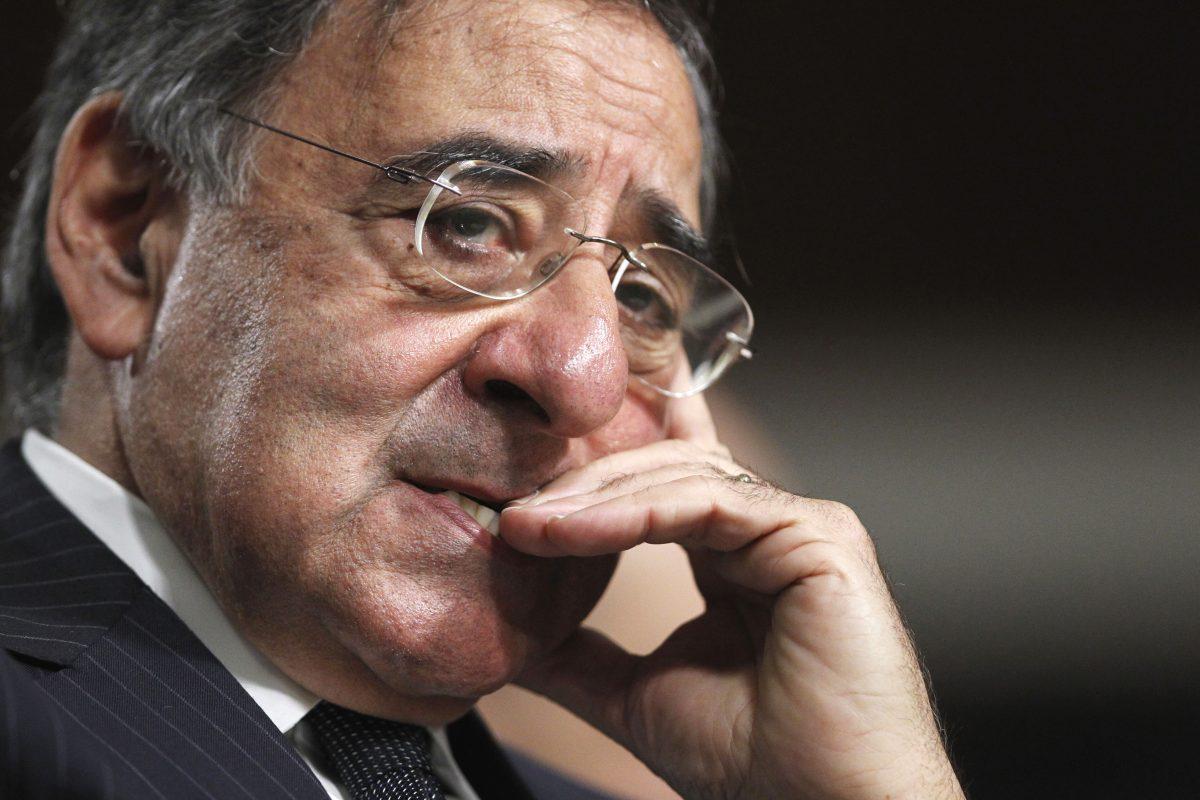
Then-CIA Director nominee Leon Panetta testifies on Capitol Hill in Washington on June 9, 2011. (AP Photo/Manuel Balce Ceneta)
“People ask me, why did I go into public service? Number one, because my parents felt it was very important to give back to this country because of what this country gave them, an opportunity,” Panetta said. “Secondly, because of my experience in the Army and seeing people from all over the country come together to work on a common mission to take the hill; and thirdly, because of a young president [John F. Kennedy] who said, ‘Ask not what your country can do for you—[ask] what you can do for your country.”