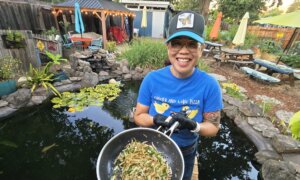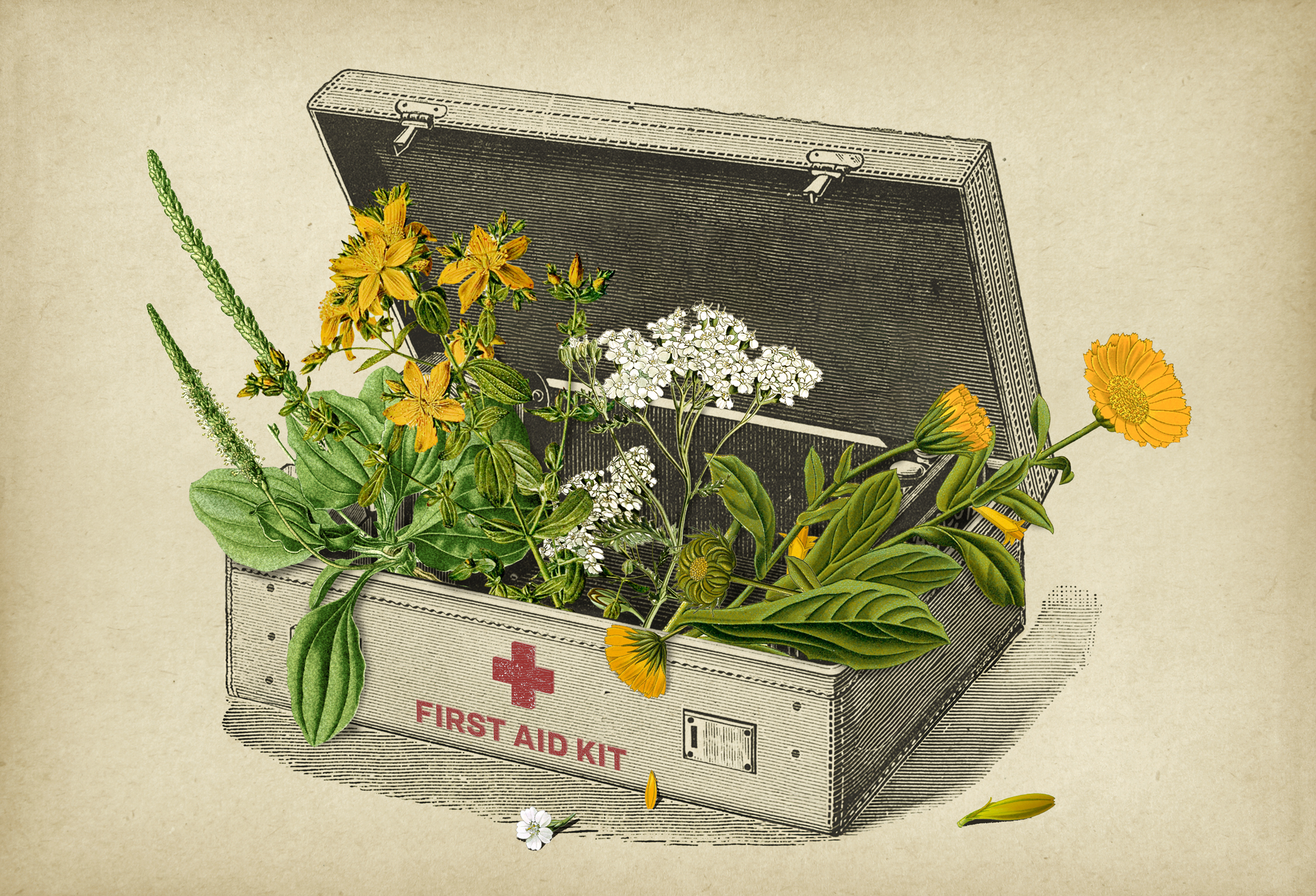
Former Green Beret Sam Coffman, an herbalist and a Master of Science in acupuncture and oriental medicine, shared how he got into herbalism as well as some pointers for packing an herbal first-aid kit.
Coffman is the author of the book “Herbal Medic: A Green Beret’s Guide to Emergency Medical Preparedness and Natural First Aid,” in which he blends herbal medicine with orthodox emergency and medical care.
Coffman told The Epoch Times that it was during his second time in the U.S. Army that he became an 18 Delta Special Forces medic. The first time, he had been an interrogator and translator, since he had a gift for languages.
He learned what he called the gold standard for field care in the Army.
“I enjoyed the fact that I was being paid to be the best that I could possibly be,” he said. “Especially in special ops, it’s just really challenging.”
As a medic, he was trained to take care of anything from trauma on and off the battlefield, to working with groups of indigenous people that a special forces team might run into, similar to the Vietnam era, he said.
“The medic is really kind of the backbone,” he said.
Coffman noted that one day you might be delivering a baby, treating a broken bone, or dealing with some kind of a pandemic, and the next day, you might be helping somebody in a veterinary situation with their cattle or sheep.
“So it’s kind of like a cross between a battlefield paramedic on one end and a kind of nurse practitioner,” he said.
He also learned some minor surgery, debridement, and amputation procedures, and he learned how to apply all this knowledge in an austere setting or prolonged field care.
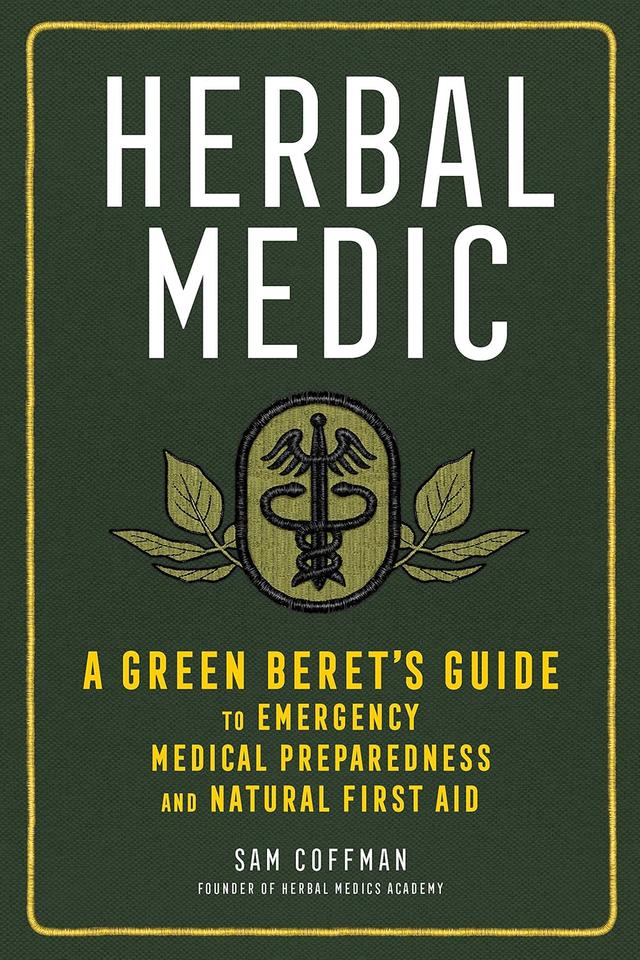
Sam Coffman's book "Herbal Medic: A Green Beret's Guide to Emergency Medical Preparedness and Natural First Aid." (Courtesy of Sam Coffman)
Coffman first became familiar with herbs and herbal medicine when he was growing up as part of a very large plant-literate family, he said. So by the time he got into Special Forces medic school, he was already very interested in herbalism and already had a little bit of knowledge, having his own materia medica and an understanding of about 20 herbs.
A materia medica, in this case, is an encyclopedia-like book of herbs that contain their healing properties, how to use them as traditional medicinal remedies, and possibly even the history of the substance.
“We gardened all our own food for the winter and canned it all. My mother was a very good gardener; my dad grew up on a wheat and pea ranch in eastern Oregon,” Coffman said. “This was in northwestern Washington, where I was born, and so for the first 11 years of my life, plants were a big part.”
He said his mother taught him when he was about four or five that the plants she talked to did better than the ones that she didn’t.
His trial by fire into herbalism, Coffman said, was when he broke his thumb during the first phase of the Special Forces qualification course, which took place in Fort Bragg, North Carolina.
He was out mountain biking with a friend and fell with his hand outstretched, which resulted in an avulsion fracture of his thumb, where in the injury process, a tendon attached to a bone pulls it away from another bone.
Being in the qualification course, Coffman took his own X-rays. After checking them out himself, he took them to the post’s hospital and had an orthopedic doctor look at them.
He said the doctor told him he would need to put a pin in it, and that was the only way it was going to heal and regain full strength and grip. Coffman asked to have it put in a cast instead. The doctor scolded him and told him it was not a smart move, but in the end, reluctantly allowed it.
“I think he even told me that if he saw me back there again, he was going to give me an Article 15 for disobeying a direct order,” he said, referring to a type of nonjudicial punishment that commanders can use on soldiers for minor offenses.
When Coffman got back to his barracks, he cut the cast off and went to a shop in Fayetteville that sold herbs, which he had already scoped out when he first got into town. He got the herbs comfrey and horsetail.
“Those are the two herbs that I knew really well, and I knew that they would help at that time,” Coffman said. “I hid them under my locker because I was scared to death they were going to think I was hiding weed.”
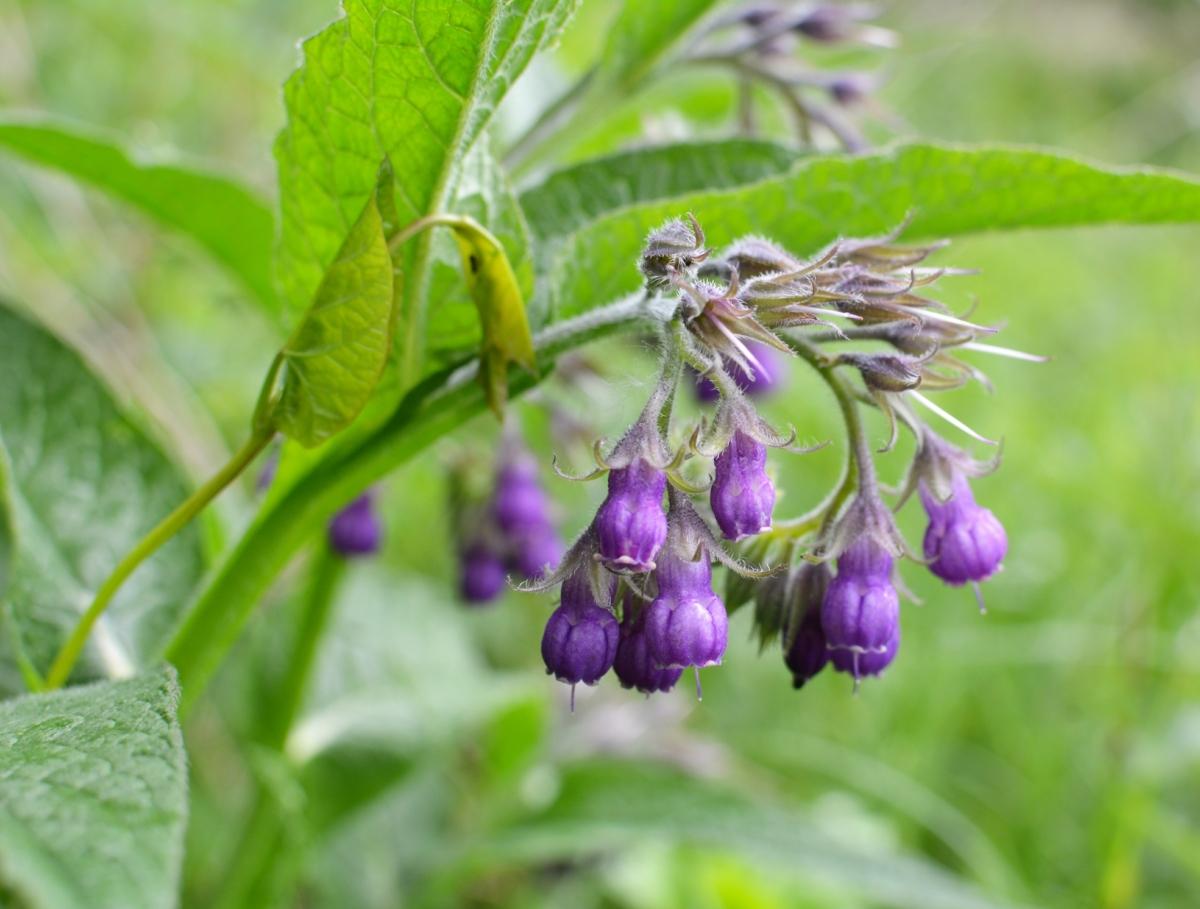
Comfrey (Symphytum officinale). (Orest lyzhechka/Shutterstock)
With the herbs and some gauze pads, he made poultices and stored them in resealable plastic bags in his cargo pocket so he could switch them out every two hours in the bathroom. He would get the poultice wet and then wrap it around his thumb.
Coffman said that luckily, he had injured his thumb right before entering the goat lab, where the practice of using animals as training aids for combat medics was employed. He was assigned to four weeks of microscopy training first, which gave his thumb some time to heal.
By the time he moved on to the trauma training part of the goat lab, his thumb had healed just enough to let him fully participate. During that segment, he treated fully anesthetized goats that had life-threatening injuries. His thumb was in pain for hours afterward.
However, the herbs worked amazingly well, and within six months, he had recovered full grip strength, he said.
“I’m a black belt in Brazilian jiu-jitsu,” he said. “You have to have strong grip strength to do that. ... I’ve never had a problem with it.”
Moving forward, Coffman took herbs out in the field with him, carrying a couple of pounds of herbs for personal use along with his regular gear.
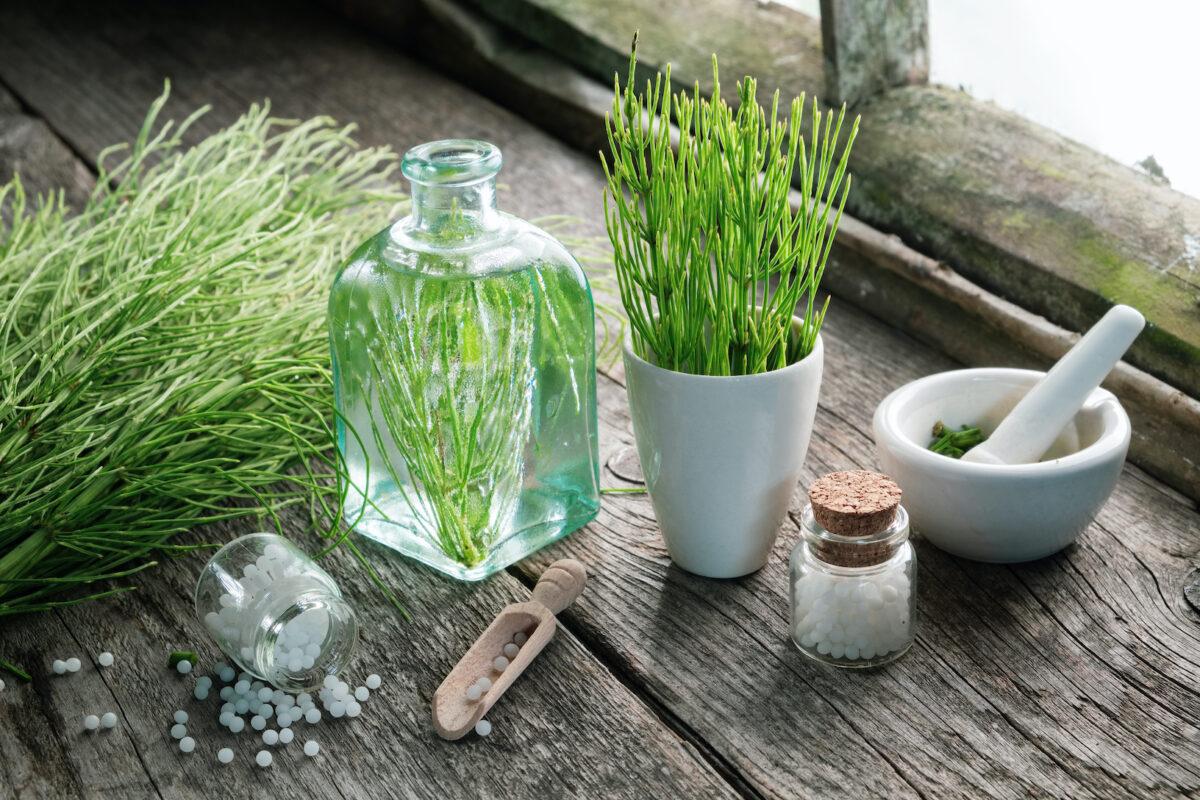
Horsetail (Equisetum arvense). (Chamille White/Shutterstock)
Since he was among the top of his class, other medics soon took notice of his health and the benefits of the herbs he used, and they started asking him about the herbs and wanted to get involved.
After a while, teammates were bringing their family members to him for treatment and saying, “Hey, you never get sick; what do you do for the cold and flu?” he said.
Through helping his teammates, he came up with the idea of starting an herbal medic school.
After six years, Coffman decided to leave the Special Forces. For him, it was a choice between family and the military.
“I got out of the military. ... I’m glad I did, because I was able to really be a good father and a good husband and be home and raise my kids,” he said. “Kudos to those in the military [who] were able to do it, but I couldn’t have done it that way; I don’t think it would have worked.”
In addition to Western herbalism, Coffman said he has always been interested in Chinese medicine and started practicing qigong, a type of traditional Asian energy exercise, at the age of 13. When he had the opportunity, he became a licensed acupuncturist.
“You know, there’s a saying in acupuncture that says in America, acupuncture is 80 percent needles and 20 percent herbs; and in China, it’s 80 percent herbs and 20 percent needles; and I am definitely more of an 80 percent herbs kind of person,” he said.
Coffman noted that a first-aid kit is designed to let you give immediate aid and then figure out whether to go to higher care or not, but there’s nothing in there to really sustain the care you would need. Coffman supplements his first-aid kits with herbs for chronic issues, and he uses herbs both from a Western perspective and from a traditional Chinese medicine (TCM) perspective.
“I’m not saying I’m just taking a tablet of an herb, right? We’re talking about nebulizing them, or nasal inhalation, atomization, or steam inhalation, or sometimes taking them through the gut, of course, if we need to, but in a very concentrated form, not just going to aisle 13 of your local grocery and the health food aisle and buying some capsules,” Coffman said.
He said he would put herbs against any antiviral out there, whether it’s for the herpes family of viruses or severe acute respiratory syndrome (SARS), as he prefers to use herbs in these situations.
Herbal First-Aid Kit
“I never leave home in a car without one,” Coffman said.
When making an herbal first-aid kit, besides all the items for normal falls and burns, you can build it mission-specific, he said. He said you need to think about what you need when it comes to the specifics of your family’s health.
Whether you’re going on a car trip, driving an RV across the country for two weeks, or going hunting, you can adjust your kit to those circumstances. For example, on a hunting trip, you could pack tourniquets and chest seals for a possible accidental gunshot injury, he said.
Coffman shared three herbal staples that he almost always has in a kit because they can be mixed with so many other things.
The first is echinacea. Coffman’s is a mix of the flower of the echinacea purpurea and the root of the echinacea angustifolia.
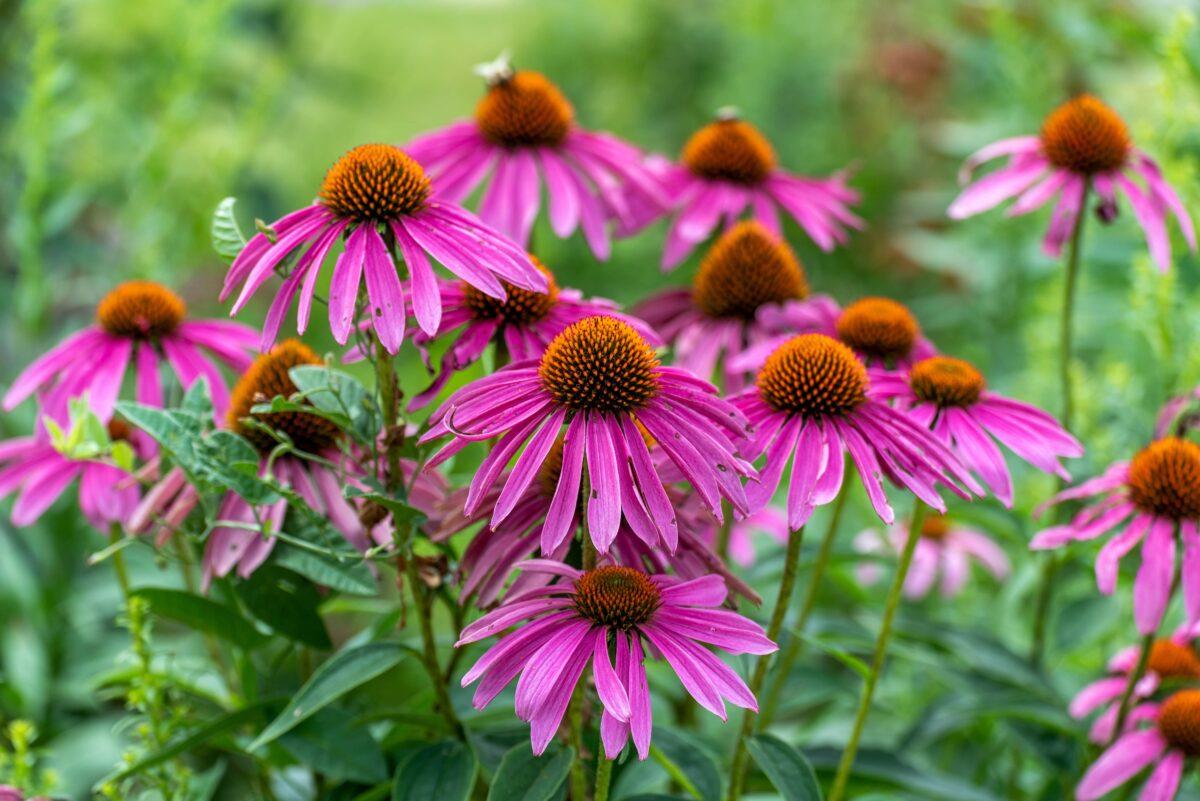
All parts of the echinacea plant have medicinal uses. (Barbara Smits/Shutterstock)
The second staple is algerita, a berberis plant that is high in the alkaloid yellow berberine. It’s kind of like Chinese Coptis, he said, and it’s used primarily as an anti-nausea herb for the gut and to decongest the liver, Coffman said in a video.
The third is chaparral of the larrea species, which is sometimes called creosote bush. Coffman said in a video that it is used for wound infection and wound management.
Coffman said having a formula for upper respiratory use is always important, whether to help tonify or to help with an upper respiratory tract infection.
One that he carries in his herbal online store is called Broad Spectrum Defender, which is a kind of broad-spectrum antibacterial formula.
Along with that, he recommends having what he calls a Biofilm Buster, which has a lot of herbs in it that are not just antibacterial, but also inhibit biofilm formation, he said.
“If you’re dealing with a wound infection or something that’s been going on for over 72 hours, you probably have a biofilm formation that’s involved in that,” he said. “A chronic urinary tract infection would be another example of that.”
Additionally, to treat the gut, he recommends that activated charcoal should be part of any first-aid kit, for both external and internal use.
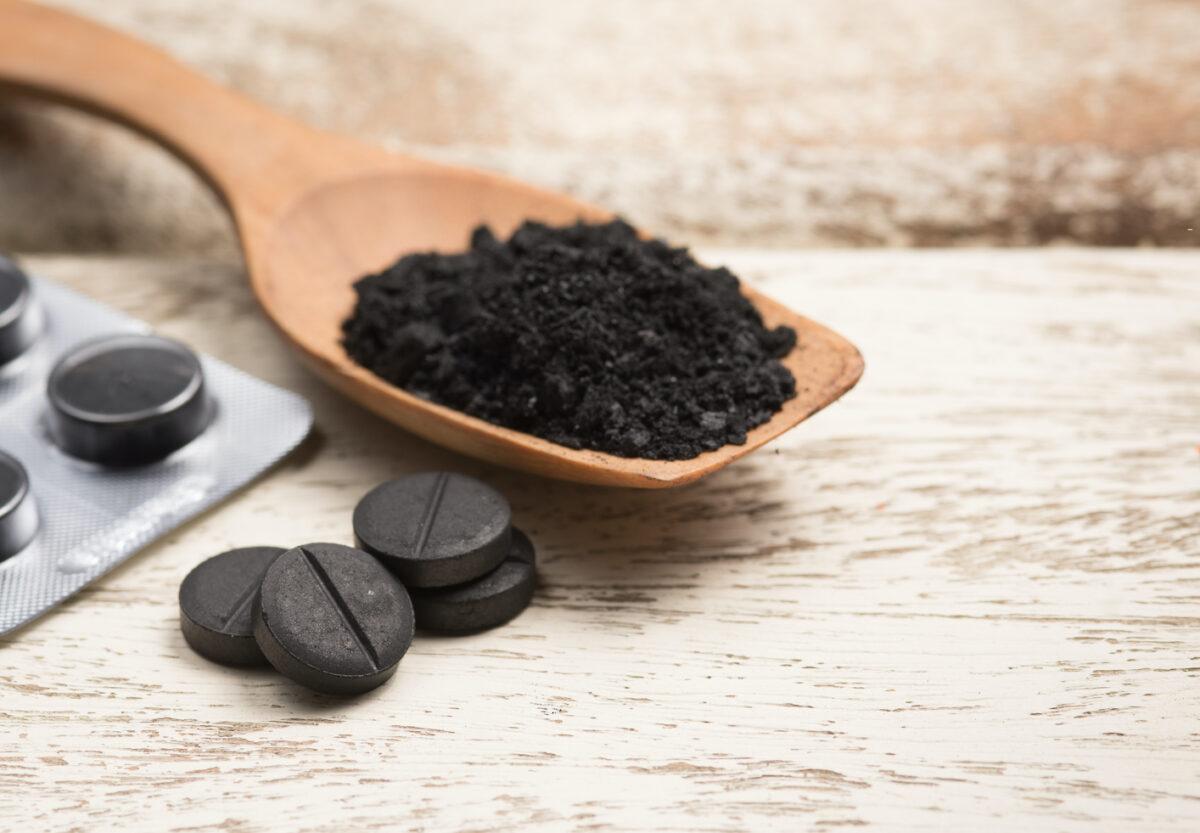
Activated charcoal. (showcake/Shutterstock)
There’s not a lot of good pain relief in legal herbs, he said, as the opium poppy can relieve pain but can’t be used legally. Others for pain relief he mentioned are gelsemium sempervirens (yellow jessamine) and corydalis, but these can be toxic and need to be extracted correctly and prepared with caution and a strong understanding of these herbs.
For anxiety and focus, he recommends Lactuca virosa. For him personally, he said it helps a lot with ADHD.
He noted that it’s also called opium lettuce because the plant has a kind of gooey white latex-type sap that can be boiled down with alcohol and water to a resin.
“It’s like this hard resin that you can take a piece of and put it under your tongue; it’s called lactucarium,” he said.
In the 19th and early 20th century, you could go into any drugstore, for example, in England, and buy lactucarium as a type of sleeping pill and to help with anxiety, he said.
“I’ve used it that way with clients and even kids of clients who have really bad ADHD, and it works really well that way,” he said.
Coffman also sells it in his online store under the brand name Intergalactucarium.
Herbal Medics Academy
For people looking to go deeper, Coffman offers classes and courses, 90 percent of them online, with his Herbal Medics Academy.
He holds onsite classes on his property, which borders about half a million acres of National Forest, about 10 minutes from downtown Taos, New Mexico.
In May through October, his academy teaches in-person courses including wilderness first aid, wellness first responder certifications, emergency birth class, and botany courses.
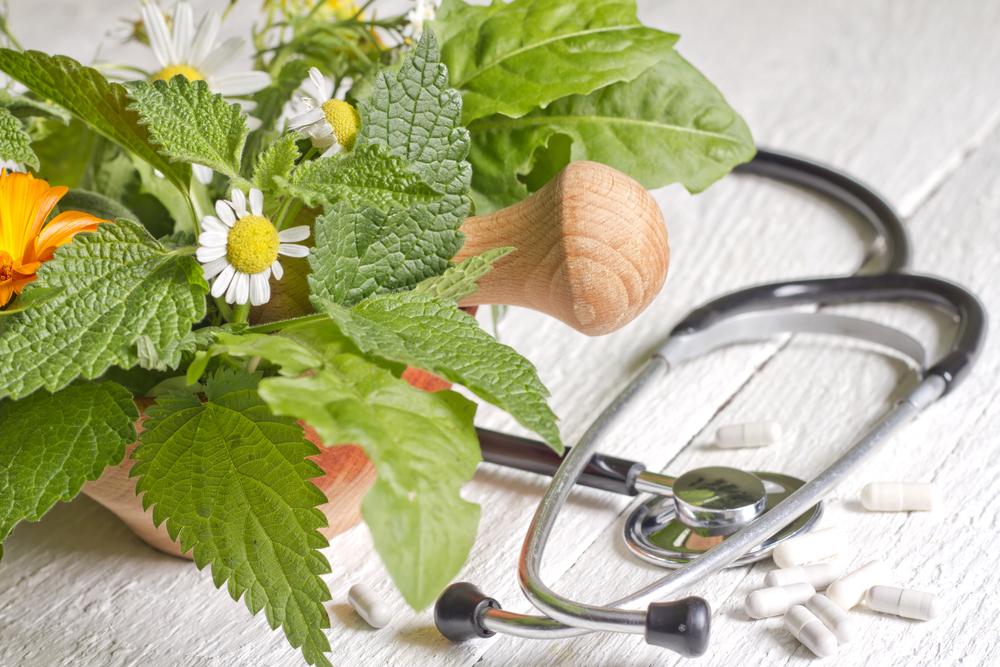
Herbs are a traditional aspect of medicine. (udra11/Shutterstock)
In addition to herbalism and sustainable medicine, his team teaches sustainable food and other sustainable skills, including off-grid engineer, medic, scout, provider, and leadership skills.
He said he’s a co-director with his wife, a registered nurse who also runs the apothecary, as well as with his daughter; and the academy’s faculty includes medical doctors, a nurse practitioner, registered nurses, and midwives.
He said his main programs include Wilderness First Aid, Advanced Wilderness First Aid, and Wilderness First Responder; and then from there, Austere Medicine, which picks up where Wilderness First Responder stops.
The Austere Medicine program was created by Coffman and another former Green Beret medic, Dr. Steve Pehrson, who has been a rural doctor for 40 years.
The Austere Medicine program combines allopathic Western care with Western herbalism and some TCM.
His off-grid engineer classes are based on the experience of his Herbal Medics outreach team. The idea came from an outreach his team did in rural Nicaragua, about 100 miles from the nearest road. His team provided free clinics and a slow sand water filtration system for people in the area.
“I was kind of scouting ... going down ahead of time and doing the reconnaissance in an area [we were] going to be in,” he said. “There’s literally flatworms swimming around in the cistern. Well, what they need is water purification. It doesn’t do any good to look at antiparasitic. That’s where that whole idea of the off-grid engineer really started to take off.”
His team has also done outreach in underserved areas in the United States, including Native American nations and poor areas in rural America. They have offered post-disaster help and assistance with permaculture design and developing gardens for both food and medicine.
Building on his book “Herbal Medic,” Coffman is also the author of “Survival Gardening: Grow Your Own Emergency Food Supply, From Seed to Root Cellar.”
He said it’s all about how you would grow food if you had to live on it.
He said the book breaks it down into a five-day, five-week, five-month, and five-year plan, starting with sprouts and moving on through micro greens, mushrooms, building soil, harvesting food, and storing food long-term.
Food for a First-Aid Kit
Terri Ward, a functional nutritionist with a master’s degree in human nutrition and functional medicine, shared with The Epoch Times some foods that are shelf-stable, multi-purpose, and safe for most people, making them helpful additions to a first-aid kit, she said.
She said raw, unfiltered honey (local if possible) is one of the most useful natural foods. She noted that it has antimicrobial properties, can be used to soothe minor burns or small scrapes, and can calm a cough or ease a sore throat for older children and adults.
Ginger (whether fresh, candied, or dried for tea) can be used to help calm nausea from motion sickness or morning sickness, settle digestive discomfort, and ease minor inflammatory aches, she said.
Apple cider vinegar (raw, with the “mother”) can be diluted and used on sun-exposed skin to soothe it, she said. For some people, she said, it can also be diluted in water and sipped to ease occasional heartburn or indigestion.
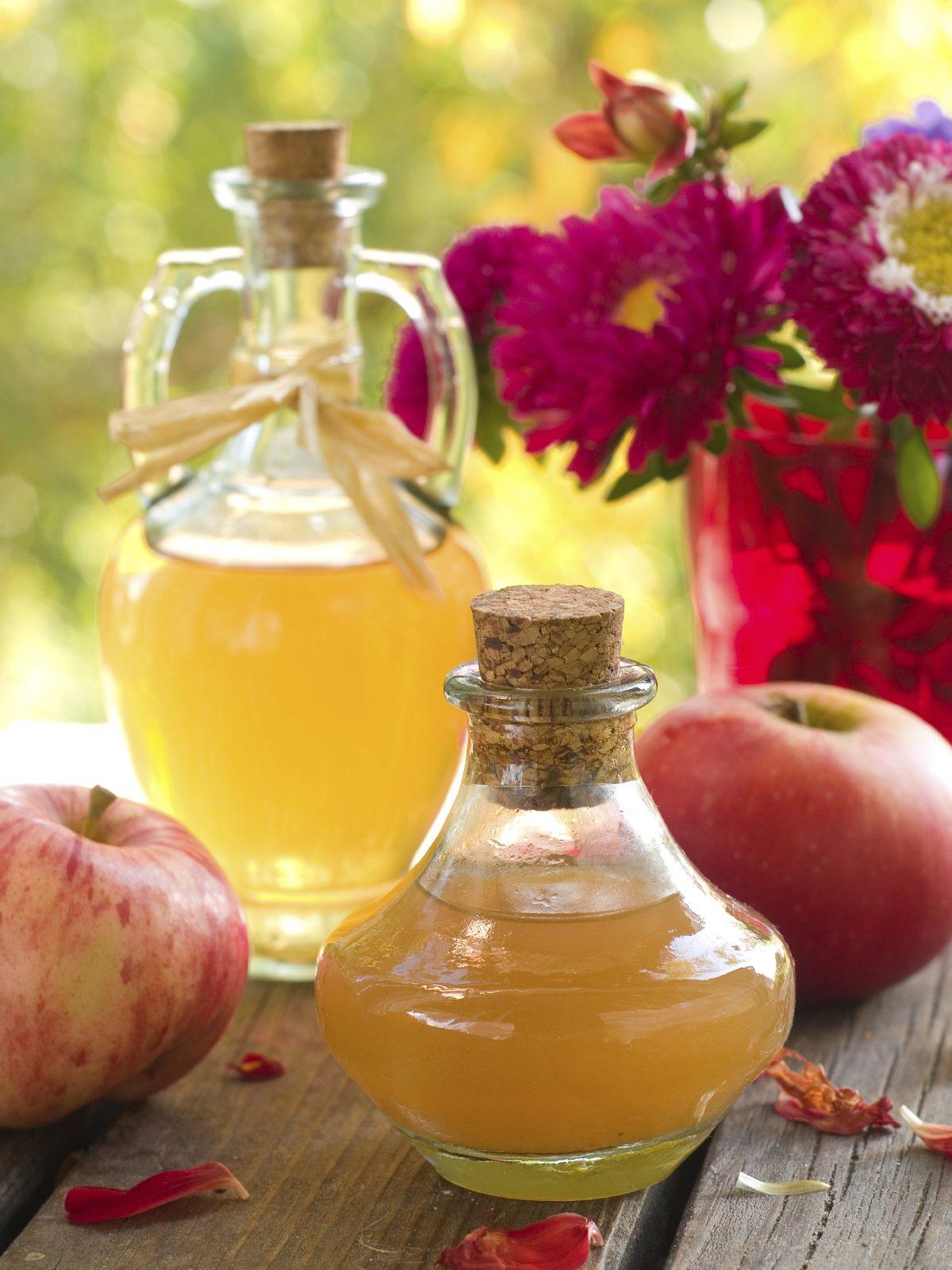
(Wiktory/iStock)
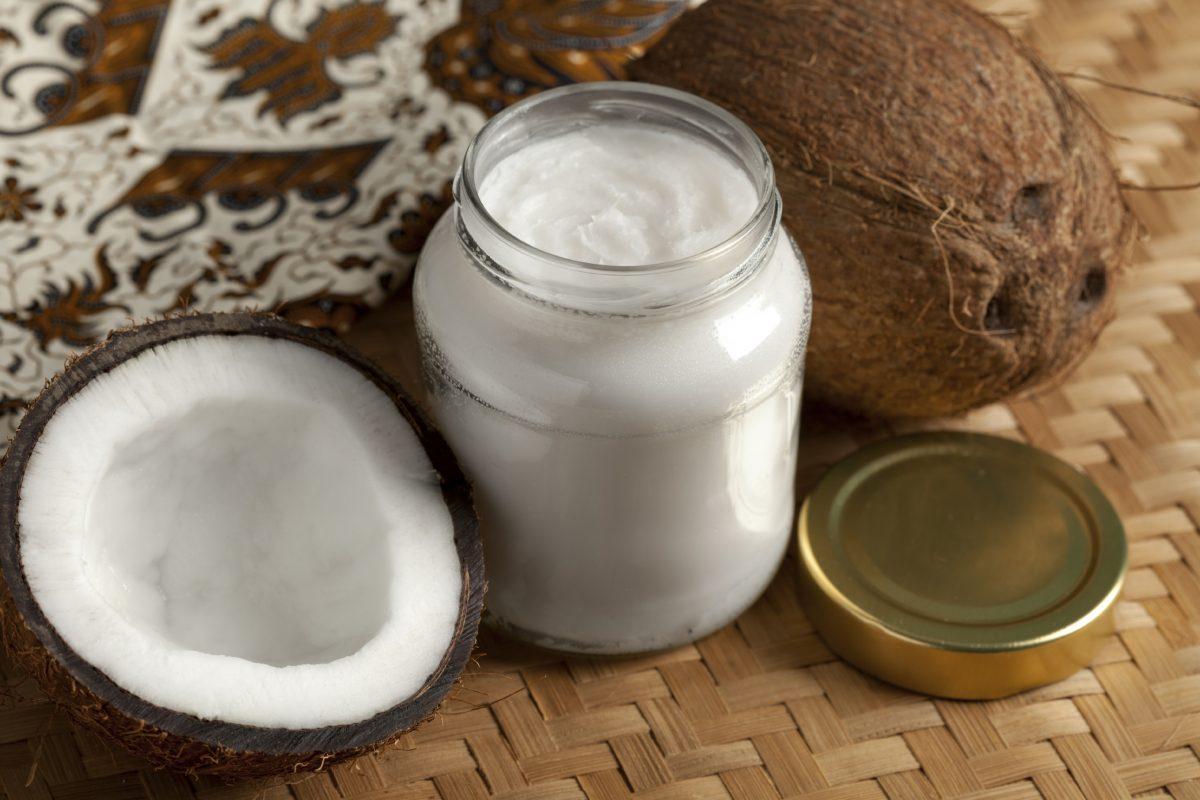
Coconut oil (first cold-pressed or virgin) has mild antimicrobial properties and is excellent for moisturizing cracked, dry skin or soothing minor chafing and irritation, according to Ward.
Oats (plain, unflavored—colloidal oats or regular) can calm skin irritation when used as a poultice or in a bath for rashes, bug bites, or itchy skin, she said.
Sea salt or Himalayan salt (pure, no anti-caking agents) may seem simple, she said, but warm saltwater gargles are a time-tested way to soothe throat or gum irritation. She noted that a saltwater solution can also be used for nasal rinses or combined with fluids to help support hydration and electrolyte balance.
Chamomile (organic, no added flavors) can work as a gentle tea for calming digestion and helping the body relax from stress or anxiousness, she said. The tea bags, once cooled, can be used as a simple compress for puffy or irritated skin around the eyes, she said.
(PicturePartners/iStock)
“When you’re choosing foods for a first-aid kit, look for high-quality, minimally processed versions,” Ward said. “These aren’t replacements for medical attention when it’s needed, but they reflect a core functional nutrition principle: using whole, natural foods to support the body’s built-in design to heal.”
Ward is also a functional nutritional therapy practitioner (FNTP) trained by the Nutritional Therapy Association.
She noted that she’s not an herbalist but deeply values medicinal herbs and uses them when appropriate.
“Herbs were humanity’s first medicine—long before the rise of pharmaceuticals—and I believe God designed plants with properties that support the body’s healing processes,” she said. “In my practice, I use supplements that contain well-researched herbs—things like turmeric, ginger, elderberry, milk thistle, nettle, and ashwagandha—when they fit a client’s needs and are supported by their history and labs. I stay within my scope, so I don’t treat disease or prescribe herbal protocols the way an herbalist or naturopath would. My goal is always to support the body’s natural functions, not to target or ‘treat’ specific diseases.”