Health advocate and author Terri Ward says that in the age we live in, we don’t have a choice but to inform ourselves when it comes to our health. Taking responsibility for your own health and being a good steward of your body is the first step, she said.
On a recent episode of EpochTV’s “Bay Area Innovators,” she discussed why food and health care systems fall short and how we can reclaim the health of our body, mind, and spirit.
“Medical professionals have an obligation for informed consent, but they’re so rushed and so limited on the time they can spend with any one patient, so it’s kind of getting overlooked,” she said. “I think it’s important to remember that experts are human, too, and as Ronald Reagan said, trust but verify.”
When it comes to our own health, she said people have to educate themselves, do their own research, and verify what they’re being told. For example, she noted, instead of trusting a headline, read a study.
She mentioned that you can find peer-reviewed studies on the National Institutes of Health’s online biomedical database PubMed. However, she said a large percentage of studies are funded by pharmaceutical companies nowadays.
She said they can conduct multiple studies, and they’re not required to disclose any but the one they want to submit for publication, so they can just keep designing studies until they get the results they want.
Also, instead of looking at one piece of the puzzle, she said it’s better to look at the big picture.
“We’re holistic human beings, and everything is connected, so it takes a multi-pronged approach,” Ward said.
She suggested using the Institute for Functional Medicine’s 5R framework for health—remove, replace, reinoculate, repair, and rebalance—starting with removing things that are causing health problems, whether they’re environmental toxins, foods, or unhealthy lifestyle choices. Then replace—maybe you need more digestive enzymes or your body needs a little more of a particular nutrient, she said. Then re-inoculate by building up microbiomes with beneficial gut bacteria. Then you repair—you provide the body with what it needs to heal—and rebalance with new healthy lifestyle choices, she said.
Ward calls functional medicine “root cause medicine.”
“If you can get to the root cause, you can actually fix the problem or support the body ... whereas if you just take a pill, it’s just going to suppress a symptom and it’s probably going to stop a natural process that has tons of downstream effects.”
Ward, a functional nutritionist, is the author of the book “God’s Prescription.” The book talks about how a person’s social circle can influence health. Ward wrote that surrounding yourself with people who value eating healthy, exercising, and prioritizing faith can make a big difference.
“So rather than just asking, ‘What should I eat?’ a better question might be, ‘How should I live?’” Ward said.
A Lifestyle Approach to Health
In the interview, Ward said that taking responsibility for health starts with one’s mindset and that it’s not just one thing; it’s a lifestyle. She pointed to the Mediterranean diet and way of life as an example.
In her book, she also wrote about the Mediterranean lifestyle, saying that meals in that culture are slower-paced and enjoyed with others. She contrasted that to the West, where meals tend to prioritize convenience and efficiency and can feel like more of a transaction. Meals in Mediterranean cultures prioritize gathering with friends and family to laugh and have conversations around the table, which can strengthen one’s sense of belonging, she wrote.
“Even in the busiest seasons, time is intentionally carved out for family, faith, and fellowship,” her book states.
Additionally, it mentions that physical activity is integrated into daily life. Her book gives the examples of “walking to visit friends, working outdoors, or preparing food from scratch.”
“Days follow a natural rhythm of work, rest, and worship,” she writes.
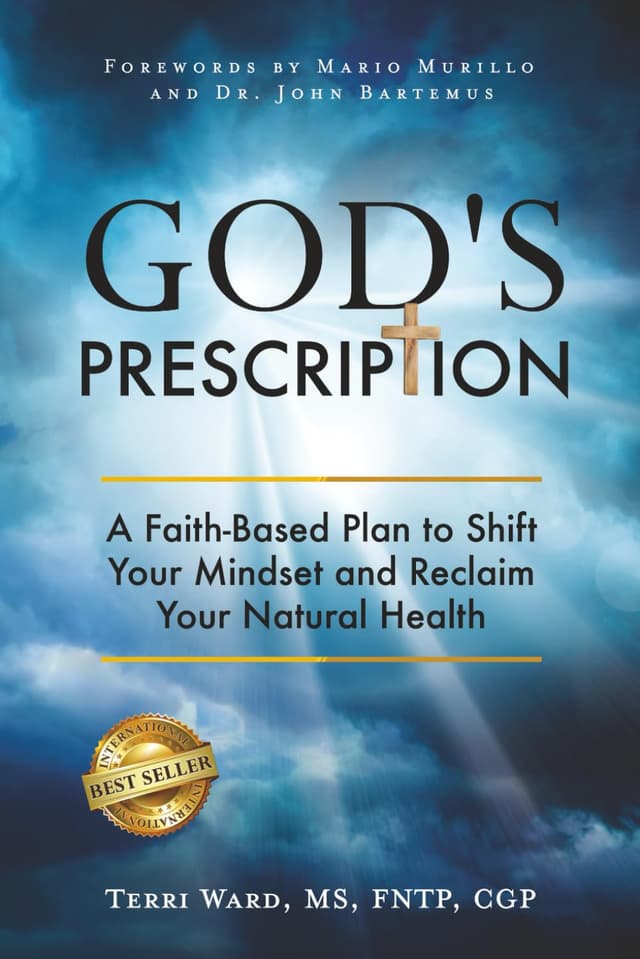
Terri Ward’s book “God’s Prescription.” (Courtesy of Terri Ward)
While Ward recommends the Mediterranean lifestyle approach, she noted that there is no one-size-fits-all diet, and health is about finding what works for your body.
Her book recommends what she calls an Anti-Inflammatory Rainbow Diet focusing on whole foods. She said it isn’t about rigid rules; rather, it’s used as a guide that recognizes that health comes in all shapes and sizes.
The diet is actually a lifestyle focused on nourishing and restoring your body, balancing blood sugar and gut health, and supporting a healthy acid-alkaline balance, she said.
In addition to healthy fats and quality proteins, the diet focuses on eating a colorful variety of fruits and vegetables to ensure a wide range of phytonutrients, which can help prevent deficiencies and disease.
“I think that food is intended for enjoyment, but mostly for nourishment. So it’s not that it has to be one or the other,” Ward said in the interview.
A Turning Point in History
Ward talked about the 1910 Flexner report, titled “Medical Education in the United States and Canada,” which was prepared for the Carnegie Foundation by Abraham Flexner. In her book, she stated that this report, backed by John D. Rockefeller, shaped the future of the health industry by controlling the funding.
While the report was intended to improve medical education and pushed for a uniform, science-based approach to educating doctors, she said it caused a rift between conventional and alternative medicine.
This resulted in a medical system where pharmaceutical-based care took over, leading to the suppression of natural medicine, as it was branded as unscientific, she said.
Ward said Rockefeller was looking for more profits to expand his business into the medical arena.
According to homeopath Dana Ullman, though Rockefeller gave financial support to conventional medical schools and institutions, he relied on homeopathic physicians for the last 50 years of his life until his death at age 97.
Ward’s book cites a report by medical doctor Thomas Duffy, which analyzes the Flexner report’s effects 100 years after its release. It concludes that the shift toward a research-focused medical culture downplayed the importance of hands-on patient care, practice-based wisdom, and compassion, and that shift undermined the trust and respect once held for the medical profession.
Beyond the Flexner report, she said the move to ultra-processed foods after World War II and the repurposing of chemicals into agricultural products have offered convenience and increased productivity but at the expense of health.
Mind-Body Connection
Ward suggested that prayer, meditation, and also just having faith can improve health outcomes.
“It’s like a mindset,” she said. “It will influence outcomes for health. Also, I think it makes you a better steward of your body.”
In her book, Ward went further into the topic of mind-body connection, noting that thoughts and beliefs can lead to physiological realities.
“Research shows that faith-based practices like prayer, gratitude, and forgiveness aren’t just spiritual disciplines; they can physically change the brain and body, lower stress hormones, improve immune function, facilitate coping, and promote healing,” Ward’s book states.
Ward’s Journey
Ward told The Epoch Times in an email about how her faith in God influenced her to write her book.
“When God made it clear to me that the health care and food systems in this country are not what he intended for his people, I assumed he meant I was to share that message with my nutrition clients,” she said. “But he kept placing messages about writing books in front of me—repeatedly and undeniably—until I understood that he wanted the message to reach far beyond my practice.”
Ward looks to scripture to find the connection between faith and diet. She said it reminds us to honor our bodies as temples of the Holy Spirit.
“The Holy Spirit resides within us,” she said. “We are called to keep that environment clean, nourish it with real, unadulterated food, give it sufficient rest and movement, and protect it from what diminishes it. That isn’t legalism—it’s stewardship, and stewardship of the body is an act of worship.”
One of the simplest and most powerful places to start to include God in one’s diet and health, she said, is pausing before you eat and giving genuine thanks for your food.

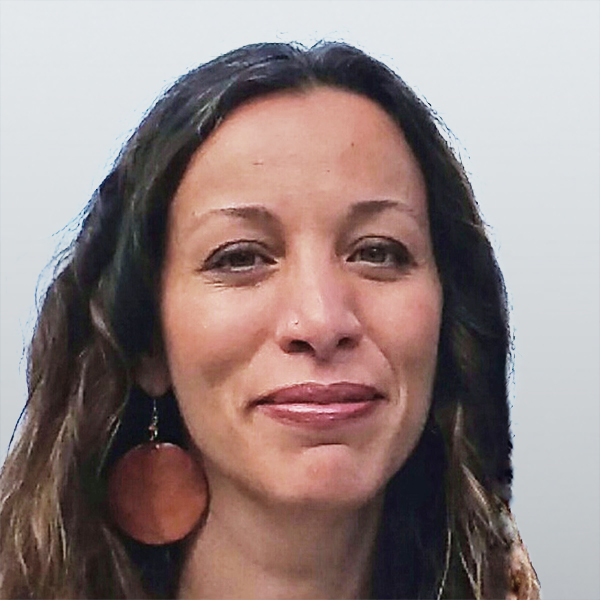
Terri Ward. (Courtesy of Terri Ward)
This also aligns with science, she said, as the act of pausing and expressing gratitude shifts the nervous system from a sympathetic stress state into a parasympathetic state, which is significantly more conducive to healthy digestion and nutrient absorption.
“Something as simple as a sincere blessing over your meal has both spiritual and physiological benefits,” she said.
While Ward’s book is rooted in God and faith and provides scripture passages to back up what she teaches, she said you don’t have to be a Christian to find value in it. The book is also grounded in science, and readers of any background or belief system can benefit, she said.
She said God did not design us to be sick or to navigate alone. She added that God promised to prosper us, not harm us; to give us a hope and a future.
“We were created for community, for guidance, and for a relationship with the God who designed us and knows exactly what we need,” she said. “While the modern sick-care system is extraordinary in a crisis, it was never designed to help you thrive. When we begin honoring our bodies as the temples they are—fueling them with real food, addressing root causes rather than masking symptoms, and aligning our health decisions with how God designed us—remarkable things happen.”
Ward, a former Certified Public Accountant, was inspired by her own health journey to help others.
She said she healed her gut through nutrition and lifestyle changes. By restoring her own health, she heard a calling from God to help others do the same.
She went back to school and earned a Master of Science degree in human nutrition and functional medicine. As a functional nutritionist, she guides people to heal their gut microbiomes and achieve better health.