
Electricity rates in California are roughly twice the national average and are likely to keep climbing. A former state energy commissioner recently detailed the many factors behind this trend.
Since the late 1980s, California residents have paid as much as 10 percent more for electricity than the national average, according to the Public Policy Institute of California. However, energy rates have surged in recent years, to as much as 80 percent more than the national average in 2024 from about 33 percent higher than the average in 2015.
However, power costs are expected to continue escalating in California as the state’s utility providers grapple with the loss of crucial power grid infrastructure in the aftermath of major wildfires.
Jim Boyd, former energy commissioner for the state, recently spoke with Siyamak Khorrami, host of The Epoch Times’s “California Insider,” and noted that the Golden State’s average utility rate is currently about 96 percent higher than the rest of the nation.
At Pacific Gas & Electric (PG&E), the state’s largest utility provider serving Northern and Central California, the average rate is roughly 104 percent higher than it was a decade ago, according to Boyd.
Key Factors
Oftentimes, the damaging effects from the state’s many wildfires are a primary reason why California residents have seen such steep increases in their power costs, Boyd said.
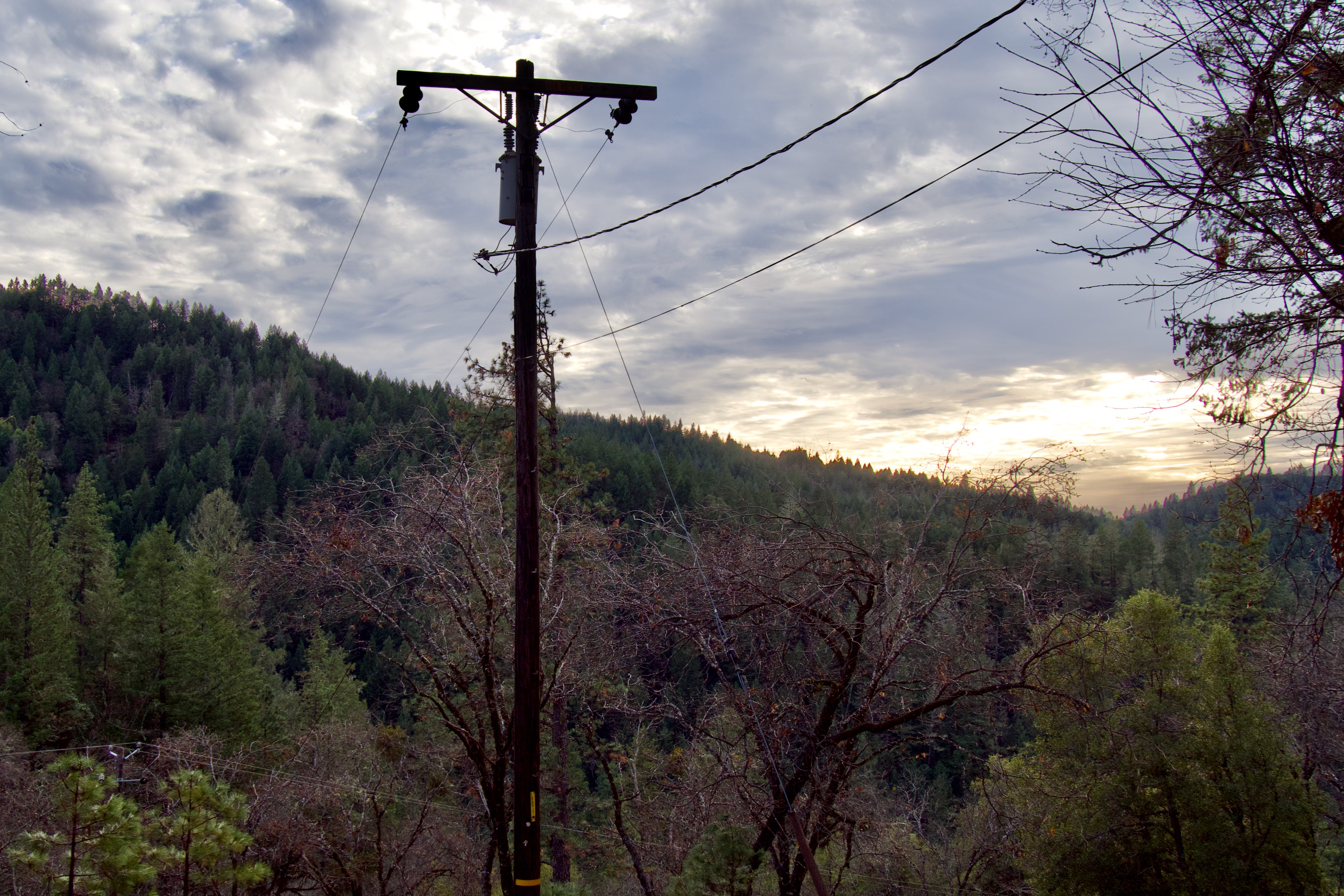
“Utilities are damaged by wildfires,” he said. “Their infrastructure gets burned, and it’s expensive to replace. Infrastructure costs go into the rate for electricity. Rate-payers pay for it.”
Boyd also said many wildfires have been started by utilities themselves because their equipment was too close to trees and because their wires were old and easily damaged.
According to the California Department of Forestry and Fire Protection (Cal Fire), there have already been 62 wildfires in California through Jan. 26. In the five years from 2020 through 2024, there were an average of 7,713 wildfires each year in California, Cal Fire reported.
Two of the most destructive wildfires in state history happened in January 2025, when the Palisades and Eaton fires destroyed 16,246 structures in Southern California, including huge swaths of electric utility lines, substations, and other infrastructure that must be rebuilt.
However, the deadliest fire in state history was the Camp Fire in November 2018 that completely decimated the town of Paradise in Butte County and caused 85 deaths. The fire was started by PG&E’s electrical power lines. In December 2019, the utility agreed to a $13.5 billion settlement for its role in the Camp fire and several others in Northern California that were linked to the company’s power transmission lines.
The California Public Utilities Commission (CPUC) reported that wildfire-related revenue requirements generated 27 percent of PG&E’s total revenue for 2024 and were 17 percent of revenue for both Southern California Edison and San Diego Gas & Electric. The state’s residential ratepayers paid an average of $250 to $490 annually because of those requirements, the CPUC stated.
The second key factor that has led to high energy rates in California is the state’s aggressive restrictions on greenhouse gas emissions and other clean energy goals, according to Boyd.
In September 2018, California signed into law the 100 Percent Clean Energy Act, which requires all of the state’s electricity to be generated from carbon‑free resources—mainly solar and wind—by 2045.
Boyd said he thought the act should have given more attention to biomass as a renewable source of electricity. Biomass generates electricity from wood waste, which California produces in large quantities as a major agricultural state.
He said the state had experimented with many renewable sources since the 1970s, including wind, solar, and biomass.
“The only one that worked at that point in time ... was the biomass to electricity,” Boyd said. “My original concern about the renewables, solar and wind, they’re intermittent.”
He noted that the number of biomass electricity-producing plants has declined to about 20 to 30 today from about 60 in the 1980s.
Other factors, Boyd said, include high natural gas costs and utility providers using time-of-use pricing—in which they charge more for higher energy usage during peak hours—as well as tiered pricing, where rates increase as consumption rises.
New Billing Structure
Boyd said he doesn’t expect electricity rates in California to stabilize anytime soon and expressed skepticism that the shift from usage-based rates to fixed charges will lower prices, as other issues remain unresolved.
The California Public Utilities Commission approved the new billing structure mandated by the state legislature in May 2024, aiming to reduce residential electricity rates and encourage residents to adopt electric appliances and vehicles.
The measure is scheduled to be implemented in late 2025 and early 2026.
Under the new structure, families in the states will pay a fixed $24.14 per month, regardless of the amount of electricity they use, while certain low-income families will pay discounted flat rates of $6 or $12.