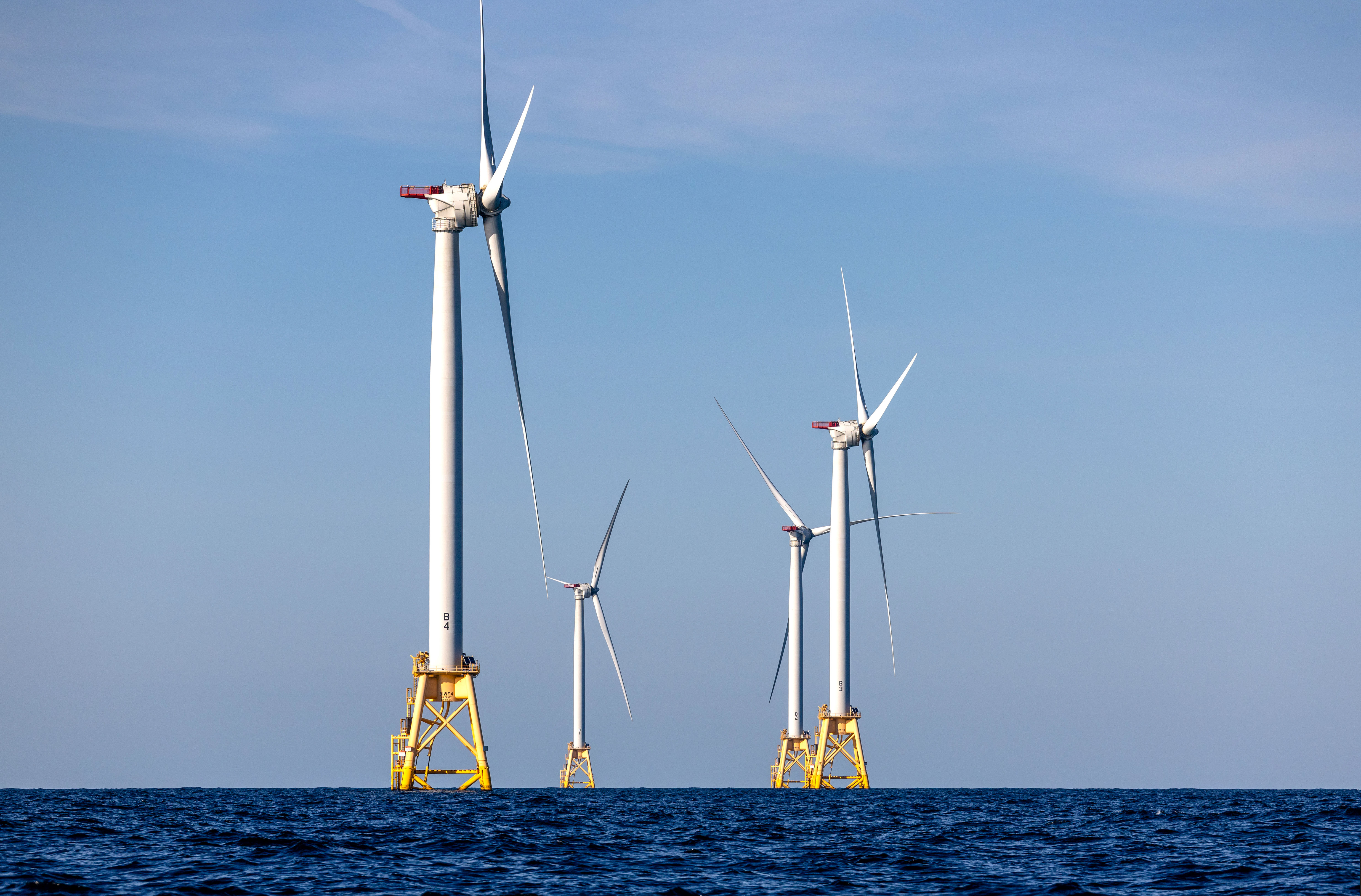

The Trump administration has halted construction across the U.S. offshore wind sector, pausing leases for all five major projects under construction after the Pentagon found that turbine structures could interfere with critical military radar systems.
The Department of the Interior said in a Dec. 22 announcement that the move followed warnings from the Department of War that the rotating turbine blades and highly reflective towers used in large-scale offshore wind farms can interfere with military radar systems, potentially obscuring real targets or generating false signals.
“[The pause will allow federal agencies] time to work with leaseholders and state partners to assess the possibility of mitigating the national security risks posed by these projects,” the Interior Department said in a statement.
The action covers all five large offshore wind projects currently under construction, including GE Vernova’s Vineyard Wind 1, Danish energy company Orsted’s Revolution Wind and Sunrise Wind, Dominion Energy’s Coastal Virginia Offshore Wind–Commercial, and Equinor’s Empire Wind 1.
Interior Secretary Doug Burgum said in a Dec. 22 social media post that the five paused projects were “expensive, unreliable, heavily subsidized.”
“ONE natural gas pipeline supplies as much energy as these 5 projects COMBINED,” he wrote, noting that President Donald Trump “is bringing common sense back to energy policy & putting security FIRST!”
In a statement, Burgum said the move is motivated by the imperative of keeping Americans safe.
“Today’s action addresses emerging national security risks, including the rapid evolution of the relevant adversary technologies, and the vulnerabilities created by large-scale offshore wind projects with proximity near our east coast population centers,” Burgum said.
“The Trump administration will always prioritize the security of the American people.”
Burgum told Fox News in a Dec. 22 interview that leaseholders were being formally notified on Dec. 22 that construction leases were being suspended.
The lease suspensions build on a series of actions taken this year by the administration to rein in offshore wind development. In August, the Interior Department launched a comprehensive review of offshore wind regulations, citing concerns about national security, environmental impacts, and what it described as preferential treatment for “unreliable, foreign-controlled energy sources over dependable, American-made energy.”
That review, led by the Bureau of Ocean Energy Management and the Bureau of Safety and Environmental Enforcement, paused new offshore wind approvals while the department reassessed offshore wind energy projects and their impact on the economy, environment, and national security.
The move follows Trump’s Jan. 20 memorandum temporarily withdrawing all areas of the U.S. Outer Continental Shelf from offshore wind leasing and ordering a review of federal wind leasing and permitting practices.
Although Trump’s memo preserved rights under existing leases, it directed the Interior Department to conduct a comprehensive review of those leases to determine whether they should be terminated or amended, citing concerns about consequences that “may lead to grave harm—including negative impacts on navigational safety interests, transportation interests, national security interests, commercial interests, and marine mammals.”
Federal agencies have long acknowledged that large wind turbines can interfere with radar systems by creating electromagnetic “clutter.” According to the Department of Energy’s Wind Energy Technologies Office, turbine towers and rotating blades can reflect radar signals in ways that reduce detection sensitivity, complicate target tracking, and impede weather forecasting.
In air traffic control and defense applications, according to the Department of Energy, turbine blades can appear as moving objects on radar, making it harder to identify and track legitimate airborne targets.
A 2024 progress update from the federal Wind Turbine Radar Interference Mitigation Working Group states that agencies are testing mitigation approaches to manage turbine-related radar clutter, including adjustments to existing radar processing systems.
Reuters contributed to this report.