
The Federal Aviation Administration (FAA) on Feb. 11 lifted a temporary suspension of flights to and from El Paso International Airport in Texas, hours after grounding all operations for what it had described as “special security reasons.”
“The temporary closure of airspace over El Paso has been lifted. There is no threat to commercial aviation. All flights will resume as normal,” the agency said in a statement.
The restriction had taken effect at 1:30 a.m. ET and was initially set to remain in place through 1:30 a.m. on Feb. 21. The FAA had barred pilots from operating aircraft in the affected airspace, which included areas over El Paso and nearby Santa Teresa, New Mexico, though it excluded Mexican airspace. The agency had said the restriction did not apply above 18,000 feet, allowing aircraft to transit over the region at higher altitudes.
While the FAA did not specify the nature of the “special security reasons” behind the original order and did not immediately explain why the restriction was rescinded, the White House told The Epoch Times in an emailed statement that Mexican cartel-operated drones had breached U.S. airspace and that the Department of War took action to disable them. A White House official said the FAA and the Department of War subsequently determined there was no threat to commercial aviation.
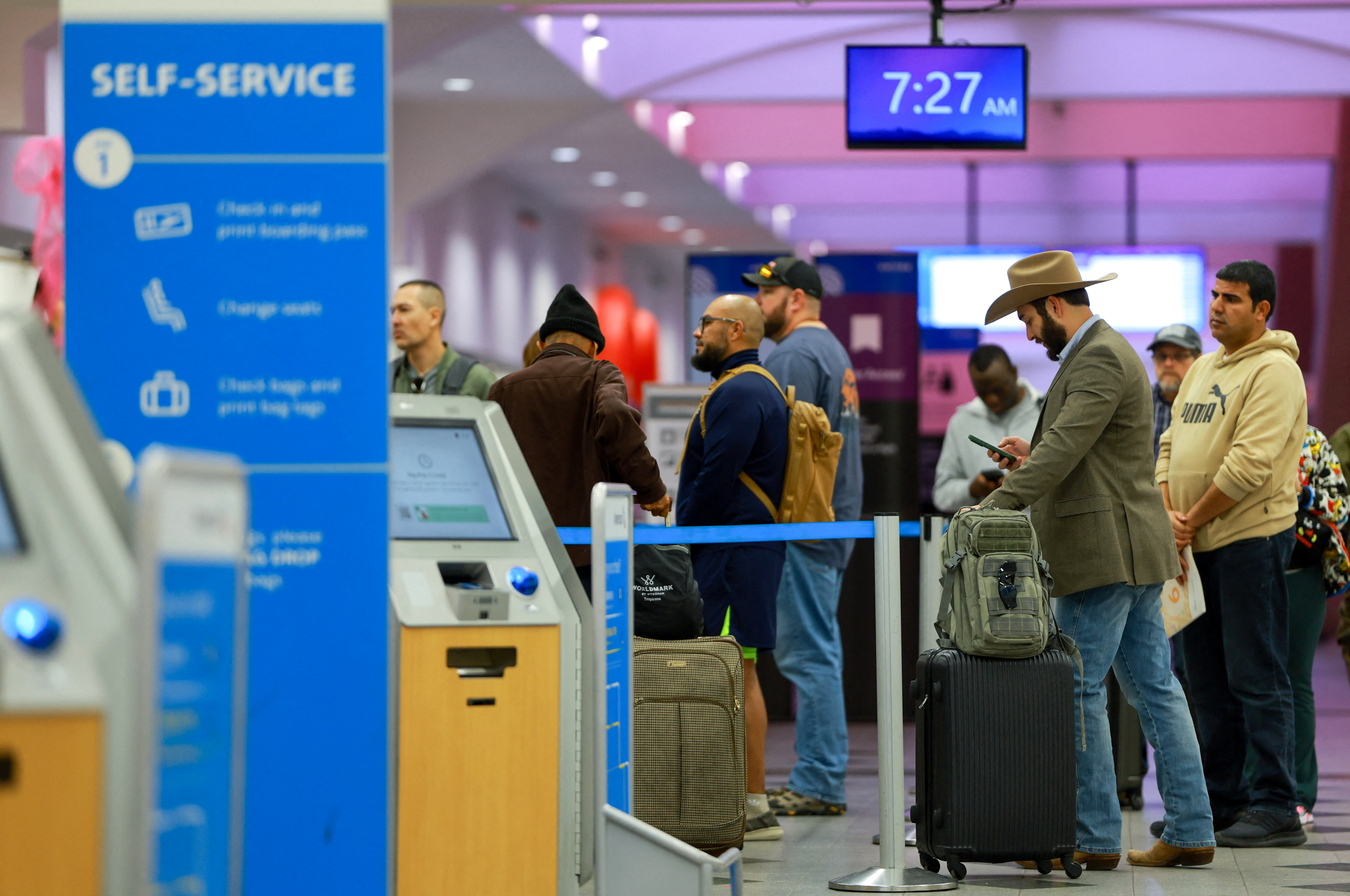
The temporary grounding halted commercial, cargo, and private aviation operations at the airport. Southwest Airlines said it paused all operations to and from El Paso at the FAA’s direction and notified affected customers. American, United, and Delta also operate flights from the airport.
El Paso International Airport handles roughly 4 million passengers annually and serves as a key gateway for West Texas, southern New Mexico, and northern Mexico. The border city of nearly 700,000 residents forms part of a larger binational metropolitan area alongside Ciudad Juárez, Mexico, and is a major hub for cross-border commerce.
The initial restriction had been issued under Title 14 CFR Section 99.7, which authorizes the FAA to implement special security instructions and restrict aircraft operations in U.S. airspace when required for national security.
Before the FAA announced that the restriction had been lifted, local officials criticized the lack of advance notice and called for greater transparency.
El Paso City Councilman Chris Canales issued a statement on Feb. 11 criticizing the lack of information from federal authorities and warning of potential economic fallout if the closure were to last for a full 10 days.
“We have no reason to believe that there is any kind of imminent safety threat to El Paso, but we still have no reason provided by the FAA or any federal authority, and that lack of explanation is obviously fueling fear and speculation in our community,” Canales said.
If the airport were to remain closed for the full 10 days, Canales estimated the economic impact to the city could reach $40 million to $50 million or more.
The incident comes amid greater scrutiny of the security situation along the U.S.–Mexico border by the Trump administration.
In January, President Donald Trump said that drug cartels were effectively controlling Mexico and suggested that the United States could carry out strikes on land targets as part of efforts to combat them.
“The cartels are running Mexico. It’s very sad to watch and see what’s happened to that country,” Trump told Fox News’ Sean Hannity in an interview. “They’re killing 250,000, 300,000 in our country every single year.”
Trump added that U.S. forces had “knocked out 97 percent of the drugs coming in by water, and we are going to start now hitting land with regard [to] the cartels.”
The president was referring to a campaign of strikes against what the administration has described as “narco-terrorists” operating drug-trafficking vessels in the Western Hemisphere, as part of Operation Southern Spear.
The U.S. military killed two people in a Feb. 5 strike on an alleged drug-trafficking vessel in the Eastern Pacific, with the new commander of U.S. Southern Command saying that the warfighting headquarters would work “tirelessly to strengthen security, stability, and partnerships across the Western Hemisphere.”
Emel Akan and Zachary Stieber contributed to this report.