Gov. Gavin Newsom is road-testing a national political message through deep-red territory this week as the California Democratic Party struggles to unite behind a single candidate to succeed him in Sacramento.
Newsom, who was elected governor in 2018 and won reelection in 2022, is term-limited and cannot seek a third consecutive term. He will leave office in January 2027.
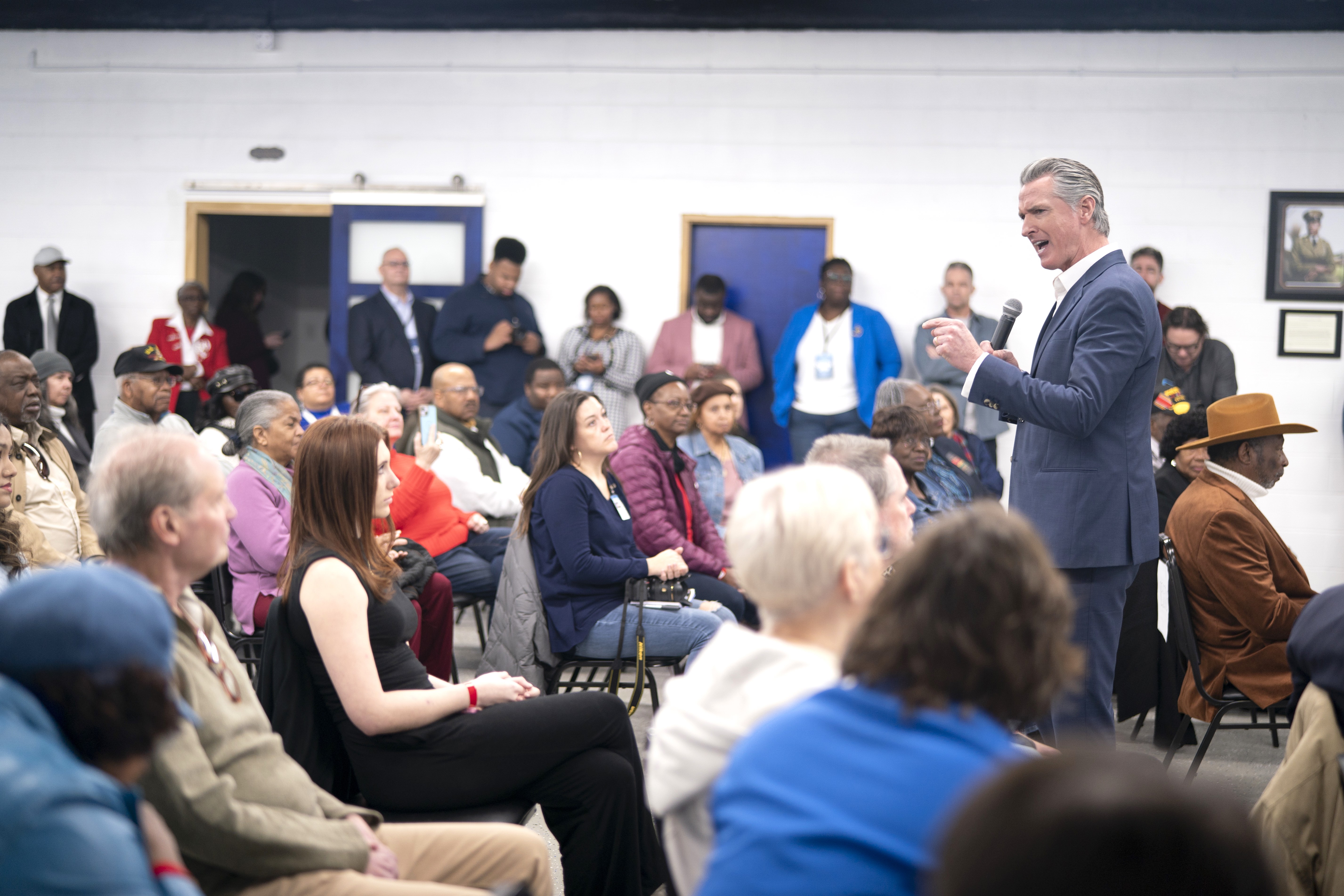
He launched his memoir tour on Feb. 20 in Nashville, where he met with the state’s Democratic Party before addressing a public audience. He continued to Georgia on Feb. 21 and was scheduled to appear in South Carolina on the evening of Feb. 23. President Donald Trump carried all three states comfortably in 2024.
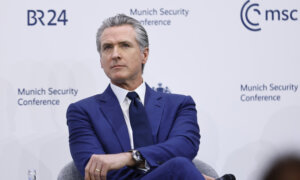
The red-state book tour is the latest in a string of high-profile appearances Newsom has made in recent weeks. In January, he attended the World Economic Forum in Davos, Switzerland, and last week he headlined multiple panels at the Munich Security Conference in Germany, where he met with German Chancellor Friedrich Merz and signed a partnership agreement with Ukrainian regional leaders.
Newsom has not declared a presidential candidacy, but he said in October 2025 that he was considering a 2028 presidential run. That decision, he indicated, would come after the 2026 midterm elections.
In Nashville, he argued that Democrats must compete everywhere rather than cede Republican-dominated states, a message he delivered directly to state party organizations along the way.
“For things to change, we have to change,” Newsom told the Nashville crowd on Feb. 20. “Society becomes how we behave. We are our behaviors.”
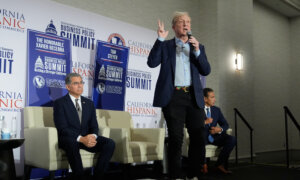
Back in California, his party is struggling to coalesce behind a single candidate in a crowded race to be his successor. The California Democratic Party ended its annual convention in San Francisco this weekend without endorsing a candidate in the governor’s race, as nine contenders split delegate votes and none came close to the 60 percent threshold required for formal party backing ahead of the June 2 primary.
According to official results released by the California Democratic Party, Rep. Eric Swalwell led the field with 24 percent of delegate votes. Former State Controller Betty Yee followed with 17 percent, former California Attorney General Xavier Becerra received 14 percent, billionaire climate activist Tom Steyer received 13 percent, former Rep. Katie Porter received 9 percent, State Superintendent Tony Thurmond received 7 percent, former Los Angeles Mayor Antonio Villaraigosa received 4 percent, and former Assemblyman Ian Calderon received less than 1 percent. Another 8.5 percent of delegates reported no preference.
The result was recorded as “no consensus” under party rules. San Jose Mayor Matt Mahan did not appear on the ballot after entering the race in late January—after the convention deadline.
The fractured Democratic field raises the prospect that two Republicans could advance to the Nov. 3 general election under California’s top-two primary system, in which only the top two vote-getters in the June primary advance, regardless of party.
The two Republicans gaining the most traction in fundraising and polls are former Fox News host Steve Hilton and Riverside County Sheriff Chad Bianco. A recent Emerson College poll found Hilton leading the entire field at 17 percent, and Swalwell and Bianco were tied at 14 percent.
Swalwell framed his delegate lead as momentum.
“I want to thank the California Democratic Party delegates for backing me to be California’s fighter and protector of working families,” he said in a statement on Feb. 22.
“Together, we'll defend all Californians against Donald Trump and lower every family’s costs. I look forward to uniting our party and leading us to victories across the state in November.”
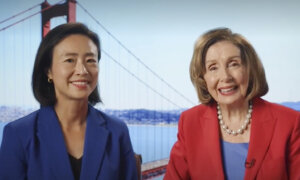
Yee, who finished second in the delegate count, pushed back on any suggestion that she should exit the race.
“Don’t underestimate the power of the grassroots,” she wrote on X on Feb. 22. “Don’t underestimate Betty Yee.”