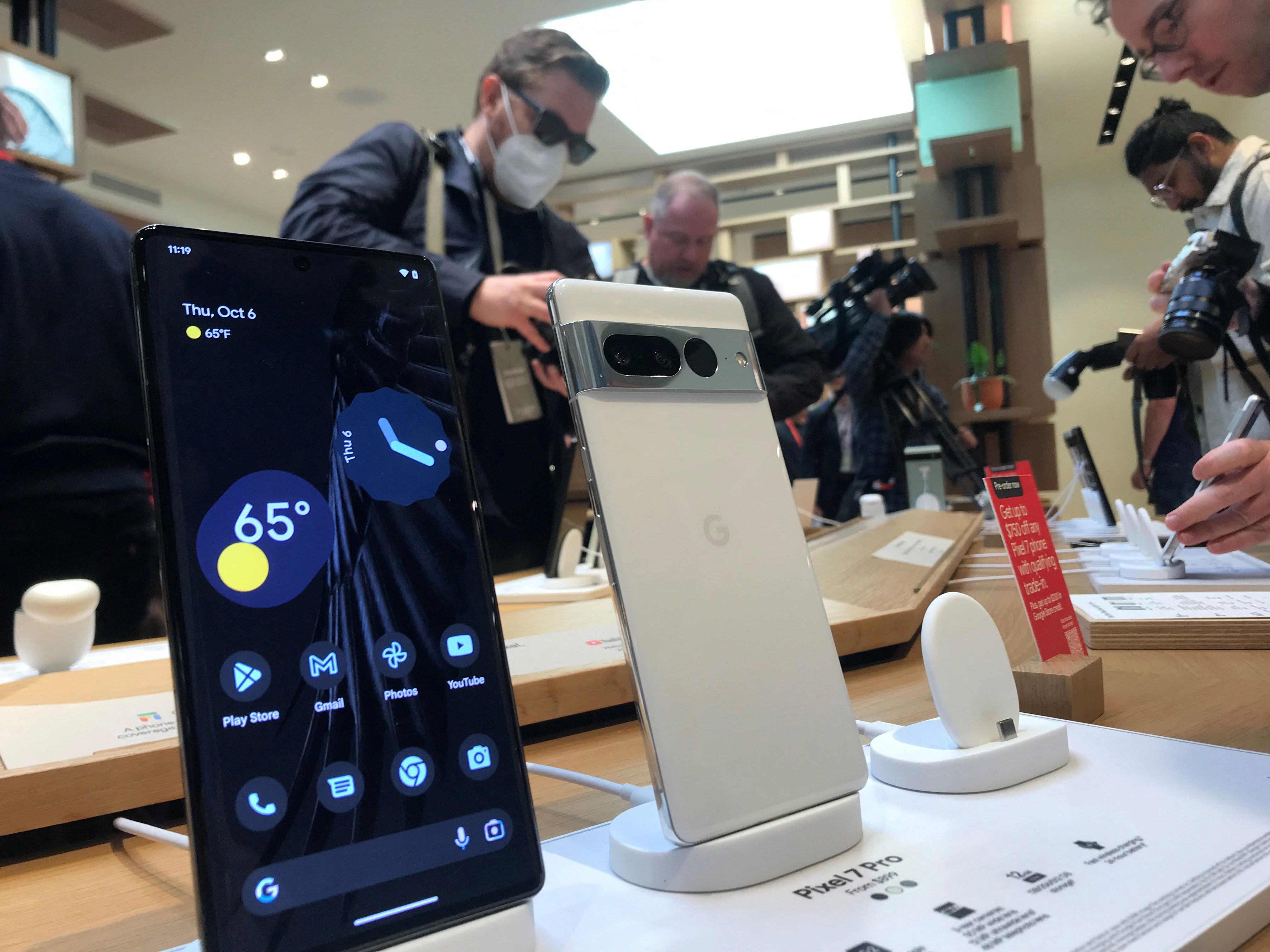

Two former Google engineers and one of their husbands were charged on Feb. 19 with allegedly conspiring to steal trade secrets related to the company’s Tensor processor used in its Pixel phones.
The defendants—Samaneh Ghandali, 41; her husband Mohammadjavad Khosravi, also known as Mohammad Khosravi, 40; and Soroor Ghandali, 32—made their first court appearances last week in San Jose, California, according to the Justice Department.
If convicted, each defendant faces a maximum sentence of up to 130 years in prison for 13 counts of conspiracy to commit trade secret theft and attempted theft of trade secrets and up to 20 years in prison for obstruction of official proceedings. They also each face a fine of $250,000 for each criminal count brought against them.
Prosecutors claim that the defendants secretly copied files and trade secrets after they took jobs at Google and other leading tech companies in their mobile computer processor (CPU) divisions, where microprocessors for laptops, smartphones, and tablets are made.
“The alleged actions outlined in this indictment reflect a calculated betrayal of trust by individuals accused of stealing trade secrets from the very tech companies that employed them,” FBI Special Agent in Charge Sanjay Virmani said in a statement. “According to the allegations, the method in which confidential data were transferred by the defendants involved deliberate steps to evade detection and conceal their identities.”
Samaneh Ghandali and Soroor Ghandali, who are sisters, were Iranian nationals who were educated at Iranian universities before moving to the United States. Samaneh Ghandali became a U.S. citizen around 2018 after receiving a master’s degree in computer engineering and pursuing a doctoral degree from a university in Iran. She received a doctoral degree in computer engineering from the University of Massachusetts–Amherst in 2019.
Soroor Ghandali came to the United States on a non-immigrant student visa after getting a bachelor’s and a master’s degree in computer science from universities in Iran. She studied postgraduate work in computer engineering at Santa Clara University starting in 2020, according to court documents.
Khosravi was an Iranian national who served as a lieutenant in the Iranian army. He became a U.S. legal permanent resident around 2019. He also received degrees in computer engineering from universities in Iran and studied at the University of Massachusetts–Amherst starting in 2017, where he received a doctoral degree in 2021.
Soroor Ghandali referred her husband and her sister multiple times for jobs at Google after she started working at the company as an intern in 2019, according to court documents.
Khosravi applied to Google more than 40 times for various jobs, including as a processor design engineer, but he was not hired.
Soroor Ghandali started working at Google as an intern in 2022 but was not hired at the end of her internship. She left to work at Intel Corp., according to her LinkedIn profile. Before she left Google, Soroor Ghandali allegedly downloaded internal Google files to a personal USB drive, which was detected by Google’s internal security systems.
She allegedly acknowledged her actions and signed an affidavit that states that she had permanently deleted them from her possession and destroyed them and said she hadn’t sent them to anyone.
The logo of Google is seen outside Google Bay View facilities during the Made by Google event in Mountain View, Calif., on Aug. 13, 2024. (Manuel Orbegozo/Reuters)
According to the indictment, Samaneh Ghandali, while employed by Google, also allegedly transferred hundreds of files, including Google trade secrets, to a third-party communications platform, specifically to channels bearing each of the defendants’ first names.
Prosecutors also allege the trade secrets were later copied to various personal devices, Khosravi’s company work device, and Soroor Ghandali’s company work device.
The defendants allegedly hid their actions by submitting false, signed affidavits to their employers about their conduct and the stolen trade secrets, destroyed the transferred files and other records from their electronic devices, and concealed the methods of transfer to avoid detection by the tech companies, according to prosecutors.
Google’s internal security system allegedly detected Samaneh Ghandali’s activity, and Google revoked her access to company resources in August 2023. She then signed an affidavit claiming that she had not shared the company’s confidential information with anyone outside the company.
Prosecutors claim that Samaneh Ghandali then allegedly started searching and visiting websites about deleting communications and other data, including how long a cell phone provider keeps “messages to print out for court.”

Google CEO Sundar Pichai talks about the new Google Assistant during a product event in San Francisco, in this file photo. (Eric Risberg/AP Photo)
The couple then allegedly continued accessing Google trade secrets that were stored on their personal devices and started manually photographing hundreds of Google’s computer screens over the next few months, according to prosecutors.
The night before Samaneh Ghandali and Khosravi traveled to Iran in December 2023, Samaneh Ghandali allegedly manually captured on her phone about 24 photos of Khosravi’s work computer screen containing the company’s trade secret information.
While in Iran, authorities say she used her personal device to access the photos, and Khosravi accessed his company’s trade secret information.
“Protecting Silicon Valley innovation and defending the groundbreaking technologies that drive our economy and national security is a top priority for the FBI,” Virmani said.
San Francisco U.S. Attorney Craig H. Missakian said in a statement: “As alleged, the defendants exploited their positions to steal confidential trade secrets from their employers. Our office will continue to lead the way in protecting American innovation and we will vigorously prosecute individuals who steal sensitive advanced technologies for improper gain or to benefit countries that wish us ill.”
It was not clear whether the defendants had legal representation. They were not able to be reached for comment.