
BANDERA, Texas—After a soft rain on Sovereignty Ranch, the earthy smells of rich humus and pungent juniper hung in the air. The clay roads became a sticky gumbo, clinging to cowboy boots and pickup trucks as guests converged on the ranch.
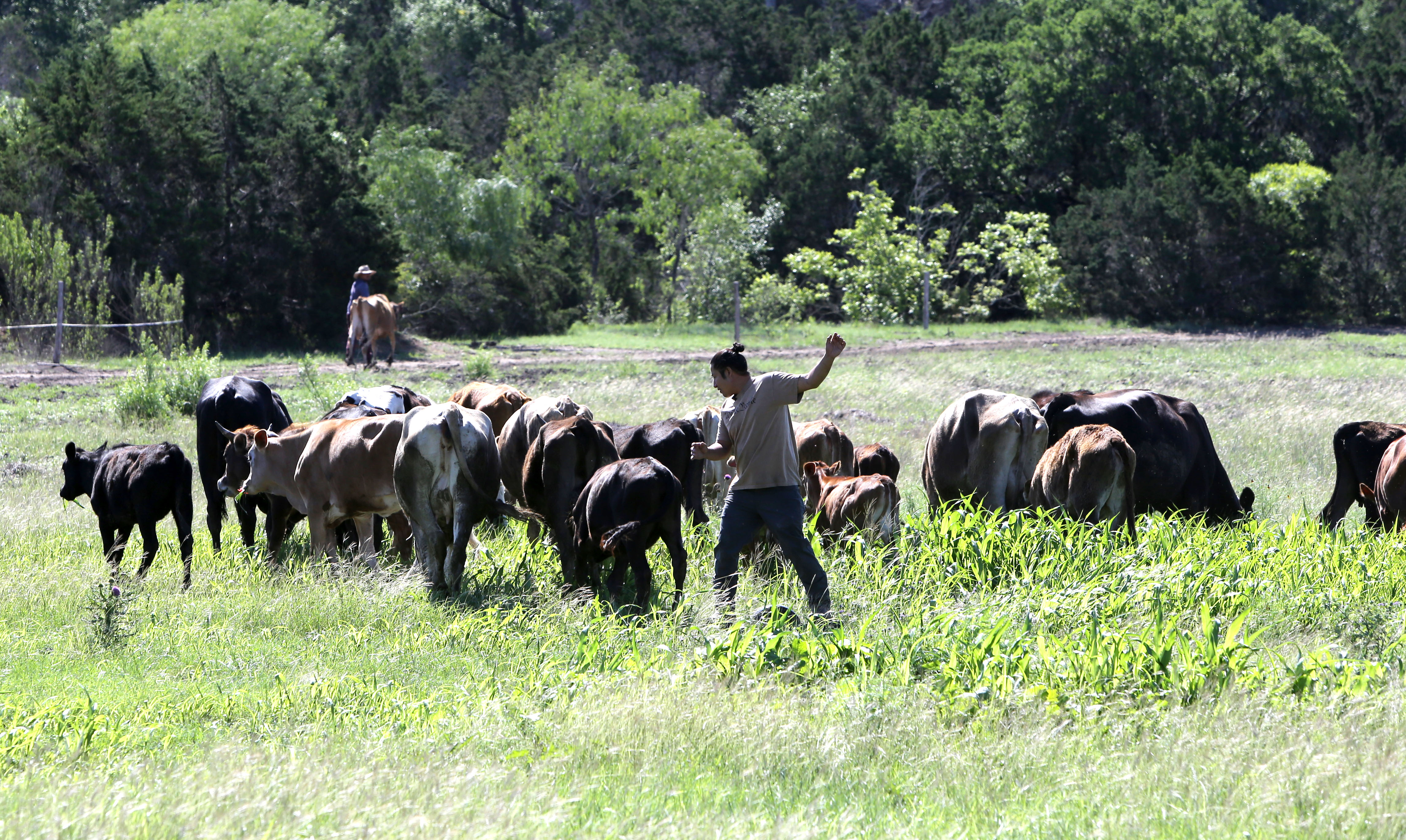
Bandera, dubbed the Cowboy Capital of the world, was a hub for driving millions of cattle and horses through the region during the late 1800s.
But the scenic 200-acre Sovereignty Ranch, set amid rugged hills and ancient limestone bluffs, does not follow traditional land-and-cattle ranching practices.
The farm was founded by Mollie Engelhart, a self-described “recovering vegan” and California chef who became a Texas rancher and regenerative farmer. The first weekend of May, the place was packed with vehicles from Texas, Colorado, and California for the two-day American Regeneration Conference, featuring a visit from Health Secretary Robert F. Kennedy Jr., a longtime advocate of regenerative farming.
The ranchers and farmers at the conference, some sporting “Make Ranching Great Again” and “Common Ground” baseball caps, were not your typical cowboy types. Once on the fringes of agriculture, regenerative farmers are going mainstream.
Their circle-of-life message—that healthy soil makes healthy food, which makes healthy bodies—is gaining a foothold here in cowboy country and across the nation.
Think of it as a “yeehaw” moment for agriculture, as modern practices embrace the wisdom of old-school farming.
Some practitioners are former Democrats; others are health-conscious parents and vaccine skeptics who were drawn to Kennedy’s Make America Healthy Again movement, which eventually merged with the base supporting President Donald Trump.
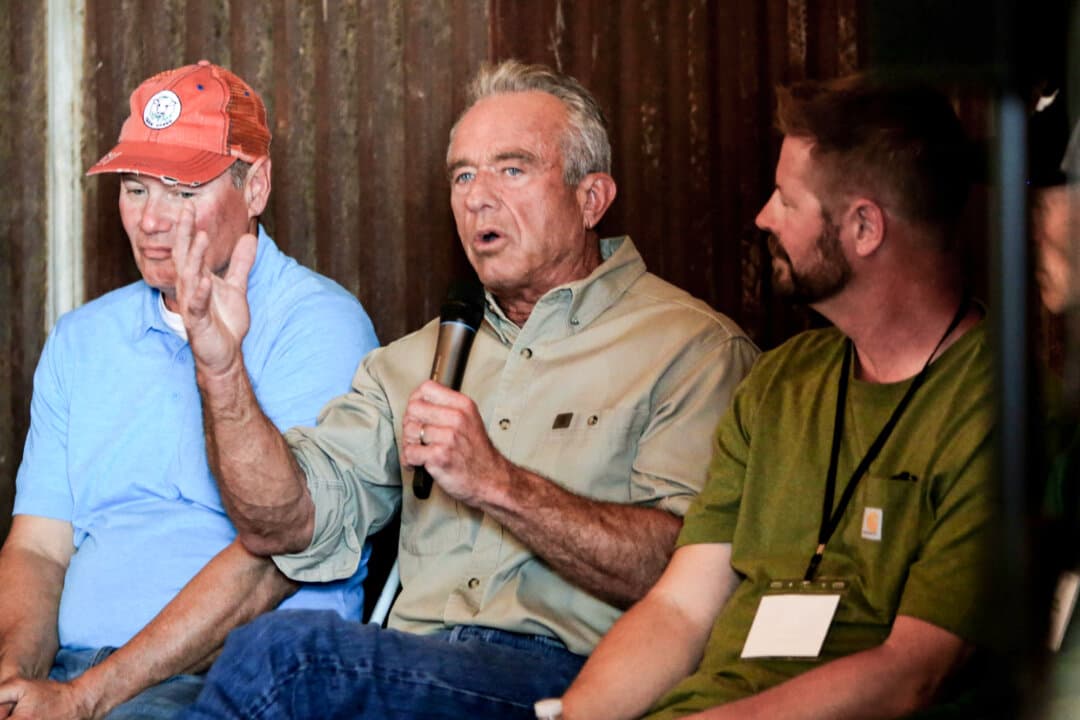
Robert F. Kennedy Jr, secretary of the Department of Health and Human Services, speaks at Sovereignty Ranch in Bandera, Texas, on May 2, 2026. The ranch hosted a two-day event to advance regenerative agriculture in America. (Bobby Sanchez for The Epoch Times)
The conference brought together notable figures in regenerative farming, many with backgrounds in science or education. Topics included the use of new technologies and methods to reduce or eliminate chemical use in farming while maintaining profitability.
For example, ground cover can preserve topsoil. Rotating farm animals through pastures provides natural fertilizer.
Technology is helping make regenerative farming more successful. The conference featured a $1 million machine that can weed fields, saving farmers money on weedkillers while protecting the environment.
Going Big
Rick Clark, who operates a large-scale organic regenerative farm of 6,500 acres in Indiana, spoke at the conference about how he has saved more than $2 million in fuel, fertilizer, and chemicals by using natural farming methods.
“How can we be good to Mother Nature, and how can we become more profitable?” Clark said. “That’s what this is about.”
During his presentation, he showed photos illustrating how using rye as a cover crop for soybeans avoids the need to till the entire field.
Clark plants rye to prevent soil erosion and maintain soil nutrients. Then, without tilling the field, he plants soy directly into the growing rye.
Within six weeks of planting soy, green, leafy plants cover the field as far as the eye can see, all grown without any chemicals.
“No Roundup, no herbicides, no insecticides, no fungicides, no seed treatments,” he told The Epoch Times. “We haven’t done any of that for 12 years now.
“When you reduce inputs or eliminate inputs like we have, the nutrient density of our food goes up. That’s been proven. It’s been tested.”
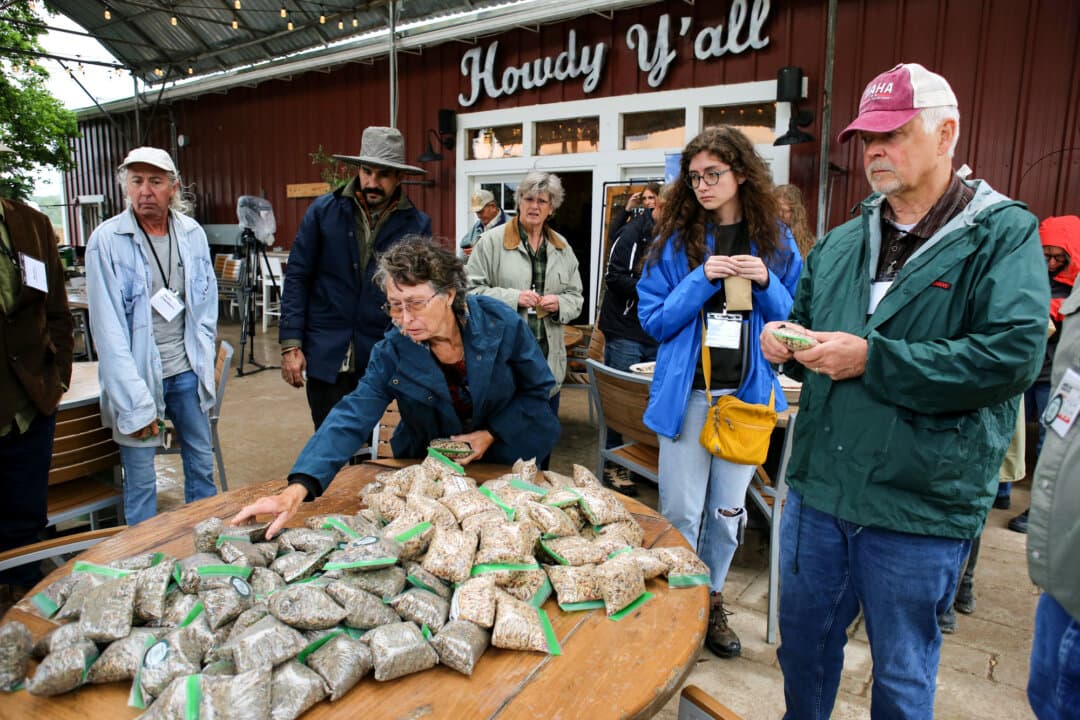
Participants at the American Regeneration Summit collect seeds at Sovereignty Ranch in Bandera, Texas, on May 1, 2026. The conference brought together leaders in regenerative farming to discuss technologies and methods aimed at reducing chemical use while maintaining profitability. (Bobby Sanchez for The Epoch Times)
Land, Body, and Spirit
Many regenerative farmers believe that nutritious, natural food can combat disease and promote good health.
Kennedy is one of those believers.
“Our health is directly related to our food, and the quality of our food is directly related to and [depends] on the quality of our soils,” Kennedy said during a presentation at the conference.
He described how he grew up seeing fields covered with flowers and butterflies and puddles teeming with frogs and tadpoles. Now, he worries that children may lose the chance to see such biodiversity and to form a connection with nature.
“It’s not only biologically impoverishing us, but it’s spiritually impoverishing us,” he said.
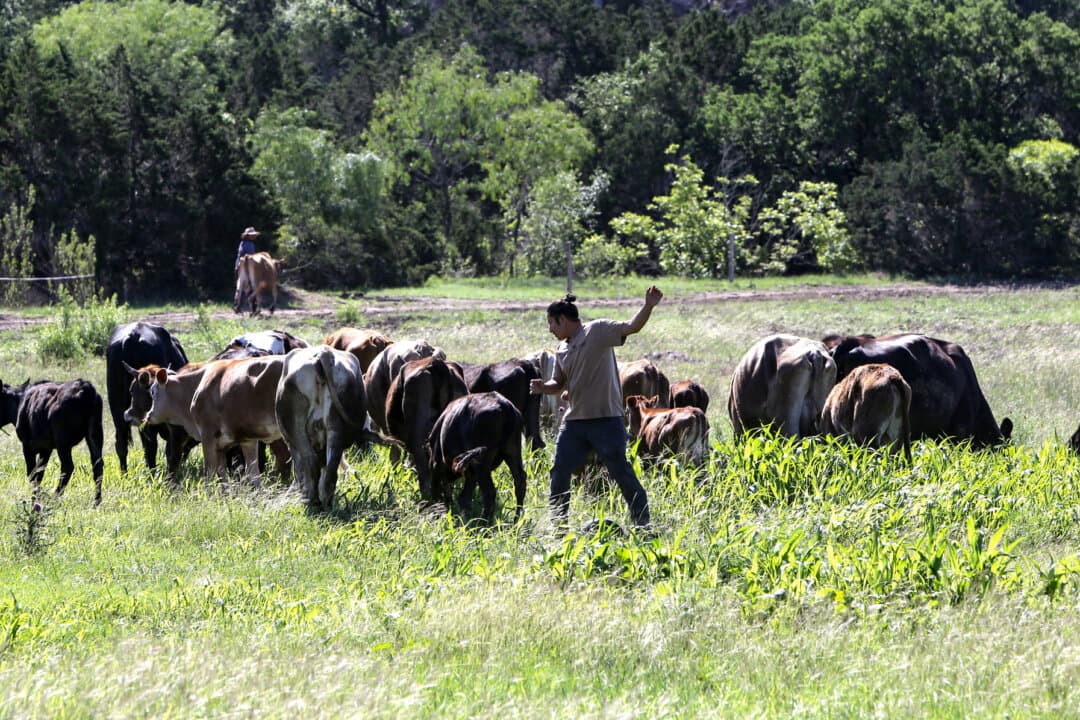
Cattle are driven to a pasture for grazing at Sovereignty Ranch in Bandera, Texas, on May 2, 2026. Bandera, dubbed the Cowboy Capital of the world, was a hub for driving millions of cattle and horses through the region during the late 1800s. (Bobby Sanchez for The Epoch Times)
Kennedy said family farms, long considered the backbone of America, are struggling and vanishing at an alarming rate.
“When we destroy nature—when we destroy our relationship with the abundance, the diversity of nature—we destroy our capacity to sense the divine,” he said.
Kennedy joined Agriculture Secretary Brooke Rollins in December to introduce a $700 million regenerative agriculture initiative, which he believes will improve Americans’ diets and health. While at the summit, he suggested expanding the initiative to $50 billion.
He noted that the program is one way the Trump administration is working to fulfill Make America Healthy Again objectives, such as eliminating chronic disease through healthier food.
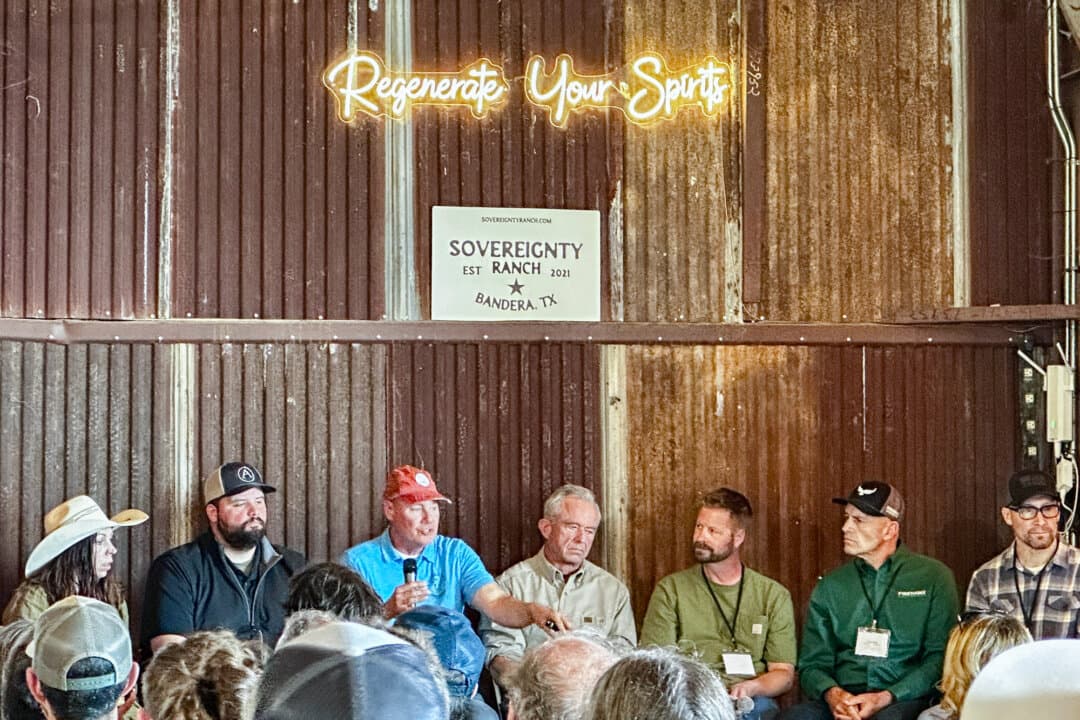
Health Secretary Robert F. Kennedy Jr. sits in at a regenerative agriculture summit at Sovereignty Ranch in Bandera, Texas, on May 2, 2026. At the summit, Kennedy suggested expanding a regenerative agriculture initiative from $700 million to $50 billion, after launching the program with Agriculture Secretary Brooke Rollins in December. (Darlene McCormick Sanchez/The Epoch Times)
‘No Such Thing as Diseases’
Dr. Ben Edwards, who served as a country doctor in rural West Texas, said he dutifully prescribed pharmaceuticals for seven years to treat ailments. Then a colleague turned Edwards’s view of medicine upside down.
“I met a doctor who told me there’s no such thing as diseases,” he told The Epoch Times. “They’re all consequences. They’re all new over the past 100 years. Of course, I couldn’t believe what he was saying.”
Health policies should support regenerative farmers to enrich the soil, he said. Food grown in healthy soil, he added, supports gut health by fostering beneficial bacteria and energy production in the body.
“So it’s all integrated together,” he said. “You can’t put these things in silos. We’re all connected.”
Ann Bennett, known online as The Orchard Wife, operates an organic pecan farm in Oklahoma.
Bennett told The Epoch Times that she switched her family’s diet to include raw milk and eliminate seed oils and ultra-processed foods, resulting in better health.
“Both of my boys—who had had asthma since they were babies—every time they got a cold, they would need albuterol or steroids,” she said. “Within a matter of months, they never needed those things again. It’s like their bodies were healed.”
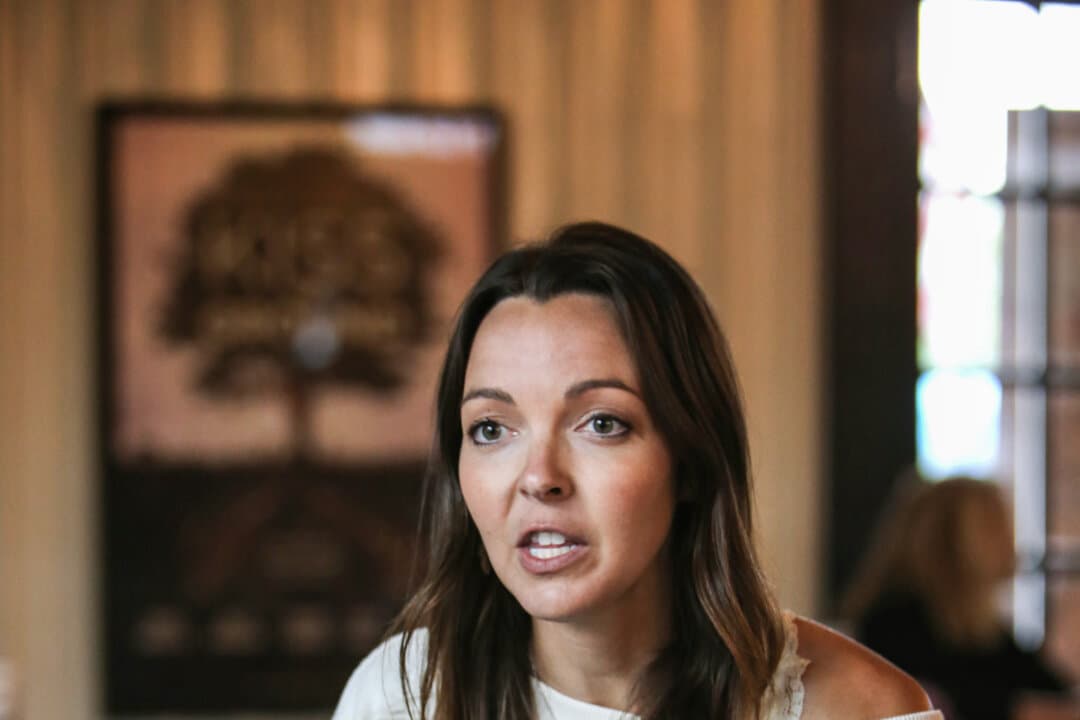
Ann Bennett, a holistic health expert, at Sovereignty Ranch in Bandera, Texas, on May 1, 2026. Bennett said her family’s health improved after switching to a diet with raw milk and without seed oils or ultra-processed foods. (Bobby Sanchez for The Epoch Times)
Green Thumbs Up
Although the Department of Agriculture does not specifically track regenerative farming trends, it does track certain practices, such as ground cover use and reduced tillage.
The number of no-till and reduced-till acres has steadily increased for crops such as wheat, corn, soybeans, and cotton over the past two decades, with the largest increase in wheat acreage.
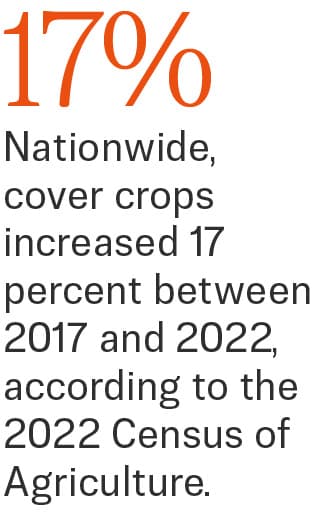
Likewise, cover crops increased by 17 percent between 2017 and 2022, to 17.9 million acres nationwide from 15.3 million acres, according to the 2022 Census of Agriculture.
The increase in cover crops in Texas, where the heat can be brutal and rainfall scarce, skyrocketed by more than 50 percent during that same period.
The survey notes that including cover crops in a rotation can improve water quality, soil health, and weed suppression, as well as reduce soil erosion.
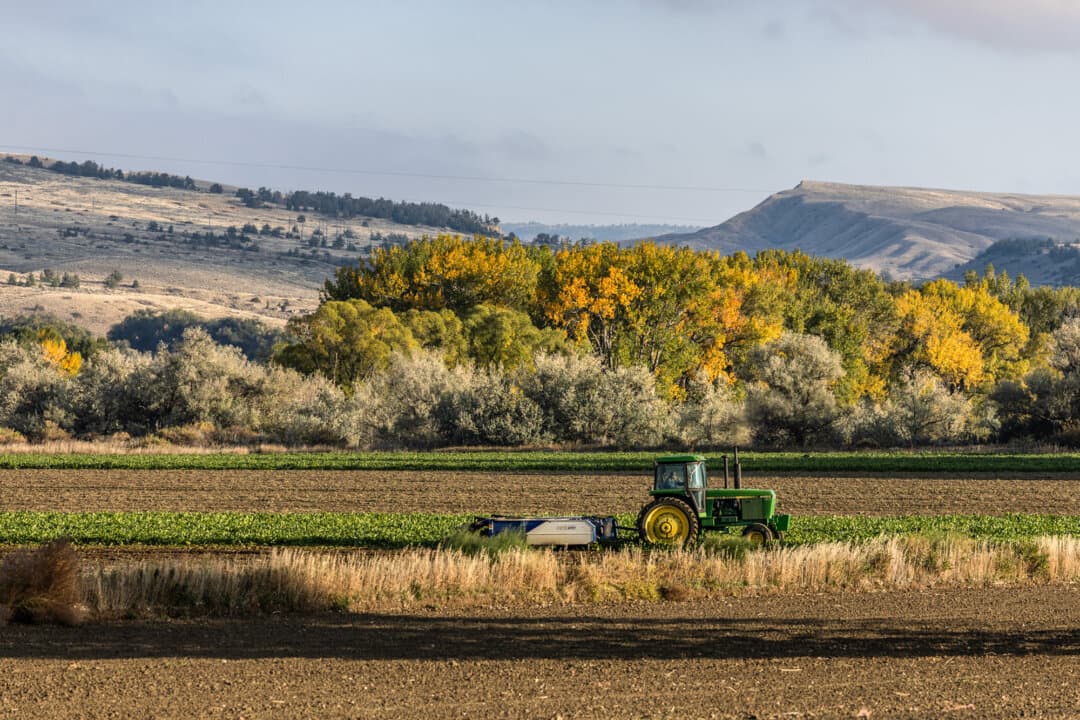
A farmer uses a tractor in southwestern Montana on Oct. 14, 2025. Bob Quinn, a biochemist and regenerative organic farmer in Big Sandy, Montana, said when he ventured into regenerative farming, people thought he had lost his mind. (John Fredricks/The Epoch Times)
‘Weird Ideas’
Bob Quinn, a biochemist and pioneering regenerative organic farmer in Big Sandy, Montana, talked about how organic farming was not widely accepted at first.
He was not sure that he believed in it, either.
Quinn said his farm is right on the main road to town, so his organic experiments were on display for all to see as he ventured into regenerative farming.
Tongues wagged at the local bar. Quinn had lost his mind, they said. They scratched their heads, wondering why any sane person would abandon modern agriculture to do it the old-fashioned way without chemicals, he recalled.
“They thought I'd been in California too long, and came back to Montana with all these weird ideas,” he told The Epoch Times.
Engelhart, who contributes to The Epoch Times, experienced her own brand of peer pressure during her regenerative farming journey.
She had lived a highfalutin life as a vegan chef, operating five restaurants in Los Angeles.
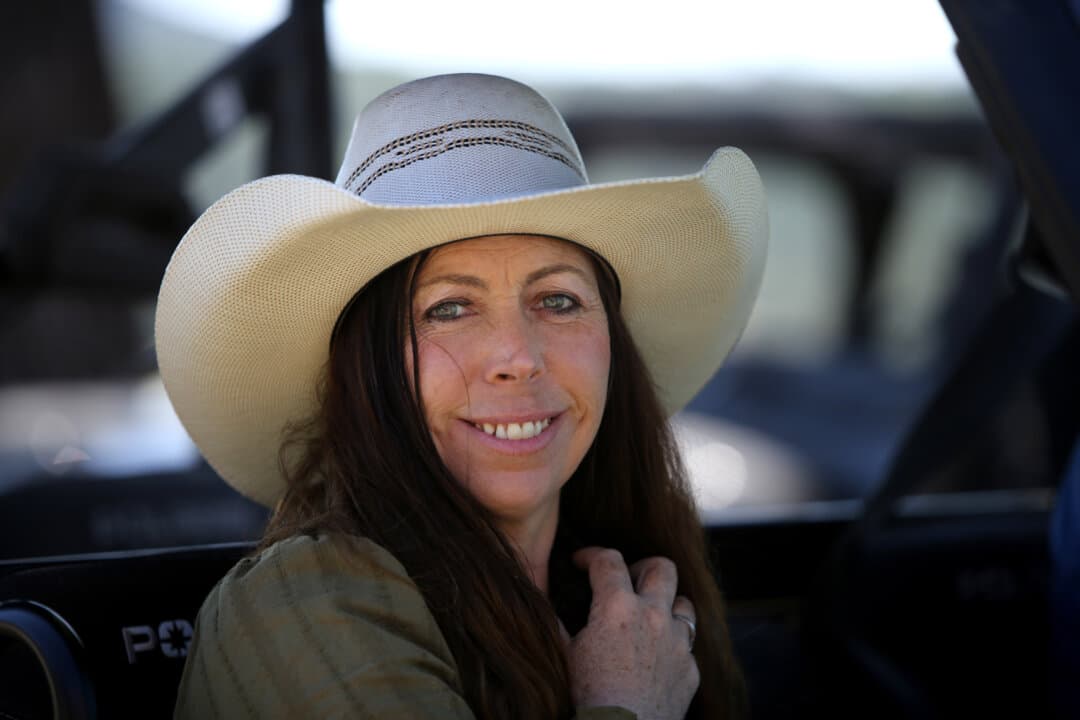
Mollie Engelhart during an interview at Sovereignty Ranch in Bandera, Texas, on May 1, 2026. The ranch hosted a two-day event to advance regenerative agriculture in America. (Bobby Sanchez for The Epoch Times)
But it seems that many vegans and animal activists did not take too kindly to her decision to offer regenerative meat, dairy, and eggs at her rebranded Sage Regenerative Kitchen & Brewery restaurants.
The backlash was reminiscent of a torch-and-pitchfork moment in an old Hollywood movie, she said.
Her social media announcement drew thousands of negative comments, calling the move “disgusting” and a “sellout” of her vegan principles.
Even People for the Ethical Treatment of Animals publicly denounced the switch to meat, in a Los Angeles Times story.
In June 2024, animal-rights activists mobbed and vandalized one of Engelhart’s Los Angeles restaurants. Protesters blew whistles, beat drums, and carried signs reading “Meat is Murder” as they harassed customers and staff.
She left that life behind and got out of the frying pan, but there was still some fire to deal with when she moved to Texas to start anew.
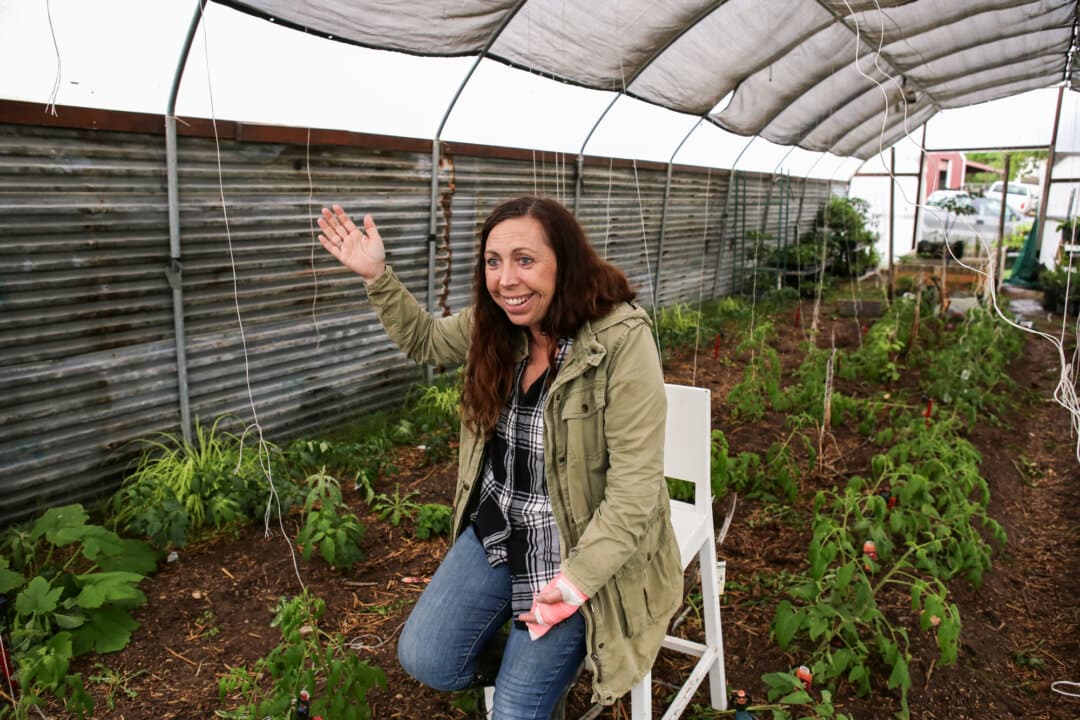
Mollie Engelhart during an interview at Sovereignty Ranch in Bandera, Texas, on May 1, 2026. Farmers and ranchers need to be able to make enough money to stay in business, Engelhart said, pointing out that 170,000 farms have been lost in the past eight years. (Bobby Sanchez for The Epoch Times)
The slogan “Don’t California My Texas” is about as popular as steak in the Lone Star State.
“I’m from California, and Texans feel really strongly about Californians,” she told The Epoch Times.
The neighbors are coming around, though—literally. Some come to pray over her or to eat at her restaurant, which features food from her ranch. Others are just looking.
“I think that I’m gaining the favor of the Texans, little by little,” she said.
The Taco Debate
Some visitors scoff at her $23 taco plates. She stands her ground, asking them to consider the cost of raising a cow for two years and the corn needed for tortillas to plate a healthy meal.
For Engelhart, her tacos are a perfect example of the actual cost of producing nutritious food versus what consumers think that it should cost.
Americans spend about 10 percent of their income on chemically produced food that may be less nutritious. In other parts of the world, high-quality food would cost about 30 percent of the family budget.
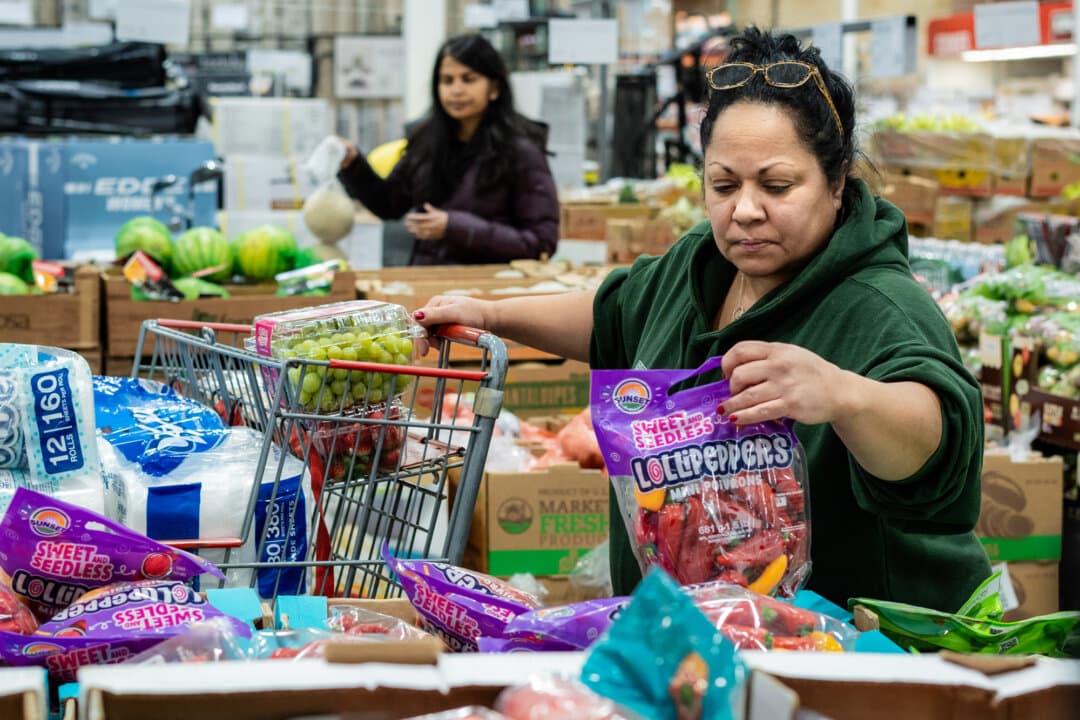
People shop for groceries at a store in Mount Laurel, N.J., on Feb. 5, 2025. Engelhart said cheap, overprocessed food in grocery stores is one reason many farmers are going out of business. (Samira Bouaou/The Epoch Times)
Although that might be a nonstarter for many, Engelhart pointed out that cheap, overprocessed food can negatively affect health, which is a hidden cost.
“Food prices in the grocery stores need to go up” to keep farmers in business, she said.
“The truth is, cheap food prices [are] the problem across the board,” she said. “It’s why farmers are going out of business. It’s why we’re sick.”
Farmers and ranchers need to be able to make enough money to stay in business, she said, pointing out that 170,000 farms have been lost in the past eight years.
Watch The Epoch Times’ documentary “Heal the Dirt: How Farmers Are Detoxing America“ now!
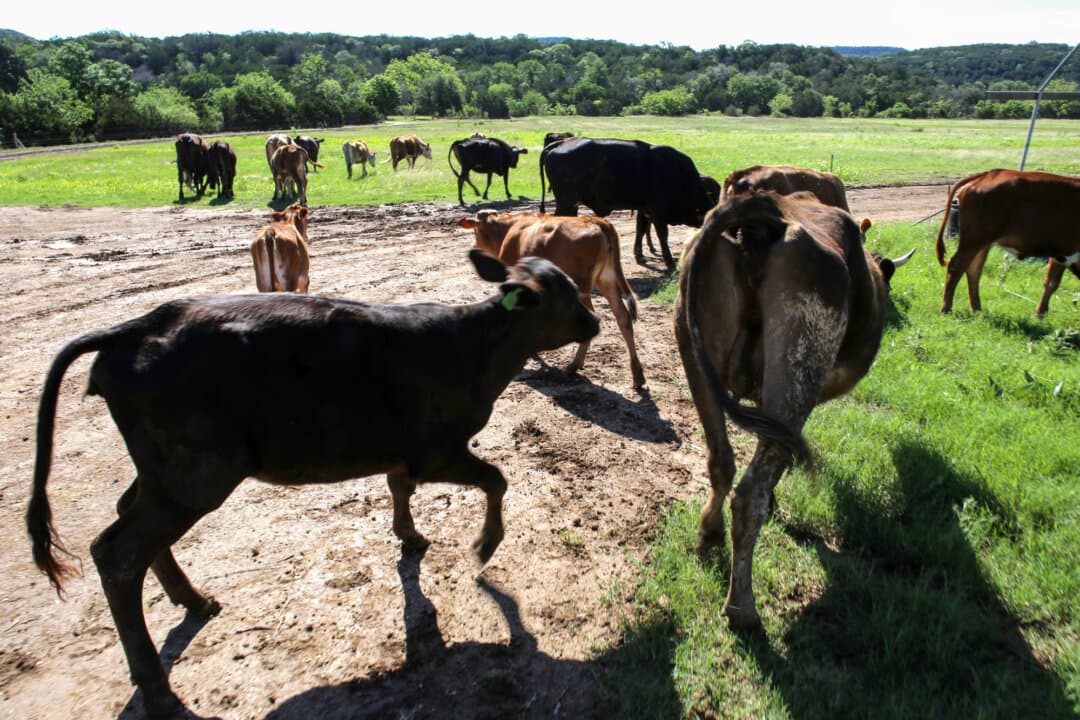
Cattle are driven to a pasture for grazing at Sovereignty Ranch in Bandera, Texas, on May 2, 2026. (Bobby Sanchez for The Epoch Times)