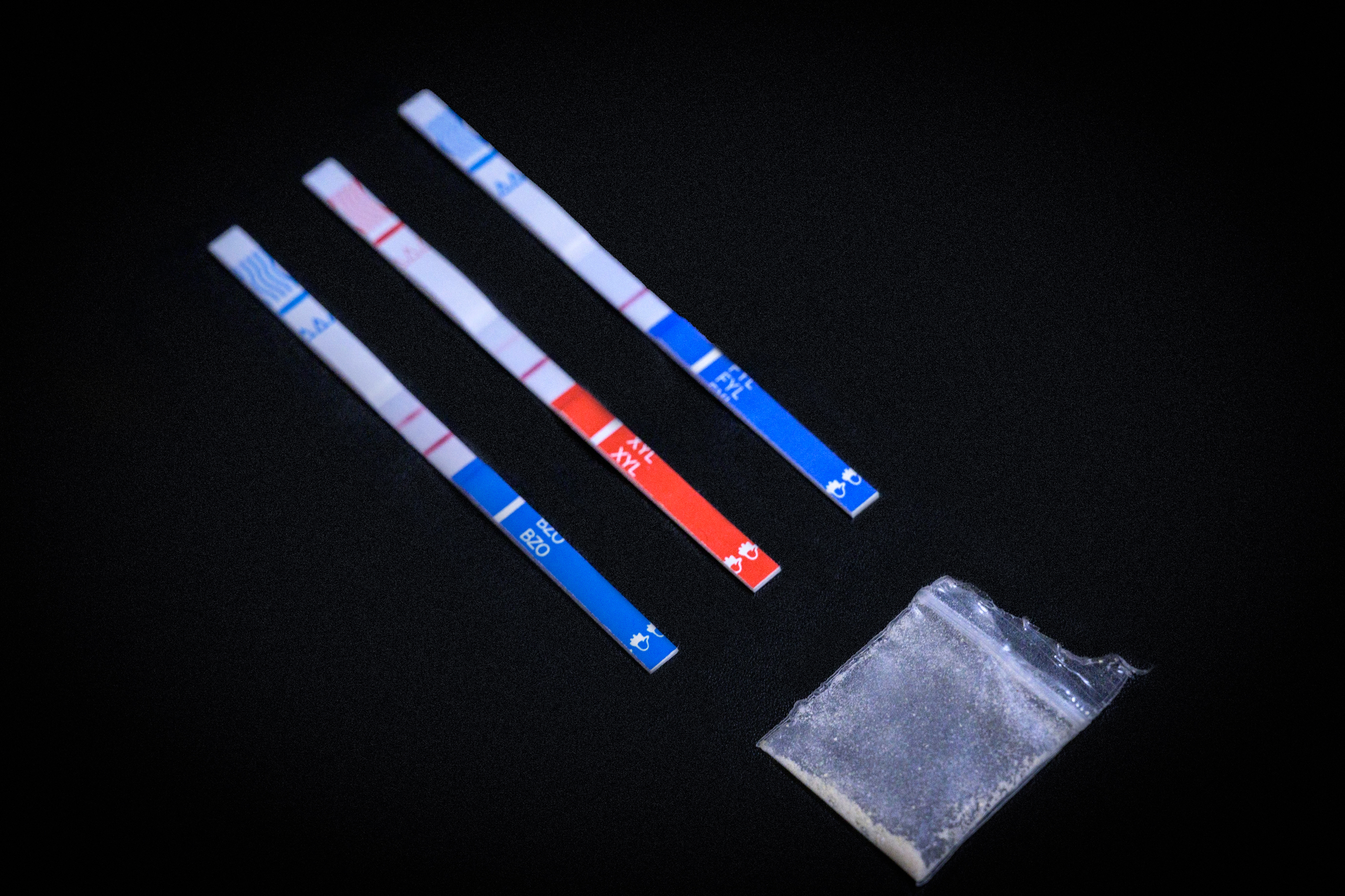
Medetomidine, a powerful animal sedative used by veterinarians, is fast becoming the adulterant of choice for drug cartels pushing fentanyl on U.S. streets.
Also known as “rhino tranq,” medetomidine is showing up more frequently than its cousin xylazine, a pain reliever, in the illicit drug supply in places such as New York City, Philadelphia, and Chicago, according to public health alerts.
Neither medetomidine nor xylazine is an opioid, but both are frequently added to fentanyl to extend its effect, according to public health officials.
Medetomidine—which relieves pain, decreases heart rate, and can cause hallucinations—is not approved for human use. It is produced mainly in China.
It is so potent that it can keep people unconscious for hours. Medetomidine does not respond to naloxone, which is used to reverse the potentially deadly respiratory depression caused by opioids or their synthetic substitutes, such as fentanyl.
Not only is medetomidine up to 200 times more powerful than xylazine, but it also causes life-threatening withdrawal symptoms once it wears off, such as rapid heartbeat and dangerous blood pressure levels, according to the Philadelphia Department of Public Health.
“Medetomidine impacts the central nervous system and can lead to extreme vomiting and high blood pressure, potentially requiring ICU care,” New York State Health Commissioner Dr. James McDonald said in a health alert issued for medetomidine in December 2025.
Rise of Medetomidine
For the families of fentanyl victims, medetomidine represents the latest deadly twist.
“It’s like, now there’s another synthetic, and I’ve got to learn how to pronounce it. It’s absolute insanity. And they all start in China,” April Babcock, whose son died from fentanyl overdose seven years ago, told The Epoch Times.
Likewise, the rise of medetomidine is a troubling trend for law enforcement.
Frank Tarentino, associate chief of operations for the Drug Enforcement Administration (DEA) Northeast Region, said medetomidine is cheaper and more potent than xylazine, so distributors use it to maximize profits.
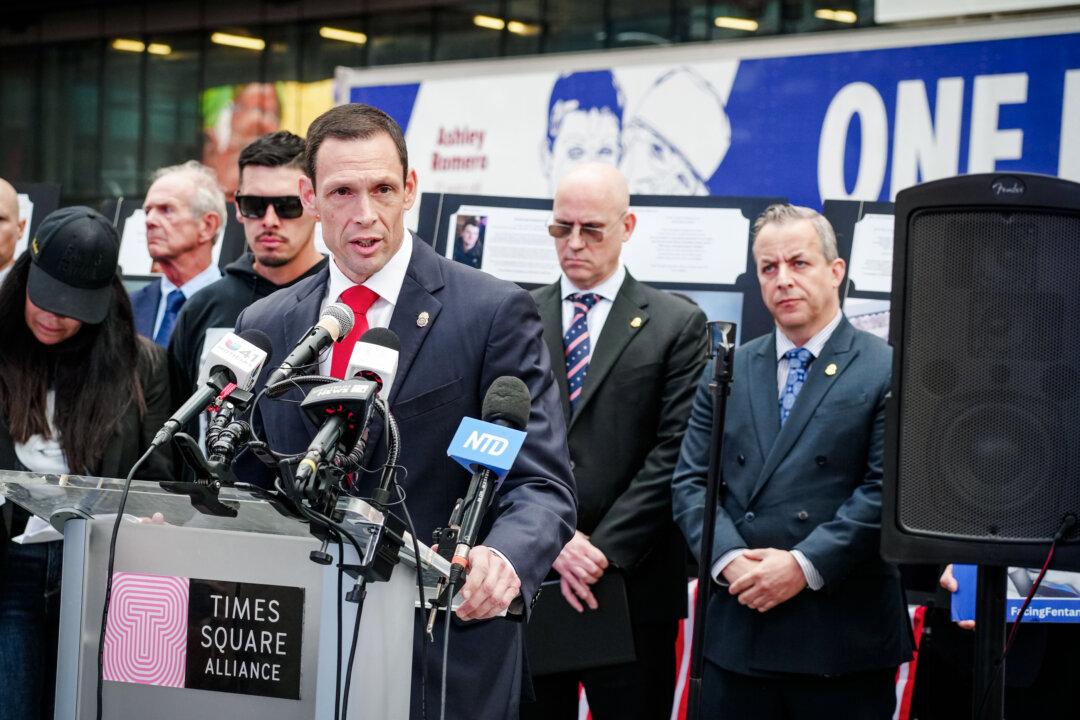
Frank A. Tarentino III, special agent in charge of the Drug Enforcement Administration’s New York Division, speaks at the fourth annual National Fentanyl Prevention and Awareness Day in New York City, on Aug. 21, 2025. (Samira Bouaou/The Epoch Times)
“What we have seen here in New York, which is pretty consistent with what we’re seeing throughout the country ... is an increase in the use of other types of synthetics, like medetomidine,” he told The Epoch Times.
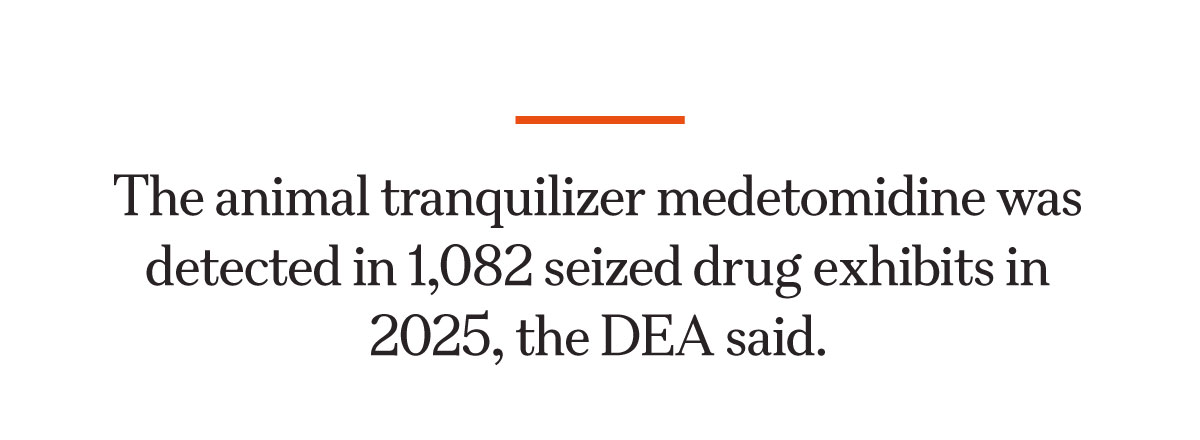
The DEA’s nine labs across the country have seen a sharp increase in medetomidine. The animal tranquilizer was detected in 72 seized drug exhibits in 2024—a figure that increased to 1,082 in 2025, Tarentino said, adding that most of the medetomidine was found mixed with fentanyl.
New to the Street
Medetomidine first began appearing in illicit street drugs in Maryland in 2022 before spreading to Pennsylvania, Illinois, California, and beyond. In late 2024 and into 2025, health alerts regarding the drug were issued in states including West Virginia, Minnesota, and New York.
The drug emerged as a significant threat in 2024.
In May 2024, Chicago emergency medical services were dispatched 50 times in a single day—about twice the daily rate—for a suspected cluster of opioid overdoses, according to the Centers for Disease Control and Prevention. Hospitals reported that users did not fully respond to naloxone and had slow heart rates.
The CDC investigation of the May 11–May 17, 2024, Chicago overdose cluster found 12 confirmed, 26 probable, and 140 suspected overdose cases involving medetomidine, with one death reported.
In Pennsylvania, between May and November in 2024, the percentage of illicit drugs containing medetomidine increased from 29 percent to 87 percent, while xylazine showed a similar decrease, according to the Philadelphia Department of Public Health.
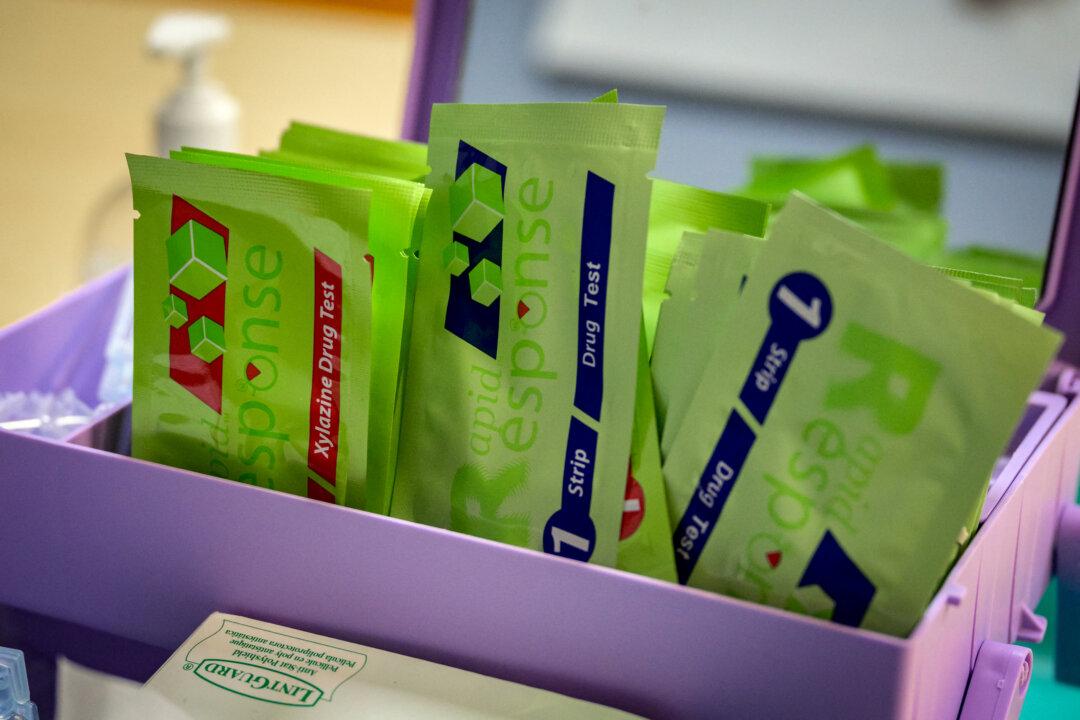
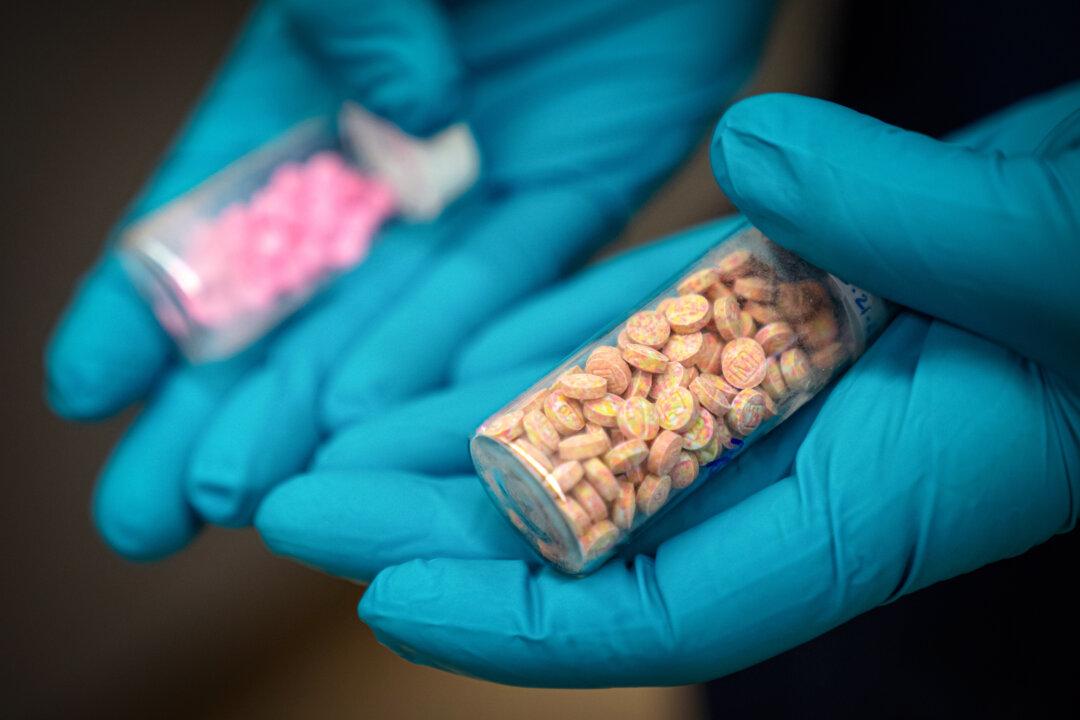
(Left) Drug tests, used to detect the presence of fentanyl and xylazine in different kinds of drugs, such as cocaine, methamphetamine, and heroin, are seen at St. Ann's Corner of Harm Reduction in New York City on May 25, 2023. The tranquillizer, approved for veterinary use by the Food and Drug Administration, has infiltrated the illegal drugs market, with producers increasingly using it to augment fentanyl. (Right) Jonathan Dumke, a senior forensic chemist with the Drug Enforcement Administration, holds vials of fentanyl pills at a DEA research laboratory in northern Virginia on April 29, 2025. (Angela Weiss/AFP via Getty Images, Mark Schiefelbein/AP Photo, file)
Toxicology testing by the Philadelphia Medical Examiner’s Office over a seven-month period in 2024 detected medetomidine in the systems of 46 people who died of overdose. Tests also detected fentanyl in their systems.
About two months ago, West Virginia—the epicenter of the fentanyl crisis—dealt with a similar cluster of overdose calls, according to Dr. Stephen Loyd, director of West Virginia’s Office of Drug Control Policy.
He told The Epoch Times that Charleston was hit hard with 45 overdoses involving medetomidine.
“The killer out there is [still] fentanyl. This time we didn’t lose anybody,” Loyd said. But medetomidine “makes things more complicated.”
Todd Davies, associate director of research and development at Marshall University in West Virginia, said medetomidine is stronger than xylazine and produces heavy sedation, but it doesn’t depress the body’s respiratory system like fentanyl does.
In West Virginia, health officials have seen cases in which people who are unconscious from medetomidine mixed with fentanyl have gotten up and moved around in an agitated state after naloxone was administered, he said.
A cocktail of medetomidine and fentanyl could potentially be more deadly than xylazine without medical intervention, depending on the potency of the fentanyl, Davies said.
However, the combination is so new that there’s not enough data to say. The low blood pressure and heart rate associated with medetomidine can rise once the drug wears off, potentially causing extreme withdrawal symptoms.

A group of men are passed out after using drugs in Los Angeles on April 10, 2024. Animal tranquilizer medetomidine is being frequently added to fentanyl to extend its effect, according to public health officials. (John Fredricks/The Epoch Times)
Synthetic Nightmare
After her son’s death, Babcock founded the nonprofit Lost Voices of Fentanyl, which has a Facebook following of almost 47,000.
So far, medetomidine is still relatively unknown to parents, she said, but it doesn’t surprise her that a new drug is replacing the more familiar xylazine.
It’s the opioids and their synthetic versions, such as fentanyl, that keep users hooked and coming back for more, she said.
From 2019 through 2024, nearly 570,000 Americans died from drug overdoses, mostly from synthetic opioids, according to the CDC.
President Donald Trump has made tackling the fentanyl crisis a signature issue of his administration, moving to impose fentanyl-related tariffs on China, Mexico, and Canada while declaring Mexican cartels terrorist organizations.
“There’s no doubt that America’s adversaries are trafficking fentanyl into the United States, in part because they want to kill Americans,” Trump said in December 2025 when he declared fentanyl a weapon of mass destruction.
Babcock said it’s hard to understand why yet another street drug—potentially making fentanyl even more deadly—has been allowed to gain a foothold in the country.
“They all start as pharmaceuticals in China,” she said. “So I knew the crackdown on the fentanyl and the precursors for fentanyl, but what about all these other crazy synthetics?”
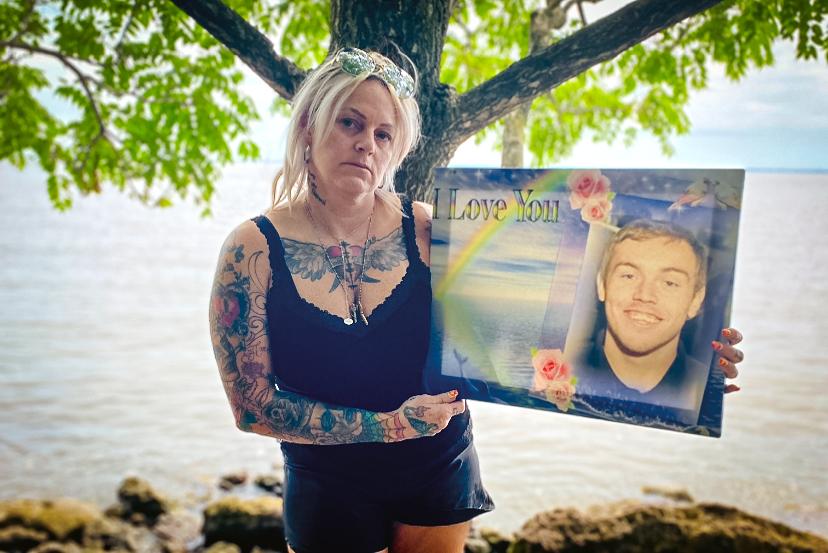
April Babcock holds a picture of her son Austen, who died in January 2019 after unknowingly taking some fentanyl-laced cocaine. (Courtesy of April Babcock)
China Supply Line
Medetomidine is “100 percent supplied by and enabled by the cartels” as a way to increase profit, Tarentino said.
The tranquilizer’s low cost and higher potency allow distributors to use less than with xylazine, he said.
The drug is being produced in China and India, Tarentino said.
“The synthetics that are killing Americans are coming from these two countries, predominantly, as well as the precursor chemicals,” he said.
What’s alarming is the No. 1 exporter of medetomidine is China, and the No. 1 importer is the United States, he said.
In early 2016, fentanyl became a major threat to the United States. High-level meetings involving Beijing and Washington prompted China to make fentanyl illegal to produce and distribute inside the country in 2019, Tarentino said.
But soon after, the precursor fentanyl chemicals began showing up in Mexico, where they were then synthesized into fentanyl and trafficked into the United States, he said.
Likewise, other synthetic drugs such as nitazenes, synthetic opioids, and drugs such as medetomidine started being produced illicitly and smuggled out of China into the United States.
“I mean, there’s no doubt that this is being weaponized in a way to, number one, make money,” Tarentino said.
The rise of medetomidine highlights the complexity of drug enforcement in an ever-changing landscape, he said.
On Dec. 19, 2025, New York state issued its own medetomidine health alert. The New York State Department of Health, which monitors illicit drugs, found medetomidine in 37 percent of the samples of opioids tested in 2025, up from just 4 percent in May 2024.

An officer from the Customs and Border Protection Trade and Cargo Division works with a dog to check parcels at John F. Kennedy International Airport's U.S. Postal Service facility in New York City on June 24, 2019. (Johannes Eisele/AFP via Getty Images)
In July 2025, almost 15 percent of seized drugs analyzed in the northeast DEA lab contained medetomidine. Within the past 90 days, tests have shown medetomidine present in 32 percent of the drugs tested, Tarentino said.
Medetomidine is mainly found in powder form when mixed with other drugs, primarily fentanyl, he said.
While the New York alert said that only a few cases of hospitalization for withdrawal had been reported so far, Tarentino said it’s too early to get the full picture of the drug’s contribution to overdose deaths in the state.
Opioid Deaths Down
Although drugs such as medetomidine are showing up in overdose deaths, overall, those attributed to synthetic opioids are down across the country, Tarentino noted.
Drug overdose deaths, mainly attributed to fentanyl, decreased by about 25 percent across the country from February 2024 to January 2025, according to provisional data from the CDC.
Pressure on fentanyl production and distribution could be part of the reason why, he said.
A new study examining the drop in opioid overdose deaths suggests that the decrease is the result of a disruption in the supply chain of fentanyl precursor chemicals from China. Over the past six months, the potency of illicit drugs has dropped, including pills laced with fentanyl and sold as Xanax and Adderall on the street.
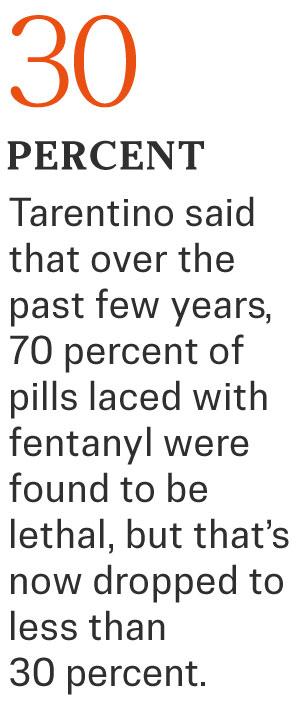
Tarentino said 70 percent of pills laced with fentanyl were found to be lethal over the past few years, but now that has dropped to less than 30 percent.
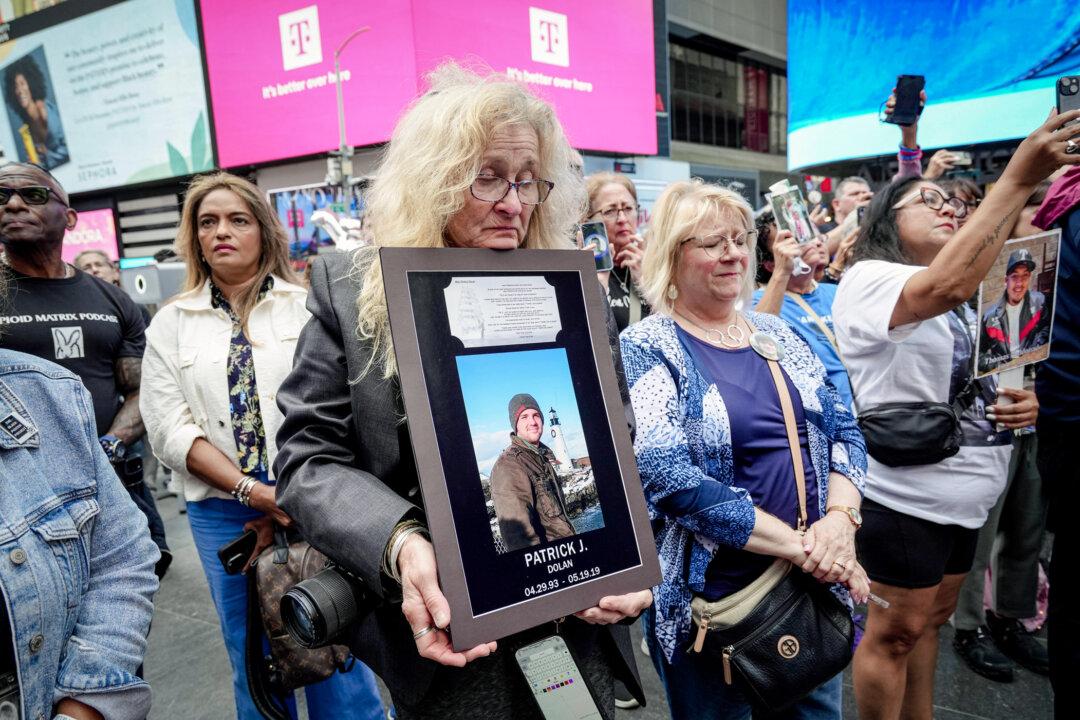
Families who lost loved ones to fentanyl attend the fourth annual National Fentanyl Prevention and Awareness Day in New York City, on Aug. 21, 2025. (Samira Bouaou/The Epoch Times)
He said the DEA’s Operation Fentanyl Free America is a program aimed at disrupting the fentanyl supply chain, reducing its availability.
“This is an effort to attack the entire illicit supply chain and to hold those people accountable. Our priority is the community and the citizens of the United States,” Tarentino said.