
California has emerged as America’s new epicenter of fraud-related prosecutions, publicity, and outcry—with multibillion-dollar fraud estimates dwarfing the massive fraud problems that have plagued Minnesota. That midwestern state’s systemic problems with fraudsters rose to prominence late last year, touching off scrutiny of federally funded aid programs across the nation.
Although fraud investigations have ramped up nationwide at President Donald Trump’s direction, the main spotlight shifted to California recently after Dr. Mehmet Oz—who heads the Centers for Medicaid and Medicare Services—began raising alarms over the extent of fraud there.
“If you thought the fraud was out of control in Minnesota, wait until you learn about what’s happening in California,” Oz wrote in a social media post earlier this year.
That post accompanied a video in which he estimated $3.5 billion in fraudulent claims for home health care and hospice care in Los Angeles County.
Besides excluding figures for the state’s 57 other counties, that number also does not count other types of government-program fraud, such as those found in Minnesota. Documented scandals in the North Star State have involved child care, autism services, housing assistance, and meal programs. If those additional programs are included in the fraud total, “in California scale, it’s huge!” Oz exclaimed in the video.
With 39 million residents, California is America’s most-populous state. By contrast, Minnesota ranks 22nd in population, with about 6 million residents.
Minnesota’s fraud, dating to 2018, could total $9 billion, a federal prosecutor said late last year.
Fraud totals in California could amount to “hundreds of billions of dollars,” Bill Essayli, the top federal prosecutor in central California, told Fox News on April 3.
The day before, Essayli called California “the kingdom of fraud” while announcing arrests of alleged hospice fraudsters in California. That action came less than three weeks after Trump signed an order appointing Vice President JD Vance to head a federal anti-fraud task force.
Minnesota Gov. Tim Walz and California Gov. Gavin Newsom have pushed back against the federal fraud crackdowns aimed at each of their states. Both Democrats have accused the Republican president’s administration of mischaracterizing their states’ fraud problems.
In both Minnesota and California, allegations of systematic defrauding of government-benefit programs date back a decade or more, and federal officials allege that agency procedures and official responses were lax.
Here is a summary of what we know about the fraud situation in California and how it evolved.
What’s Happening Now
So far, the primary focus on fraud in California centers on two areas: home health care and hospice, services intended to help people who are near the end of their lives.
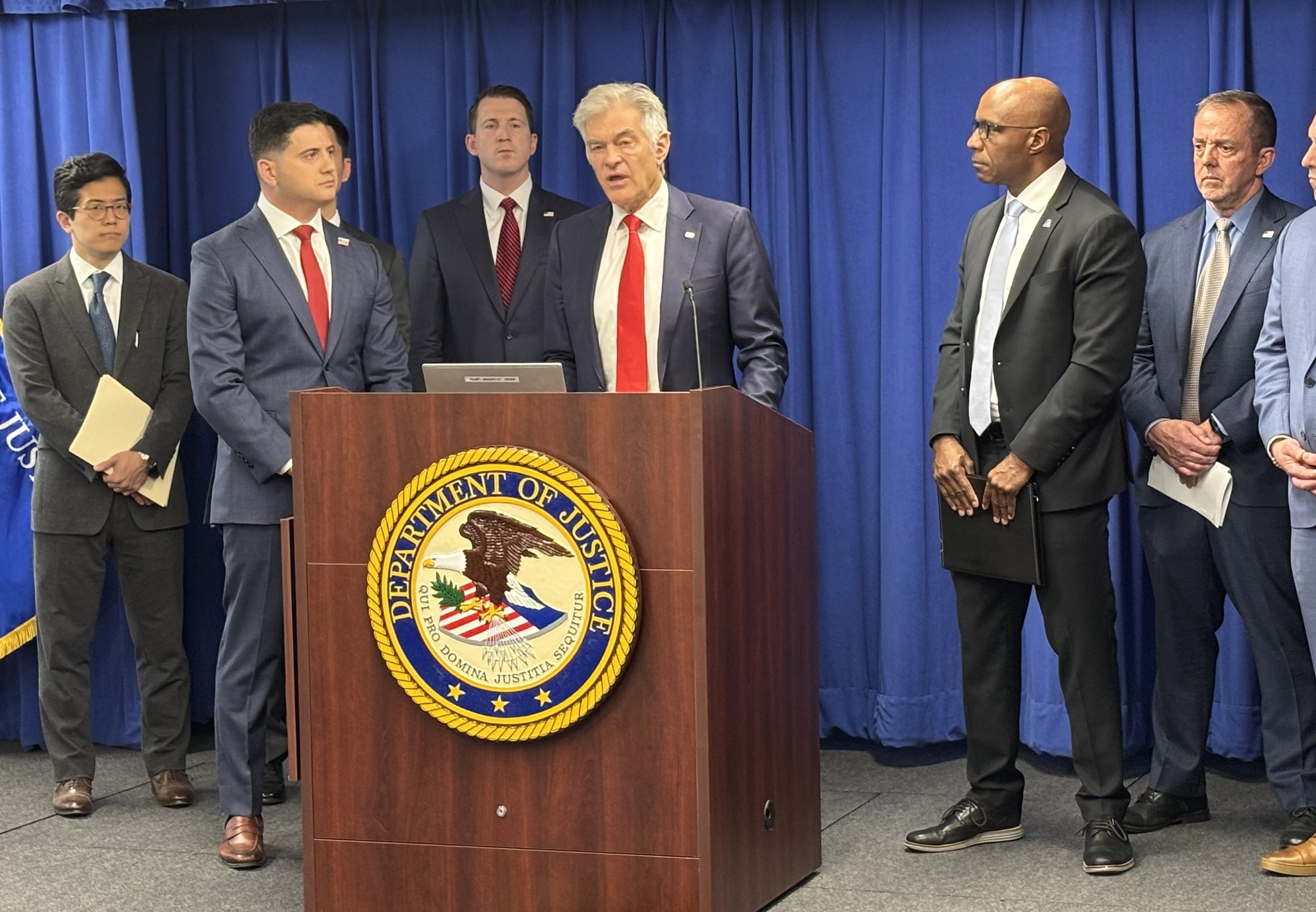
Last week, officials announced charges filed against 15 people. The suspects, charged in several separate cases, are accused of bilking health and hospice programs out of a combined $50 million. Eight defendants were arrested on April 2, the Justice Department said in a statement. The remaining suspects were either already in custody or were being summoned to court.
One of the alleged “sham” hospice providers that were targeted in Operation Never Say Die had 85 percent of its patients survive and walk out of the facility. That was “nearly five times the national average” of 17.1 percent “nondeath discharges” in 2021, the release said. Other defendants’ hospice agencies also had high patient-survival rates, officials said.
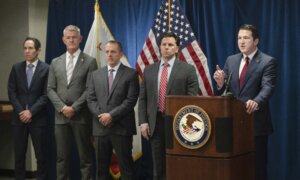
During a Los Angeles press conference, Essayli said the hospice-services defendants “recruited beneficiaries who were not terminally ill and paid them to pose as patients receiving hospice care.” Some are also accused of paying illegal kickbacks for referrals.
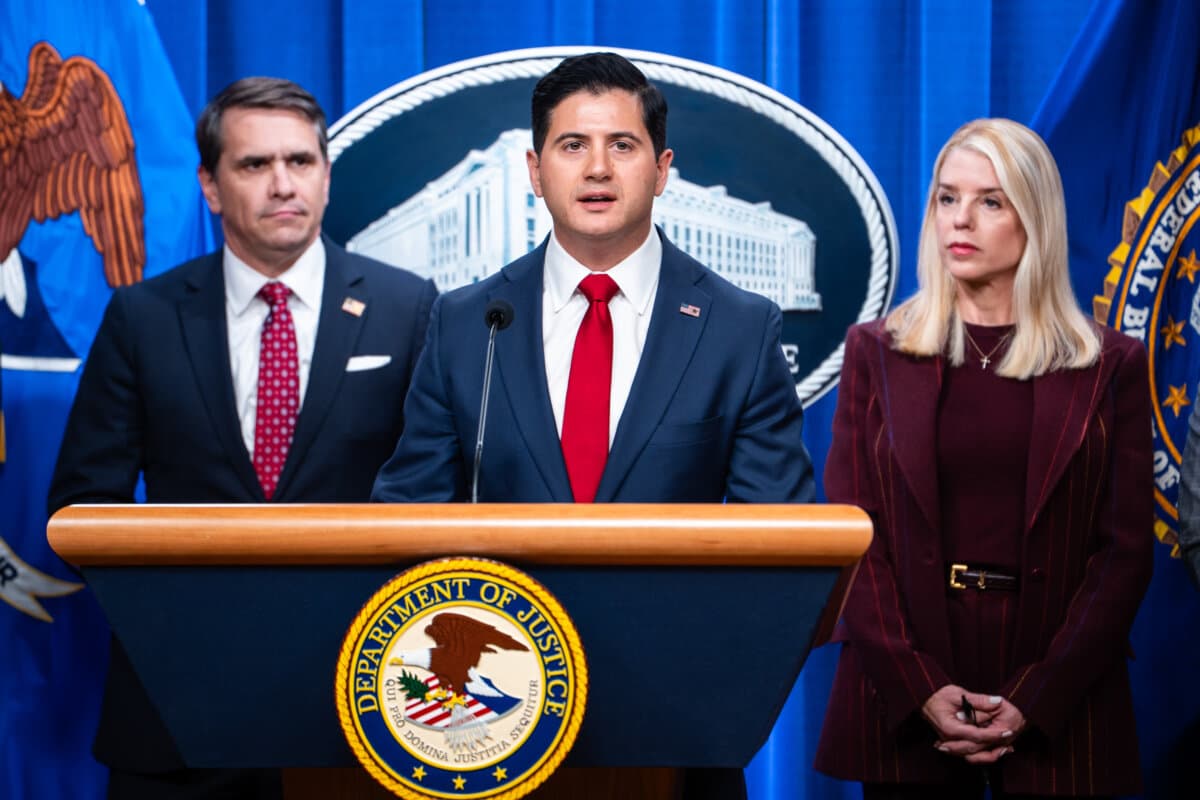
Central District of California First Assistant U.S. Attorney Bill Essayli at a press conference at the Department of Justice in Washington on Nov. 19, 2025. (Madalina Kilroy/The Epoch Times)
Akil Davis, assistant director of the FBI’s Los Angeles field office, pointed out the larger picture: The United States “loses hundreds of billions of dollars annually to health care fraud at the expense of all American taxpayers,” he said in the statement. People see their health care benefits decreasing while their “premiums, copayments and taxes grow.”
“Our aim is to reverse that trend with Operation Never Say Die and others like it,” Davis said.
Multiple investigations involved several federal agencies. Eight of the defendants were charged with hospice-related fraud, while seven others were charged with defrauding a private union health plan.
Anthony D'Esposito, inspector general for the Labor Department, called the arrests “another decisive strike in our war on fraud.” Trump announced that “war” during his State of the Union address in February.
In the Justice Department statement, D'Esposito said his office is “relentlessly pursuing those who target union benefit plans and exploit employee health care programs for personal gain.”
Four defendants, including a licensed chiropractor, were charged with conspiracy to commit health care fraud and wire fraud in connection with a $19 million scheme to defraud a labor union’s health plan. They are accused of making “false claims for chiropractic services and physical therapy that weren’t needed or never provided,” the Justice Department stated.
Rep. Kevin Kiley (I-Calif.) has said that additional types of fraud have also been uncovered in his state.
Earlier this year, the congressman gave these totals in a social media post: $32 billion in unemployment fraud, $24 billion in lost homelessness funds, and 1.2 million fake college applications.
He has sought action, including supporting the No Aid for Ghost Students Act, to address the financial aid fraud. He also noted that additional indictments were expected in the homelessness fraud cases.
Why Hospice-Care Suspicions Flared
In 2010, there were 109 hospice agencies in Los Angeles County serving about 1 million elderly individuals.
Then the number of agencies skyrocketed—although the number of patients served did not.
By 2021, there were 1,841 hospice agencies serving 1.4 million elderly people.
In 2022, the California state auditor’s report “found that the State’s weak controls have created the opportunity for large-scale fraud and abuse” among hospice agencies. Nonprofit organizations previously ran most hospice centers in the past. But droves of for-profit companies sprang up in recent years, the report states.
“Numerous indicators” showed that many of the newer agencies may have been billing Medicaid and the state Medi-Cal programs “for services rendered to ineligible patients or services not provided at all,” the report states.
“This type of fraud can be lucrative,” the audit reads, considering that a 20-patient hospice operation generally could collect about $122,000 per month.
“The state agencies responsible for overseeing hospice care in California have failed to take adequate measures to prevent such fraud or to protect patients from unqualified and unscrupulous providers.”
Signs of “large-scale, targeted” fraud included concentrated clusters of hospice centers.
A single building in Van Nuys contained “more than 150 licensed hospice and home health agencies—a number that exceeds the structure’s apparent physical capacity,” the report states.
The overall number of hospice agencies was suspicious, too.
“In 2019, Los Angeles County had more than six times the national average number of hospice agencies relative to its aged population,” the report reads.
And, for more than two decades, the state’s public health agency failed to set up hospice-licensing regulations, the report states, noting that the process failed to ensure the qualifications of hospice-center employees. When fraud concerns arose during licensing attempts, the state agency nevertheless issued the licenses. Thus, the state was enabling suspected fraudsters “to continue functioning, placing patients at serious risk of not receiving appropriate care,” auditors wrote.
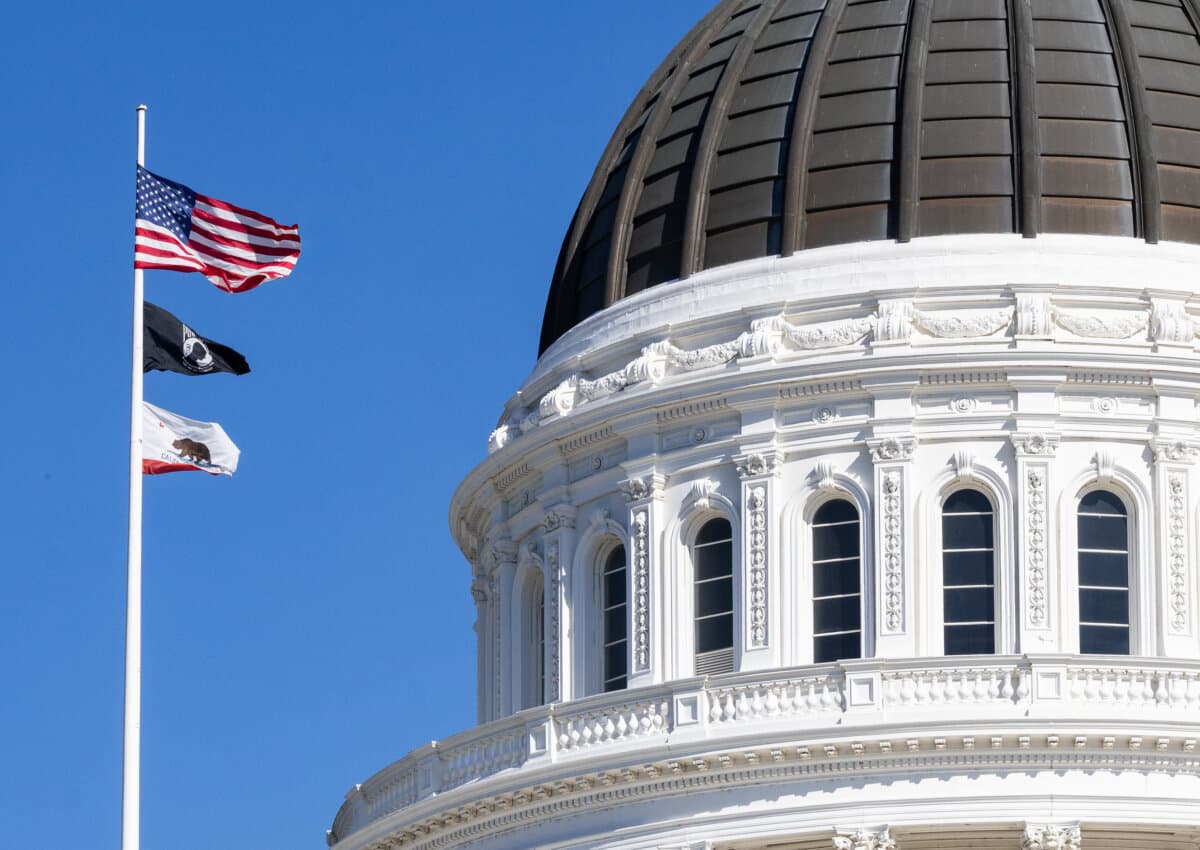
The California State Capitol in Sacramento on Nov. 2, 2025. (John Fredricks/The Epoch Times)
As State Officials Defend Actions, Prosecutor Vows More Enforcement
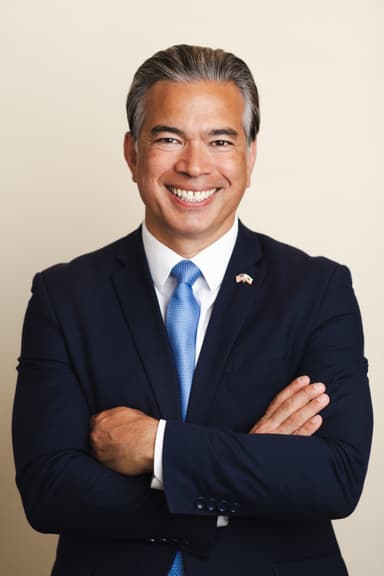
California Attorney General Rob Bonta. (Douglas Despres/Attorney General's Office)
As additional scrutiny of California was ramping up earlier this year, the state’s attorney general spoke out.
“Claims that California is overrun with fraud and doing nothing about it are simply false. This case proves it,” Attorney General Rob Bonta said in a statement. “We want Californians to know that we are on it. We have been on it for decades.”
He said that his office has “built real expertise in identifying abuse, holding bad actors accountable, and recovering taxpayer dollars.”
“To suggest otherwise is just wrong,” Bonta wrote, as he announced seven people arrested for state hospice-fraud charges.
Bonta’s office worked with a federal agency on a multiyear investigation that involved three companies that allegedly bilked Medi-Cal and Medicare out of $3.2 million.
The defendants recruited, enrolled, and certified hospice services for people without any diagnosed terminal illness, according to the statement, noting that the defendants shuffled these “patients” among the three companies “to avoid suspicion.”
“To those committing fraud: we’re watching, we’re investigating, and we’ll act,” said Bonta, who has been in office since 2021.
Similarly, the governor defended the state’s track record. Newsom, who was sworn in as governor in 2019, said: “California has been cracking down on hospice fraud for years with a statewide task force, a standing moratorium on new providers, and aggressive enforcement that’s already revoked 280+ licenses and put hundreds more under investigation.”
In the wake of the 2022 state auditor’s report raising concerns about fraud and abuse, Newsom signed a law that banned new hospice licenses, “halting growth in a sector vulnerable to abuse while strengthening oversight.” He also signed an extension of that moratorium, according to his March 24 statement.
However, the federal prosecutor said California officials haven’t taken fraud seriously enough, in his opinion. State authorities “let people out of prisons” and “decriminalized” offenses, Essayli told Fox News on April 3.
He also faults state officials for failing to enact new hospice regulations by Jan. 1, as a state law required.
“California does not have sufficient regulations to crack down on fraud,” Essayli said.
“We’re going to do our job. You’re going to see a lot more fraud [prosecutions].”
He also promised to work “hand-in-hand” with the Vance-led anti-fraud task force.