
In the 1962 cartoon “The Jetsons,” people of the future drove flying cars. In 1982, the NBC-TV show “Knight Rider” featured a talking car named KITT that could scan, self-drive, “turbo boost” through the air, and fire weapons.
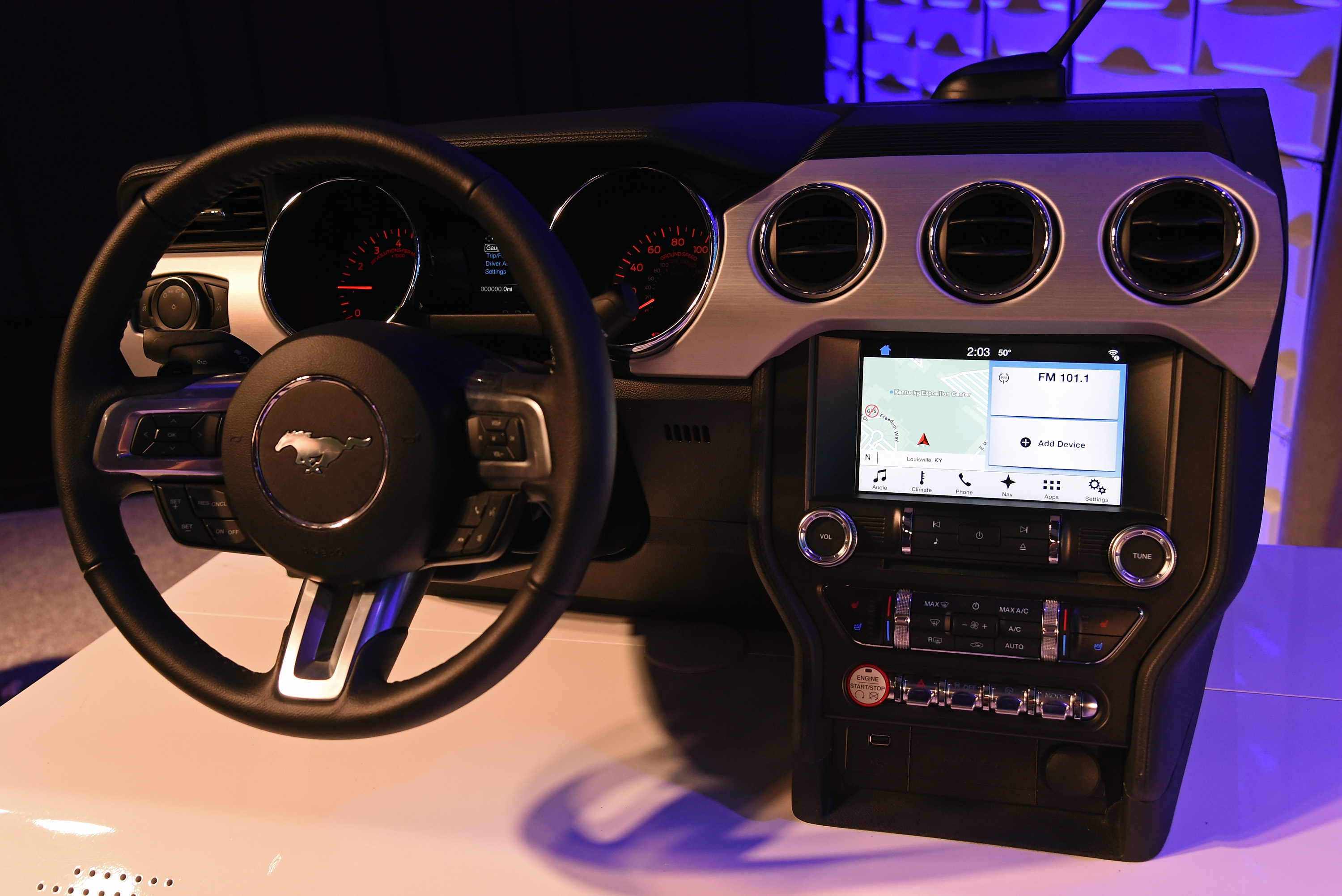
Decades later, these science fiction scenes are becoming reality, with now highly complicated vehicles often called “computers on wheels.” But as that complexity grows, so do the trade-offs, as highlighted by frequent software-related recalls, rising vehicle prices and insurance costs, and higher maintenance fees, experts said.
Software-Defined Vehicles
Cars were much simpler during the eras of “The Jetsons” and “Knight Rider.” In his 2023 white paper “Trends Towards Software-defined Vehicles,” Ismet Aktas noted that most cars harbored a simple engine control unit, the “brain” of the engine, which manages performance, ignition timing, fuel injection, and emissions.
Cars manufactured during the 1980s and 1990s, Aktas said, had a basic engine and fuel control, lights, and simple climate control with air conditioning and heating.
Since the 1990s, the number of mini-computer systems in typical cars has grown from about five to more than 30 in the 2000s and 2010s. Today, most base models have between 30 and 70 systems, with more than 100 in luxury vehicles.
According to Aktas, cars have mutated from a mechanically simple vehicle with minimal electronics to a networked supercomputer that can manage everything from comfort to entertainment to safety.
In terms of lines of computer coding, today’s cars average about 100 million lines of code, and Aktas predicts that there will be more than 300 million lines of code by 2030. He noted that nearly 192 million vehicles were completely computer-connected in 2023, and that number is expected to soar to 367 million vehicles by 2027.
According to a January report from Motor1.com, a car-reviewing service, most cars manufactured today and in the future will incorporate artificial intelligence (AI). The report said brands such as Hyundai, Kia, Lucid, Mercedes-Benz, and Volkswagen already offer AI-powered features for navigation and voice control.
“Over the next few years, AI won’t just be a quirky feature—it will be deeply integrated into every single new car that’s on the road,” the report stated.
“A software-defined vehicle is more than a car with a fancy touchscreen; it controls everything, from the AC and infotainment system to the brakes. All of it can be updated over the air, learning from your driving habits, and improving over time.”
Drive for More Tech
Lauren Fix, founder of the Car Coach, which provides car reviews and consumer advice, told The Epoch Times that manufacturers, more than consumers, tend to be the driving force behind these computerized upgrades.
“Consumers say they want more tech, safety, and convenience, but automakers bundle in complex systems, subscriptions, and features that often go beyond what drivers actually asked for,” Fix said.
“The result is often higher costs, more things to break, and vehicles that are harder—and more expensive—to maintain.”
She said that technology and “infotainment” are leading the software boom because they sell cars.
“Big screens, connectivity, and software-driven features grab attention in the showroom,” Fix said.
Safety is also a major driver, often due to government regulations and fuel-economy standards.
“The problem is, all of it is being layered together so quickly that it’s adding complexity faster than it’s adding real value for the average driver,” she said.
According to Fix, regulations for new cars focus more on safety, emissions, and cybersecurity, rather than on specialized computer upgrades.
“There isn’t a single regulation that directly limits how advanced or complex in-car software can be, so manufacturers still have wide latitude in how they design and layer technology,” she said.
Higher Costs
According to a recent Statista report, electronics accounted for only 5 percent of a car’s cost in 1970 and 15 percent in 1990. However, by 2010, that share had soared to 35 percent, and by 2030, Statistica forecasts that computer systems will account for about half the cost of a new car.
The average new car price reached a record high of $50,326 in December 2025, dipped seasonally to $49,191 in January, and rebounded to $49,353 in February, according to Cox Automotive reports.
Ezra Peterson, vice president of insurance at auto service platform Way.com in Fremont, California, told The Epoch Times that in addition to the extra costs of these highly computerized vehicles, consumers will also be hit with higher premiums to insure them.
“An often overlooked side effect is the increase in overall cost of ownership—primarily through increased insurance rates, which are driven by a rapidly rising spike in the costs of repairing and recalibrating any of the number of sensors in today’s drive-by-wire platforms,” Peterson said.
Ryan Salata, marketing director of Specialty Auto Parts USA, Inc. in Warren, Michigan, said expenses for computerized cars can escalate for even a simple towing job.
“This complexity can create vulnerability—a 2021 truck was recently immobilized by a malfunctioning throttle position sensor that required an expensive diagnostic tow,” he told The Epoch Times.
“The real risk comes when safety-critical systems depend on interrelated networks of computers.”
For example, Salata said, stability control, anti-lock brakes, and collision avoidance systems share real-time data, which could lead to systemwide malfunctions if one system has even a minor glitch.
The National Highway Traffic Safety Administration (NHTSA) reported that more than 29 million vehicles were recalled in the United States in 2025 alone.
According to an analysis by U.S.-based automotive consulting firm Envorso, more and more recalls in recent years have been related to software glitches. In 2025, more than 6.51 million vehicles were recalled due to software issues. In 2024, the number was more than doubled at 14.85 million.
Hidden Risks
In some cases, software glitches can pose serious risks.
In mid-March, Hyundai Motor North America halted sales of its 2026 Palisade sport utility vehicle following a fatal accident involving a young child. In this case, the powered second- and third-row seats failed to detect the occupant and continued with power folding operations, resulting in the child’s death.
Later in the month, Hyundai reported four cases of injuries in the United States and two such cases in South Korea related to powered seats.
In March, Ford recalled more than 254,600 vehicles with computer software issues, including a loss of rearview camera images and other advanced driver assistance systems. This followed an October 2025 recall of more than 1.44 million vehicles, again with rearview camera system software glitches causing images to be inverted or distorted.
The 2026 list continues with trailer-control software issues affecting nearly 4.4 million Ford vehicles, 141,000 Toyota models experiencing unexpected door openings because of software problems, and more than 65,000 Hondas with software defects causing the center video console to go blank, depriving the driver of information on speed and navigation.
More accidents on the road today are often the result of technology gone wrong.
Edward Susolik, CEO, senior partner, and personal injury attorney at Callahan & Blaine in Irvine, California, has seen firsthand the results of accidents caused by vehicles that may have been “too smart.”
“While there are some truly fantastic safety benefits to these newer cars with automatic emergency braking, lane departure warnings, and backup cameras, there’s a more complex and darker side to the software in these vehicles,” he told The Epoch Times. “If it malfunctions, there are huge consequences for everyone.”
Susolik noted that a software bug in one system can often lead to a trickle-down effect on other vehicle functions.
“This creates new questions about who is at fault when accidents happen,” he said. “It could be the driver, the software company, or the vehicle manufacturer.”
Citing the rise in software-related recalls for rearview cameras, automatic braking, and electronic stability control, Susolik noted that when these systems fail, it’s not always obvious until it’s too late.
“Even worse, when it’s the software in these cars, it can affect all of those vehicles at the same time,” he said. “If an issue is caught in advance, then the recall is issued, but it still could take several months before the majority of the affected vehicles are repaired.”
As a result, he said there could be millions of vehicles on the roads with safety recalls that have yet to be addressed.
Alan Gelfand, owner of German Car Depot in Hollywood, Florida, has been repairing all makes and models of vehicles for more than 30 years. While touting the benefits of computerized cars, including a wealth of diagnostic information, he said they do have some significant drawbacks.
“When a component fails, it is often an electronic part,” Gelfand told The Epoch Times. “They can be very difficult to diagnose and very expensive to replace.”
In addition, he said, automakers are now experiencing a large number of software fixes for bugs in the code that affect thousands of vehicles.
“When an electronic system fails, it is designed to fail to a safe mode, allowing the vehicle to be driven to a safe location,” Gelfand said.
“However, it can often leave the driver very confused and uncertain as to why the vehicle is acting in an unusual manner.”
Luke Oswald, an automotive expert at Wheels Away online car-buying service, warned that drivers may often rely too heavily on computer assistance.
“One small glitch can turn the situation right on its head,” he told The Epoch Times.
“If you park your car by listening to the sensors, for example, you could find yourself reversing into a brick wall if that sensor gets disrupted for any reason.”
Oswald said it’s important to remember that these systems are an aid and not a replacement for human control. “You should always be hyper-aware when you’re behind the wheel of a car,” he said.
The Future
Kelley Blue Book describes different types of autonomous or self-driving cars that can operate without human intervention.
Currently, there are five levels of autonomous capability, ranging from Levels 1 and 2, offering features such as adaptive cruise control, lane-keeping assist, and hands-free capability, through Level 5, in which the car can drive itself under any conditions on any road.
“These vehicles do not need steering wheels or pedals. At this point, Level 5 systems are theoretical,” the company’s May 2025 report states.
Some luxury models, including ones produced by Mercedes-Benz, BMW, Kia, Ford, and Honda, offer “traffic jam assist,” a low-speed adaptive cruise control with some degree of lane-keeping assist. It operates at speeds below 40 mph and can bring the vehicle to a full stop and then restart on its own when traffic begins moving.
The report indicates that in 2023, Tesla recalled its Full Self-Driving beta technology in all of its electric vehicles after the NHTSA deemed it unsafe. The NHTSA also opened an investigation into the automaker’s software fix after receiving reports of 20 accidents involving Teslas that received the new Autopilot software updates.
Kelley noted that General Motors ended its Cruise driverless taxi experiment after a pedestrian incident in San Francisco.
“Beyond the engineering challenge, state laws must adapt to decide safety and liability issues before self-driving cars become common,” the report states.
Susolik said he believes that self-driving cars will most likely arrive eventually, but the laws will need to catch up to address key questions about who will be at fault in the event of accidents.
“It’s probably not going to be an issue until at least 2030, but it’s a good idea for all parties to come together to put the framework together first to stay ahead of it,” he said.