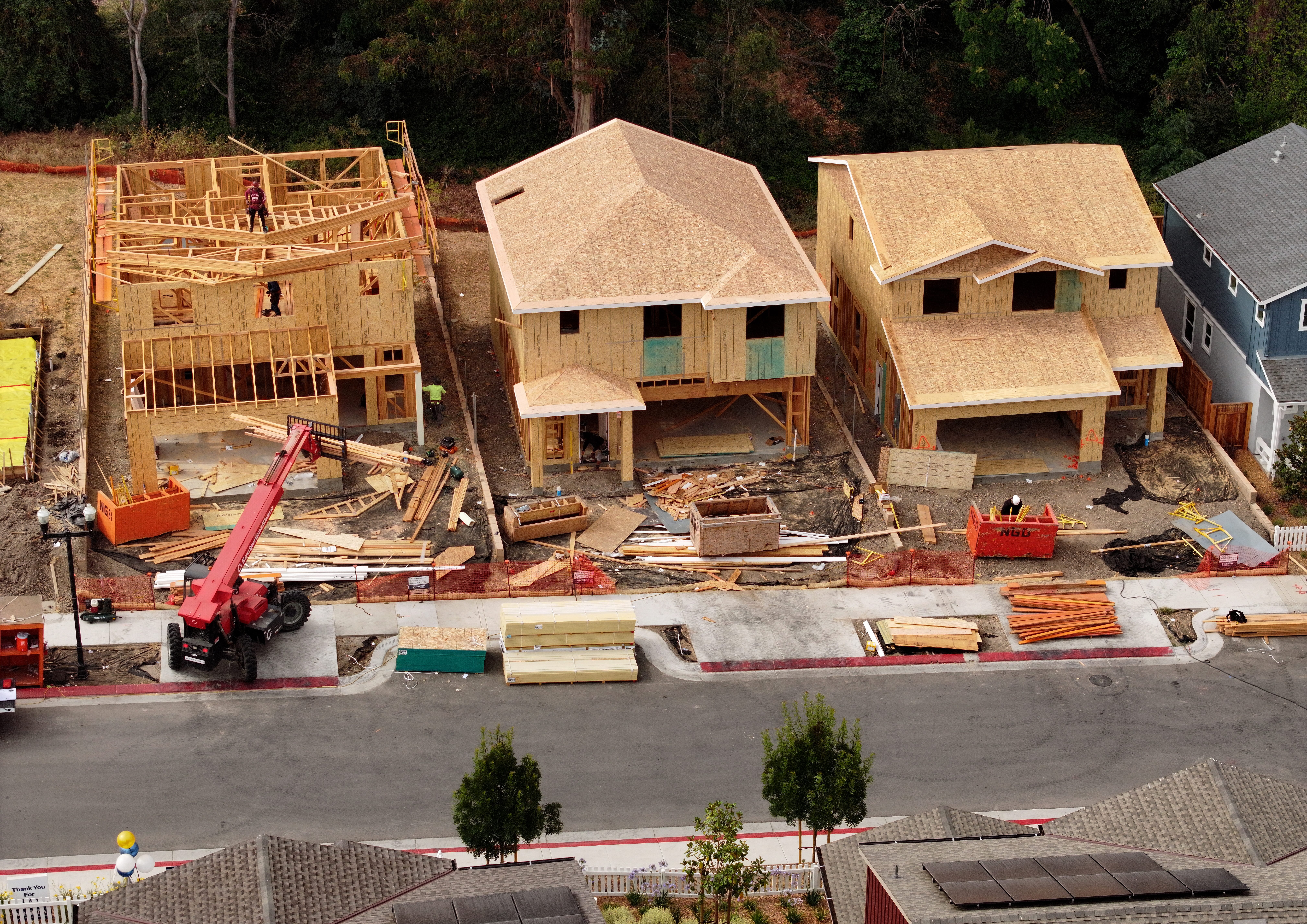

For the first time in more than a year, privately owned housing units saw a significant increase in starts in March, possibly signaling forward movement in the home construction sector.
The Census Bureau’s Monthly New Residential Construction Report, issued on April 29, indicated that housing starts in March on a seasonally adjusted annual basis saw a 10.8 percent increase from February’s revised estimate of 1,356,000 to 1,502,000. The March data also represent a 10.8 percent rise above the March 2025 rate of 1,355,000.
Single-family housing starts in March came in at a seasonally adjusted annual rate of 1,032,000—a 9.7 percent advance from the upwardly revised February figure of 941,000, marking the highest start level since February 2025. The March start rate for units in buildings with five or more apartments was 446,000.
However, building permits underperformed, falling behind both the February and March 2025 rates. Permits for privately owned housing units dropped by 10.8 percent month over month to a seasonally adjusted annual rate of 1,372,000—well below the upwardly revised February rate of 1,538,000. The March permits also fell 7.4 percent below the March 2025 rate of 1,418,000.
Single-family authorizations in March were at a rate of 895,000—a 3.8 percent decline from the upwardly revised February future of 930,000. Permits for units in buildings with five or more apartments were at a rate of 427,000 in March.
“Housing starts popped in March, beating expectations, but building permits plummeted,” Bankrate principal analyst Ted Rossman said in a note emailed to The Epoch Times. “This foreshadows slower times ahead. The economic uncertainty exacerbated by Iran war impacts and lingering tariff concerns continues to weigh on the housing market.”
Bill Owens, chairman of the National Association of Home Builders (NAHB) agrees that housing starts posted a solid rebound in March, while noting that construction activity remains sensitive to interest rate fluctuations and construction costs.
“Overall, the uptick in housing starts is a positive development for residential investment and signals that the sector may be stabilizing,” Owens said in an April 29 statement.
Danushka Nanayakkara-Skillington, NAHB’s assistant vice president for forecasting and analysis, added that builders are being cautiously optimistic about production to meet persistent inventory shortages.
“While this is an encouraging sign, the pace of construction is likely to remain measured as builders continue to navigate elevated financing costs and labor availability,” she said in the statement.
In its analysis of privately owned housing completions for March, the Census Bureau found declines in numbers from both one month and one year ago. The seasonally adjusted rate of 1,336,000 private units was only 0.1 percent above the revised February estimate of 1,364,000 but 12.8 percent below the March 2025 rate of 1,566,000.
Single-family completions last month numbered 896,000—a 4.8 percent decrease from the revised February rate of 941,000. The March rate for units in buildings with five or more apartments was 452,000.
The NAHB reported that combined single and multi-family starts were 36 percent higher in the Northeast, 7.8 percent higher in the Midwest, 3 percent higher in the South, but 15.5 percent lower in the West.
Analyzing regional permit data, the Northeast again was the winner with 15.4 percent more permits issued, an additional 6 percent in the West, but just 1.1 percent more in the Midwest. Building permits in the South declined by 9.1 percent.
The NAHB noted there are currently 587,000 single-family homes under construction, and 677,000 apartment units.
Earlier this year, the NAHB projected a substantial need to increase housing production in 2026 to address a deficit of close to 1.5 million units.
“Congress is still working on a landmark housing bill, which has the potential to loosen red tape and stimulate more homebuilding,” Rossman said.
“The House and Senate are currently at odds regarding next steps, with a proposed ban on institutional investors one of the main sticking points.”