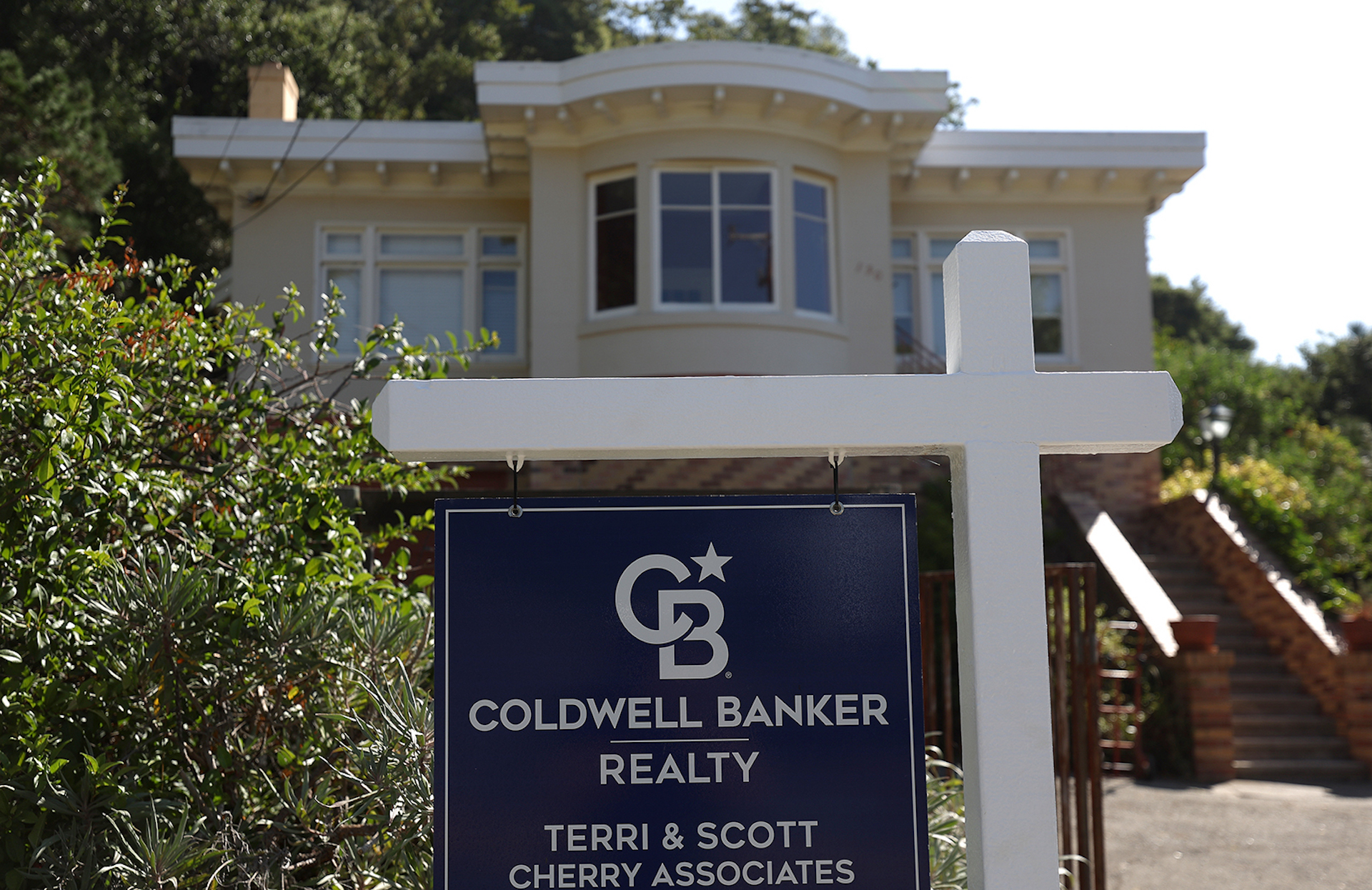

The housing slowdown has broadened in the United States, with more than half of major metropolitan markets recording year-over-year price declines in February, according to the latest S&P CoreLogic Case-Shiller Home Price Indices.
The national housing price index rose 0.7 percent year over year in February, down from 0.8 percent in January, according to the indices published on April 28.
Prices decreased annually in more than half of the major metropolitan areas, with Denver posting the biggest decline (2.2 percent), replacing Tampa, Florida, as the weakest market in the index. Tampa saw a 2.1 percent decline, narrowing for a fourth consecutive month.
Prices in Seattle, Los Angeles, and Washington decreased 2 percent, 0.8 percent, and 0.1 percent, respectively, joining price declines in Sun Belt cities.
Nicholas Godec, head of fixed income tradables and commodities at S&P Dow Jones Indices, said in the report that the geographic distribution has changed “meaningfully.”
“The housing slowdown has broadened well beyond its Sun Belt origins,” he said. “With consumer inflation at 2.4 percent [in February], U.S. home values have lost ground in real terms for nine consecutive months.”
The March Consumer Price Index rose to 3.3 percent as gasoline prices surged after the Iran war began on Feb. 28, according to the Bureau of Labor Statistics.
Godec said that high mortgage rates continue to pressure affordability and transaction activity, resulting in nominal price growth lagging inflation. As of April 23, the average rate on a 30-year fixed mortgage stood at 6.23 percent, according to Freddie Mac.
According to Godec, Chicago led all metropolitan areas in price gains, with a 5 percent annual growth, followed by New York (4.7 percent) and Cleveland (4.2 percent).
“Leadership remains concentrated in [the] Midwest and Northeast markets,” he said. “The 7.2 percentage point spread between Chicago and Denver illustrates how localized the housing story has become.”
Month over month, the National Index rose 0.3 percent before seasonal adjustment in February, according to the indices.
Meanwhile, an April 28 report shows that the Federal Housing Finance Agency (FHFA) housing price index, which measures the movement of single-family home prices, remained flat on a seasonally adjusted basis in February, following an upwardly revised increase of 0.2 percent in January and missing market expectations of a 0.2 percent gain.
Year over year, the index increased by 1.7 percent, compared with a 3.9 percent annual increase in February 2025.
“Both the FHFA and S&P CoreLogic Case-Shiller reports for February confirm a cooling trend at the national level, with annual gains slowing compared to this time last year,” Bankrate senior economic analyst Mark Hamrick said in a note emailed to The Epoch Times.
With more than half of major metropolitan markets posting year-over-year price declines, as the Case-Shiller Home Price Indices show, “this broadening slowdown signifies that the correction is no longer localized to just a few pandemic-era ‘hot spots,’” Hamrick said.
However, he said that easing home prices nationally may offer some breathing room for potential buyers sidelined by affordability challenges.