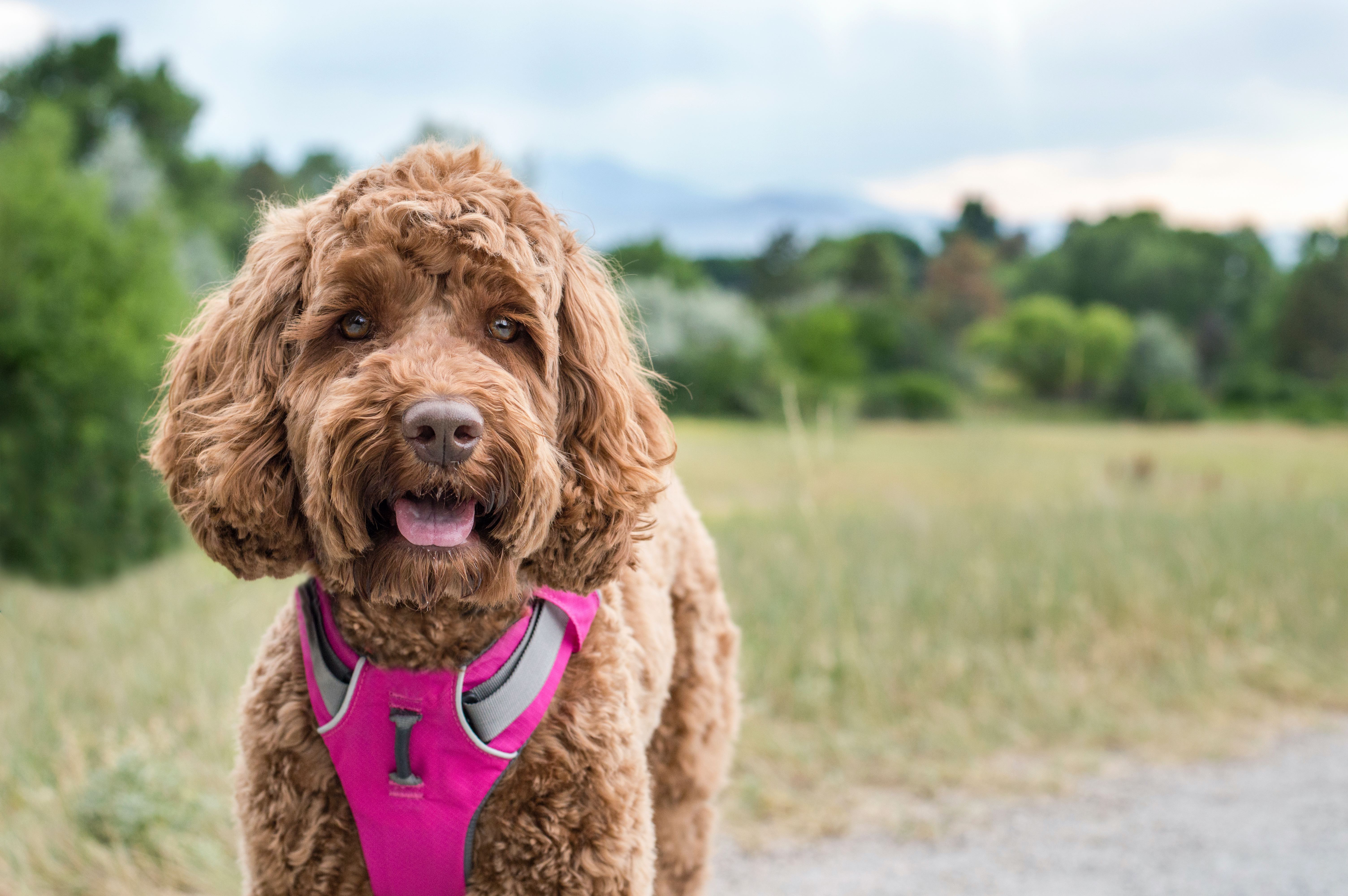

While traditional dog collars are the standard option for walking your dog, many experts are recommending using a harness instead.
“[A] harness is ideal,” Carol Jean Tillman, a holistic veterinarian who has practiced in California and Nevada, told The Epoch Times in an email. “A collar around the neck with a leash, can cause neck problems, cause more anxiety, and dogs can slip out of a collar and escape, and run into the street.”
A properly fitted harness will distribute pressure across the dog’s chest and back rather than the neck, according to the website of the International Boarding & Pet Services Association (IBPSA).
A harness can benefit dogs that tend to pull or lunge, as well as smaller breeds that have a fragile neck, the website states. It reduces the risk of “tracheal damage, throat irritation, and neck strain,” it states.
“When the dog pulls against the collar, it can constrict their windpipe, leading to respiratory distress,” the IBPSA website states. “Harnesses, on the other hand, circumvent this problem by avoiding pressure on the neck, thereby protecting your dog’s airways and keeping them safe and healthy.”
Additionally, it states that harnesses can provide better support, taking pressure off a dog’s back and neck, making them a better option for dogs that are at risk of spinal problems, such as dachshunds.
Harnesses may be better for a dog’s respiratory health, especially for brachycephalic breeds with flat faces such as bulldogs and pugs, which can have breathing difficulties.
In addition, a harness can reduce the risk of ocular proptosis for brachycephalic breeds, which is when a dog’s eyeball protrudes from the socket, becoming a medical emergency. According to Harmony Animal Hospital’s website, this problem can happen if too much pressure is put around the dog’s neck.
A harness also discourages pulling, the hospital website states.
“It teaches dogs that the action doesn’t give him any advantage. With a collar, pulling moves the dog forward, so he feels like the action is working,” the website states. “With a harness, pulling often does nothing but get the front legs off the floor—definitely not a result your dog will find effective.”
A harness can also help you control a dog that jumps up on people, without having to worry about choking your dog in the process, the hospital website states.
It adds that a harness can be a better choice for puppies, as they might have a tendency to get tangled up or hurt themselves while pulling on a leash with a collar; and a harness can be good if your dog needs a little assistance getting up or during walks, since it allows you to gently pull up to provide extra support.
Using a harness can also reduce the risk of escape, especially for dogs such as greyhounds and whippets, which have smaller heads with slender necks. If a collar is too loose-fitting, the dog can wiggle out, the American Kennel Club’s website notes.
Harnesses can also be useful when walking multiple dogs at a time.
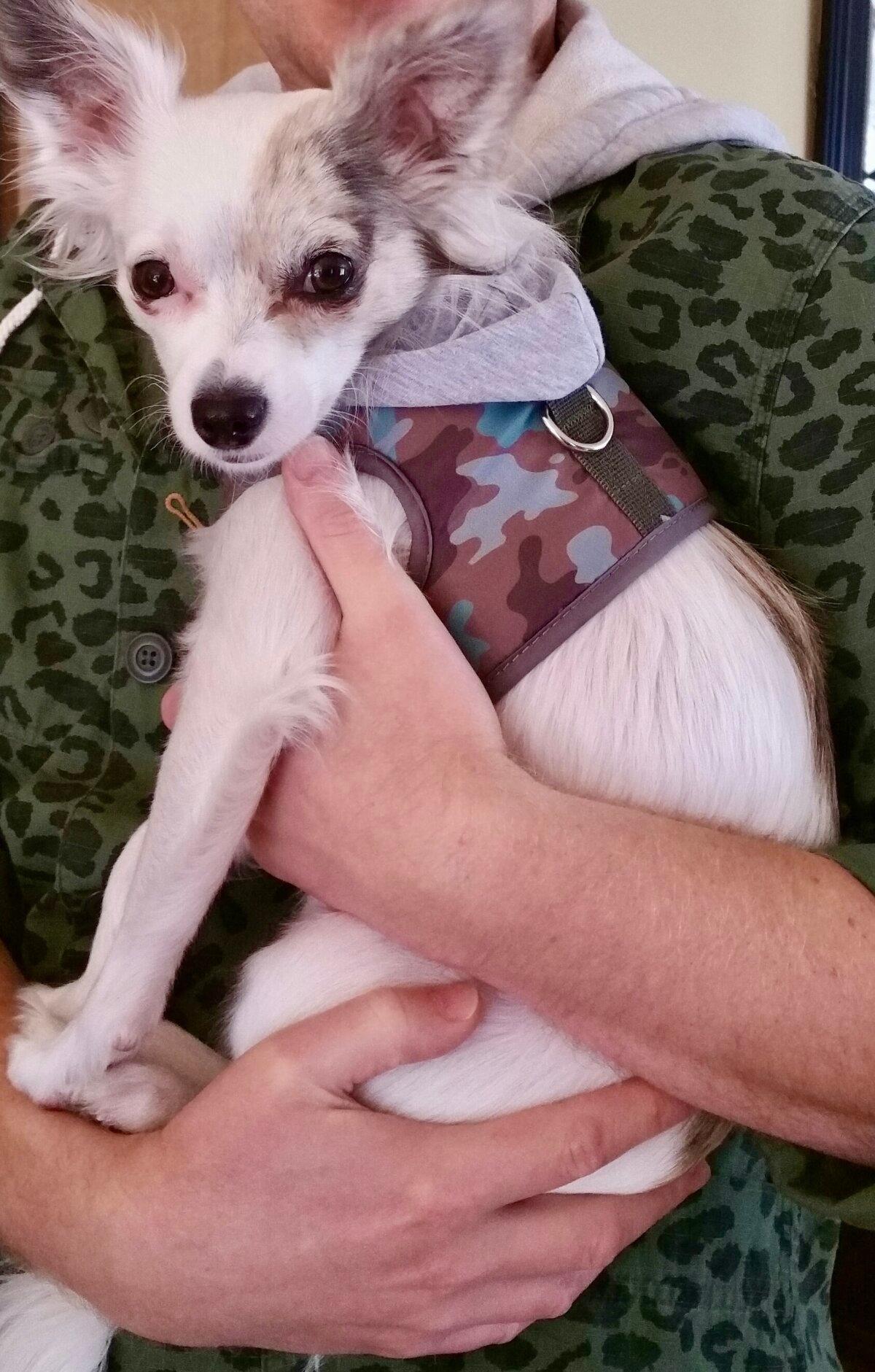
Small dog Daisy wears a harness before her walk. (Helen Billings/The Epoch Times)
While harnesses may be a more comfortable and safe option for your dog, collars still have their place, especially for attaching identification tags.
The IBPSA website states that collars can be good for dog owners with physical limitations, as harnesses can be more difficult to put on and remove.
Tillman said that some dogs may need a promise halter or Gentle Leader, a type of head collar that is highly recommended by veterinary behaviorist Ian Dunbar.
Dunbar emphasizes that dog walks should be enjoyable for both the dog and the owner, with a focus on mental stimulation and positive reinforcement rather than just physical exercise, she said.
She noted that his approach is to let dogs stop frequently to sniff and explore, and to also use walks as opportunities for training and socialization, praising your dog and giving them treats whenever they greet another dog or person in a friendly fashion.
Picking Out a Dog Harness
With several different harness styles to choose from, an important step is to make sure it fits your dog snugly, yet comfortably.
According to the IBPSA, some of the available styles are back-clip harnesses, which are popular for small dogs; front-clip harnesses; no-pull harnesses, which apply pressure to the dog’s chest to discourage pulling; and head halters, which provide the most control over your dog and may be helpful for large dogs that pull on the leash.
Some dogs might dislike the feeling of a harness, and it can take time to adjust. Harmony Animal Hospital recommends starting when the dog is young if possible; otherwise, it might not be easy to get your dog to cooperate.
For personalized advice, it’s a good idea to consult a veterinarian.