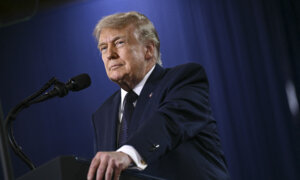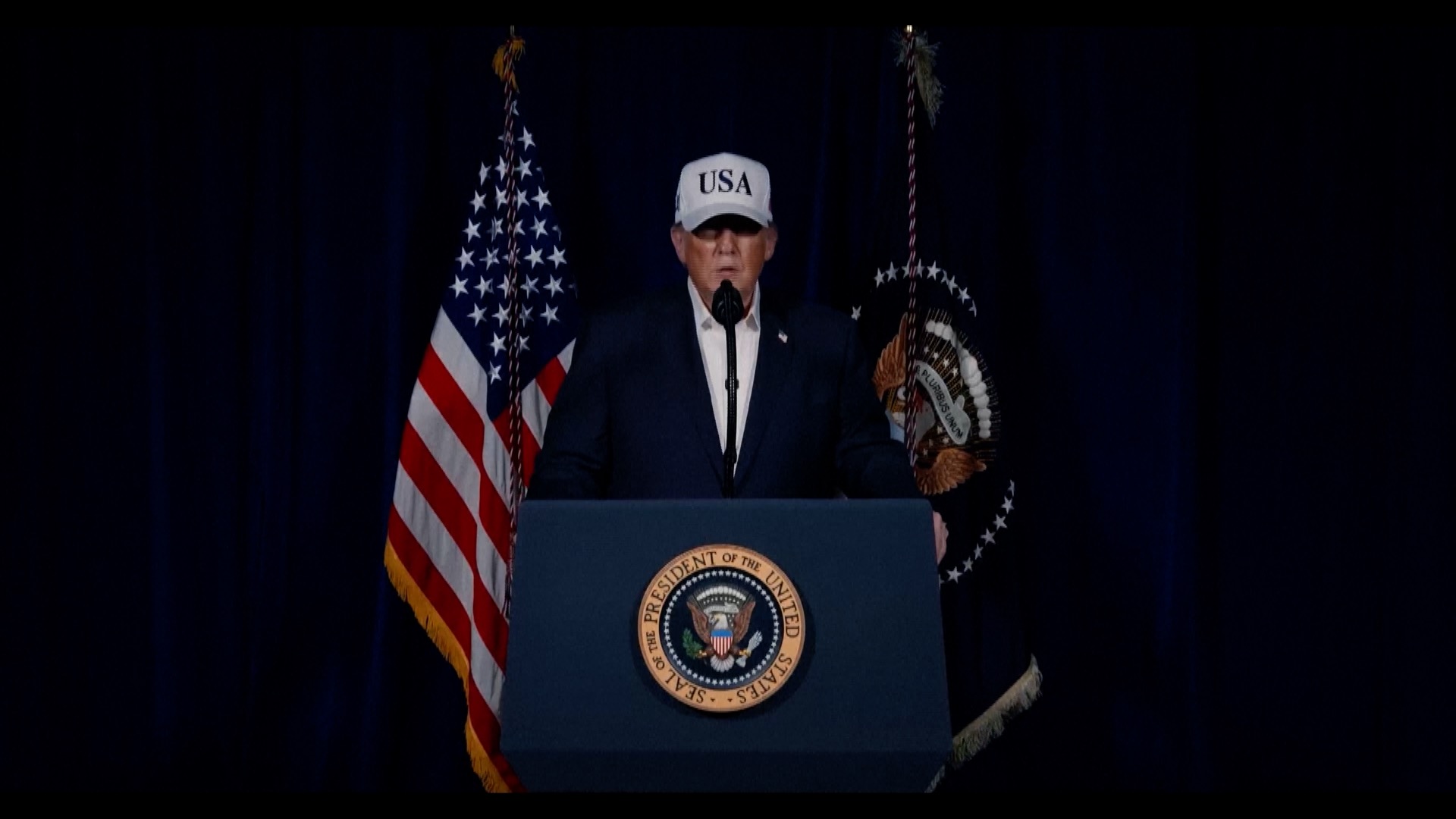

In the early hours of Feb. 28, President Donald Trump announced on social media that the United States and Israel had begun “major combat operations” in Iran.
At 1:15 a.m. ET, U.S. and Israeli forces launched Operation Epic Fury, targeting command, defense, and missile and drone launch sites across Iran, according to U.S. Central Command (CENTCOM).
The U.S. military strikes came after rounds of failed negotiations with the Islamic Republic, aiming at ensuring a nuclear-weapon-free regime. Recent talks officially began in April 2025. At the passing of the original two-month deadline last June, the United States bombed Iran’s nuclear facilities deep in the mountain area in central Iran toward the end of the 12-day Israel-Iran War.
Nationwide protests broke out in Iran in late December 2025. By the end of January, Iranian authorities had extinguished the anti-regime activities. The U.S.-based Human Rights Activists News Agency confirmed seven thousand deaths, with more than 11,000 cases still under review.
The U.S.-Iran nuclear peace agreement negotiations resumed in early February.
At the same time, the United States massed a historic military buildup in the region, including two carrier strike groups, the largest since the Iraq War.
More details of Operation Epic Fury, as named by the Department of War, are still forthcoming, but here are three highlights in the president’s video address to the nation.
Neutralizing Nuclear Threats of a ‘Terrorist Regime’
As soon as he announced the U.S. military operations, the president stated his objective as “defending the American people by eliminating imminent threats from the Iranian regime.”
He described the Islamic Republic as a “terrorist regime” and “the world’s number one state sponsor of terror.”
“It has always been the policy of the United States, in particular my administration, that this terrorist regime can never have a nuclear weapon,” Trump said, citing repeatedly failed attempts of negotiation for Iran to disarm nuclearly.
Iran’s leader, Ayatollah Ali Khamenei, was killed in the strikes, Israeli security officials told Epoch Magazine in Israel.
The day before the launch of Operation Epic Fury, a U.N. nuclear watchdog issued a report to its 35-country board.
In the report, the International Atomic Energy Agency said Iran is conducting unexplained activity at recently bombed nuclear sites and that it “cannot verify whether Iran has suspended all enrichment-related activities.”
Before the U.S. attack last June, the agency estimated that Iran had 440.9 kilograms of near-bomb-grade uranium, enough for 10 nuclear weapons.
In his speech, Trump expressed his frustration with the back-and-forth from the Iranian side over whether they would agree to abandon their pursuit of nuclear weapons.
“They’ve rejected every opportunity to renounce their nuclear ambitions, and we can’t take it anymore,” he said.
Adding that Iran tried to rebuild its nuclear program and develop long-range missiles that could reach the U.S. homeland, the president continued, “Just imagine how emboldened this regime would be if they ever had, and actually were armed with, nuclear weapons as a means to deliver their message.”
Since the 1979 Islamic Revolution, supporters of Iran’s ruling clerical regime have regularly chanted “Death to America” at state-sanctioned events.
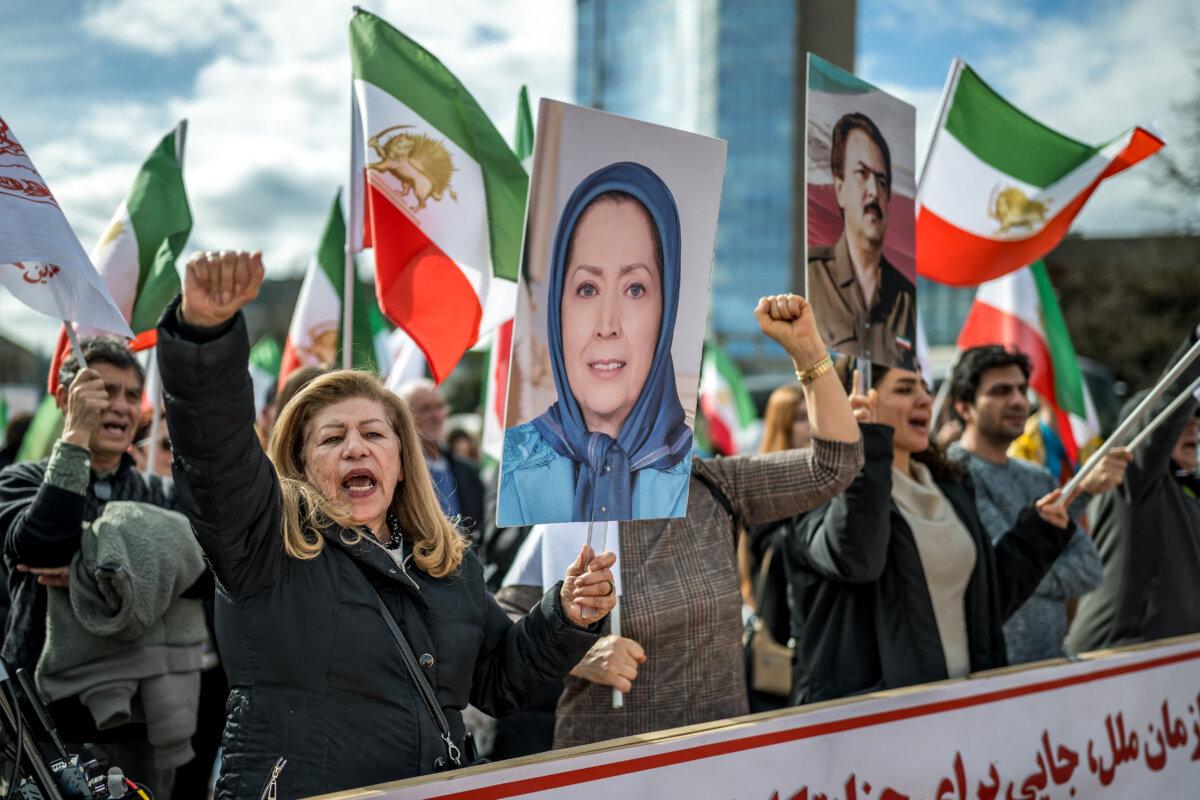
Demonstration against the Iranian regime in front of the United Nations Offices on the sidelines of the 61st session of the UN Human Rights Council in Geneva, on Feb. 23, 2026. (Fabrice Сoffrini/AFP via Getty Images)
Offering Iranian People a ‘Chance for Generations’
Central to the president’s message was also a call for the Iranian people to take the “only chance for generations” to “take over your government.”
“So let’s see how you respond,” Trump said. “America is backing you with overwhelming strength and devastating force.”
The attack, coordinated between the United States and Israel, has occurred at an unprecedented time. Since last June, the threat Iran poses to the West, rooted primarily in its nuclear ambitions and its network of terrorist proxies, has been significantly reduced.
During the Israel-Gaza war that began in October 2023, Israel dealt heavy blows to terrorist organizations—Hamas, Hezbollah, and Houthis—that have received significant financial and security backing from Iran.
As a result of Israeli strikes, the Islamic Revolutionary Guards Corps (IRGC), responsible for the preservation of the regime, also lost top leaders and nuclear scientists.
In the meantime, the Iranian society has evolved. Less than 40 percent of Iranians identified themselves as muslim, according to a 2020 survey conducted by the Group for Analysing and Measuring Attitudes in Iran, a non-profit research foundation registered in the Netherlands.
Other surveys by the same organization found in 2025 that 89 percent of Iranians favored secular democracy over a theocratic regime, and since 2021, regime change was the most popular option for meaningful progress for Iranians.
To the IRGC and armed forces, Trump had a separate message: “You must lay down your weapons and have complete immunity,” or “face certain death.”
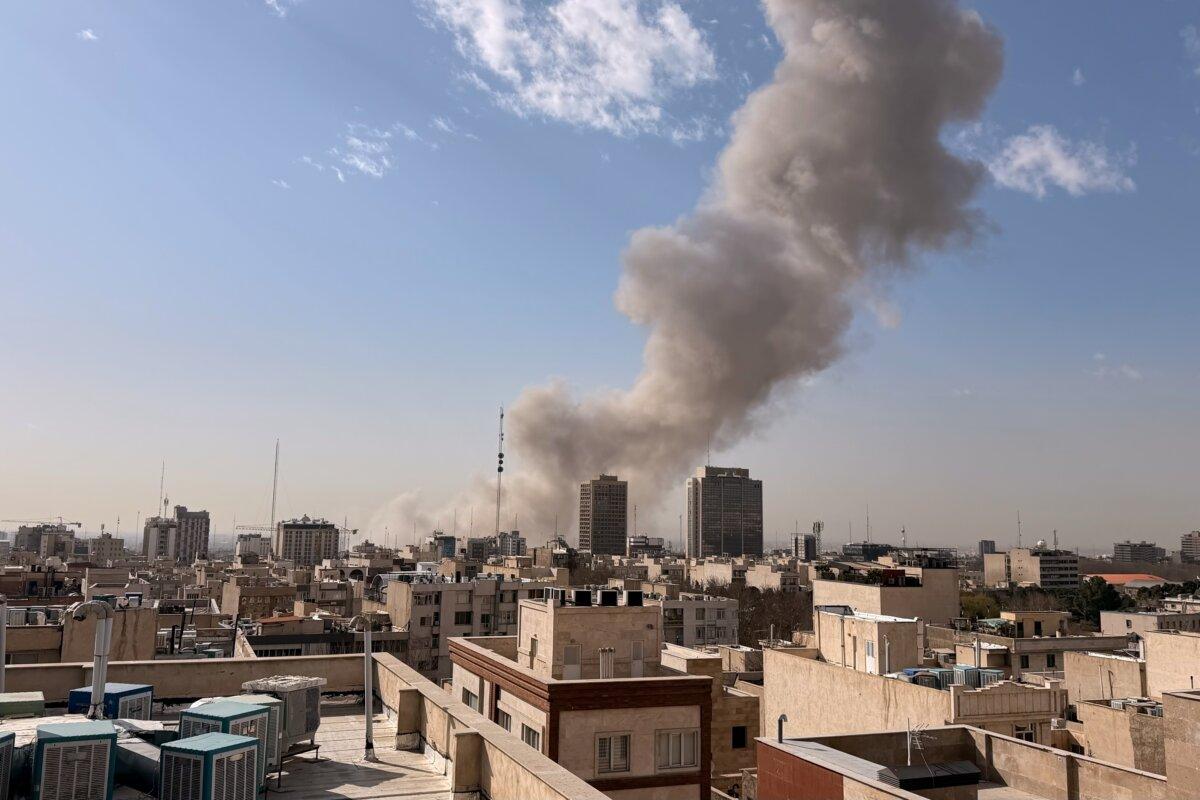
Smoke rises on the skyline after an explosion in Tehran, Iran, on Feb. 28, 2026. (AP Photo)
‘We May Have Casualties’
“The lives of courageous American heroes may be lost, and we may have casualties,” the president warned in his address to the nation, preparing Americans for the potential costs of the operation.
Within hours of the launch of Operation Epic Fury, Iran has launched retaliatory attacks on U.S. military bases in multiple Gulf states, such as Saudi Arabia, Bahrain, Jordan, and the United Arab Emirates.
Despite the escalation, Iranian Foreign Minister Abbas Araghchi downplayed the impact of the U.S. and Israeli strikes carried out on Feb. 28.
“Almost all officials are safe and sound and alive,” Araghchi told NBC News on Saturday morning. “We may have lost one or two commanders, but that is not a big problem.”
Araghchi, who shared clips from his NBC News interview on his Telegram account, said Iran was attacking American bases in self-defense.
Meanwhile, CENTCOM said that no U.S. casualties or combat-related injuries had been reported.
In the update on X at 1:08 p.m. Washington time, CENTCOM stated that the impact of Iran’s attacks on U.S. military bases has been “minimal.”
As he cautioned the public about potential losses, Trump emphasized what he described as the mission’s long-term stakes.
“We’re doing this not for now. We’re doing this for the future. And it is a noble mission,” he said.
“We pray for every service member as they selflessly risk their lives to ensure that Americans and our children will never be threatened by a nuclear-armed Iran.”