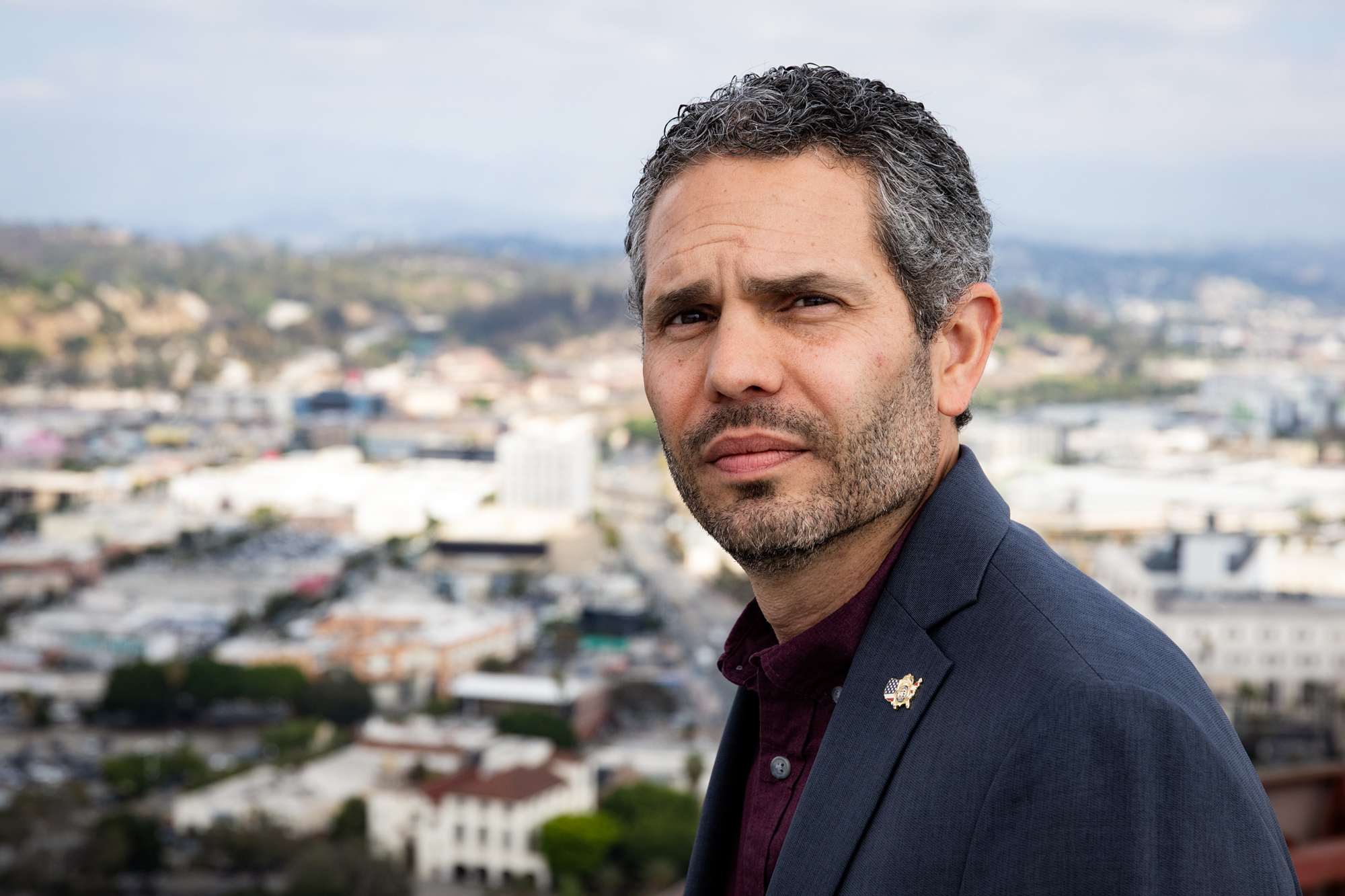

Agent Brian Clark still remembers a breakthrough case a decade ago.
His team at the Drug Enforcement Administration (DEA) arrested a Chinese money launderer at a U.S. airport where the individual had a layover.
The person had coordinated money pickups and drop-offs for the Sinaloa Cartel in Mexico. Mexican law enforcement identified him while he had lunch with a cartel leader in the country. The two of them discussed a then-recent DEA seizure of cash in New York.
Tune in to China Watch, a podcast on Chinese politics, technology, and business.
The Chinese money launderer later cooperated with law enforcement and provided extensive information about how the laundering operation worked.
Between 2015 and 2016, Chinese money laundering networks began emerging, according to Clark, special agent in charge of the DEA’s Los Angeles Field Division. He said that by 2019, the Chinese had dominated the laundering marketplace.
Now, the Chinese money laundering organizations are “one of the key actors laundering money professionally in the United States and around the globe,” according to the latest National Money Laundering Risk Assessment by the Department of the Treasury.
Chinese money laundering organizations provide “cheap, fast, and almost guaranteed” services to cartels, Clark told The Epoch Times, and the result is that cartels have more money to cause more harm with drug trafficking.
Drug overdoses, many from opioids, claimed the lives of more than 100,000 Americans every year in recent years, with the exception of a decline last year, according to the DEA.
Experts say that Chinese money laundering is a global operation supported by the Chinese Communist Party (CCP) and poses a grave danger to the United States.
Reports from think tanks and intergovernmental organizations link the CCP’s global investments to increased illicit trade and corruption.
“China, directly and indirectly, profits from money laundering operations that touch its economy and financial sector through the international trading system or its underground banking,” David M. Luna, executive director at the International Coalition Against Illicit Economies, told The Epoch Times.
Luna is also a former U.S. diplomat and national security official.
“The CCP allows it because it is so lucrative, and helps China to expand the global illegal economy that drives their commercial and mercantilist expansion in many corners of the world and geopolitical ambitions for power dominance,” he said.
Another expert, former Treasury special agent John Cassara, estimated that Chinese networks launder $2 trillion per year, about one-half of the total global money laundering.
He said that cracking down on Chinese criminality is a unique opportunity to counter the Chinese communist regime—because the crimes expose the CCP’s malign nature.
“It is straightforward. It has nothing to do with ideology. It is right or it is wrong,” Cassara told The Epoch Times. “And people know that; it’s in your gut.”
Money Laundering With Chinese Characteristics
When Chinese money laundering organizations took over the market in 2015 and 2016, they charged significantly lower commissions than traditional players in Latin America. Clark said that the market rate for laundering was 10 percent to 15 percent but that the Chinese charged close to zero for several years to undercut competitors.
Even after that, Chinese brokers’ commission rates have remained low—between zero and 6 percent—resulting in a direct boost to drug cartels’ bottom lines, former DEA agent Robert Zachariasiewicz said at an event hosted by Global Financial Integrity, a Washington-based think tank.
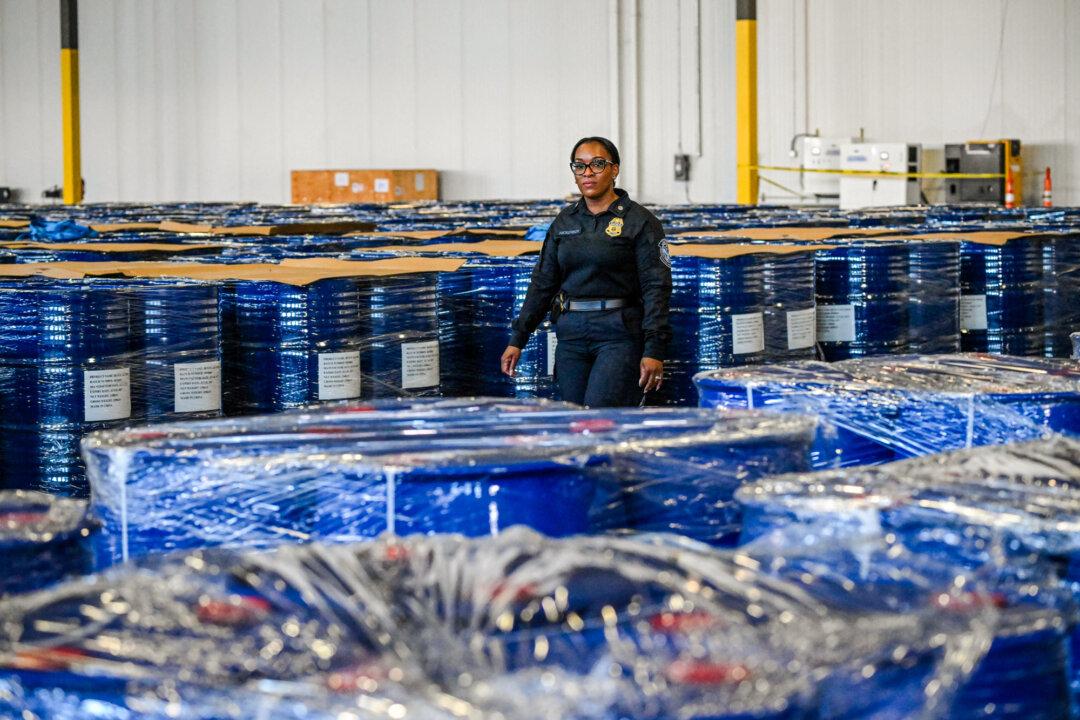
A U.S. Customs and Border Protection agent walks between barrels with chemicals used to create synthetic drugs like methamphetamine at the end of a news conference by federal authorities in Pasadena, Texas, on Sept. 3, 2025. According to U.S. Attorney for the District of Columbia Jeanine Pirro, authorities seized 300,000 kg of meth precursor chemicals sent from China and destined for Mexico's Sinaloa drug cartel. (Ronaldo Schemidt/AFP via Getty Images)
Christopher Urben, a former DEA agent and current managing director at Nardello & Co., told legislators at a September hearing that since the Chinese became dominant players in money laundering, the Mexican cartels have increased their profits by 3 percent to 5 percent.
That translates to billions of additional dollars each year.
According to a report by the Bureau of Economic Analysis under the Commerce Department, Americans spent $153 billion buying illegal drugs in 2017.
Chinese brokers can afford to charge below-market commissions to drug cartels because they generate profits from additional customers in the laundering cycle.
A key group is wealthy Chinese individuals who live in China. They want to invest in real estate in the United States or pay for their children’s tuition in U.S. universities.
However, the CCP imposes an annual foreign exchange limit of $50,000.
The limit has been in effect since 2007, and at the end of 2016, Beijing announced tighter controls on the review and approval of conversions from Chinese yuan to U.S. dollars.
That timing coincided with the rise of the Chinese money laundering networks, Clark said, adding that the underground Chinese banking systems flourished simultaneously.
These wealthy Chinese customers receive the U.S. dollars generated through drug trafficking. The money doesn’t have to leave the United States because the wealthy Chinese pay the same value in yuan to the cartel-affiliated laundering network in China. They are called mirror transactions, or swaps, and they make it harder to link the money to an underlying crime.
The Chinese yuan that ends up in cartel-affiliated accounts in China can be used to purchase chemical precursors of drugs or goods to transfer the value of the drug trafficking proceeds further back to the cartels’ home country.
The wealthy Chinese individuals are willing to pay commissions of 3 percent or higher for the service, according to Clark.
A misinvoiced transaction can also facilitate money laundering.
For example, if the drug cartel needs to launder $990,000, the Chinese money laundering networks organize a Chinese business to ship $1 million worth of consumer electronics to Mexico.
And instead of properly settling the trade, the business invoices the cartel for only $10,000. Once it’s imported to Mexico, a cartel-affiliated business can turn around and sell it, recording a profit of $990,000 on its books. Thus, $990,000 of drug trafficking proceeds have been integrated into the legitimate financial system.
Such trade-based money laundering may be measured through value gaps—the value difference between what’s recorded in a country’s imports and another country’s exports between two trade partners.

A bank employee counts out 100 yuan ($14.60) notes at a bank in Shanghai on Aug. 8, 2018. The Chinese regime imposed an annual foreign exchange limit of $50,000 in 2007, and in 2016 announced tighter controls on the review and approval of conversions from Chinese yuan to U.S. dollars. (Johannes Eisele/AFP via Getty Images)
Global Financial Integrity found that the value gap between 134 developing countries and 36 advanced economies was $835 billion in 2018. China’s value gap accounted for 37 percent of the total, nearly five times that of Poland, the country in second place.
Much of the drug proceeds in the United States don’t have to leave the country because of the mirror transactions that Chinese money launderers use. For the rest, it’s easy to hide within the international trade systems among China, Mexico, and the United States, which totaled nearly a trillion dollars last year, according to the U.S. Census Bureau.
‘Threat Multiplier’
Experts say that the lifeline Chinese money laundering networks provide goes beyond drug trafficking.
“Among the reasons that many law enforcement agencies view Chinese illicit enterprises as a ’threat multiplier' is because they help to fuel greater violence, insecurity, and instability in too many markets,” Luna said.
Illicit trade and corruption have spread alongside China’s global investments. A leading example is China’s Belt and Road Initiative (BRI), a global infrastructure project also known as One Belt, One Road.
China’s Belt and Road investments drive up illicit trade, according to an April report by the Organisation for Economic Co-operation and Development (OECD), an intergovernmental organization of 38 member countries committed to democracy and the market economy.
The analysis found that the more investment a country receives from China, the more counterfeit goods it exports. Knockoffs form the top category of underlying crimes for money laundering.
The trade in such fake products is valued at approximately half a trillion U.S. dollars a year, and China has continued to be the primary source of counterfeit goods, according to a May report by the OECD.
The Belt and Road expansion and corruption also overlap.
“Most BRI investments target developing countries where corruption is already prevalent,” states a 2020 report by the Foundation for Defense of Democracies, a Washington-based think tank.
China’s investment in the program reached its peak in 2019.
Most of the 150 Belt and Road recipient countries are ranked as highly corrupt in the 2024 Bribery Risk Matrix, an annual index released by nonprofit business association TRACE.
“Of course, it is doubtful that Beijing or many of its partners truly want a BRI free of corruption,” the Foundation for Defense of Democracies report reads. “Given its track record, the CCP clearly considers transparency and accountability to be unacceptable risks from a political point of view.”
A 2018 report by the International Monetary Fund estimated that global money laundering accounted for between 2 percent and 5 percent of global gross domestic product, or $1.6 trillion to $4 trillion per year. Because of the lack of alternative reports, this International Monetary Fund number remains the standard used by experts today.
To assess the Chinese market share, Cassara examined the global crimes underlying money laundering operations. Such crimes are professionally referred to as predicate offenses or specified unlawful activities.
He said that out of the 12 major categories—including counterfeit goods, human trafficking, organ trafficking, and corruption—the only one in which China doesn’t lead is drug trafficking, although it does lead in providing chemical components to make the drugs, such as fentanyl, that eventually land on U.S. soil.
Cassara uses the term “CCP Inc.” to refer to the Chinese Communist Party’s support of transnational crimes and to distinguish the Chinese criminal organizations from the Chinese people.
US Fights Back
The United States has taken a series of actions to combat transnational crimes directly and indirectly facilitated by “CCP Inc.”
In February, President Donald Trump declared the nation’s narcotics crisis a national emergency. He also imposed a 10 percent tariff on Chinese goods, tied to China’s role in providing chemical precursors to fentanyl and laundering money for drug cartels. The rate was doubled to 20 percent in the following month.
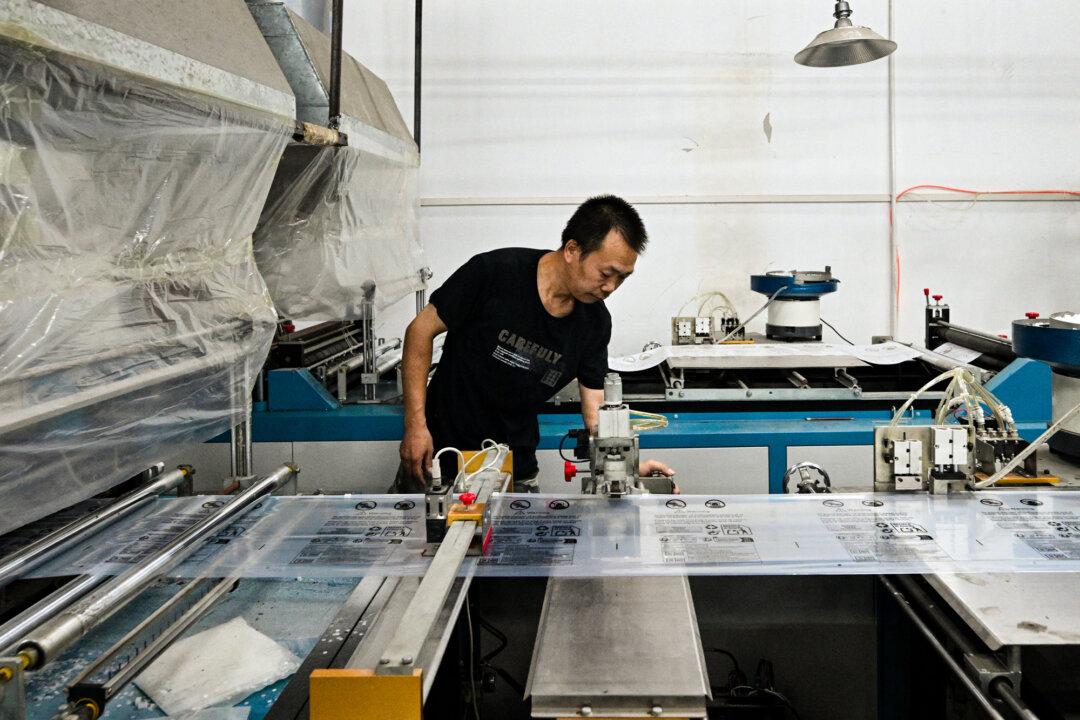
A worker handles packages for Weijiang International, a delivery firm serving the Chinese-founded online shopping giant Temu, in Guangzhou, Guangdong Province, China, on Aug. 12, 2025. In February, President Donald Trump declared the narcotics crisis a national emergency and later imposed a 20 percent tariff on Chinese goods, citing China’s role in supplying fentanyl precursors and laundering cartel money. (Adek Berry/AFP via Getty Images)
The United States kept the levy at 20 percent despite fierce negotiations from the CCP, which sought its removal. These tariffs, imposed under the International Emergency Economic Powers Act, have been challenged in court. The Supreme Court heard arguments in the case on Nov. 5.
Also in February, the Trump administration designated eight Latin American cartels as foreign terrorist organizations. The designation opened up the defense and intelligence resources to the DEA to fight drug trafficking and related money laundering, according to Clark.
Although Chinese money laundering schemes can be highly complex, depositing the tainted cash in U.S. banks remains a significant weakness in the chain, he said.
It’s a specific area in which the U.S. government has tightened its scrutiny.
In July, the Justice Department announced that all members of a Chinese money laundering network had pleaded guilty to laundering more than $92 million in illicit funds, primarily through drug trafficking from Mexico.
Another case, in which 11 Chinese individuals were indicted for allegedly laundering $50 million for the Sinaloa Cartel, is being tried at a federal court in Los Angeles.
In August, the Financial Crimes Enforcement Network, a division of the U.S. Department of the Treasury, said Chinese money launderers had likely moved $312 billion of illicit funds through U.S. financial institutions in the five years between 2020 and 2024.
The agency issued an advisory for banks to flag potential Chinese money laundering activities.
Red flags include when an individual opens a bank account with a Chinese passport and holds unexplained wealth inconsistent with his or her profession—such as a student, retiree, laborer, or housewife—or a Chinese national makes an all-cash real estate purchase.
“Money laundering networks linked to individual passport holders from the People’s Republic of China enable cartels to poison Americans with fentanyl, conduct human trafficking, and wreak havoc among communities across our great nation,” John K. Hurley, undersecretary for terrorism and financial intelligence, said in a statement accompanying the anti-money laundering guidance.

Migrants line up for immigration processing as merchants offer services in both Spanish and Chinese in Lajas Blancas, Panama, on Feb. 17, 2024. U.S. officials say Chinese money laundering networks help cartels facilitate human trafficking in the United States. (Bobby Sanchez for The Epoch Times)
“The United States will not stand by and allow nefarious actors to launder illicit proceeds through our financial system.”
Anti-money laundering was on the agenda of the latest U.S.–China trade talks in Madrid in mid-September. Afterward, Treasury Secretary Scott Bessent said it was an “area of extreme agreement” between the two countries, without revealing any agreed-upon framework.
Luna, the former U.S. diplomat, has identified the Asia-Pacific Economic Cooperation (APEC) 2026 summit as a potential opportunity to hold China more accountable. Beijing will host the APEC summit next year.
Last year, the Chinese regime amended its anti-money laundering law to cover non-financial businesses such as real estate intermediaries and specified seven predicate offenses, including smuggling and corruption. The law took effect at the beginning of this year.
According to the State Department, “serious implementation shortcomings persist” in the Chinese regime’s efforts to combat money laundering. The latest assessment of China also included insufficient cooperation with U.S. law enforcement.
Cassara said he believes that the United States needs to do more and should “name and shame ‘CCP Inc.’”
“I would love to see the Trump administration realize that China, CCP Inc., is vulnerable when we’re talking about transnational crime and money laundering,” he said.
“I think if they really focused on this area, it would be extremely effective, and it also needs to be done.”