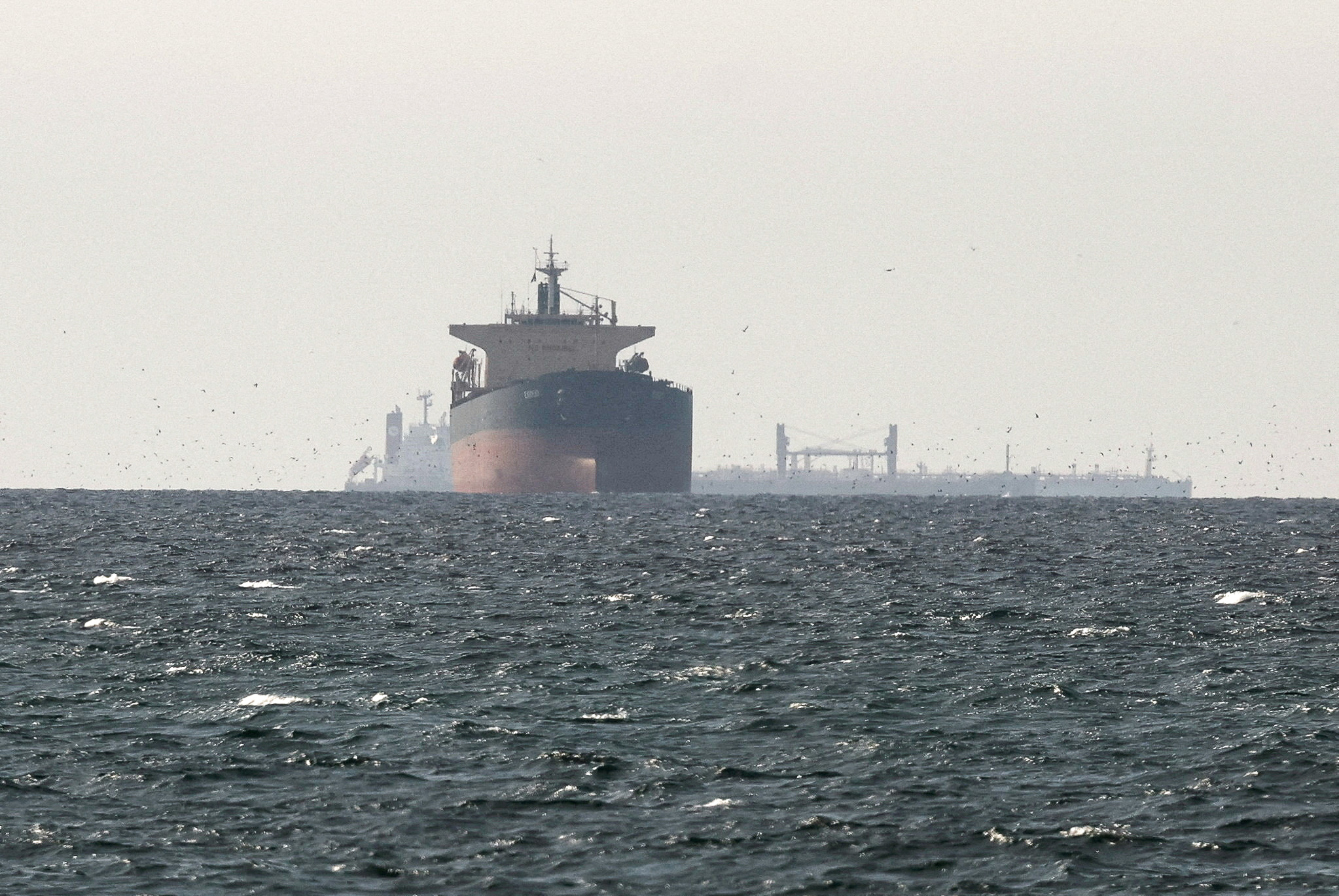

As the United States and Iran have reached a two-week ceasefire agreement, President Donald Trump has said the Chinese communist regime played a role in pushing for negotiations. However, while Iran had agreed to temporarily reopen the Strait of Hormuz, ship traffic remains severely restricted.
Analysts told The Epoch Times that the Chinese regime has a conflict of interest with the United States regarding Iran, and that its involvement would cast uncertainty over the reopening of the strait and the geopolitics in the region.
The ceasefire was announced on April 7, following mediated talks to pause military actions and reopen the strait.
Details of the agreement are unclear, and shipping in Strait of Hormuz is still at a standstill, industry leaders said. Sultan Al Jaber, chief executive officer of Abu Dhabi National Oil Co., the United Arab Emirates’ (UAE’s) largest oil producer, said on April 9 that the strait is not open in comments on LinkedIn. “Access is being restricted, conditioned and controlled,” he said.
While Pakistan is the main mediator of the talks, the Chinese Communist Party’s (CCP’s) mediator role has also been revealed. Trump said on April 7 that Beijing helped persuade Iran to negotiate. In addition, Beijing has close relations with Islamabad.
The Chinese Foreign Ministry said at an April 7 press conference that its foreign minister made 26 phone calls to related parties to help bring about a ceasefire.
China buys more than 80 percent of Iran’s shipped oil, according to public data for 2025. Nearly 40 percent of China’s crude imports pass through the strait, according to the U.S. Energy Information Administration.
U.S.-based China analyst Tang Jingyuan said that it’s entirely possible that the Chinese regime is exerting pressure on Iran from behind the scenes through Pakistan to get Iran to open the strait.
“The ruling Chinese Communist Party has been maintaining a delicate balance regarding the conflict involving Iran,” he told The Epoch Times. “It desires a ceasefire for two primary reasons: On one hand, it hopes to preserve the Iranian regime as much as possible, thereby enabling it to continue tying down the United States in the Middle East. On the other hand, a prolonged blockade of the Strait of Hormuz would inflict significant damage upon the CCP, as it accounts for the largest share of the oil and energy supplies transported through the strait.”
However, it would put the CCP in an awkward position if the strait has effectively become a massive bargaining chip in Iran’s hands, whereby it can charge fees for ships to pass, Tang pointed out.
“Even if Iran were to offer some discount on transit fees to the CCP, it would still feel as though it were paying a ‘protection fee’ as a subordinate. Diplomatically, the CCP simply cannot tolerate such an outcome. Consequently, the CCP may find itself caught in an intractable dilemma regarding the Iran issue in the future,” Tang said.
Mark Cao, a U.S.-based military tech analyst and host of Chinese-language military news YouTube channel Mark Space, expressed skepticism over the effectiveness of China’s role in the ceasefire negotiation.
“It’s highly probable that Iran is attempting to drag the CCP into the fray. The aim is to bind the CCP more closely with it,” he told The Epoch Times. “This serves to let the CCP take some credit for it, while actually exposing the true nature of the CCP’s involvement.”
Secretly Aiding Iran
While the CCP has publicly been pushing for “maintaining peace,” calling upon the United States and Iran to implement an immediate ceasefire and hold peace negotiations as soon as possible, “China is helping Iran reconstitute the Iranian missile program amid U.S.–Israeli efforts to degrade it,” the Institute for the Study of War, a Washington-based think tank, said in a report.
In addition, Chinese company MizarVision has released satellite imagery of U.S. military bases and naval assets, providing real-time targeting data for Iran’s residual retaliatory capabilities, according to U.S. intelligence officials.
Trump said in April that the United States would raise tariffs by 50 percent on countries that provide weapons to Iran.
The CCP’s support for Iran over the years has primarily consisted of economic lifelines, Cao said. In addition, it has provided drone technology and parts, semiconductors, and chemical products for missile manufacturing.
“The CCP has also dispatched advisers to assist Iran in excavating underground bunkers and equipping air defense systems,” Cao said.
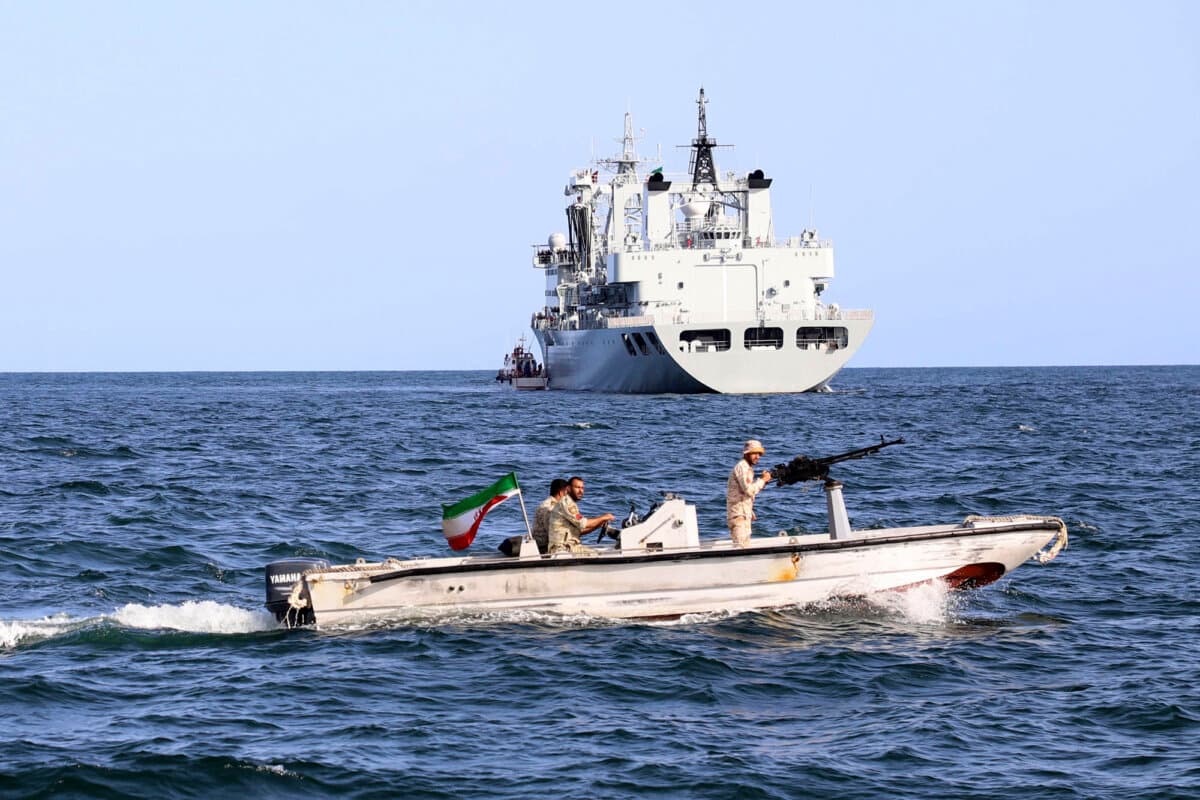
An Iranian military boat patrols as a warship enters Iranian waters prior to a joint naval drill of Iran, Russia, and China, in the Indian Ocean on March 12, 2024. (Iranian Army via AP)
Su Tzu-yun, researcher and director of the division of defense strategy and resources at Taiwan’s Institute for National Defense and Security Research, told The Epoch Times that numerous reports confirm that the CCP has been covertly supporting Iran, thereby becoming a source of instability among Middle Eastern nations.
“Beijing’s actions have now been exposed; consequently, this will indeed have an adverse impact on China’s future development and standing in the Middle East,” Su said. “Furthermore, given the longstanding animosity between Iran and countries such as Saudi Arabia and the UAE—stemming from Iran’s role as an aggressive military expansionist within the region—this situation effectively lends legitimacy to any decision by President Trump to resort to military force. Thus, Beijing stands to lose on all fronts.”
Cao said that the recent “total elimination” of Iran’s top leadership—coupled with the complete failure of China-supplied weaponry early in the conflict—constitutes a significant blow to the CCP.
“In addition, the United States has obtained substantial evidence of the CCP’s covert support for Iran. Consequently, Trump is expected to leverage this during future negotiations with Xi Jinping—potentially including the imposition of further sanctions on Chinese enterprises—which is precisely what the CCP fears,” he said.
Future Development
As long as the Iranian regime manages to survive, the CCP’s support for it will not diminish, Cao said.
“The reason is that, for the CCP, the Iranian regime serves as a crucial lever—specifically, a key instrument through which the CCP can project its influence within the Middle East.”
He noted that the internal divisions within Iran are profound, and the struggle between the “accommodationist” faction and the “hardline” faction is fierce.
“Under the intense pressure exerted by the United States, it appears that the accommodationist faction has gained the upper hand. For the CCP, this development was actually a setback,” Cao said.
“This is because the CCP has tended to lend its firmest support to the Islamic Revolutionary Guard Corps—that is, the hardliners. As for the future trajectory of events, we have to wait and see.”
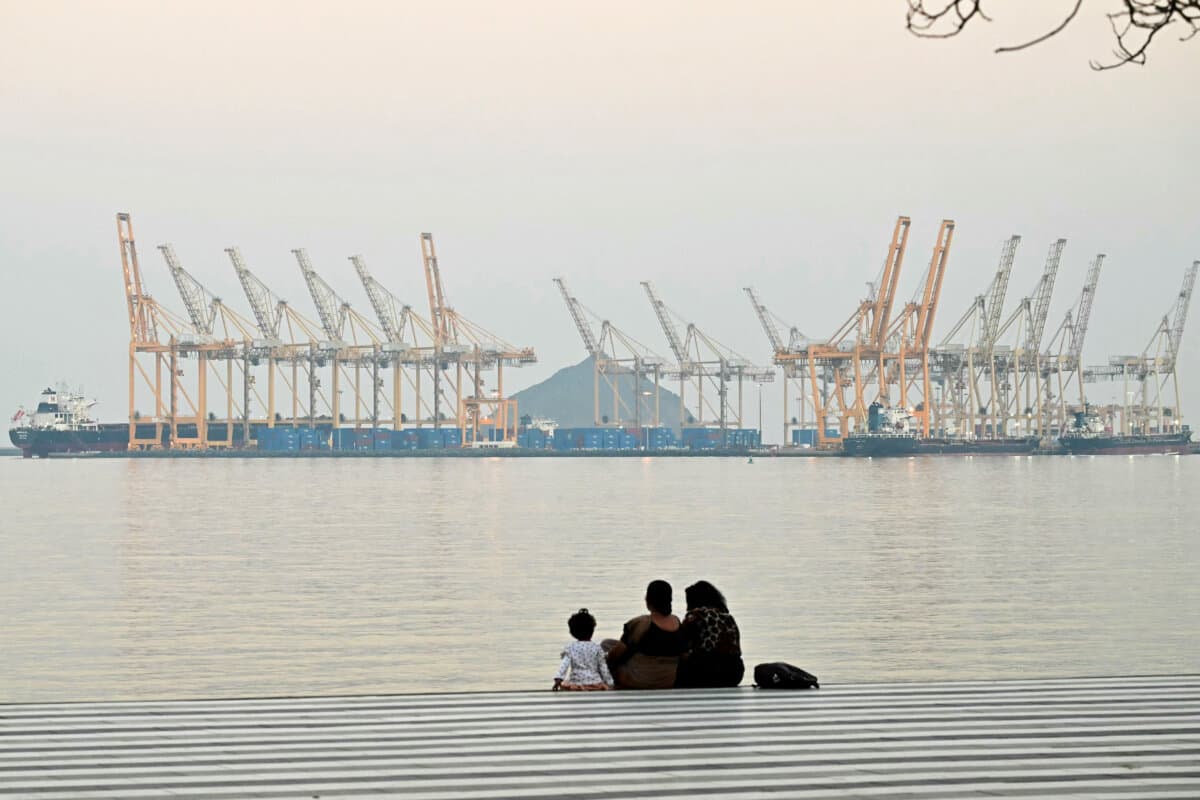
A family views a dockyard off the city of Fujairah, United Arab Emirates, just south of the Strait of Hormuz, on Feb. 25, 2026. (Giuseppe Cacace/AFP via Getty Images)
Tang predicted that three scenarios are likely to unfold regarding the strait.
“The first is a return to the pre-conflict status quo—characterized by completely free, unimpeded, and toll-free passage—which represents the most ideal outcome,” he said.
“The second scenario involves continued freedom of navigation through the strait, but with Iran levying transit fees—possibly sharing the revenue with Oman (on the south coast of the strait).”
The third scenario is the worst case, Tang said: “Iran maintains its control over the strait, granting passage selectively to certain nations rather than allowing free transit, while simultaneously imposing tolls; this would effectively constitute an acknowledgment of Iran’s jurisdiction over this international waterway.”
The Iranian regime has long been a major source of global political and economic instability—somewhat akin to a recurring virus that flares up periodically, Su said.
“As the saying goes: It is better to endure a sharp, brief pain than a prolonged, chronic one. If [the Iranian regime] can be eradicated, it will ensure long-term stability and sustainable economic development for the world in the future,” Su said.
He noted that the military actions taken by the Trump administration and Israel to counter Iran have garnered support from the Gulf states.
“The war between the United States and Iran is, at its core, a matter concerning the future global order—specifically, the trajectory of a critical strategic crossroads,” Su said. “At present, things appear to be moving in a positive direction; the ultimate outcome now hinges on whether Iran will be willing to agree to abandon its nuclear weapons program once a ceasefire is eventually held,” Su said.
Luo Ya, Ning Haizhong, and Reuters contributed to this report.