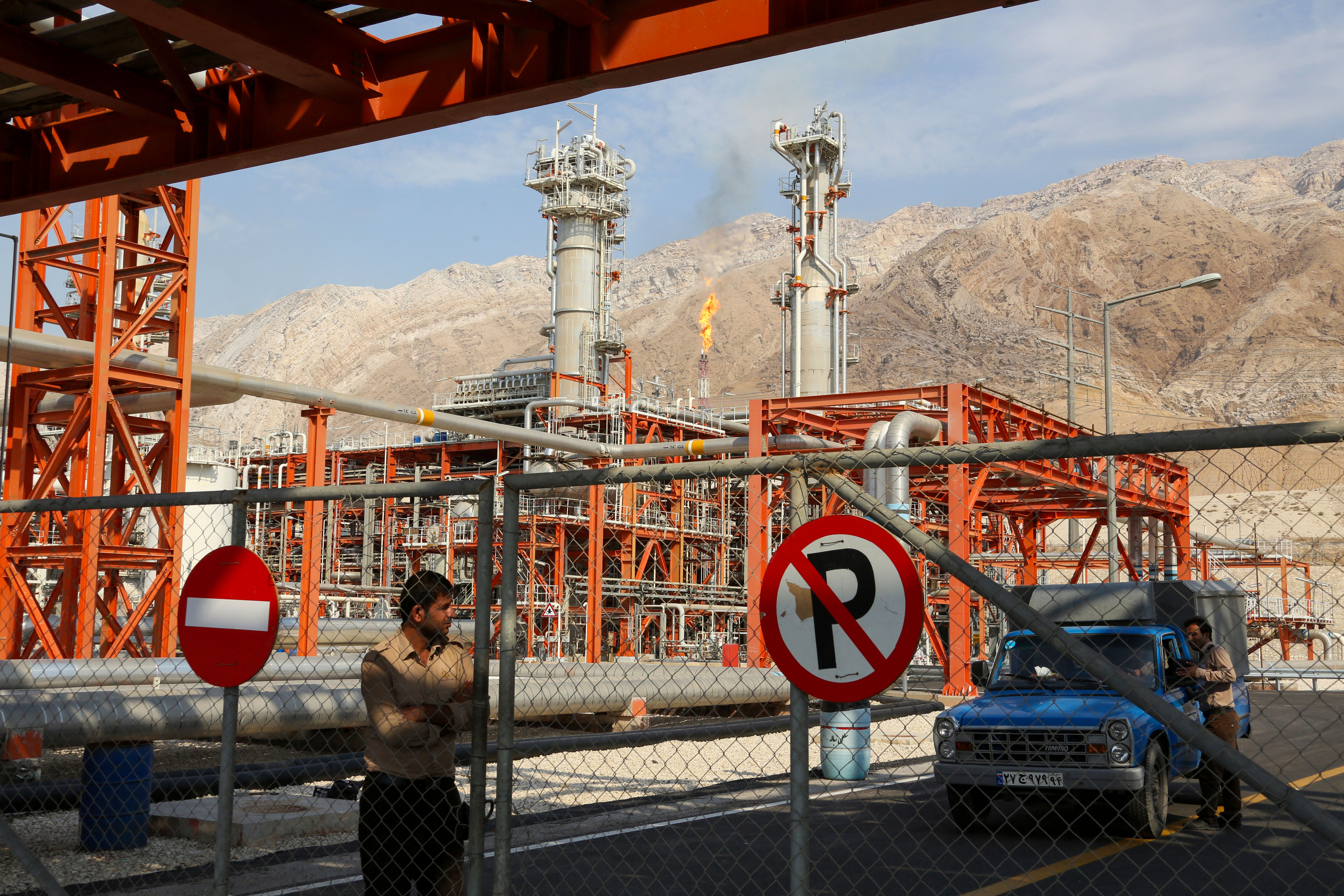

Israel said on April 6 that it carried out an airstrike on Iran’s largest petrochemical facility—the South Pars plant at Asaluyeh—as hostilities continued and diplomatic efforts to secure a cease-fire faced mounting pressure ahead of a U.S. deadline.
Israeli Defense Minister Israel Katz said the strike inflicted massive economic damage and hit a key pillar of Iran’s industrial base, responsible for around 50 percent of the country’s petrochemical production.
“The IDF has just carried out a powerful strike on Iran’s largest petrochemical facility,“ Katz said. ”The damage to the Iranian regime is estimated at tens of billions of dollars.”
Strike Targets South Pars Hub
Iranian media earlier reported that attacks targeted facilities at the South Pars natural gas field in southern Bushehr province, blaming the United States and Israel, though neither country initially confirmed responsibility for that specific location.
Katz later confirmed Israel had struck the South Pars petrochemical complex at Asaluyeh, aligning with those reports and marking one of the most direct attacks yet on Iran’s energy lifeline.
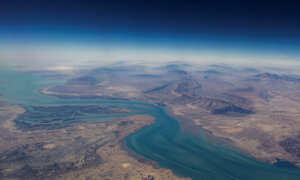
South Pars—shared with Qatar, where it is known as the North Field—is the world’s largest natural gas field and a cornerstone of Iran’s economy. The offshore reserve under the Persian Gulf supplies a significant share of global liquefied natural gas.
An Israeli strike on South Pars facilities in March triggered a wave of Iranian retaliatory attacks on oil and gas infrastructure across Gulf Arab states.
At the time, Iran condemned Israeli strikes on South Pars, with President Masoud Pezeshkian warning of “uncontrollable consequences” that “could engulf the entire world.”
When asked about the latest strike, Israeli military spokesperson Lt. Col. Nadav Shoshani said there would be “no immunity” for Iran as cease-fire talks continue.
Leadership Targets and Broader Campaign
The strike on petrochemical infrastructure came alongside continued Israeli targeting of Iran’s military leadership.
Israeli officials said an airstrike in Tehran on Monday killed Maj. Gen. Majid Khademi, the intelligence chief of Iran’s Islamic Revolutionary Guard Corps (IRGC). It was one of the highest-profile targeted killings since the conflict escalated in late February.
“The Revolutionary Guard are shooting at civilians and we are eliminating the leaders of the terrorists,” Katz said. “Iran’s leaders live with a sense of being targeted. We will continue to hunt them down one by one.”
The Israel Defense Forces (IDF) said Khademi played a central role in advancing operations abroad and overseeing domestic surveillance. Iran’s state-affiliated Tasnim news agency confirmed his death, describing it as a “terrorist attack by the American-Zionist enemy.”
Separately, Israel said it eliminated a senior figure overseeing commercial operations at the IRGC’s oil headquarters, amid a broader strategy to disrupt both military leadership and financial networks tied to Iran’s regional operations.
Katz said Israel had “severely damaged” Iran’s steel and petrochemical sectors and would continue to strike what he described as the regime’s economic backbone.
Escalation on Multiple Fronts
The latest strikes come as hostilities intensify across the region, even as diplomatic efforts accelerate to secure a cease-fire before a looming U.S. deadline.
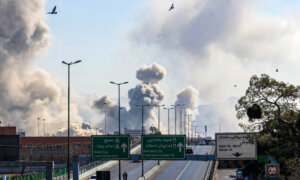
In northern Israel, two people were killed after an Iranian missile struck a residential building in Haifa early on April 6, according to local authorities. In Tehran, explosions were reported overnight, with thick smoke rising near Azadi Square following apparent airstrikes.
Since U.S.–Israeli military operations against Iran were launched on Feb. 28, the conflict has increasingly expanded to include economic and energy infrastructure, raising fears of a broader regional war.
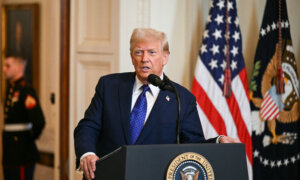
U.S. President Donald Trump has warned of possible attacks on Iranian infrastructure, including power plants and bridges, if Tehran does not reopen the Strait of Hormuz.
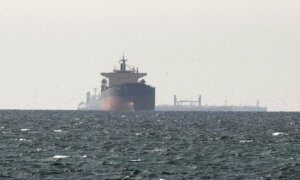
Iran has been restricting shipping traffic through the strait, a key maritime transit lane through which some 20 percent of the world’s oil and gas is transported.
Trump gave Iran until 8 p.m. on April 7 to reopen the strait or face major destruction of its energy infrastructure.
Meanwhile, regional mediators, including Turkey, Egypt, and Pakistan, have been working to bring Washington and Tehran back to the negotiating table, with Israeli officials describing the effort as a race against time.
Trump said on April 5 that the United States was “in deep negotiations” with Iran and expressed hope for a breakthrough before the deadline.
“There is a good chance, but if they don’t make a deal, I am blowing up everything over there,” Trump said.
Iran has rejected the ultimatum, with Foreign Ministry spokesman Esmaeil Baqaei saying on April 6 that negotiations under threat of force were inappropriate, according to Tasnim news agency.
Tehran has so far refused to fully reopen the Strait of Hormuz, a key U.S. condition for de-escalation, though it has allowed limited transit for vessels it considers friendly.
Chris Summers and The Associated Press contributed to this report.