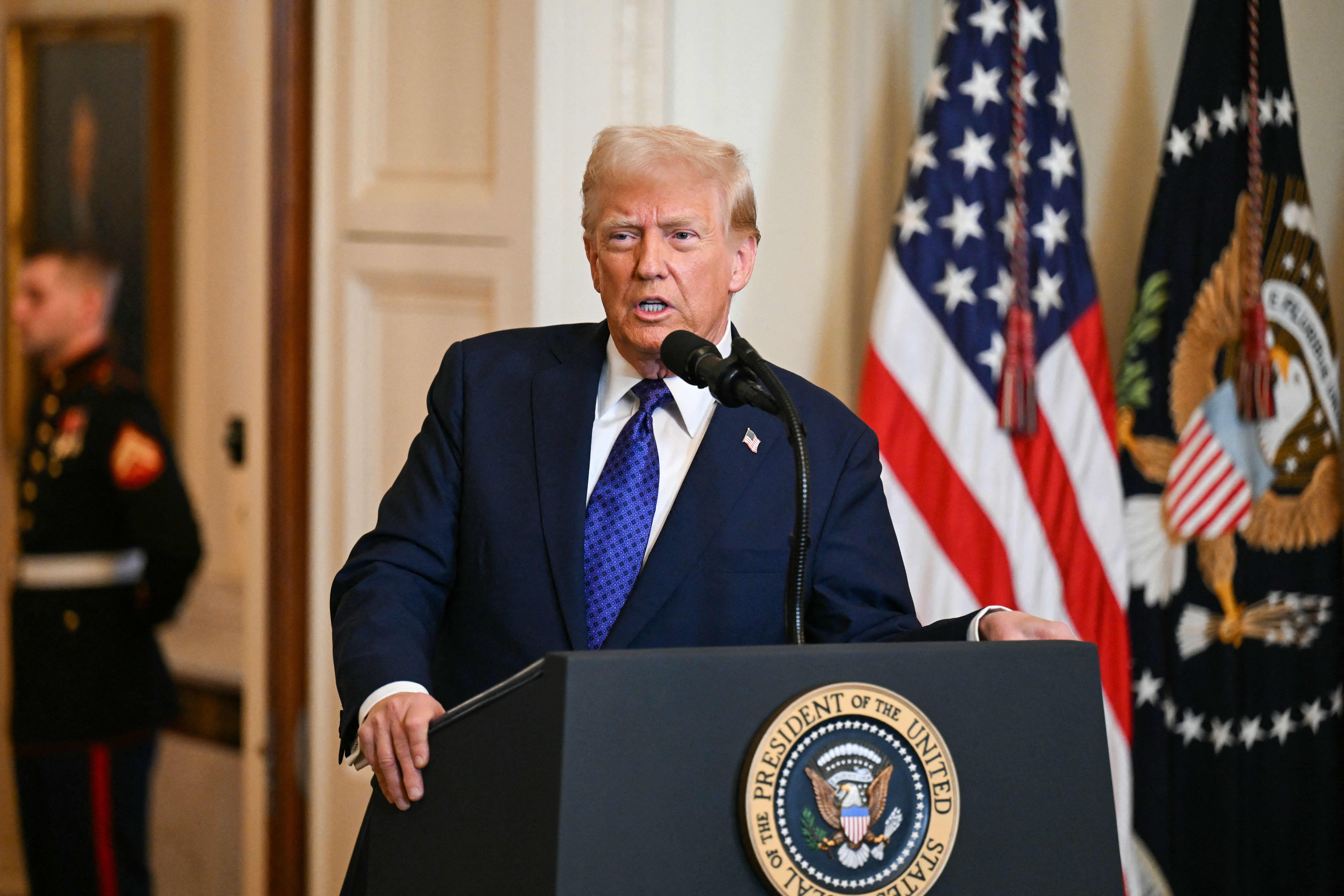

U.S. President Donald Trump has said the United States will not agree to any deal with Iran unless Tehran abandons its nuclear ambitions, laying down a firm red line ahead of a possible second round of U.S.–Iran peace talks after the first round failed to yield an agreement.
“Well, first of all, if they don’t, we’re not making a deal,” Trump said in an interview with Fox News that aired on April 15. “There’s no deal.”
He noted that the key objective of U.S. policy regarding Iran remains unchanged.
“This whole thing is really about no nuclear—they cannot have a nuclear weapon,” Trump said.
Trump’s comments come as Washington and Tehran weigh another round of negotiations after talks in Pakistan on April 12 ended without a breakthrough.
In a New York Post interview on April 14, Trump said a second round of talks could take place “over the next two days,” noting that discussions had been moving “a little bit slow.”
He initially suggested a European venue before indicating that the talks were more likely to return to Islamabad, where Pakistani officials have been facilitating dialogue.
U.S. Vice President JD Vance, who led the U.S. delegation, said the main obstacle in the first round was Iran’s refusal to commit to abandoning nuclear weapons development.
“Whether we have further conversations, whether we ultimately get to a deal, I really think the ball is in the Iranian court, because we put a lot on the table,” Vance said in an April 13 interview with Fox News.
Iran has maintained that its nuclear ambitions are civilian and peaceful, a position reiterated at an April 14 news briefing by Iranian Foreign Ministry spokesperson Esmaeil Baqaei.
Baqaei was cited by state-run media outlet Islamic Republic News Agency, in a post on Telegram, as saying that Iran has never and will never seek nuclear weapons, dismissing U.S. claims to the contrary as a pretext for hostility.
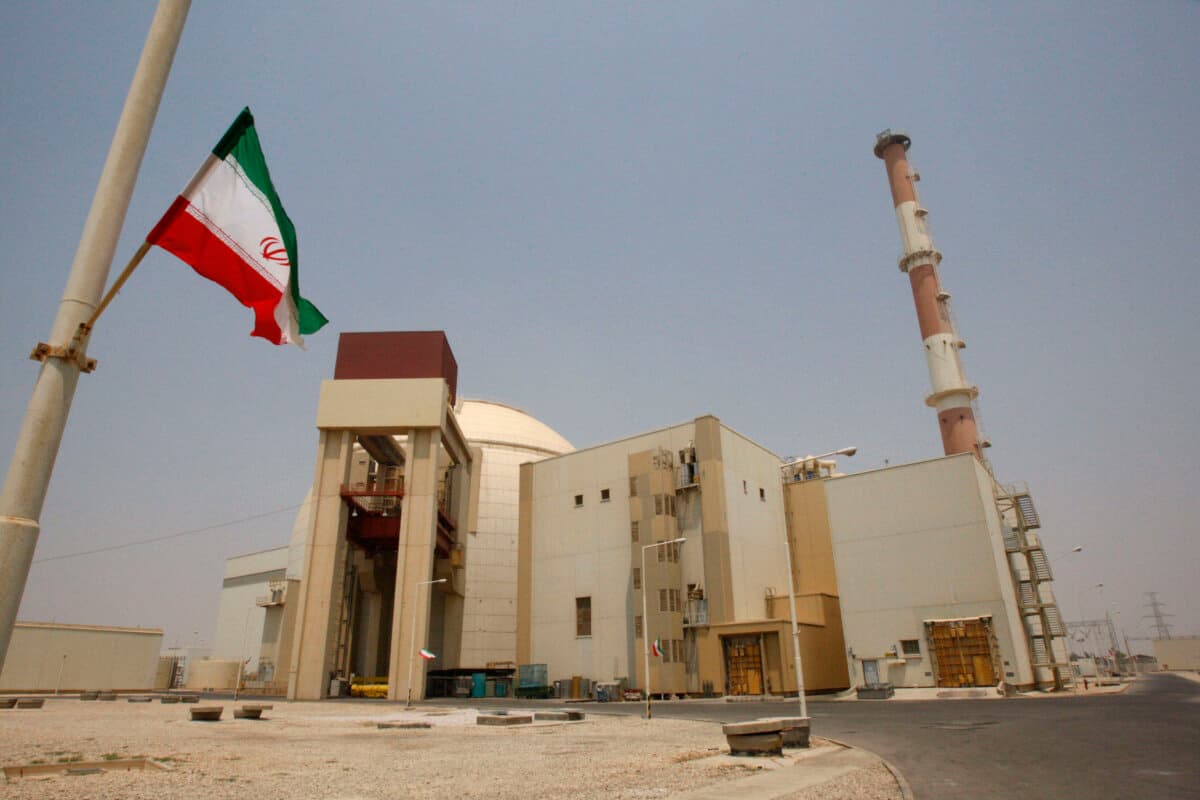
An Iranian flag flutters in front of the reactor building of the Bushehr Nuclear Power Plant, just outside the southern city of Bushehr, Iran, on Aug. 21, 2010. (Vahid Salemi/AP Photo)
He said Iran would soon host a senior Pakistani delegation in Tehran, confirming that exchange of messages with the United States continues through Islamabad’s mediation efforts.
Besides acknowledging that diplomacy continues, Baqaei said Tehran insists on its right to enrich uranium, although it is open to discussions about the level and type, according to Iranian state-run news outlet Tasnim.
Iran’s Permanent Mission to the International Organizations in Vienna wrote in an April 15 post on X that claims that Tehran is seeking to produce a nuclear weapon are false.
It is a lie that “Iran is only a few weeks away from developing nuclear weapons,” the organization said, noting that the assertions have been made for decades.
“[It has] not changed the reality that essentially Iran never opted for a nuclear weapon but insisted on its inalienable rights for peaceful uses of nuclear energy,” it said.
The late Iranian leader Ali Khamenei banned the development of nuclear weapons in a fatwa, or religious edict, in the early 2000s. He reiterated that in 2019, saying that building and stockpiling nuclear bombs was “wrong and using it is haram,” or religiously forbidden. Khamenei was killed when the United States and Israel launched strikes against Iran on Feb. 28.
In a March 2025 report, the U.S. Office of the Director of National Intelligence said that “Iran is not building a nuclear weapon” and that Khamenei “has not reauthorized the nuclear weapons program he suspended in 2003.”
In the 2026 report, the Office of the Director of National Intelligence said that before Operation Epic Fury began in February, Iran had “developed space-launch vehicles that it could use to develop a military-viable [intercontinental ballistic missile] by 2035 should Tehran decide to do so.”
“[Iran was also] intending to try to recover from the devastation of its nuclear infrastructure sustained during the 12-Day War, and refused to live up to its nuclear obligations with the [International Atomic Energy Agency], including refusing to allow [the agency] access to key nuclear facilities,” the report states.
Blockade Puts Pressure on Tehran
After the recent Islamabad talks failed to reach a breakthrough, the United States imposed a naval blockade on Iranian ports, ramping up economic pressure on Tehran.
U.S. Central Command said on April 14 that the blockade was fully enforced within its first day, with multiple vessels turning back after being denied access to Iranian ports.
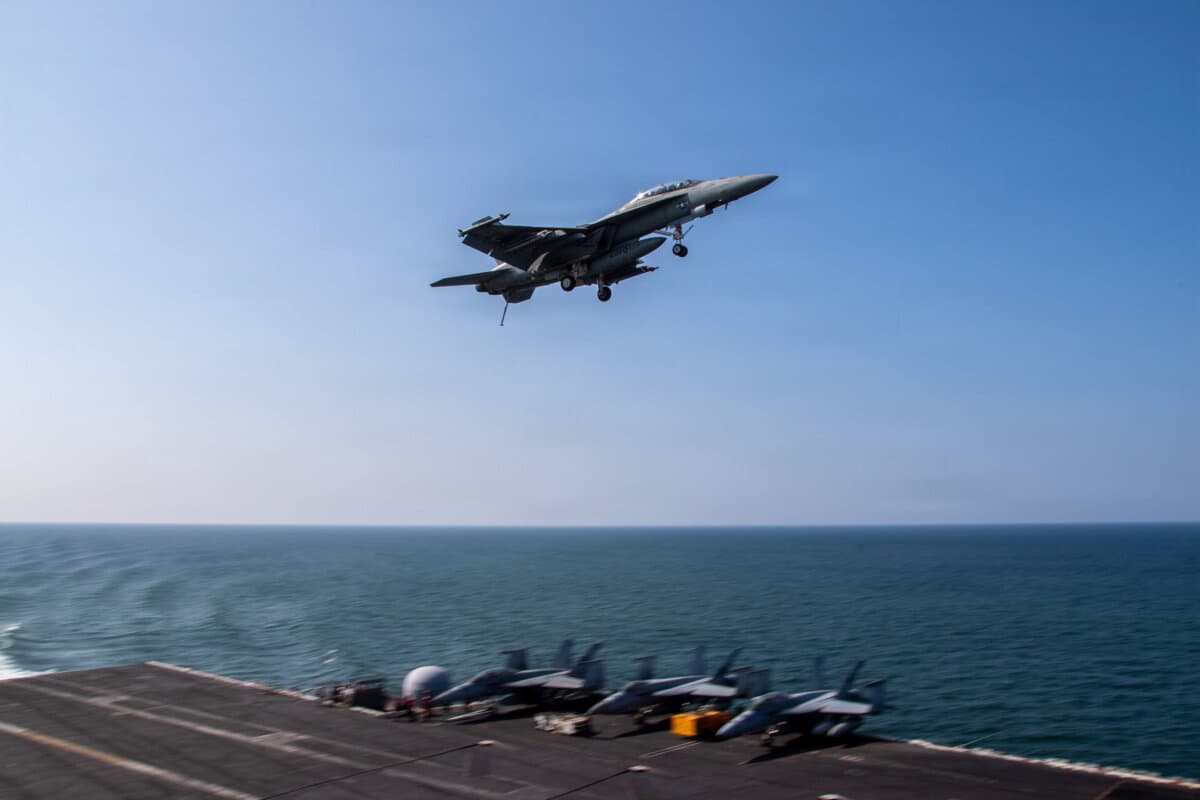
An F/A-18F Super Hornet, attached to Strike Fighter Squadron (VFA) 41, flies over the flight deck of Nimitz-class aircraft carrier USS Abraham Lincoln (CVN 72) in support of Operation Epic Fury on March 6, 2026. (U.S. Navy via Getty Images)
Adm. Brad Cooper said that the U.S. military had effectively halted most of Iran’s seaborne trade, noting that roughly 90 percent of the country’s economy depends on maritime activity.
“In less than 36 hours since the blockade was implemented, U.S. forces have completely halted economic trade going into and out of Iran by sea,” Cooper said.
Freedom of navigation remains in place for ships not traveling to or from Iran, Central Command said, noting that more than 10,000 U.S. service members and more than a dozen warships are enforcing the blockade.
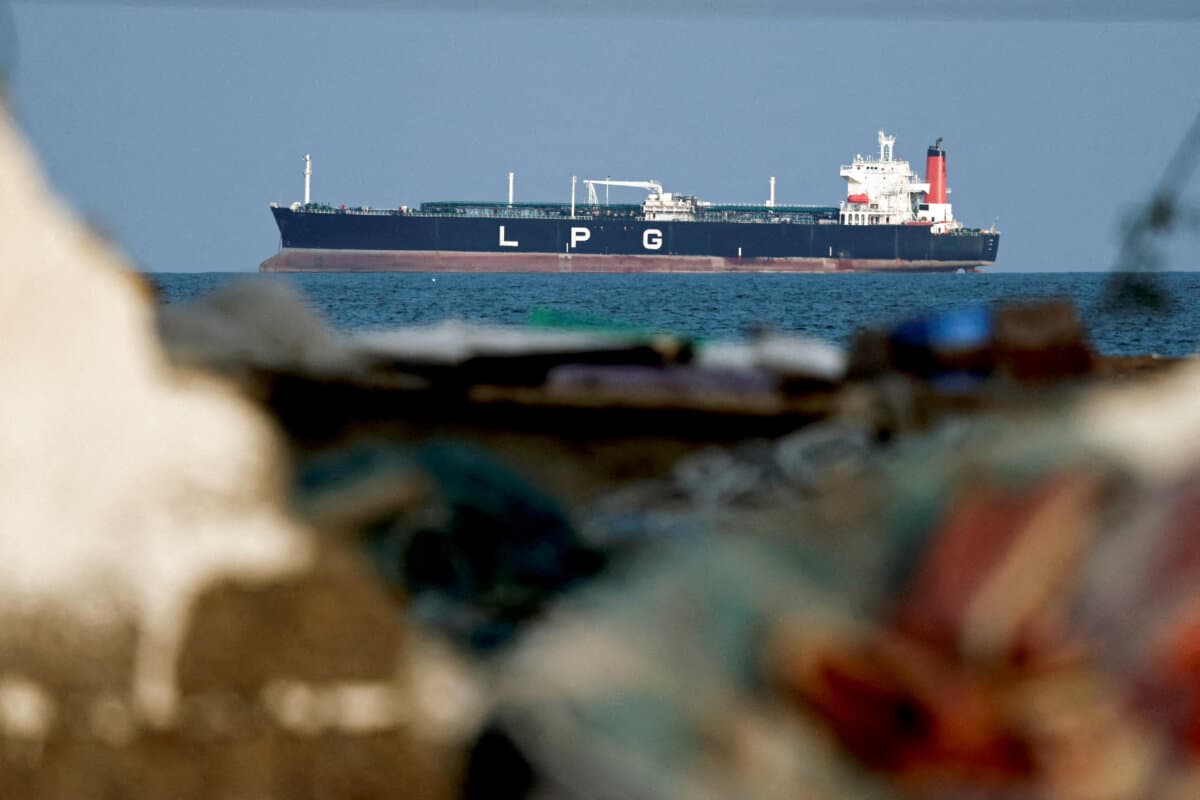
A liquefied petroleum gas tanker at anchor as traffic is down in the Strait of Hormuz, amid the U.S.–Israeli conflict with Iran, in Shinas, Oman, on March 11, 2026. (Benoit Tessier/Reuters)
It comes amid major shipping disruptions in the Strait of Hormuz, a critical artery for global oil and gas flows that carries about one-fifth of the world’s supply, after Iran imposed restrictions of its own in retaliation for U.S.–Israeli attacks, slowing Persian Gulf crude shipment to a trickle.
Senior Iranian military officials have threatened escalation in response to the U.S. blockade.
Maj. Gen. Ali Abdollahi, commander of the Khatam al-Anbiya Central Headquarters, was cited by the Islamic Republic News Agency in a post on Telegram as saying that Tehran sees America’s maritime actions as verging on a breach of the ceasefire. He said Iranian forces are prepared to block all imports and exports in the Persian Gulf, the Sea of Oman, and the Red Sea region, in retaliation.
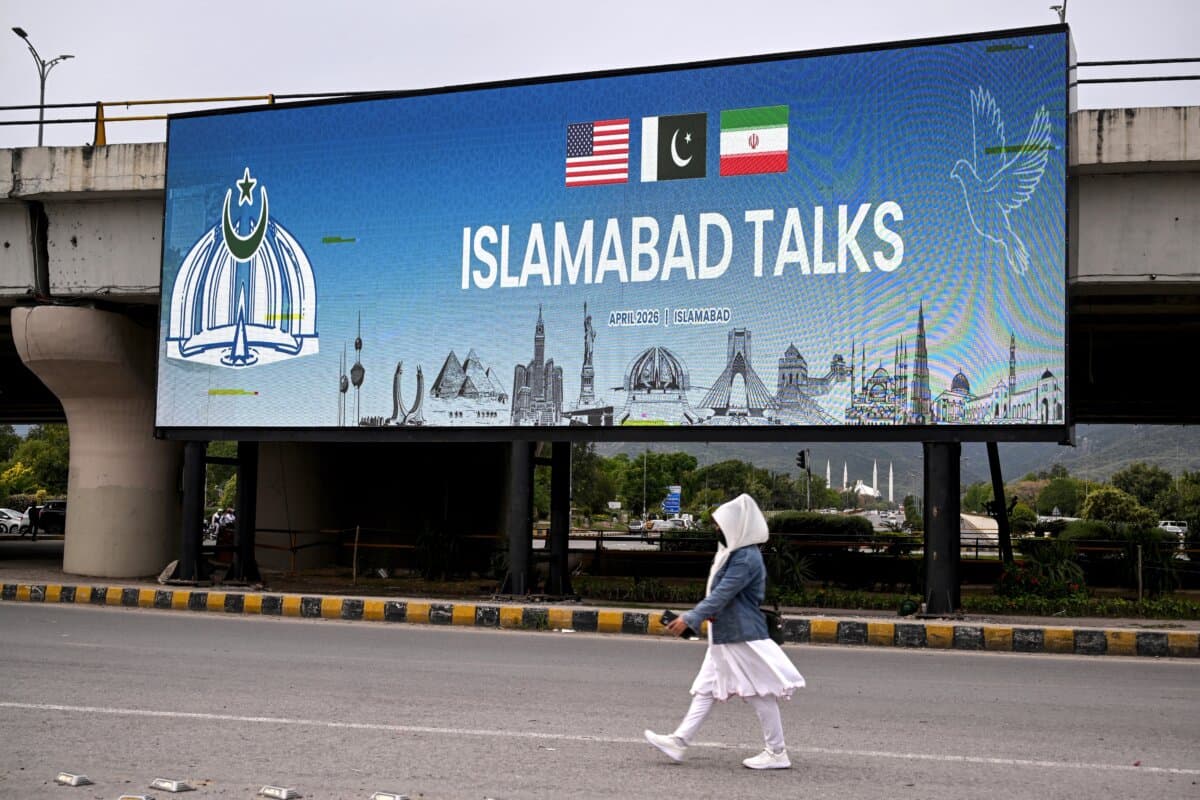
A woman walks past a digital screen displaying news of U.S.–Iran peace talks along a road in Islamabad, on April 10, 2026. (Farooq Naeem/AFP via Getty Images)
Despite the threat of escalation, Trump said in an April 14 interview with Fox News that diplomacy remains possible and that he believes that the war is “close to over.”
“I think they want to make a deal very badly,” he said.
He said that Iran has been “hit very hard” by weeks of military operations.
“I don’t know how much longer they can survive,” Trump said.
He said that although the United States can escalate further if needed, it is choosing restraint to create space for negotiations.