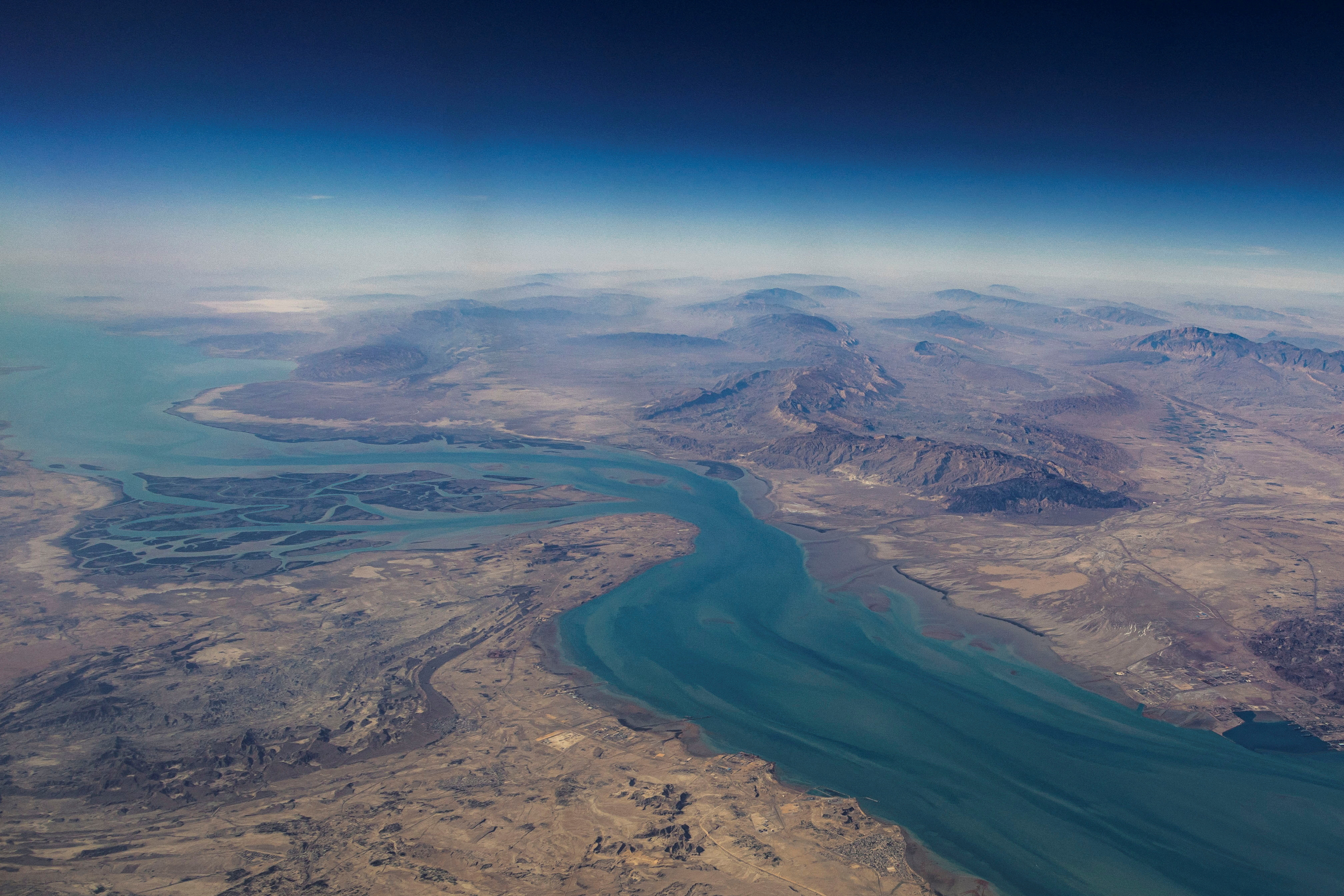

Iranian Foreign Minister Seyed Araghchi has announced that, for the duration of the 10-day ceasefire between Israel and Lebanon, Iranian forces will cease restricting shipping traffic through the Strait of Hormuz, the critical oil transit waterway that Tehran has been blocking in retaliation for U.S.-Israeli attacks that has become a focal point in the war.
“In line with the ceasefire in Lebanon, the passage for all commercial vessels through Strait of Hormuz is declared completely open for the remaining period of ceasefire, on the coordinated route as already announced by Ports and Maritime Organisation of the Islamic Rep. of Iran,” Araghchi said in an April 17 post on social media.
Araghchi’s announcement, endorsed in a Truth Social post by U.S. President Donald Trump, comes on the heels of a U.S.-brokered ceasefire between Israel and Lebanon, where Israeli forces have been battling the Iran-allied Hezbollah terrorist group after it launched attacks against Israel in response to the Iran war.
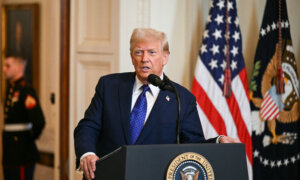
“Thank you!” Trump wrote in the post, adding that Iran’s announcement means that the Strait of Hormuz is “fully open and ready for full passage.”
In a follow-up message, Trump said that the U.S. naval blockade of Iran-linked vessels would remain in “full force” until the peace deal that Washington is negotiating with Tehran is “100% complete.”
It comes as Pakistan’s army chief met with Iranian officials in Tehran on Thursday as part of a mediation effort between the United States and Iran to extend their temporary truce and help bring about a lasting peace agreement, with much uncertainty remaining around whether the frantic diplomacy can lead to a deal.
News of the apparent reopening of the strait—long seen as the most dangerous flashpoint for global energy markets—immediately rippled through financial markets. Oil prices fell, down by more than 10 percent so far on the last trading day of the week, while Wall Street rallied toward another record.
The S&P 500 gained 0.7 percent as U.S. stocks moved closer to the conclusion of a third straight week of big gains. The Dow Jones Industrial Average rose 1 percent, and the Nasdaq composite added 1 percent.
Still, Araghchi’s remarks that vessel traffic must follow a “coordinated route” suggest the move to reopen the strait is tightly calibrated and set to reverse once the 10-day ceasefire between Israel and Lebanon lapses.
The International Maritime Organization (IMO), the United Nations’ shipping regulator, said that it is monitoring traffic through the strait to verify whether it is, indeed, open.
“We are currently verifying the recent announcement related to the reopening of the Strait of Hormuz, in terms of its compliance with freedom of navigation for all merchant vessels and secure passage using the IMO established traffic separation scheme,” IMO Secretary-General Arsenio Dominguez said in a post on social media.
Dominguez told Euronews on April 16 that, as part of its actions, Iran introduced a different corridor in the Strait of Hormuz than the one recognized by the IMO, and that he lacks information about its safety for shipping.
“We have, since 1968, a traffic separation scheme that is coordinated between Oman and Iran, and this is established in accordance with international law,” he said. “It’s ready to resume operations.”
Dominguez said that, once the conflict ends, the IMO is ready to implement an evacuation framework to assist stranded ships and seafarers in the Strait of Hormuz, as well as to restore transit. He added that technical plans for this have been shared with both the United States and Iran.
Trump said in a separate post on April 17 that Iran had agreed to “never close the Strait of Hormuz again” and that the critical shipping chokepoint—through which some 20 percent of seaborne oil and gas transit—would never again be used as a “weapon” against the rest of the world.
He added that Iran would, with the help of the United States, remove any mines laid in the strait.
Israel–Lebanon Ceasefire Holds
On the ground, the fragile ceasefire between Israel and Lebanon appeared to be holding on April 17, though both sides signaled that core disputes remain unresolved.
Israeli Defense Minister Israel Katz said Israel’s campaign objective—disarming Hezbollah in southern Lebanon—“is not yet complete,” and that Israeli forces would maintain their current positions.
“The goal we defined: disarming Hezbollah by military or political means was and remains the goal of the campaign to which we are committed,” Katz said in an April 17 video statement. “The Israeli army holds and will continue to hold all the places it has cleared and conquered.”
Israeli Prime Minister Benjamin Netanyahu has similarly insisted that any lasting peace arrangement must include the dismantling of Hezbollah’s military capabilities, rejecting proposals that would tie Israeli withdrawal to a “quiet for quiet” ceasefire model.
Israel will remain in Lebanon’s security buffer zone, which is approximately six miles deep from its border, the Israeli leader said in an April 16 statement.
“That is where we are, and we are not leaving,” Netanyahu said, while describing the moment as an “opportunity to forge a historic peace agreement with Lebanon.”
The 10-day ceasefire, which took effect at 5 p.m. ET on April 16 following U.S.-mediated talks, represents the first sustained pause in hostilities since the conflict escalated in early March.
Trump, who has taken an active role in brokering the pause, said he hopes to bring Netanyahu and Lebanese President Joseph Aoun to the White House for direct talks—the first such meeting between the two sides in more than 30 years.
In a series of posts on April 17, Trump said that U.S. negotiations with Iran are making progress on a separate track from the Lebanon ceasefire, while taking a hard line on both Hezbollah and Israel’s future military actions.
“The U.S.A. will get all Nuclear ‘Dust,’ created by our great B2 Bombers—No money will exchange hands in any way, shape, or form,” Trump wrote, referring to his demand that Iran halt its nuclear program and relinquish its stockpile of enriched uranium as part of any agreement.
“This deal is in no way subject to Lebanon, either, but the USA will, separately, work with Lebanon, and deal with the Hezbollah situation in an appropriate manner.”
Trump also said that Israel would halt further strikes on Lebanon under U.S. direction.
“Israel will not be bombing Lebanon any longer. They are prohibited from doing so by the U.S.A. Enough is enough!!!” he wrote.
The war has taken a heavy humanitarian toll. Lebanese authorities say nearly 2,200 people have been killed and more than 7,100 injured since early March, with more than 1.2 million displaced from their homes, according to the Lebanese Ministry of Public Health.
Israel has maintained that its strikes are aimed at degrading Hezbollah’s capabilities, with Netanyahu saying that Israeli forces have destroyed a large portion of the group’s estimated arsenal of 150,000 rockets and missiles.
US Maintains Pressure on Iran
Alongside diplomatic efforts to settle the conflict, Washington has moved to intensify economic and military pressure to push Tehran to accept a deal that would—crucially for Trump—involve an end to Iran’s nuclear program.
The Pentagon confirmed on Thursday that a U.S.-led naval blockade targeting Iran-linked shipping has been significantly expanded, with authorities now asserting the right to intercept and seize vessels suspected of supporting Iran’s war effort anywhere on the high seas.
Chairman of the Joint Chiefs of Staff Gen. Dan Caine told a press briefing on April 16 that the policy reflects a broader application of wartime maritime enforcement, warning that vessels connected to Iran or carrying designated “contraband” could face boarding or seizure.
“Turn around or prepare to be boarded,” Caine said, describing enforcement measures that could include warning shots and vessel takeovers.
The updated guidance defines contraband broadly, extending beyond weapons to include petroleum, industrial materials, and dual-use goods deemed capable of supporting Iran militarily.
Iran, which has sharply criticized the U.S. blockade, has warned that it could retaliate by targeting shipping lanes or regional energy infrastructure.
Behind the scenes, diplomatic efforts to extend the ceasefire and secure a broader U.S.–Iran agreement remain fluid.
Pakistan has emerged as a key intermediary, with its army chief meeting Iranian officials in Tehran on Thursday as part of efforts to revive negotiations that stalled earlier this week in Islamabad.
The Trump administration has maintained that any deal must include Iran abandoning its nuclear ambitions, including relinquishing enriched uranium stockpiles—conditions that Iranian negotiators have so far resisted.