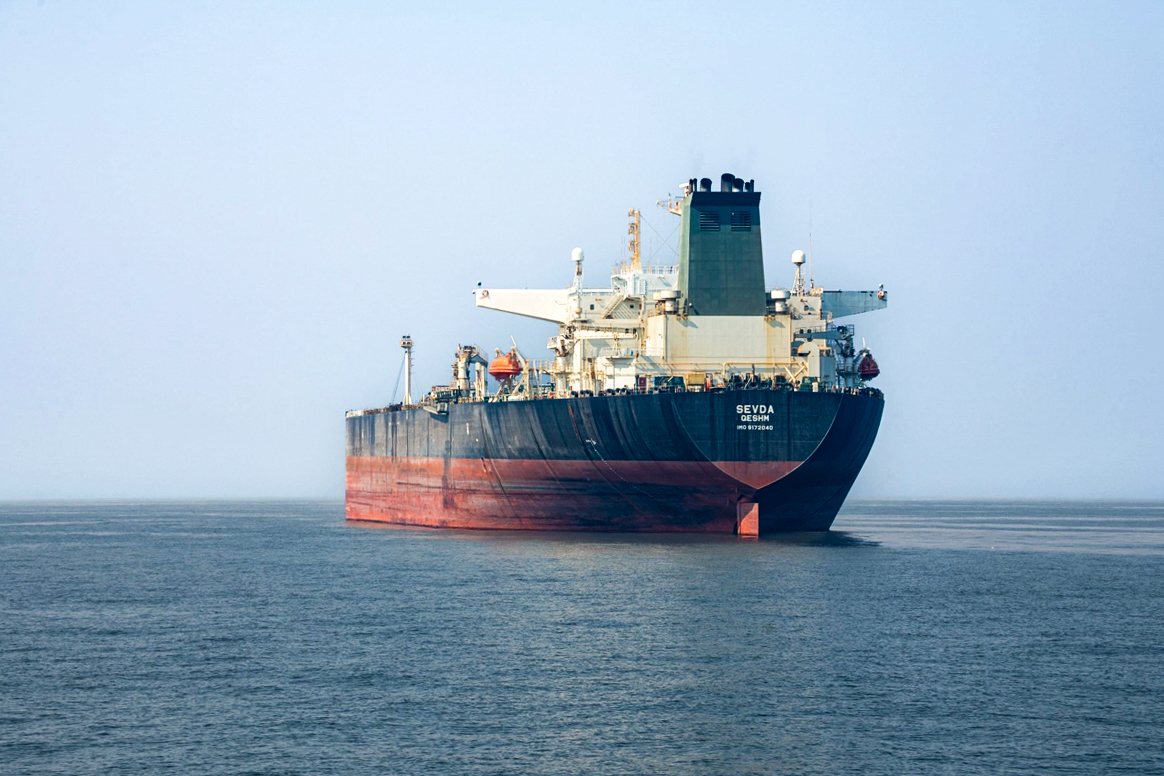

U.S. President Donald Trump said on March 26 that Iran had given the United States a “present” in the form of several boats carrying oil.
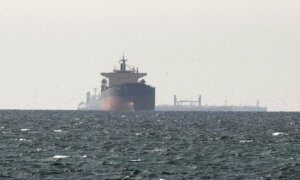
To show that they were serious and reliable, Iran had planned to send more than eight large vessels of oil, he said. He initially thought nothing of it, but then he saw a news report stating that eight ships were moving through the Strait of Hormuz.
Trump, speaking during a Cabinet meeting, reiterated that his administration is having “very substantial talks” with Tehran to resolve the conflict.
Iranian officials gifted the United States 10 boats of crude oil to show that they were “real and solid” during negotiations, he said.
“I guess we’re dealing with the right people,” the president said. “And actually, they then apologized for something they said, and they said, ‘We’re going to send two more boats,’ and ended up being 10 boats.”
Earlier this week, the president hinted that Tehran was giving the United States a “present” related to oil and gas, “worth a tremendous amount of money.”
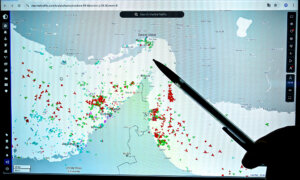
In recent days, Iran has implemented a de facto system requiring ships to submit documentation and undergo vetting to pass through the Strait of Hormuz, according to Lloyd’s List, a maritime intelligence service.
In some cases, the Islamic Revolutionary Guard Corps has been extolling a passage fee, Lloyd’s List noted.
“Analysis of Lloyd’s List Intelligence data reveals that at least 16 vessels have transited the strait since Friday,” the firm said in a March 25 report. “Thirteen vessels headed east out of the Middle East Gulf, while three entered westbound.”
It’s unclear if Trump’s reference to 10 tankers was among those noted by the intelligence service.
These comments came hours after Trump wrote on Truth Social that Iran’s leaders “better get serious, before it is too late.”
“The Iranian negotiators are very different and ’strange,'” he wrote on his social media platform.
“They are ‘begging’ us to make a deal, which they should be doing since they have been militarily obliterated, with zero chance of a comeback, and yet they publicly state that they are only ‘looking at our proposal.’ WRONG!”
Special envoy Steve Witkoff confirmed during the meeting that he delivered a 15‑point proposal aimed at ending the ongoing armed conflict with Iran.
Walking the Strait of Hormuz
Treasury Secretary Scott Bessent thinks energy prices will eventually come down once shipping traffic resumes along the vital artery between Iran and Oman.
The global chokepoint handles approximately 20 million barrels of oil and petroleum products daily, with most of the shipments destined for Asia.
“I am confident that shipping traffic will continue to increase on a daily basis, even before we secure the strait,” Bessent said.
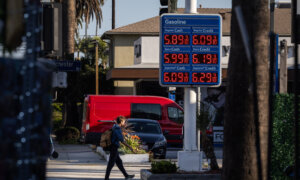
Crude oil prices have surged since the start of the war in Iran, but there has been a divergence between the United States and global benchmarks.
A barrel of West Texas Intermediate climbed by almost 5 percent on March 26 to above $94 on the New York Mercantile. Brent, an international benchmark for oil prices, also advanced by nearly 5 percent to $102 per barrel.
West Texas Intermediate concentrates on domestic production, inventories, and pipelines. However, Brent is sensitive to geopolitical developments and seaborne transportation.
While U.S. oil prices had accelerated to as high as $119 per barrel, they have since retreated due to a plethora of measures enacted by the current administration.
The White House established a $20 billion guaranteed political risk insurance program, waived a century-old shipping law—the Jones Act— and temporarily lifted sanctions on Iranian and Russian petroleum. The United States and dozens of other countries committed to tapping into their emergency reserves.
Still, the president said the oil and stock market reaction has not been as severe as he initially anticipated, noting that prices “have not gone up as much as I thought.”
“It’s all going to come back down to where it was and probably lower,” he said.
U.S. stocks have pared much of their gains from earlier in the trading week, with the leading benchmark index averages down by as much as 1.5 percent on March 26.
Yields on U.S. Treasury securities also climbed, while the U.S. dollar index jumped by almost 0.3 percent.
The potential economic damage may be reversed once the war is over, Trump said.
“My predictions have been right,” he said.
The economic outlook has been clouded by the Iranian conflict. Some argue that recession risks—back-to-back quarters of negative gross domestic product growth—remain elevated. Others say the U.S. economy remains insulated from oil price shocks and war in the Middle East.
Ryan Morgan contributed to this report.