
The war in Iran could bring a “skunk” to America’s economic party this year, JPMorgan Chase CEO Jamie Dimon said in his annual letter to shareholders, released on April 6.
Dimon warned that the conflict could elicit several scenarios, ranging from higher inflation to rising recession risks.
“A bad confluence of events generally causes various degrees of a recession,” Dimon said, adding that this climate can lead to higher credit losses, rising unemployment, and volatile markets.
“While the economy may be less fragile than in the past, this alone does not mean there is no ’tipping point'—it just may mean it could take more straws on the camel’s back to get there,” he wrote.
While a recession may happen in different ways, inflation could traverse various paths, Dimon said.
“There are some scenarios that would result in a recession, which generally reduces inflation, and other scenarios that would lead to a recession with inflation (stagflation—where inflationary forces overcome deflationary ones),” he said in the 48-page letter.
“The skunk at the party—and it could happen in 2026—would be inflation slowly going up, as opposed to slowly going down. This alone could cause interest rates to rise and asset prices to drop.”
U.S. stocks have faced a barrage of challenges over the past six weeks, amid fears that the Fed will not lower interest rates anytime soon because of the potential inflationary fallout from the war.
Despite a couple of the leading benchmark averages recently slipping into correction territory, U.S. equities remain high because they are typically viewed as a safe haven amid global turmoil, Dimon said. This has insulated Wall Street from economic downturns, but a decline in stock prices can spook investors and trigger a self-reinforcing cycle of fear, he said.
Dimon cautioned that if economic growth slows or stock markets weaken, underlying vulnerabilities could soon morph into a seismic problem for the United States.
“Human nature has not changed—sentiment and confidence can change rapidly and drive the markets,” Dimon said. “Falling asset prices at one point can change sentiment rapidly and cause a flight to cash.”
Global markets have already seen some of this play out.
The greenback has been one of the top-performing assets during the six-week-old conflict. The U.S. dollar index—a measure of the buck against a weighted basket of currencies such as the Japanese yen and British pound—has strengthened by as much as 2 percent this year because of Middle East tensions.
Heads or Tails
Long-term inflation expectations remain well-anchored, but the war-driven oil price shock has resulted in higher inflation forecasts heading into the summer.
The Bureau of Labor Statistics is scheduled to release the March consumer price index report later this week.
The Federal Reserve Bank of Cleveland estimates that the annual inflation rate could reach 3.3 percent. April’s 12-month inflation rate could also edge higher to 3.4 percent.
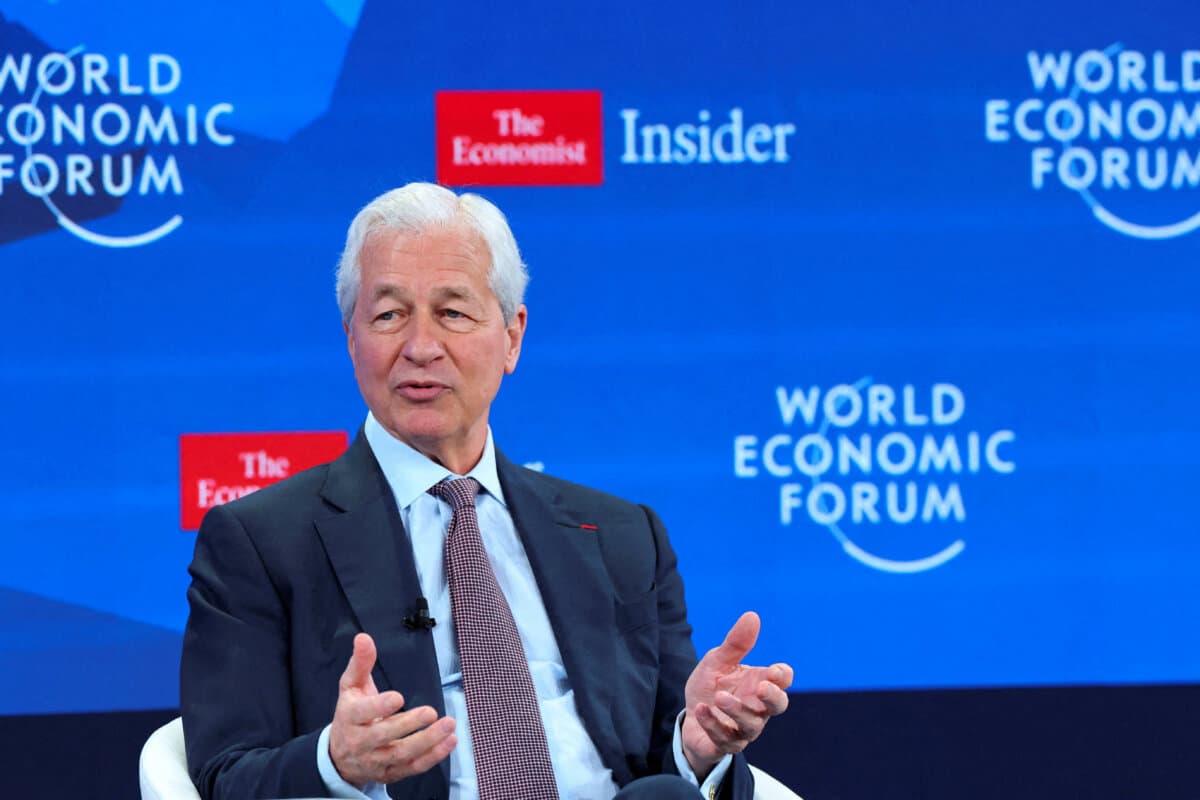
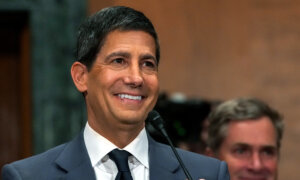
JPMorgan Chase CEO Jamie Dimon attends the 56th annual World Economic Forum meeting in Davos, Switzerland, on Jan. 21, 2026. (Denis Balibouse/Reuters)
Structural inflation remains only slightly above the central bank’s 2 percent target. The core consumer price index, which removes the volatile energy and food categories from calculations, is expected to hover at about 2.6 percent over the next two months, according to the Cleveland Fed’s Nowcasting model.
“Inflation expectations do appear to be well anchored beyond the short term, but nonetheless, it’s something we will eventually maybe face the question of what to do here,” Federal Reserve Chairman Jerome Powell said during a March 30 Harvard talk.
“We’re not really facing it yet, because we don’t know what the economic effects will be, but we’ll certainly be mindful of that broader context when we make that decision.”
Traders have pared their bets that the Federal Reserve will raise interest rates later this year. Likewise, market watchers have also reduced their expectations that the central bank will pull the trigger on a rate cut this year.
Investors now anticipate that policymakers will leave the current rate target, in a range between 3.5 percent and 3.75 percent, intact for another year.
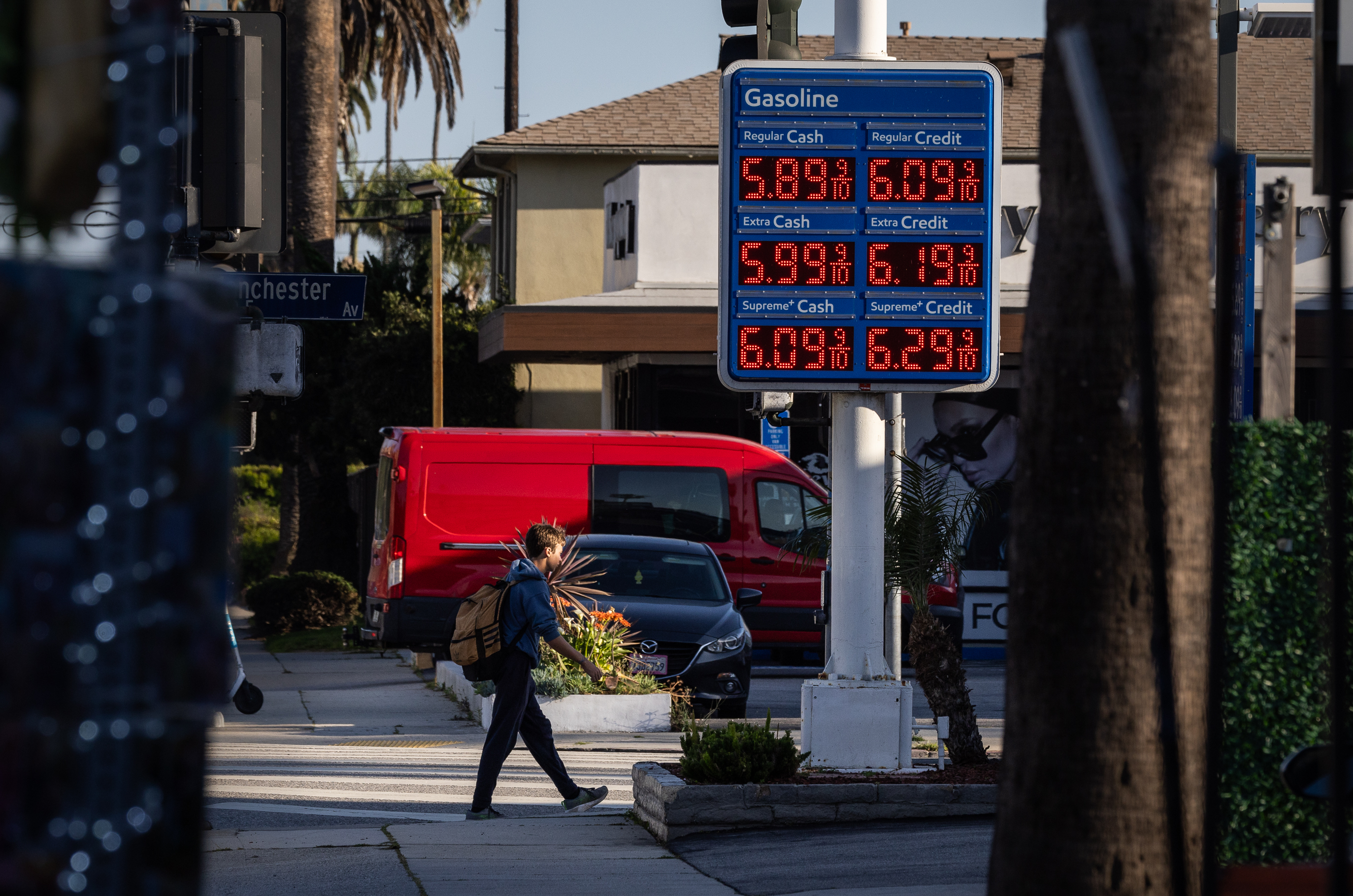
Higher energy prices are already filtering through the market, leading to higher input costs for businesses and more pain at the pump for consumers.
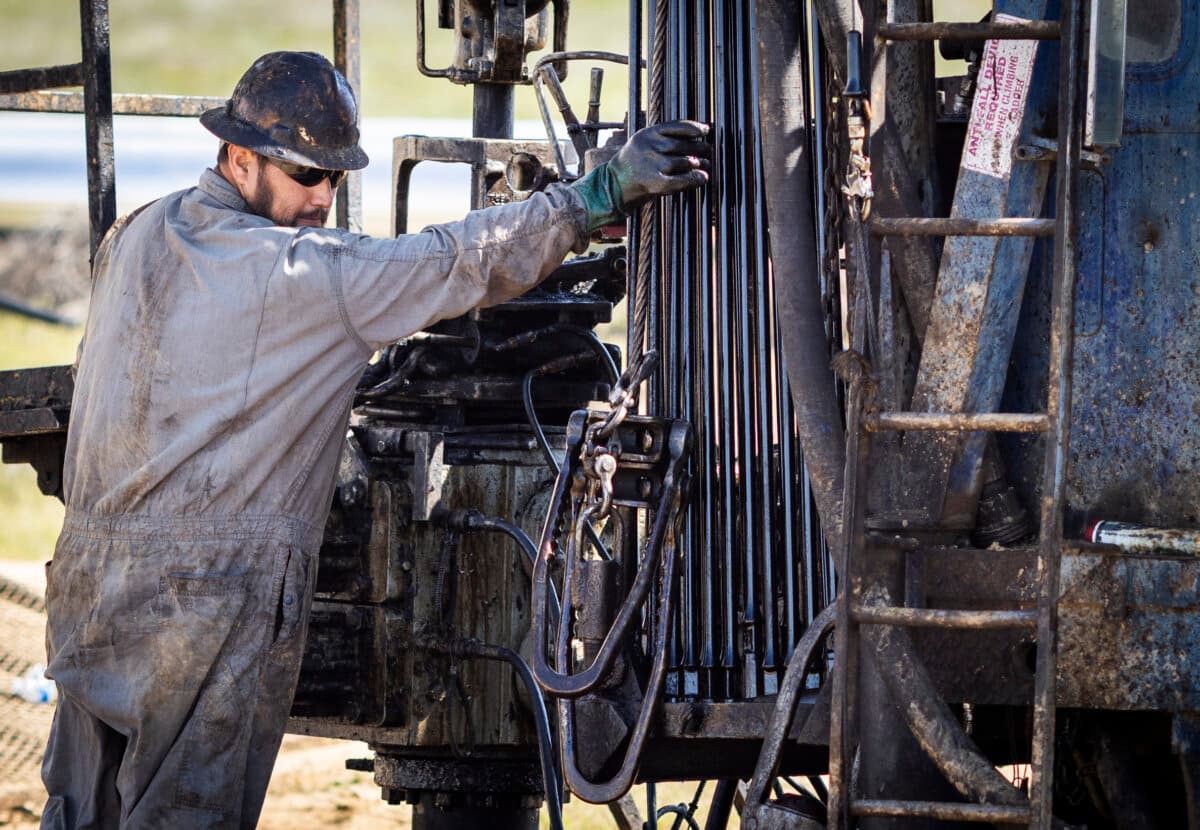
Oil specialists keep pumps in operation outside of Bakersfield, Calif., on March 21, 2025. (John Fredricks/The Epoch Times)
The national average for a gallon of gas is firmly above $4, and California, Nevada, and Washington state are already contending with $5-a-gallon gas, according to AAA.
Several major industries, from chemicals to electronics, have reported the highest input costs since June 2022, reflecting price pressures across the global supply chain. Prices for the services sector have also accelerated to their highest level in almost four years.
In addition to the Iranian conflict, Dimon pointed to other risks, such as U.S.–China trade tensions and mounting pressures in the $2 trillion private credit market.
Despite these headwinds, Dimon noted several tailwinds that will support the U.S. economy this year.
Some of these include fiscal stimulus from the One Big Beautiful Bill Act, federal deregulatory efforts, and artificial intelligence-driven capital spending and construction.
“All in all, there are lots of moving parts and potential straws that might be added to the poor camel’s back,” Dimon said. “We are watching closely and hoping for the best. We always try to be prepared and vigilant and also recognize that tough times can create good opportunities.”