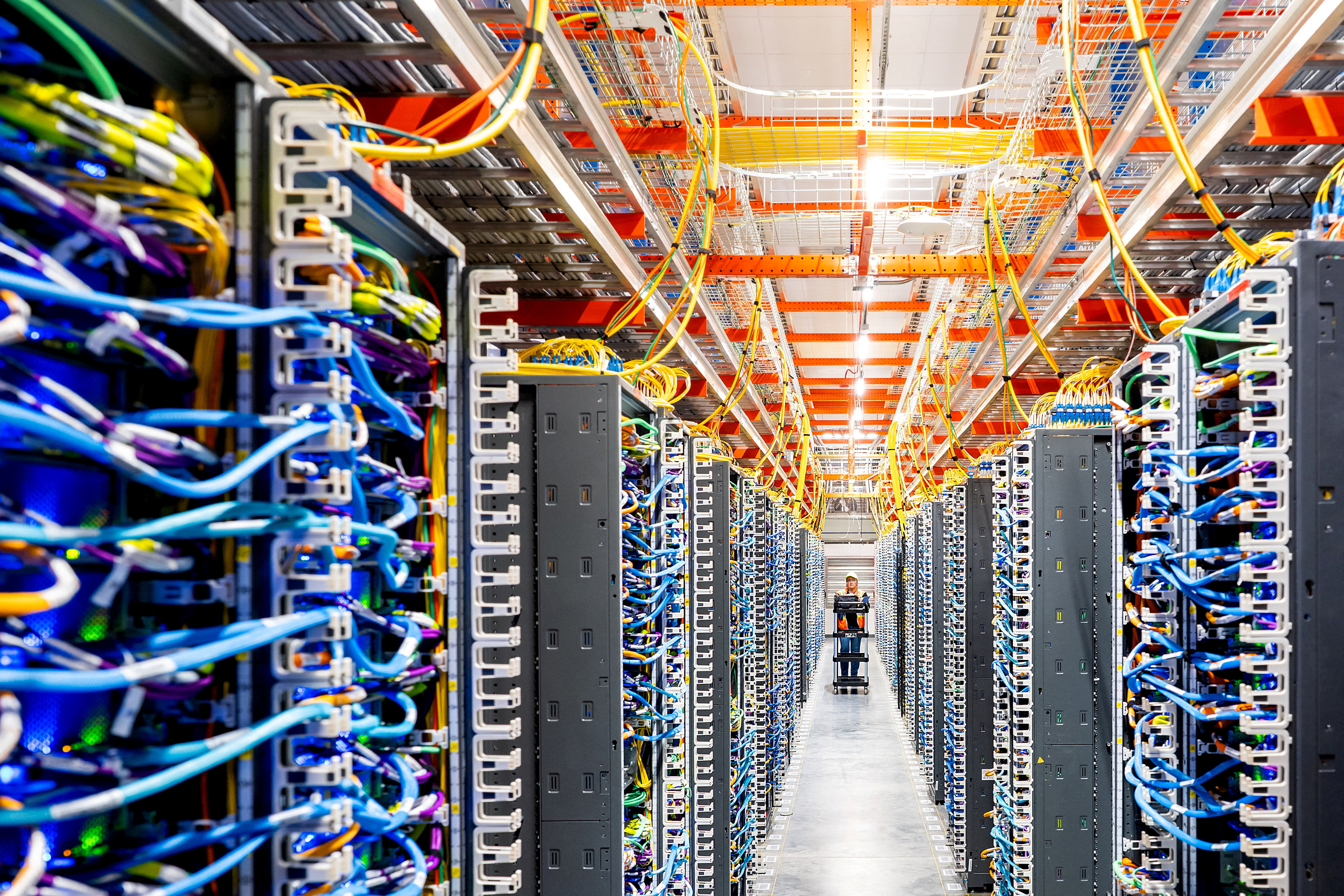

New orders for factory goods rose by the largest amount since November, driven by continued artificial intelligence (AI) investment in the United States, new government data show.
Factory orders advanced 1.5 percent in March, from an upwardly adjusted 0.3 percent increase in February, according to Census Bureau figures released on May 5.
The consensus estimate suggested a 0.5 percent jump.
New orders for manufactured durable goods climbed 0.8 percent, while nondurable goods jumped 2.1 percent—the highest level since October 2022.
America’s manufacturing sector has witnessed a notable rebound over the last several months, with businesses moving on from President Donald Trump’s sweeping global tariffs. While the war in Iran has caused higher price pressures, activity has been robust compared to previous years.
One key area for domestic manufacturing has been the global buildout of AI and data centers.
The better-than-expected reading for March was broad-based, but it was also heavily driven by growing demand for computers and electronic products.
This category increased 3.6 percent to $29.6 billion—the most in 25 years. Additionally, purchases for electromedical, measuring, and control instruments surged almost 8 percent to an all-time high of $10.6 billion.
Elsewhere, orders for machinery jumped 0.9 percent. An 8 percent gain was also registered for transport equipment and electrical equipment, appliances, and components. Primary metals orders rose 0.5 percent.
Various industry reports, including the April Institute for Supply Management’s (ISM) Manufacturing data, suggest that the U.S. manufacturing industry is recovering after years of stagnation or contraction. At the same time, firms could be grappling with multiple headwinds that could threaten the rebound, according to Priscilla Thiagamoorthy, senior economist at BMO Economics.
“The April ISM report suggests a manufacturing sector that is expanding, but employment softness, trade frictions, and geopolitical headwinds are pointing to a fragile recovery. Meantime, bubbling inflationary pressures are becoming a key concern,” Thiagamoorthy said in a May 1 note.
The organization’s widely watched purchasing managers’ index—a monthly survey of businesses indicating the sector’s prevailing economic direction—last month remained at the highest level since August 2022. The findings showed an expansion of new orders, output, and supplier deliveries, but higher input costs and output charges dampened the gains.
The Iranian conflict—now in its 10th week—has led to soaring global energy prices, as well as higher costs for business and consumer goods.
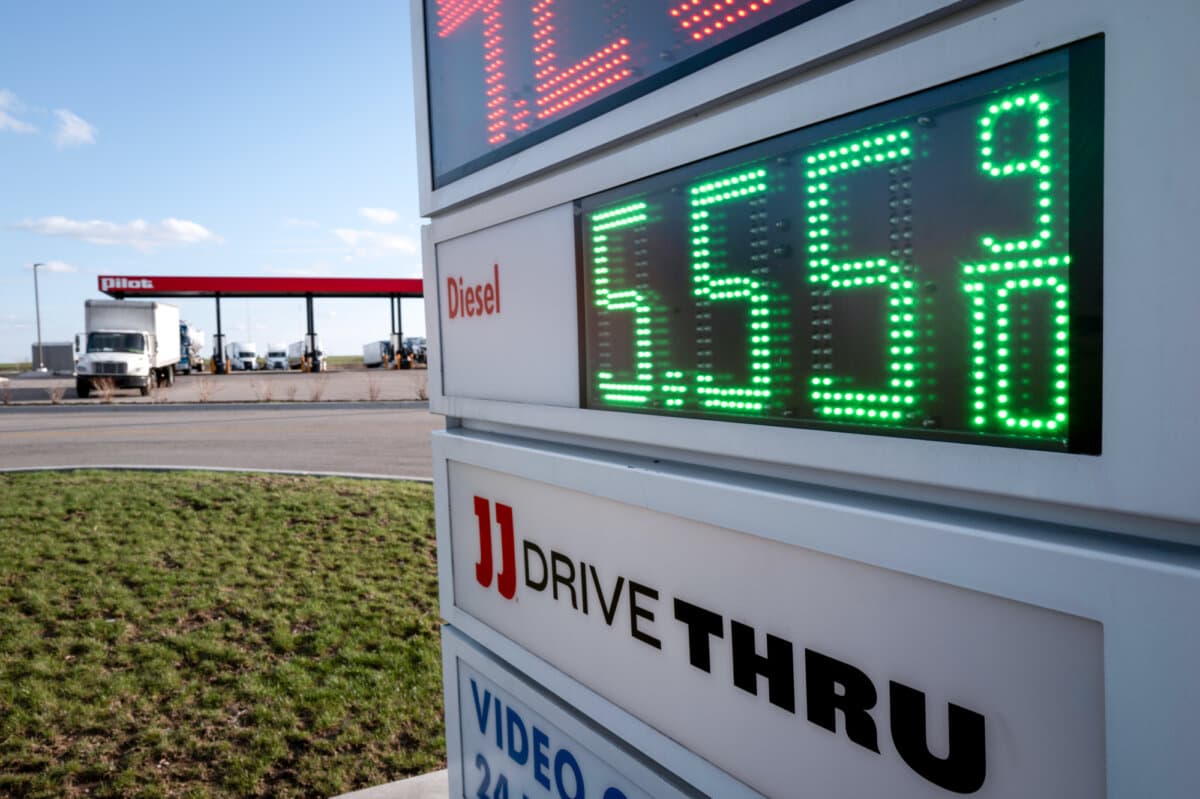
Fuel prices are displayed at a truck stop in Belvidere, Ill., on April 6, 2026. With diesel prices rising faster than gasoline, refiners are turning to import heavier crude needed to produce diesel, experts said. (Scott Olson/Getty Images)
U.S. and global crude oil futures remain firmly above $100 per barrel. Gasoline and diesel have also surged since the war began.
But constructing the AI infrastructure will likely be a boon for U.S. factory activity.
AI Is Everywhere in the Data
A chorus of hyperscalers has unveiled plans to accelerate their capital spending.
Following Big Tech’s earnings calls, total AI capital expenditures could reach $1 trillion by next year. Alphabet, Amazon, Meta Platforms, and Microsoft revised their capex projections higher—continuing the trend from the previous quarterly earnings season.
Despite the hefty price tags, these companies continued to register solid earnings, revenues, and guidance.
“The market’s hangover came not from the earnings themselves but from the CAPEX disclosures attached to them,” Mark Malek, CIO at Siebert Financial, said in a note emailed to The Epoch Times.
“The market’s lingering question–and it is a fair one–is whether the revenue flywheel ever catches up to the infrastructure bill. So far, the answer has been yes. But the tab? Well, it keeps growing.”
If this persists, it could be a tailwind for the broader U.S. economy.
Economic observers have long argued that current business investment levels are similar to those in the 1990s, when the private sector spent heavily on the dot-com boom, leading to accelerated productivity growth.
This was seen again in the first-quarter gross domestic product (GDP) data.
Gross private domestic investment surged almost 9 percent, up sharply from 2.3 percent in the prior quarter. This was fueled by a more than 10 percent increase in spending on equipment and structures, the fastest pace in close to three years.
“Business investment continues to power the economy. If the late 90s are the pattern, we could expect nonresidential investment to contribute to growth for the rest of the year,” Jeffrey Roach, chief economist for LPL Financial, told The Epoch Times in an emailed note.
Looking ahead to the second quarter, the Atlanta Federal Reserve’s GDPNow Model estimates a 3.5 percent expansion—and private investment could account for a third of this number.
Panos Mourdoukoutas contributed to this report.