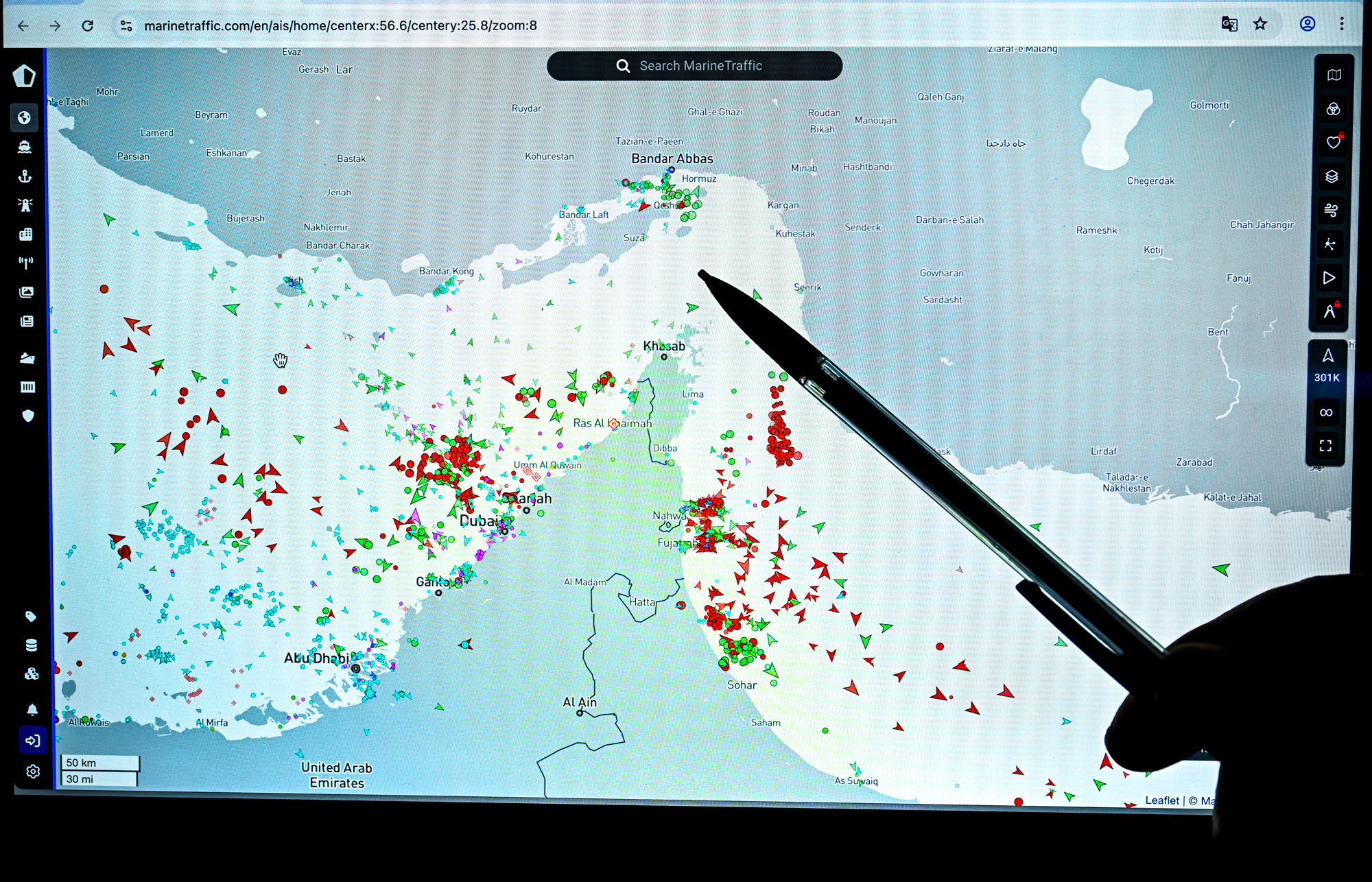

U.S. stocks rose and crude oil prices fell after the United States and Iran declared the Strait of Hormuz “completely open” for commercial traffic during the ceasefire between Israel and Lebanon.
In an April 17 social media post, Iranian Foreign Minister Seyed Abbas Araghchi stated that the vital global choke point would stay open for the remainder of the ceasefire between Israel and Lebanon.
“In line with the ceasefire in Lebanon, the passage for all commercial vessels through Strait of Hormuz is declared completely open for the remaining period of ceasefire, on the coordinated route as already announced by Ports and Maritime Organisation of the Islamic Rep. of Iran,” he said on X.
President Donald Trump stated on Truth Social that the narrow waterway between Iran and the Arabian Peninsula is “open and ready for business.”
In a follow-up post, Trump noted that the U.S. naval blockade would remain in “full force.”
“But the naval blockade will remain in full force and effect as it pertains to Iran, only, until such time as our transaction with Iran is 100 percent complete,” he said.
“This process should go very quickly in that most of the points are already negotiated.”
The announcements sent crude oil futures dropping to their lowest levels since the early days of the seven-week-old conflict.
A barrel of West Texas Intermediate—the U.S. benchmark for oil prices—fell 12 percent to below $83 on the New York Mercantile Exchange.
Brent, the international benchmark for oil prices, fell by more than 10 percent to below $90 a barrel in overseas trading.
The Strait of Hormuz has been at the center of the volatility in global financial markets as it is a critical trade route for a fifth of the world’s oil supply.
It is unclear how fast the sharp decline will translate to less pain at the pump.
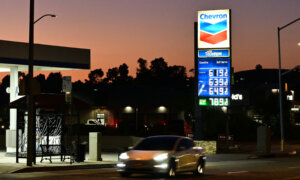
Gasoline prices have shot up, with the national average still above $4 per gallon, as of April 17, according to the American Automobile Association.
Treasury Secretary Scott Bessent, at an April 15 press briefing, expressed optimism that motorists could see $3-a-gallon gas sometime this summer.
“I’m optimistic that during the summer, we will see gas with a three in front of us sooner rather than later,” he told reporters. “I’m optimistic that sometime between June 20 and Sept. 20, we can have $3 gas again.”
Renewed Rally for Stocks
The blue-chip Dow Jones Industrial Average rose by more than 1,000 points, or 2.1 percent.
The index is on track for a weekly gain of more than 3 percent, adding to its year-to-date increase to around 2.6 percent.
The tech-heavy Nasdaq Composite Index advanced about 360 points, or 1.5 percent, and is poised for a weekly jump of more than 6 percent.
The Nasdaq is set to make history at the end of the trading week, as it is likely to extend its winning streak to 13 days for the first time ever.
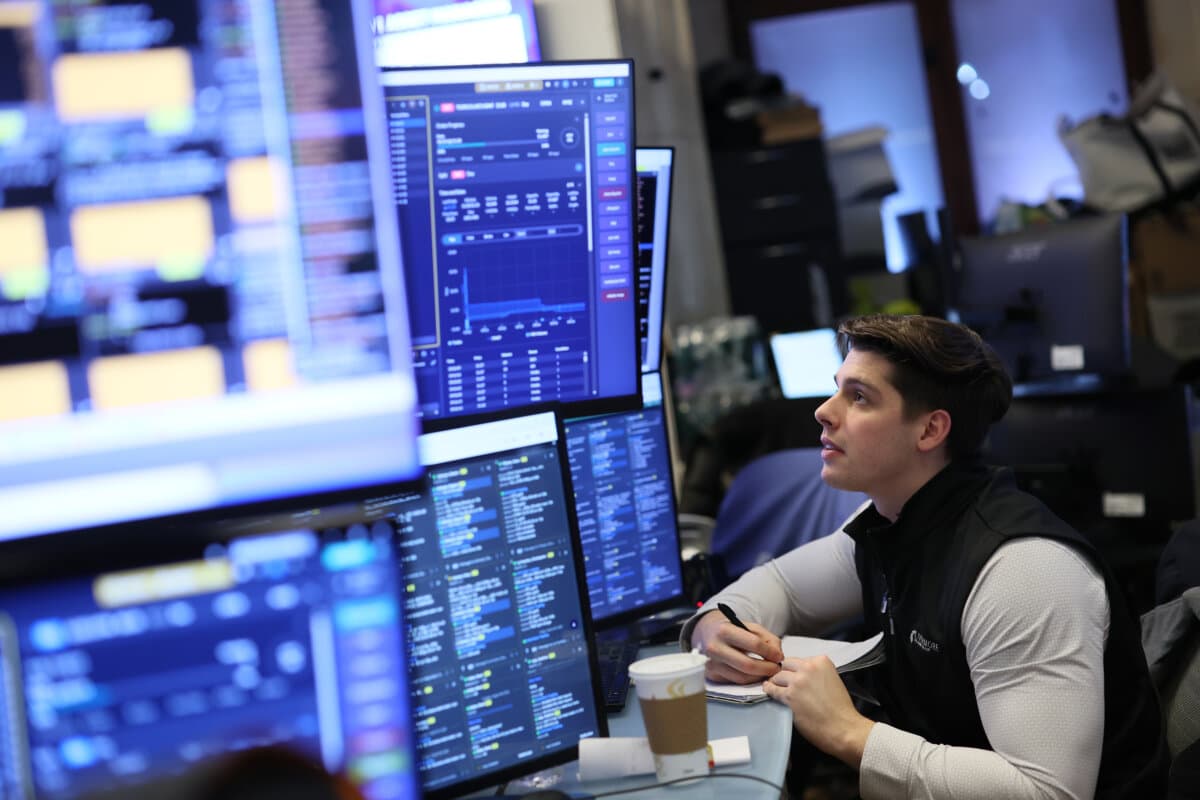
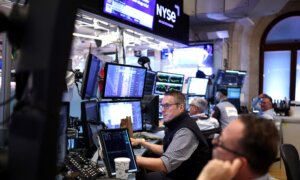
A trader works on the floor of the New York Stock Exchange on March 6, 2026. (Michael M. Santiago/Getty Images)
The broader market S&P 500 index reached a fresh all-time high, climbing nearly 100 points, or 1.3 percent, to firmly above 7,100.
The S&P 500 will register a weekly boost of more than 4 percent, lifting this year’s increase to about 4 percent.
Wall Street is entrenched in an “impressive comeback,” says Adam Turnquist, chief technical strategist at LPL Financial.
“After nearly reaching correction territory late last month, the S&P 500 has surged back to record highs. Buying pressure has been broad and consistent, with the index advancing in 10 of the last 11 trading days,” Turnquist said in a note emailed to The Epoch Times.
“Continued signs of de‑escalation in the Middle East, alongside resilient economic and corporate fundamentals, have supported the renewed risk‑on rally.”
Yields for U.S. Treasury securities were red across the board, with the benchmark 10-year down about 7 basis points to below 4.24 percent.
The 30-year yield also fell below 4.9 percent.
The 2-year Treasury yield, which typically tracks Federal Reserve policy expectations, sank to 3.7 percent as traders began pricing in an interest rate cut later this year.
While rate forecasts have swung wildly since the beginning of the conflict in Iran, traders are now gradually pricing in a quarter-point rate cut in December, according to CME FedWatch data.
The greenback’s risk premium faded, wiping out all of its gains from the war.
The U.S. dollar index—a measure of the buck against a weighted basket of currencies including the Canadian dollar and British pound—declined 0.4 percent during the end-of-week trading session.
The index is down 0.6 percent this year.
Tom Ozimek contributed to this report.