Workers in 10 California locations will get a slight bump in pay starting July 1, when new minimum wage hikes take effect.
On New Year’s Day, all of California’s minimum wage employees received an hourly pay increase from $16 to $16.50, according to the California Labor Commissioner’s Office.
Californians rejected a proposition on the ballot in November 2024 that would have raised the state’s minimum wage to $18 per hour starting Jan. 1 for employers with at least 26 workers.
Cities and counties, however, have passed their own wage regulations, setting even higher rates that kick in next month.
Workers in these locations will see a bump in pay:
- Alameda: from $17 to $17.46
- Berkeley: from $18.67 to $19.18
- Emeryville: from $19.36 to $19.90
- Fremont: from $17.30 to $17.75
- Los Angeles: from $17.28 to $17.87
- Los Angeles: from $17.28 to $17.87
- Los Angeles County (unincorporated): from $17.27 to $17.81
- Milpitas $17.70 to $18.20
- Pasadena: from $17.50 to $18.04
- San Francisco: from $18.67 to $19.18
- Santa Monica: from $17.27 to $17.81
Malibu’s minimum wage of $17.27 was set to increase on July 1. However, Malibu City Council approved a one-year suspension of the scheduled minimum wage increase to support businesses affected by the January Palisades Fire.
The state also mandates that exempt employees who are not eligible for overtime pay receive no less than two times the state’s minimum wage for full-time work. Starting on Jan. 1, California’s exempt workers must earn an annual salary of no less than $68.640, according to the state.
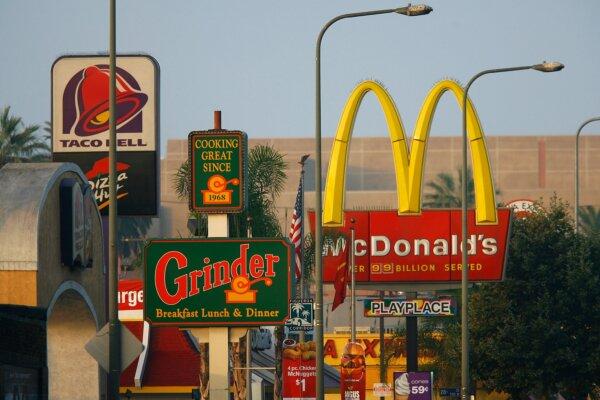
Restaurants line the streets in the Figueroa Corridor area of Los Angeles on July 24, 2008. (David McNew/Getty Images)
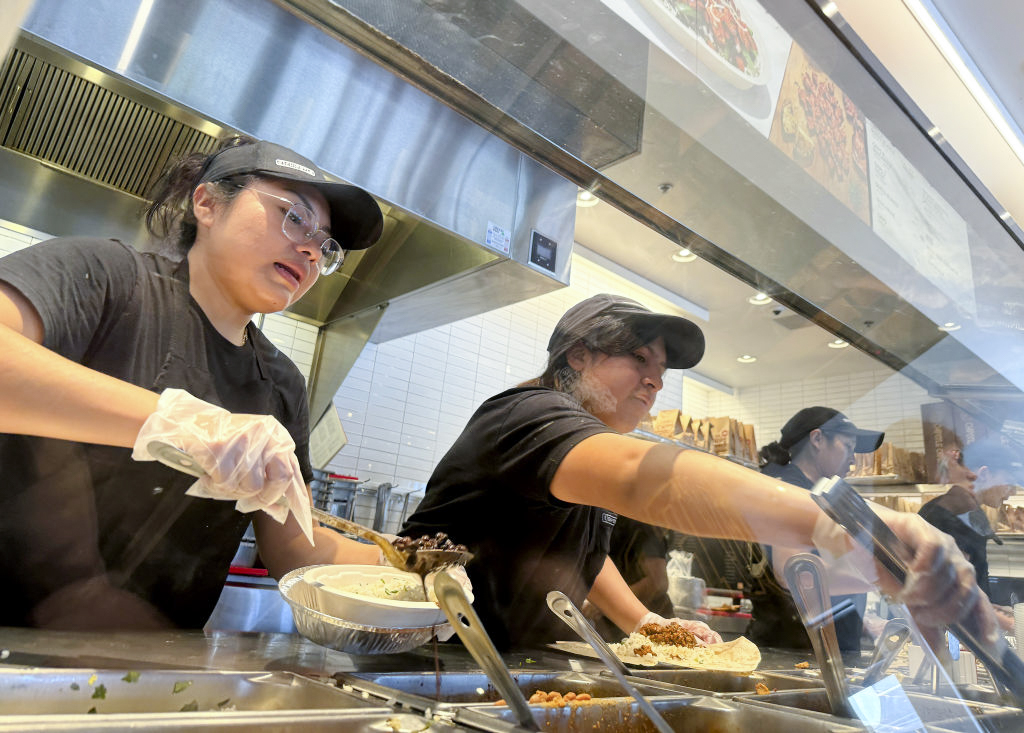
Although the state’s average hourly wage is $16.50, California Gov. Gavin Newsom signed into law an even higher minimum wage last year for the state’s 500,000 fast-food workers, increasing their pay to $20 per hour starting April 1, 2024.
The law authorized the state’s Fast Food Council to set fast-food restaurant standards for minimum wage.
“California is home to more than 500,000 fast-food workers who—for decades—have been fighting for higher wages and better working conditions,” Newsom said last year.
The controversial wage increase sparked menu price hikes and mass layoffs, and reduced work hours across the state.
The current federal minimum wage is $7.25 per hour, well below pay rates in California.
State and local jurisdictions have a right to set their own wage laws. As of this year, 45 states and the District of Columbia have established their own state wage laws and regulations.
According to the Labor Department, California has the second-highest minimum wage among the 50 states, behind Washington’s $16.66.
The highest minimum wage in the nation is in Washington, D.C., which is scheduled to increase from $17.50 to $17.95 on July 1, according to DC.gov.