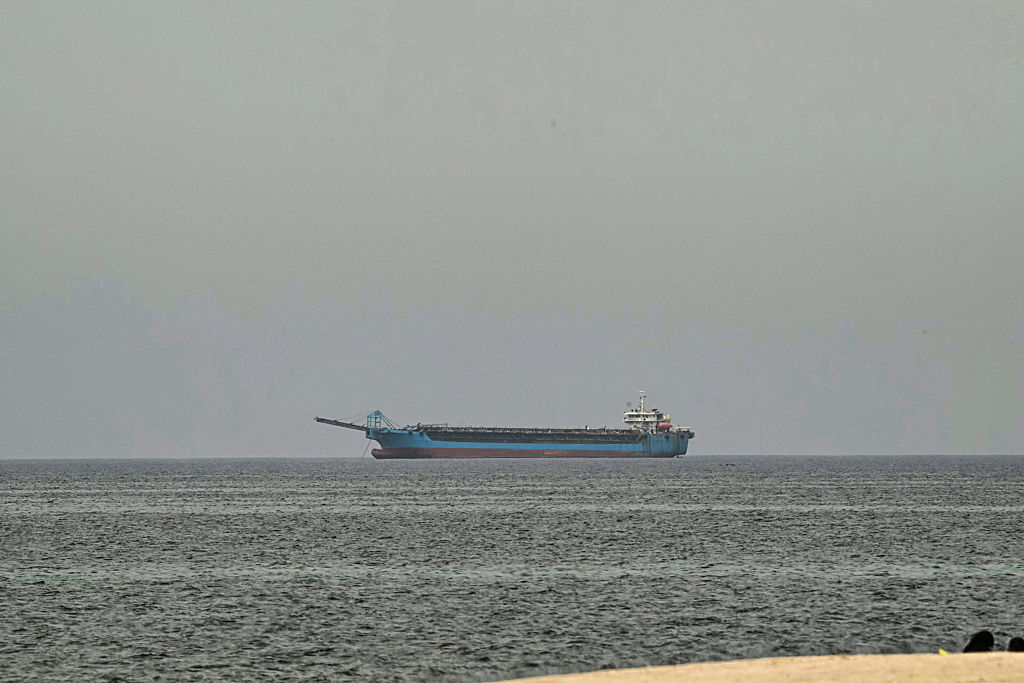

NATO allies said on April 13 they wouldn’t support the United States’ blockade of the Strait of Hormuz during its ongoing conflict with Iran, highlighting growing tensions between President Donald Trump and the alliance.
While NATO members have left open the possibility of involvement after hostilities end, they have so far refused to participate in any current military action.
British Prime Minister Keir Starmer told the BBC that the UK would not take part in the blockade.
“My decision has been very clearly that whatever the pressure, and there’s been some considerable pressure, we’re not getting dragged into the war,” he said.
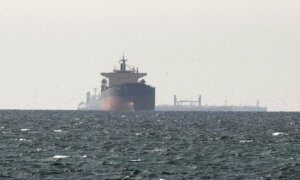
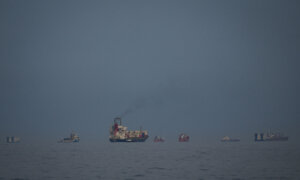
Trump announced that the United States would work with partner nations to block maritime traffic in the strategic waterway after weekend negotiations failed to resolve the six-week conflict with Iran. The blockade, which began on April 13, only targets vessels traveling to or from Iranian ports.
“The blockade will begin shortly. Other countries will be involved,” Trump said in a Truth Social post.
However, key allies have distanced themselves from the move.
Since the United States and Israel launched attacks on Feb. 28, Iran has largely restricted access to the strait, allowing only its own vessels through. It has also signaled intentions to formalize its control over the passage and impose fees on transiting ships.
In response, France is working with the UK and other nations to develop a multinational effort to restore safe navigation once the conflict subsides. French President Emmanuel Macron described the initiative as a strictly defensive mission, separate from the warring parties, to be deployed when conditions permit.
“France and the United Kingdom will also host a conference in Paris this Friday, bringing together by videoconference non-belligerent countries ready to contribute, alongside us, to a multilateral and purely defensive mission aimed at restoring freedom of navigation in the strait when security conditions allow,” he said on X.
Speaking in Parliament on Monday, Starmer said: “Let me be very clear, this is about safeguarding shipping and supporting freedom of navigation once the conflict ends. Our shared aim here is a coordinated, independent, multi-national plan.”
The proposed plan would establish guidelines for safe passage and coordinate naval escorts for commercial shipping, according to Starmer.
Turkey has urged a diplomatic solution, warning that creating an international force to manage the strait would be complex. Foreign Minister Hakan Fidan also called for NATO to reassess its relationship with the United States at an upcoming summit in Ankara.
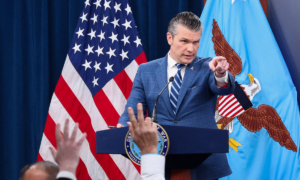
Meanwhile, Trump has criticized NATO for refusing to support the United States during the conflict. He warned that its role would face serious scrutiny moving forward.
Throughout the conflict, Trump has repeatedly accused NATO members—particularly European countries dependent on oil shipments through the strait—of failing to act. He has also continued to question the alliance’s value, at one point again raising the idea of U.S. control over Greenland, a Danish territory.
The Epoch Times has reached out to the White House for comment.
Reuters contributed to this report.