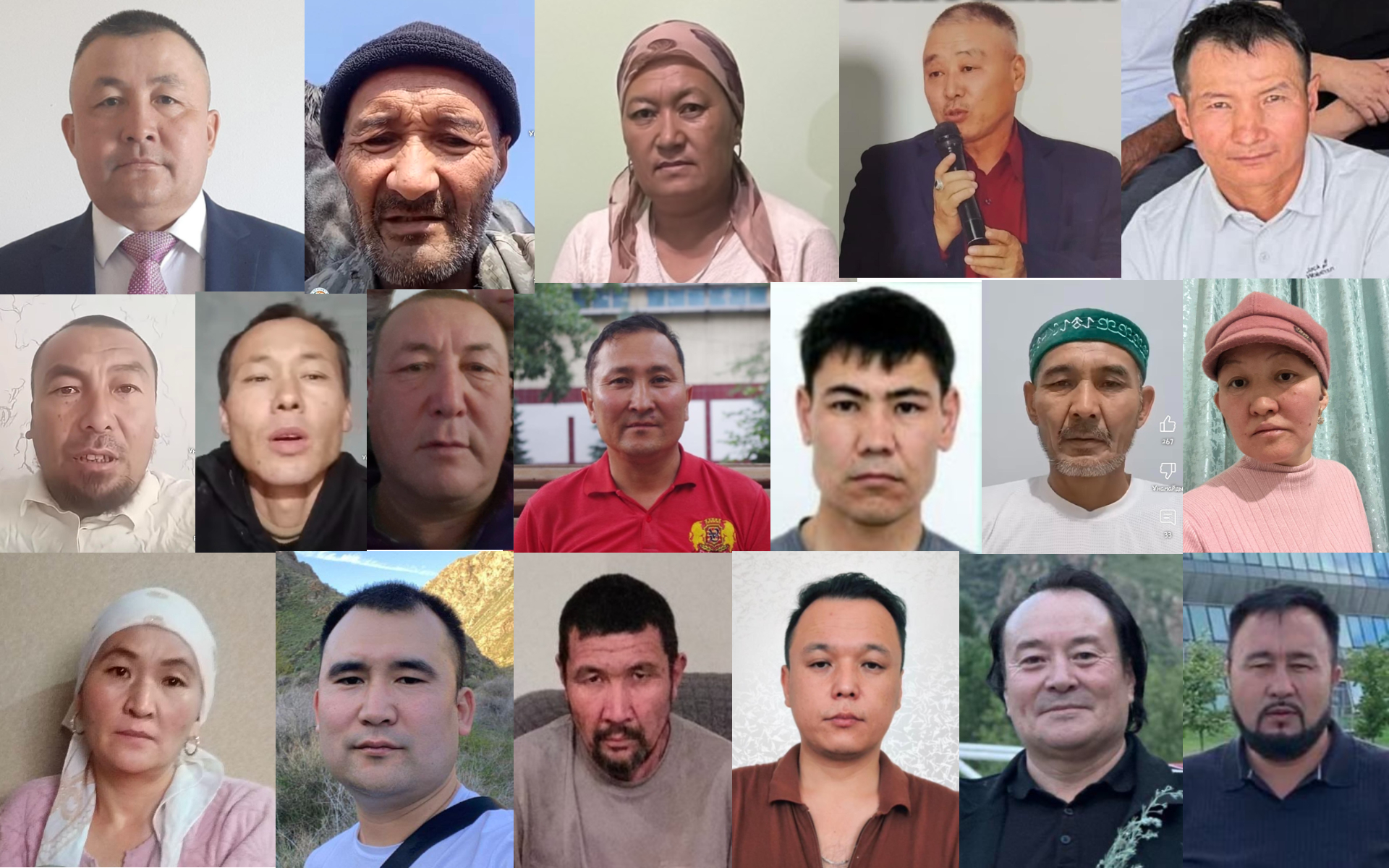


A Kazakh court on April 13 sentenced a group of human rights activists to up to five years in jail, in a case that has drawn attention to Beijing’s expanding influence in the Central Asian nation.
All 19 activists were convicted of inciting hatred for staging a protest in November 2025 over the detention of a Kazakh truck driver in China. The activists were arrested after burning the Chinese regime’s flag and a portrait of Chinese Communist Party (CCP) leader Xi Jinping during the demonstration in Almaty, close to Kazakhstan’s border with China’s Xinjiang region.
Guldaria Sherizat, the wife of the driver detained in the Xinjiang region, got five years imprisonment as a district court in Kazakhstan’s southeastern Zhetysu region handed down sentences to the 19 defendants on the afternoon of April 13, according to Atajurt, a Kazakhstan-based rights group supporting those with relatives detained in China.
“The CCP has turned Kazakhstan into a second Xinjiang,” Serikzhan Bilash, head of Atajurt, told The Epoch Times.
The United States determined in 2021 that “genocide” is taking place in the Xinjiang region, where more than 1 million Uyghur Muslims are held in a sprawling network of internment camps. The U.N. human rights office in 2022 found that Beijing’s repression of Uyghurs may amount to “crimes against humanity.”
Tursynbek Kabi, a former eyewitness to the Xinjiang region camps and a member of Atajurt, was among the 11 defendants who were sentenced to five years in prison on April 13, according to Bilash.
Eight other defendants received sentences of “restricted freedom” ranging from four years and eight months to five years.
The activists disagree with the verdict, and their relatives protested outside the courtroom on April 13, according to Bilash.
Before the trial, international human rights organizations such as Human Rights Watch and Amnesty International called on the Kazakh authorities to drop the charges, arguing that they misused the criminal law in response to pressure from Beijing.
The Chinese Consulate in Almaty sent two letters to Kazakhstan’s foreign ministry the day after the protests—translated copies of which were viewed by The Epoch Times—and said the case had an “extremely negative impact” on bilateral relations.
After receiving the diplomatic notes, which were cited in the indictment, the Kazakh authorities opened a criminal investigation into the protesters, who initially received penalties such as fines and short-term detentions under administrative charges.
This case has reignited concerns about the Chinese Communist Party’s influence in Kazakhstan, where Beijing has emerged as a major economic and trade partner for the Central Asian nation.
Bilash, a prominent campaigner who was detained by the Kazakh police in 2019, said he is concerned that the Kazakh authorities might be moving closer to the CCP.
“Kazakhstan is an arena where Western civilization clashes with the communist and imperialist ideologies of China and Russia,” Bilash said in an interview before the sentencing.
He highlighted Kazakhstan’s strategic importance to Beijing, especially amid the ongoing U.S. and Israeli military strikes on Iran, which killed Iranian leader Ali Khamenei, a figure friendly to the CCP.
“After Venezuela and Iran, Kazakhstan is the only country that provides cheap oil and natural gas to the CCP,” Bilash said. “The CCP has already lost Venezuela and Iran. Perhaps the CCP would rather die than lose Kazakhstan.”
“I worry that the West will lose Central Asia to the CCP,” Bilash said.
Researchers and human rights advocates have called the case a reminder of the CCP’s efforts to go after its targets beyond the border.
“The CCP treats everyone as a threat,” Serkan Tas, associate director of China studies at the Washington-based Victims of Communism Memorial Foundation, said at a news conference in January. “Our research shows that Chinese authorities label any diaspora member who asks questions, even someone simply trying to locate a missing relative, as an overseas terrorist.”