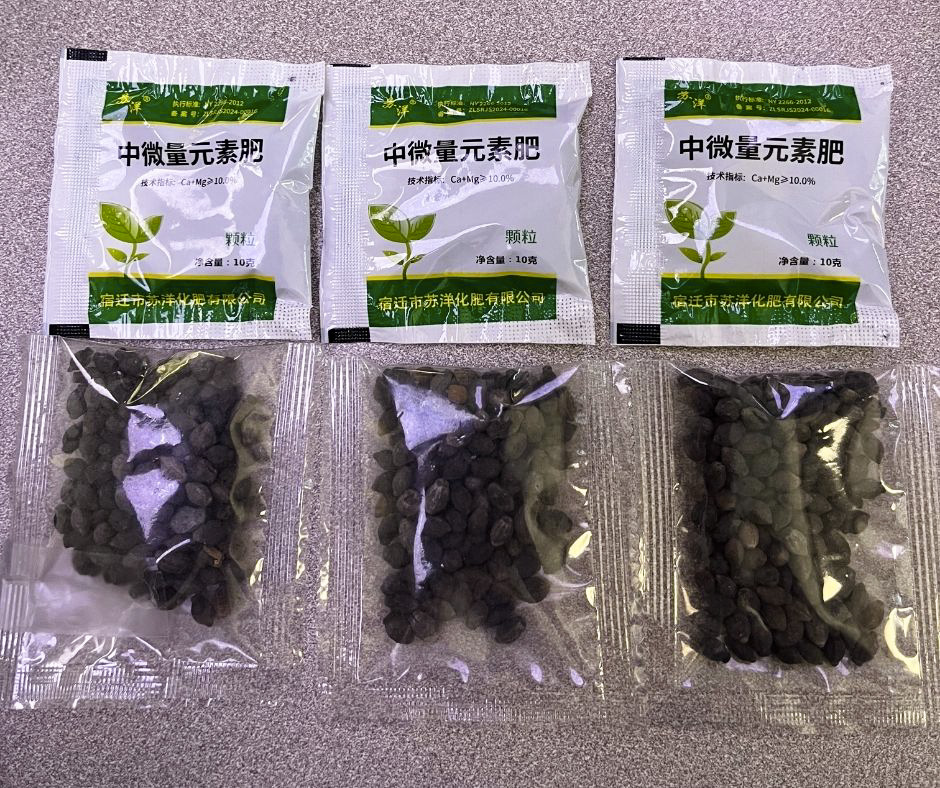

Texas state agricultural officials issued fresh warnings on Jan. 15 after hundreds of residents received unknown seeds in the mail that they never ordered.
In just the first 15 days of this year, officials collected 126 bags of unsolicited seeds that had arrived in the mailboxes of Texas households, according to the Texas Department of Agriculture. Texas had already recorded more than 1,100 bags of unsolicited seeds over the course of the past year.
“These packages are pouring in faster and further than ever before,” Texas Agriculture Commissioner Sid Miller said in a statement on Jan. 15.
State officials worry that seeds coming in the mail could be invasive plant species or carry pests and diseases that pose a threat to native crops and livestock.
“They may look innocent, but the danger is real,” Miller said. “One invasive species, pest, or pathogen could devastate Texas farms, ranches, natural resources, and food supply.”
The Texas Department of Agriculture issued the first warning to Texans in February 2025 after receiving communication from a resident of Clute, Texas, who had received an unsolicited package containing seeds and liquid from China.
Those seeds were later identified as Nelumbo nucifera, also known as sacred lotus or Indian lotus, by the U.S. Department of Agriculture’s Animal and Plant Health Inspection Service, according to the Texas Department of Agriculture. The unlabeled liquid in the package was determined to be plant food.
The Texas Department of Agriculture cautioned that the sacred lotus is considered invasive in many regions, particularly when introduced outside its native range in Asia. Although the sacred lotus is not on the federal list of noxious weeds, it is currently prohibited in one state, Wisconsin.
One of the first affected residents reported ordering a dog toy from Temu, a Chinese online shopping platform, before receiving unsolicited seeds in the mail, according to the Texas Department of Agriculture
The department is working with federal authorities to identify the origins of other seeds. Officials urged residents who receive unsolicited seeds in the mail not to open the packages or plant the seeds.
Miller encouraged residents to report such packages to authorities instead of returning them, even if the listed return address is within Texas. The Texas Department of Agriculture has learned of a resident in Frisco, Texas, whose address was fraudulently used as the return address on boxes containing these unknown seeds. As a result, that person was overwhelmed by returned boxes that the individual had never packed or shipped.
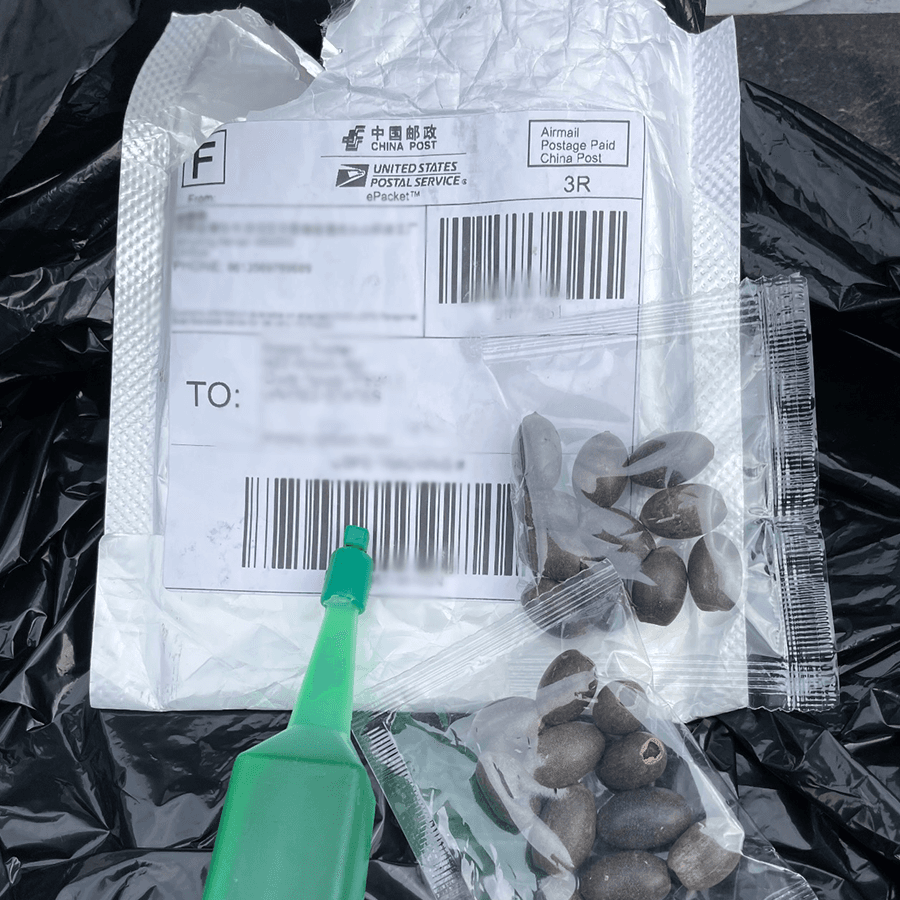
An unsolicited package of seeds with a label of China Post, the Chinese regime’s official postal delivery service. (Texas Department of Agriculture)
Other states, including New Mexico and Alabama, also reported residents receiving similar bags of unsolicited seeds in 2025.
The Texas Department of Agriculture said it is investigating whether these shipments are “disproportionately targeting Texas.”
The recent surge in unsolicited deliveries echoes a trend of five years ago, when households across the United States and other countries reported seeds arriving in unsolicited mail, much of which came from China.
Federal investigators later determined that these seeds were likely part of a global “brushing scam.” By shipping low-value items to residents who did not purchase them, retailers could post fake positive reviews under the name of a “verified” owner, thus boosting their products’ ratings and sales numbers, according to the U.S. Department of Agriculture.
Regardless of the senders’ intent, Miller called on residents to “stay sharp” and report “every suspicious package.”
“We can’t take any chances that might jeopardize our producers, the environment, or food security,” Miller said.
“Together, we can stop this threat before it takes root. Please report seed package deliveries to protect Texas.”