
A federal appeals court revived the lawsuit of a white first grader in California who alleges that she was punished for making what her lawyers call an innocuous drawing that arose out of a history lesson in class.
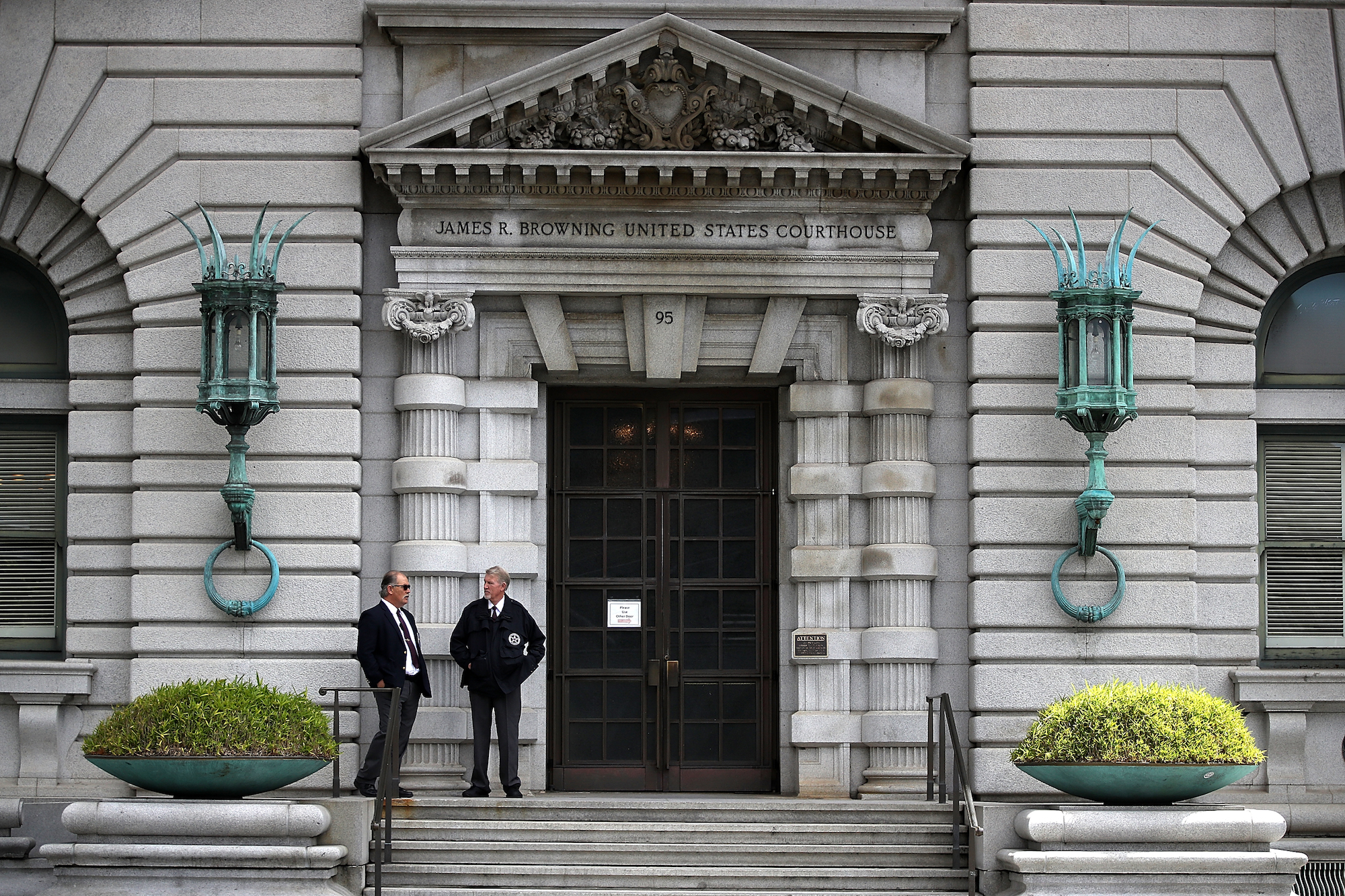
A three-judge panel of the U.S. Court of Appeals for the Ninth Circuit ruled unanimously on March 10 that a federal district court was wrong to summarily rule in favor of the Capistrano Unified School District by concluding that the drawing did not constitute protected speech. The stalled lawsuit is now expected to move forward.
In its ruling, the panel held that elementary school students enjoy First Amendment free speech rights at school and that the drawing made by the student known as B.B. was constitutionally protected.
The case goes back to 2021 when the then-first-grade student heard the phrase “Black Lives Matter” as it came up during a lesson about the Rev. Martin Luther King Jr., the black civil rights leader who was slain in 1968, according to public interest law firm Pacific Legal Foundation, which is representing the child and her mother, Chelsea Boyle.
B.B., who has attention deficit hyperactivity disorder, uses art “as her primary therapeutic outlet for this disorder,” according to the legal complaint that was filed in federal district court on Nov. 6, 2023.
To support her black friend and classmate, who is identified in court papers as M.C., B.B. drew a picture of the two of them, along with two other friends, writing “Black Lives Mater [sic]” at the top. She added the phrase, “any life,” according to the complaint.
“B.B.’s intent was to show children of various races getting along,” the complaint reads.
It was the “any life” qualification that seemed to have angered school officials.
Throughout the history of the Black Lives Matter movement, some of its supporters have been known to strongly criticize people who respond to the phrase “black lives matter” by saying “all lives matter,” instead of focusing exclusively on the lives of black people.
For example, John A. Powell, a law professor and director of the Othering and Belonging Institute at the University of California at Berkeley, wrote in 2020 that he objected to the phrase.
“All lives matter also ignores history and resists efforts to improve the lives of Black people specifically, who have been struggling for 400 years under the weight of anti-Black racism to belong in this country and to have our humanity seen,” Powell wrote.
According to the complaint, when M.C. showed her mother the drawing, the mother worried that her daughter had been singled out because she was black, and contacted school officials.
The school’s principal, Jesus Becerra, said writing “any life” on the drawing was not consistent with values taught in the school and punished B.B. for the drawing, saying it was “racist” and “inappropriate,” according to a brief filed with the appeals court.
U.S. District Judge David O. Carter dismissed the plaintiffs’ federal law-based claims in the case.
The district court held that M.C.’s right “to be let alone” was violated because B.B.’s drawing “included a phrase similar to ‘All Lives Matter,’” a phrase that the court said “is widely perceived as racially insensitive and belittling when directed at people of color,” according to the brief.
The Ninth Circuit panel reversed on March 10, adopting the reasoning of the U.S. Supreme Court’s landmark 1969 decision in Tinker v. Des Moines Independent School District (1969). That ruling held that the free speech clause of the First Amendment and the due process clause of the 14th Amendment protected the right of teenage students to symbolically protest the Vietnam War by wearing black armbands to school.
The Supreme Court found in that case that the school district could not ban the armbands because wearing them was not disruptive and did not infringe on others’ rights.
In its new opinion, the Ninth Circuit said that “elementary students’ speech is protected by the First Amendment ... and schools may restrict students’ speech only when the restriction is reasonably necessary to protect the safety and well-being of its students.”
The appeals court vacated the district court judgment and sent the case back to that court for further proceedings.
Caleb Trotter, senior attorney at Pacific Legal Foundation, said the ruling stands for the idea that even young students still have constitutional rights.
“The Constitution protects every student’s right to free expression,” he said in a statement. “No child should be punished for expressing a well-intentioned message to a friend.”
The Epoch Times requested comment from the Capistrano Unified School District, but no response was received by publication time.