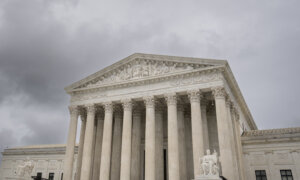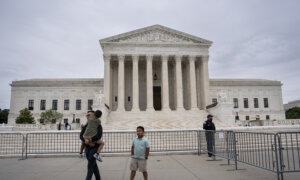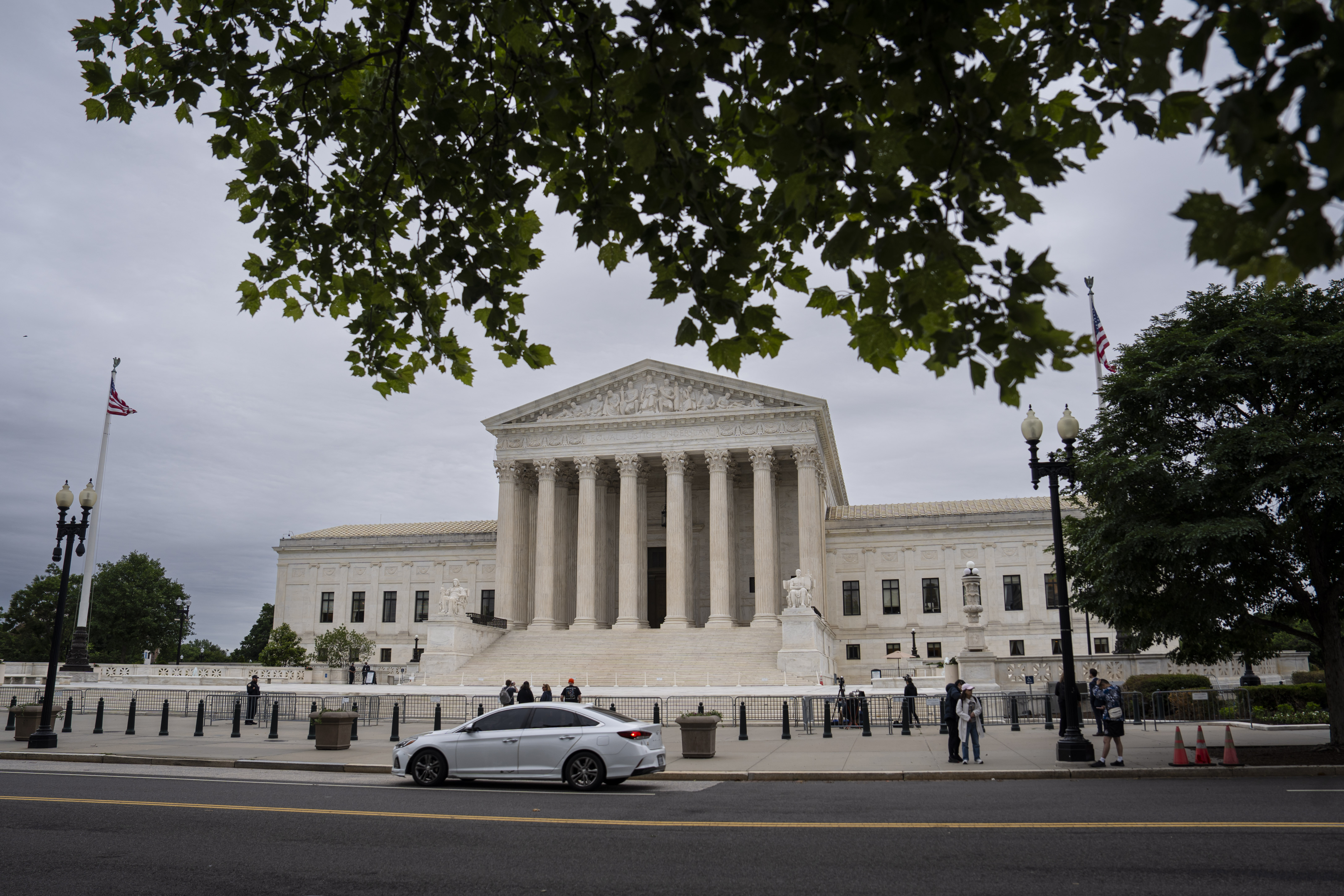

The U.S. Supreme Court on May 26 denied Florida permission to sue California and Washington state over their policy of ignoring federal rules regarding the issuance of commercial driver’s licenses (CDLs).
The decision took the form of an unsigned order. The court did not explain its decision.
The Constitution gives the Supreme Court original jurisdiction, or authority, to try disputes between the states as a court of first impression. In such cases, the court often appoints a judicial officer called a special master to hear the case and issue a recommendation to the justices on how to rule. A state that wishes to sue another state must seek approval from the court before being allowed to proceed.
Justices Clarence Thomas and Samuel Alito dissented.
The lawsuit was filed after an August 2025 incident in which a native of India allegedly made an illegal U-turn on a Florida turnpike. A minivan containing three occupants could not avoid the truck’s trailer as it stretched across the lanes, and the occupants perished.
The Florida Department of Highway Safety and Motor Vehicles said the man came to the United States unlawfully in 2018 and was able to get a CDL in California.
The U.S. Department of Transportation reported that Washington state had previously issued him a CDL, even though illegal immigrants—or those seeking asylum—are not supposed to be eligible to receive one.
Florida’s then-acting solicitor general, Jeffrey DeSousa, said in the bill of complaint filed with the Supreme Court, that both California and Washington “routinely frustrate and hinder federal law enforcement from addressing the immigration crisis and the destruction that accompanies it.”
Federal law provides that states issuing CDLs adhere to safety and immigration status standards, but California and Washington “ignore these standards and authorize illegal immigrants without proper training or the ability to read road signs to drive commercial motor vehicles,” the document stated.
The two states are endangering citizens in their own states and other states that obey federal law and adhere to CDL safety standards, according to the complaint.
Florida became the “most recent victim” when an illegal immigrant licensed by both California and Washington and driving an 18-wheeler initiated a U-turn across a busy Florida highway that led to three fatalities. The driver could neither read nor speak English, the document stated.
In his dissent, which Alito joined, Thomas said that Florida brought suit against the two states “for defying federal law by providing commercial driver’s licenses to illegal aliens who cannot read English.”
“The result of this practice, Florida alleges, is the disturbing phenomenon of illegal-alien truck drivers causing fatal accidents on the road. I respectfully dissent from the Court’s denial of Florida’s motion because we cannot refuse to hear suits between States,” Thomas said.
“An illegal alien who cannot read English road signs cannot drive an 80,000-pound tractor-trailer.”
Federal law and regulations forbid states from giving CDLs to applicants unless they pass a driving test, sufficiently understand English, and demonstrate appropriate immigration status, he said.
Although the truck driver involved in the accident “failed his test at least ten times in Washington and at least one time in California, both Washington and California provided [him] with CDLs,” he added.
Under Article III of the Constitution, the Supreme Court possesses exclusive original jurisdiction over Florida’s lawsuit because it involves one state that is suing other states.
“I doubt this Court has discretion to refuse to hear cases within its exclusive original jurisdiction,” Thomas said.
“This Court declines to even hear Florida’s claims, even though it has nowhere else to bring them,” he said.