For people who have difficulty falling or staying asleep, an herbalist shared some natural options that can help.
“Even just simple peppermint or spearmint tea with a little honey is relaxing. If we have low blood sugar, honey before bed protects us from waking up with an adrenaline burst in the middle of the night,” Matthew Wood, an internationally known herbalist who has been practicing for 44 years, told The Epoch Times in an email.
“When the blood sugar drops too low, the adrenaline bursts in to boost up the blood sugar level and literally saves our lives.”
He said the herbs in the mint family are the source of most basic nerve, anxiety, and sleep remedies.
He said the mint that is perhaps the most famous for sleeplessness is skullcap, noting that either Chinese or American skullcap can be used.
“It is the favorite for restless leg syndrome, so it is for nervous people who have a hard time slowing down when they lie down at night; they are both mentally and physically overstimulated,” Wood said.
In addition to skullcap, he said vervain or blue vervain is also used for this kind of restlessness problem.
He added that while skullcap is more for thin people, another mint called lemon balm (Melissa) is for anyone: thin, thick, or medium; young or old; hyperthyroid or hypothyroid.
For waking in the middle of the night, Wood said hawthorn is a good herb to help with that.

(encierro/Shutterstock)
There are two main types of insomnia: having trouble falling asleep after lying down, and waking up in the middle of the night, he said.
He said often the difficulty with falling asleep after lying down is an inability to stop the mind, and a remedy for this is passionflower (Passiflora incarnata).
He noted that if someone simply doesn’t have enough melatonin, the sleep hormone secreted by the pineal gland, they may need to take this supplement to help with sleep.
Wood said waking up can be due to many problems besides blood sugar, such as getting up to pee too often at night. He said schisandra or sumach can help with that, and sumach berry spice can usually be found in a Middle Eastern grocery store. He said this problem is related to “adrenaline excess” but not necessarily blood sugar problems, and some of the adaptogen herbs like schisandra can tone down the adrenaline.
Additionally, he said, when a baby keeps you up, they can be given chamomile, and it works for babies of any age.
“I made a house call one time to help a young mother. Her four-year-old son was demanding her attention. When she turned to give it to him he’d reject petulantly. He bent his torso back from some kind of stomach pain,” Wood said.
He told the mother, “I have to give your son something or we won’t be able to continue.”
Wood gave chamomile to the little boy.
“He calmed down and went and sat with his dad. No hugs or kisses for mom, but at least now we could talk,” he said.
Herbs are safe, he said, although a person can have a “paradoxical reaction”—becoming alert instead of sleeping.
To avoid that, he said to start with small doses (under 10 drops, or a mild tea) and build up, and only take the herb when the problem is present.
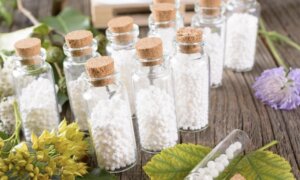
For those who may be nervous about taking herbs, he said most of these are available in homeopathic dosages.
Minerals are also important, he said. He said 98 percent of people are low on magnesium, which can relax muscles, sedate the mind, and promote sleep.
For anxiety, Wood also had some recommendations to help. For people with anguish, feeling “caught in a bind” and hiding the pain behind a cheerful facade, his remedy for that is agrimony.
For people who get nervous when there is a challenge and can’t seem to cross the threshold, the homeopathic cell salt silica or the herb horsetail is good for that, he said.
He added that oats are nourishing and stabilizing to the nerves.
When he talked to an Indian medicine man when he was a young herbalist, Wood said they found that they both used plants with a square or sharp-edged stem for the nervous system. This was called “deer medicine,” he said, because the stem looks like a deer’s leg and the deer is a highly attuned, nervous, careful animal.
Wood called this the “doctrine of signatures,” a traditional belief that plants’ appearances and other traits can reveal which illnesses they will treat. His friend, the Indian medicine man, said he was just taught that way but didn’t have a name for it.
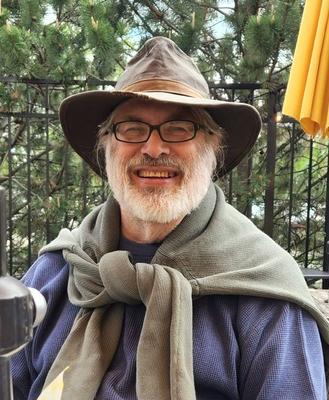
Matthew Wood. (Courtesy of Matthew Wood)
“That wasn’t from lack of vocabulary; the speech-way of indigenous people is based on ‘thought-by-association’ or the intuition and imagination: so signs, omens, and insights were built into their thinking,” Wood said. “Modern science hoots and makes fun of the doctrine of signatures, but that is because [modern science] is based on a materialistic worldview.”
Wood said that the mints have square stems, fitting into the doctrine of signatures, and they are the source of many nerve, anxiety, and sleep remedies. Also, hawthorn has very sharp edges—thorns—and is used to help people who wake up in the middle of the night.
“In the ’90s, we used to say medical doctors treated the symptoms, while we holistic practitioners treated the whole person. In the early 2000s, the doctors started treating the blood test results, not the symptoms. Then they treated the insurance billing categories,” Wood stated. “Today, biomedicine is so impersonal and materialist that it ignores the real person and the underlying conditions completely. Under the circumstances, the public needs to seek a ‘second opinion’ and ‘alternative view.’ Blood tests, symptoms, and the whole person are all relevant to true healing.”
Wood has an MSc in herbal medicine from the Scottish School of Herbal Medicine accredited by the University of Wales in 2003. Like many of his contemporaries today, he said he practices traditional Western herbalism with inputs from traditional Chinese herbalism and Ayurveda.
Wood teaches herbalism courses online and can be found at the Matthew Wood Institute of Herbalism website.
For people starting out, he recommends his books “The Book of Herbal Wisdom,” “The Earthwise Herbal, Volume I: A Complete Guide to Old World Medicinal Plants,” and “The Earthwise Herbal, Volume II: A Complete Guide to New World Medicinal Plants.”