
Americans have a downbeat view of the U.S. economy, driven by higher gasoline prices, according to the University of Michigan’s widely watched consumer survey.
The preliminary May Consumer Sentiment Index declined to a record low of 48.2, “comparable to the trough reached in June 2022,” when inflation peaked at above 9 percent, the university said on May 8.
This month’s lower-than-expected reading was fueled by a 9 percent drop in current conditions and little change to expectations.
Consumers cited concerns surrounding higher prices, personal finances, and buying conditions for major purchases. Real (inflation-adjusted) income expectations extended the decline from March.
“About one-third of consumers spontaneously mentioned gasoline prices and about 30 percent mentioned tariffs,” said Joanne Hsu, University of Michigan’s director of consumer surveys. “Taken together, consumers continue to feel buffeted by cost pressures, led by soaring prices at the pump.”
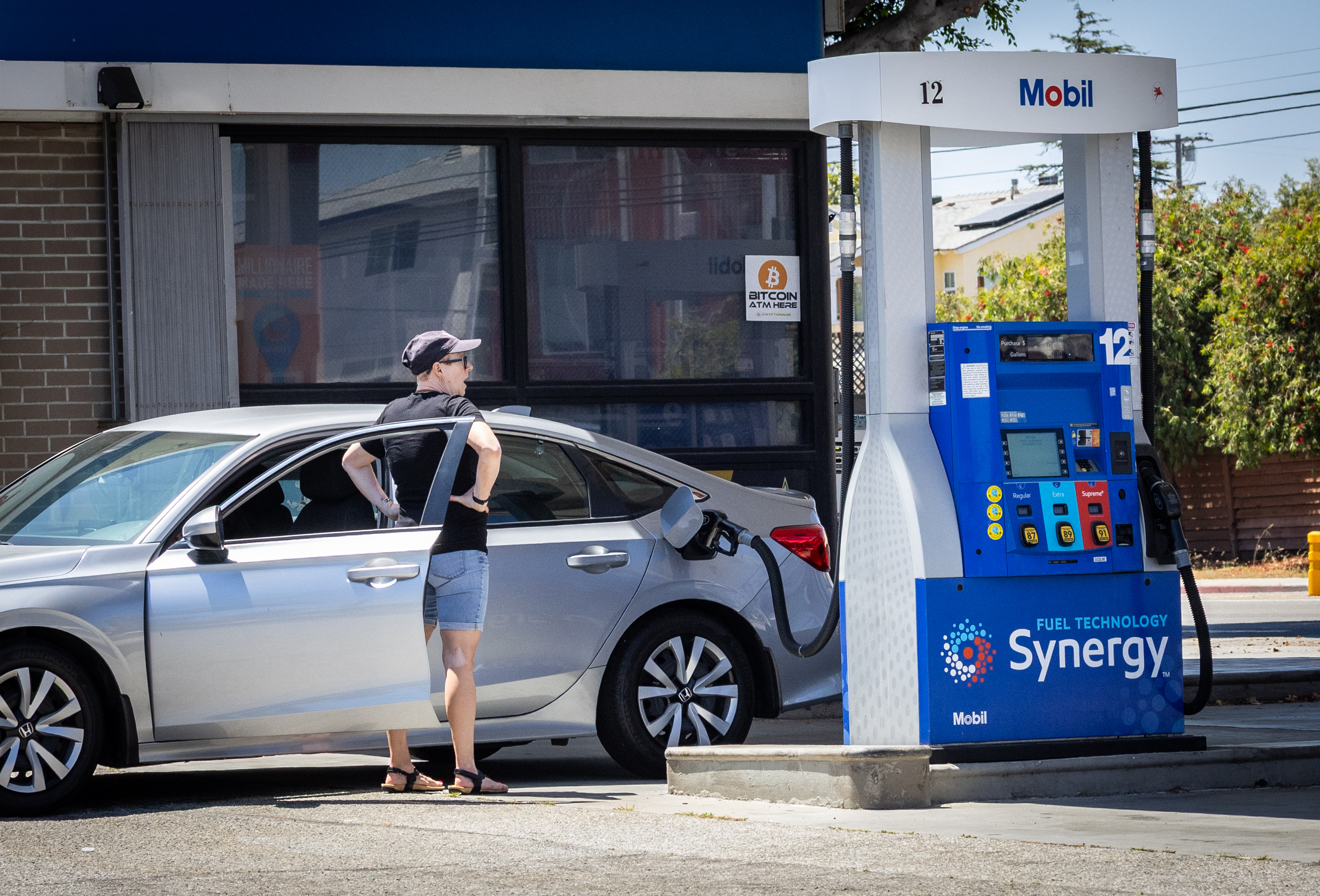
Motorists have felt the pain at the pump over the last several weeks.
The national average for a gallon of gas is $4.546—up almost $0.40 in the past month—according to the American Automobile Association.
International energy markets have stabilized this week.
A barrel of West Texas Intermediate (WTI)—the U.S. benchmark for oil prices—is hovering around $95 on the New York Mercantile Exchange, down 20 percent from its recent high.
Traders have been optimistic that the Strait of Hormuz could reopen. Reports surfaced this week that the administration was preparing to restart naval operations and escort commercial tankers through the narrow waterway.
Secretary of State Marco Rubio, meanwhile, told reporters on May 8 that the White House is anticipating a response from Tehran on the proposal to end the 10-week-old conflict.
“We’ll see what the response entails. The hope is it’s something that can put us into a serious process in negotiation,” Rubio said.
Hsu said that “Middle East developments are unlikely to meaningfully boost sentiment until supply disruptions have been fully resolved and energy prices fall.”
Inflation Outlook Improves
Preliminary results suggest that consumers’ inflation forecasts have improved.
The one-year outlook eased to 4.5 percent from a seven-month high of 4.7 percent in April. Despite the drop, year-ahead expectations are still firmly above the prewar level of 3.4 percent.

Shoppers at a grocery store in Centreville, Va. (Madalina Kilroy/The Epoch Times)
Five-year inflation projections also slowed to 3.4 percent, from 3.5 percent.
Next week, consumers will receive a fresh tranche of inflation data.
April’s Consumer Price Index report is expected to show the annual inflation rate ticking up to 3.6 percent, from 3.3 percent in the previous month, according to the Federal Reserve Bank of Cleveland’s Nowcasting model.
The May 12-month inflation could also rise to 3.9 percent, the regional central bank estimates.
But while persistent inflation might cloud the economic outlook, the situation “is so much better than what the doom crew has been saying,” says Chris Zaccarelli, CIO for Northlight Asset Management.
“There are a lot of headwinds—higher oil prices, sticky inflation and higher-for-longer interest rates—and yet the labor market is adding jobs, GDP is growing and corporate profits are expanding at a rapid pace,” Zaccarelli said in a note emailed to The Epoch Times.
The latest jobs report topped economists’ expectations.
In April, the economy added 115,000 new jobs, topping the consensus estimate of 62,000. The unemployment rate also held steady at 4.3 percent. March’s payrolls were also revised slightly higher by 7,000, to 185,000.
First-quarter gross domestic product (GDP) growth came in at 2 percent, while corporate profits surged almost 6 percent in the fourth quarter.
This comes as U.S. and global stock markets have recovered from the March selloff.
The benchmark S&P 500 Index and the tech-driven Nasdaq Composite Index are flirting with fresh record highs to close out the trading week.
Earlier this week, South Korea’s Kospi broke the 7,000 ceiling for the first time. In addition, the Nikkei in Japan hit a record high.
Artificial intelligence (AI) has been the primary factor pulling this market to record territory, says Giuseppe Sette, president of market analytics firm Reflexivity.
“The key point is that the AI story is bigger than geopolitics,” Sette said in an emailed note to The Epoch Times.
“First-order effects—trillions in capex—are combining with second-order effects, such as productivity gains in non-tech firms, to push the market to new highs while AI adoption is still only partial across the wider economy.”
Scores of AI hyperscalers recently revised their capital spending plans higher. By 2027, capital expenditure could reach $1 trillion.
Jack Phillips contributed to this report.