News Analysis
Nineteenth-century French author Jean-Baptiste Alphonse Karr is credited with the cynical adage “The more things change, the more they stay the same.”
Turmoil in the $2 trillion private credit market is drawing parallels to the early days of the global financial crisis two decades ago.
Private credit is an alternative to traditional lending—constructed from the rubble of the Great Recession—and has enjoyed a boom over the past decade.
In recent months, however, a growing chorus of investment firms has begun limiting client withdrawals amid mounting pressures.
Observers are split on whether this is the beginning of a financial calamity that will spill into the broader economy or a situation confined to a corner of the financial markets.
“It sort of smells like that kind of a moment again,” former Goldman Sachs CEO Lloyd Blankfein said last month on Bloomberg’s “The Big Take” podcast.
“I don’t feel the storm, but the horses are starting to whinny in the corral.”
What happened 20 years ago is causing some consternation today.
Revisiting the Global Financial Crisis
In response to the dot‑com bust and the destabilizing impact of the 9/11 terrorist attacks, the Federal Reserve cut interest rates sharply to support growth and restore confidence.
By May 2004, the federal funds rate—a key policy rate that influences borrowing costs for households and businesses—reached 1 percent.
But although the central bank’s goal was to resuscitate demand, the Fed facilitated enormous borrowing across the U.S. economy, particularly in the housing market.
The borrowing binge fueled a real estate bubble, as home prices exceeded fundamentals.
When the Fed began tightening monetary policy—the federal funds rate returned above 5 percent by mid-2006—mortgage costs accelerated, demand tanked, and defaults started to rise.
Subprime borrowers bore the brunt of the housing downturn after lenders steered high‑risk households into loans with enticing teaser rates that later reset to unaffordable levels.
The resulting wave of defaults was confined to one corner of the financial markets.
Because banks had packaged these mortgages into mortgage‑backed securities and collateralized debt obligations, the subprime collapse quickly spilled into the wider financial system.
When subprime default rates surged, the value of these securities tanked.
Liquidity started drying up. Banks stopped lending to each other. Credit risk and market fear went into high gear.
Many will remember the collapse of Bear Stearns and Lehman Brothers, but the first piece of the global financial crisis puzzle was BNP Paribas.
In August 2007, the bank froze redemptions in three asset-backed securities, warning of a “complete evaporation of liquidity.”
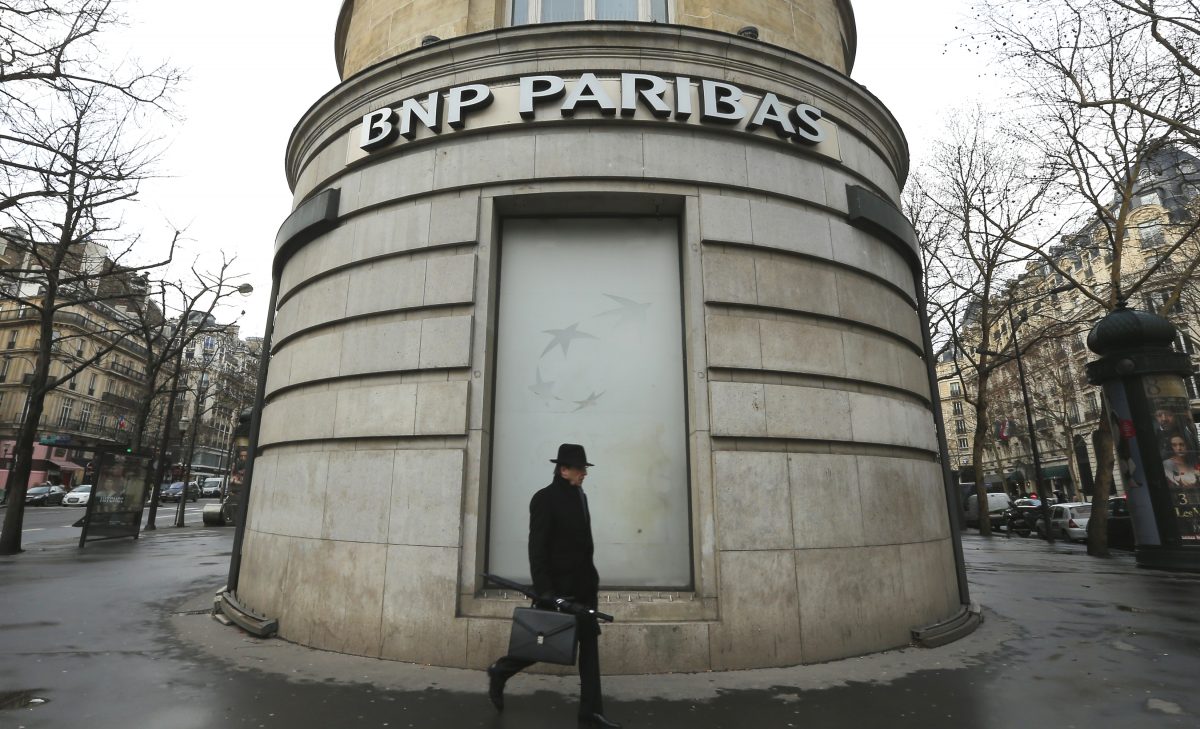
- In this Feb. 5, 2013, file photo, a man walks past the BNP Paribas headquarters in Paris. (Jacques Brinon/AP Photo)
Others began to follow—at home and abroad—either declaring a credit crunch or bankruptcy: the largest U.S. mortgage lender, Countrywide Financial; American Home Mortgage; Germany’s IKB; and the UK’s Northern Rock.
By the time the smoke cleared and the dust settled, the global financial crisis had eviscerated as much as $20 trillion in worldwide market value.
Feeling Stressed in Private Credit
Following the global financial crisis, the Federal Reserve slashed interest rates to almost zero percent—and kept them there until early 2016, when it began incrementally raising the policy rate.
The ultra-low-rate environment led to starvation among yield-hungry investors.
The institutional class dipped their toes in private credit, seeking higher returns on their investments.
In the early days of the COVID-19 pandemic, the Fed employed emergency actions.
Institutional investors amplified their involvement in private credit, but the sector also attracted retail traders.
The recent turmoil can be traced to two failures that happened within a week of each other.
In September 2025, First Brands Group and Tricolor Holdings collapsed, catching the attention of JPMorgan Chase CEO Jamie Dimon.
“I probably shouldn’t say this, but when you see one cockroach, there are probably more. And so we should—everyone should be forewarned on this one,” Dimon said during the third-quarter earnings call in October 2025.
He may have been correct.
Stresses worsened when Blue Owl Capital restricted clients’ redemption requests in February, forcing investors to rush to other investment firms and request their money back.
Throughout March, various regulatory filings revealed that scores of firms—BlackRock, Blackstone, Apollo Global Management, Ares Management, and UBS—capped or halted redemptions.
Investors have been spooked by the recent turbulence—high leverage, rising default risks, and tightening liquidity conditions—forcing them to take another look at their portfolios, said Scott Stevens, founder and managing partner at Grays Peak Capital.
“A lot of people are reassessing their private credit portfolio and trying to see if there is any default in their portfolio,” Stevens told The Epoch Times.
“If you’re an investor, you’re in one of these funds that has a headline that’s saying they’re getting redemptions, you’re probably going to redeem regardless of whether there’s an issue.”
A large share of the challenges the industry is facing can be linked to risks in the tech sector’s so-called software scare.
Software firms have discovered that artificial intelligence could threaten their business models, sending valuations and growth forecasts crashing.
Shares of Microsoft, for example, have fallen by 28 percent.
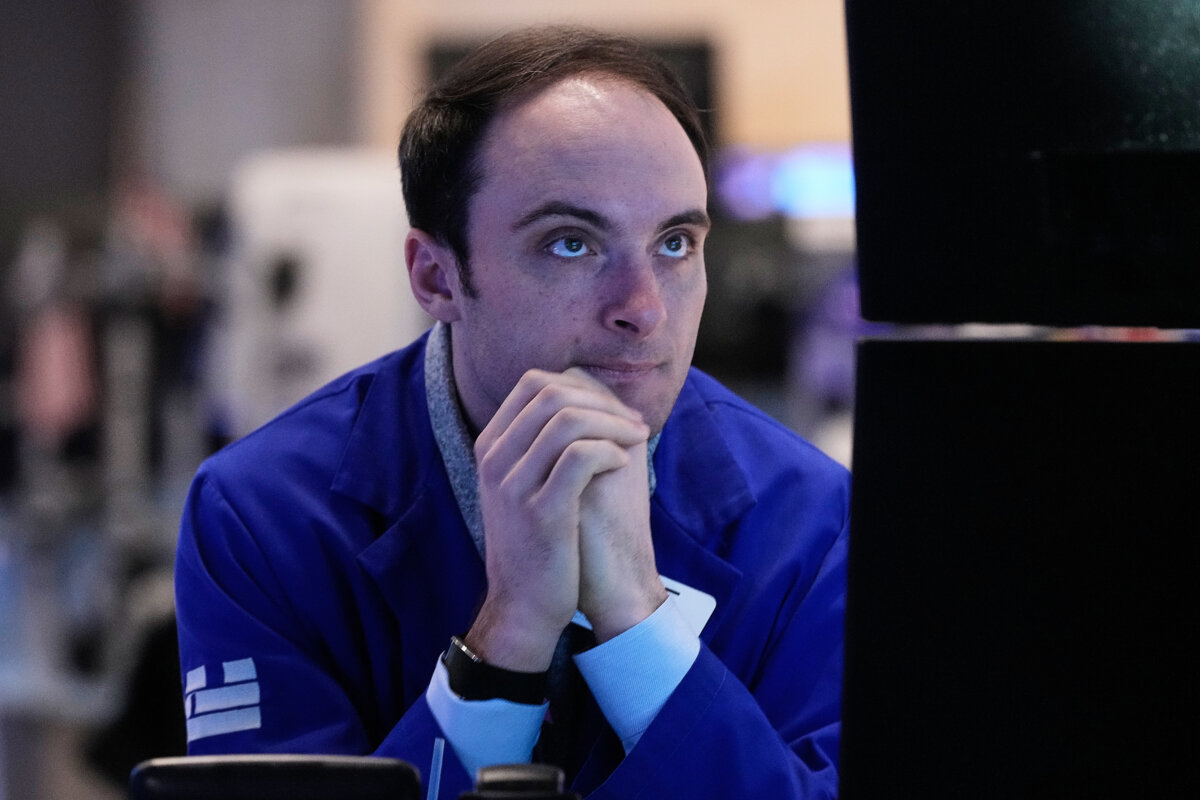
- Specialist Joseph Maguire works at his post on the floor of the New York Stock Exchange on Feb. 3, 2026. (Richard Drew/AP Photo)
The trend is continuing to play out in the stock market, and it is also a major factor in private credit, since software accounts for a large share of leveraged loans, speculative assets, and business development companies that provide financing to small and medium-sized companies.
“As those fears get repriced, investors are reassessing assets and applying greater scrutiny to their underlying exposures,” Christian Hoffmann, head of fixed income at Thornburg Investment Management, said in a note emailed to The Epoch Times.
“BDCs and private credit have fairly significant exposure to the space, but those portfolios aren’t necessarily doomed or inherently problematic. However, software has long been viewed as a sector capable of supporting substantial leverage.”
Systemic Risks or Niche Problem
Private credit has been one of the latest concerns traversing Wall Street, contributing to the leading benchmark averages’ slipping into correction territory.
“Between the Iran conflict, private credit, higher interest rates, and gas prices, along with the Fed losing maneuverability to further cut interest rates, there are plenty of reasons why the S&P is down about 9 percent from highs earlier this year,” Justin Bergner, portfolio manager at Gabelli Funds, told The Epoch Times in a note.
For now, the consensus among market watchers is that private credit should be monitored but does not pose systemic risk to the financial system.
“I think this is an issue, but I don’t think it’s as big an issue as people are making out to be,” Stevens said.
“I think a lot of it is just people getting scared and pulling money, and the industry will have to kind of cycle through that.”
Vivek Bantwal, global co-head of private credit in Goldman Sachs Asset Management, has said much the same.
Bantwal, writing in a March 26 note, argued that portfolios are not overly concentrated, leverage levels are restrained, and assets and liabilities are appropriately matched.
“Private credit is certainly getting a lot of media attention right now, not all of it necessarily nuanced or accurate,” he said.
The Federal Reserve is paying closer attention to private credit to ensure that a deeper crisis is not forming.
However, Fed Chair Jerome Powell said at a Harvard talk this week that the central bank does not see a “contagion” event unfolding.
Although ING strategists have said they do not believe the system is collapsing, they said they see what is transpiring in private credit as a risk repricing.
Direct exposure to private credit, they say, might not pose an immediate systemic hazard, but the indirect spillover channels are far more worrisome.
“As the credit cycle turns, financing costs, already influenced by the expansion of private credit structures, are set to rise further,” the strategists wrote in a March 25 research note.
“At the same time, the Middle East conflict, stubborn inflation, and a rising likelihood of renewed rate hikes create a backdrop of mounting macro‑financial stress.”
Despite some hiccups over the past 20 years, U.S. financial markets have been resilient, said Blankfein. But when markets are strong, investors sometimes let their guard down and take on added risk.
“If everything is always good and there’s no cost, no adverse consequences, you start to lose discipline over time,” Blankfein said.