
The Federal Reserve left interest rates unchanged on March 18 for a second consecutive meeting, as policymakers monitor the oil shock from the Iranian conflict.
Officials kept the benchmark federal funds rate—the key lever that helps shape borrowing costs for households and businesses—at its current range of 3.5 percent to 3.75 percent.
In a post-meeting statement, the Fed said various indicators suggest that the economy is “expanding at a solid pace,” as employment gains remain low and the unemployment rate holds steady.
“Uncertainty about the economic outlook remains elevated,” the Federal Open Market Committee said in a statement. “The implications of developments in the Middle East for the U.S. economy are uncertain.”
The decision to leave policy unchanged was near unanimous, with officials voting 11–1.
Fed board member Stephen Miran was the lone dissenting vote, preferring to lower interest rates by a quarter point.
Despite supporting a rate cut in January, Fed board member Christopher Waller voted with the committee.
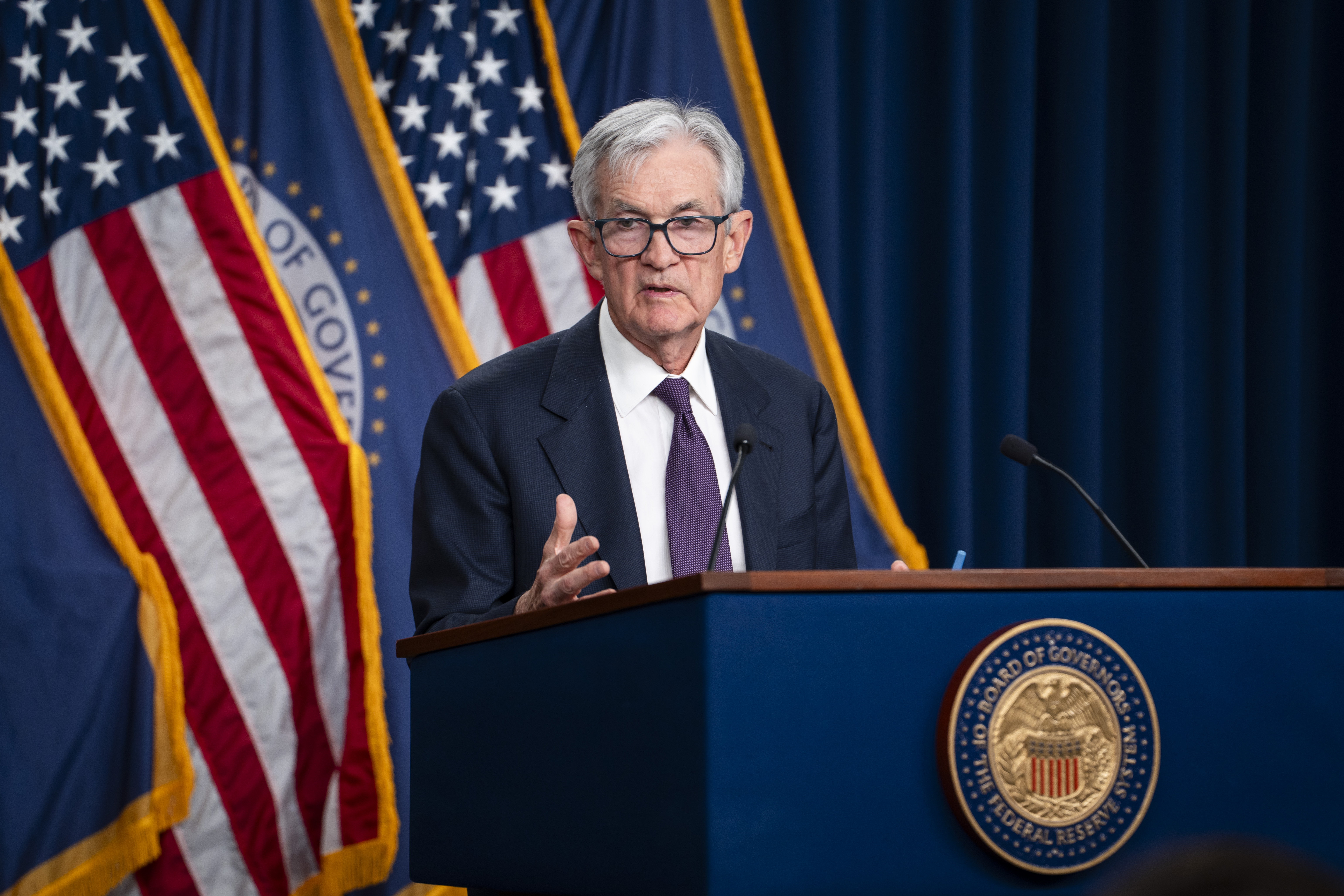
During his post-meeting news conference, Fed Chairman Jerome Powell reiterated that it was “too soon to know” the implications of the Iranian conflict.
“Near-term measures of inflation expectations have risen in recent weeks, likely reflecting the substantial rise in oil prices caused by the supply disruptions in the Middle East,” he said.
But the shock of surging oil prices—to growth or employment—could be offset by higher energy production.
“We’re a net exporter of energy,“ Powell told reporters. ”So any effects on employment and economic activity and spending would be offset to some extent by the fact that our oil companies will be more profitable, and they may even do more drilling.
“They’re going to make a reasoned, careful judgment that we’re going to have higher oil prices for an extended period.”
Still, Powell said, the Fed is in a “difficult situation” as it attempts to balance upside inflation risks and downside labor market challenges.
“So we’re in a difficult situation, and we feel like our framework calls on us to balance the risks, and we feel like where we are now is just kind of on that borderline, the higher borderline of restrictive versus not restrictive,” he said.
Examining Policy
Looking ahead, the Fed maintained its projection for one interest rate cut this year, according to the updated Summary of Economic Projections. The central bank also expects a single rate action.
Of the 19 Federal Open Market Committee participants, seven members believe that rates will remain unchanged this year, based on the dot-plot—a visual representation of where officials think that policy is headed.
The median policy rate is still predicted to finish the year at 3.4 percent.
Policymakers revised their growth and inflation forecasts slightly higher.
Real gross domestic product growth is expected to be 2.4 percent this year, up from the December 2025 estimate of 2.3 percent.
The Fed’s preferred inflation measure—the personal consumption expenditures (PCE) price index—is anticipated to be 2.7 percent this year, up from 2.4 percent in the previous Summary of Economic Projections. Core PCE, which excludes volatile energy and food categories, was revised higher to 2.7 percent from 2.5 percent.
“The Fed is choosing to look through the fog of conflict, for now,” Jamie Cox, managing partner for Harris Financial Group, said in a note emailed to The Epoch Times. “A dual mandate Federal Reserve is not going to rock the interest rate boat during a supply shock.”
For the second straight meeting, the possibility of the next move being a rate hike was addressed. However, Powell clarified that it was not the base case for policymakers.
Rate Expectations
Following the hot inflation report, investors pushed back their expectations for the Fed to lower interest rates.
Traders now anticipate that the U.S. central bank will follow through on a single quarter-point rate cut in December.
Since the beginning of the year, investors have been steadily revising their forecasts, with markets initially betting on a springtime loosening of policy. As more data trickled in, investors penciled in a late summer reduction.
Renewed price pressures could force monetary policymakers to stay put for longer.
The Iranian conflict—now in its third week—has triggered an energy price shock that could revive inflationary challenges.
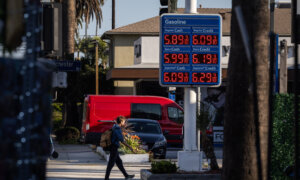
Crude oil prices are hovering at about $100 per barrel, sending the national average for a gallon of gasoline to almost $4.
Officials will now have to look through the inflation effects of higher oil prices and examine underlying trends.
Recent figures suggest that inflation may have been edging higher before the outbreak of war in Iran, creating consternation among policymakers that the path back to the institution’s 2 percent target will remain bumpy.
The producer price index—a gauge of prices paid for goods and services by businesses—unexpectedly surged by 0.7 percent in February, higher than the consensus forecast. Core producer inflation, which removes food and energy, also advanced by 0.5 percent—topping market estimates.
Last week, January’s 12-month PCE price index decelerated to 2.8 percent. But core PCE inflation ticked up to 3.1 percent.
At the same time, the broader economy could be at a standstill.
Fourth-quarter gross domestic product was adjusted lower to 0.7 percent from the initial estimate of 1.4 percent. Additionally, January’s retail sales declined by 0.2 percent, and durable goods orders held steady to kick off the year.
The other side of the Fed’s dual mandate—maximum employment—could be under threat.
The economy lost 92,000 jobs in February after creating 126,000 jobs in January.
“The bar to cutting has risen meaningfully as energy-driven inflation risk has re-entered the picture,” Christian Hoffmann, head of fixed income at Thornburg Investment Management, said in a note emailed to The Epoch Times. “Growth does appear to be slowing, and the Fed’s preferred inflation gauge, core PCE, is running hotter than [the consumer price index].
“The bigger issue for the economy is that inflation is proving sticky while energy costs are rising, which compresses the Fed’s room to maneuver.”
Still, President Donald Trump said the Fed needs to lower interest rates immediately.
“When is ‘Too Late’ Powell lowering INTEREST RATES?” Trump said in a March 18 social media post.
This was Powell’s second-to-last meeting as head of the Federal Reserve. Although his term as chairman ends in May, Powell will still have a seat on the Federal Reserve Board of Governors for two more years.