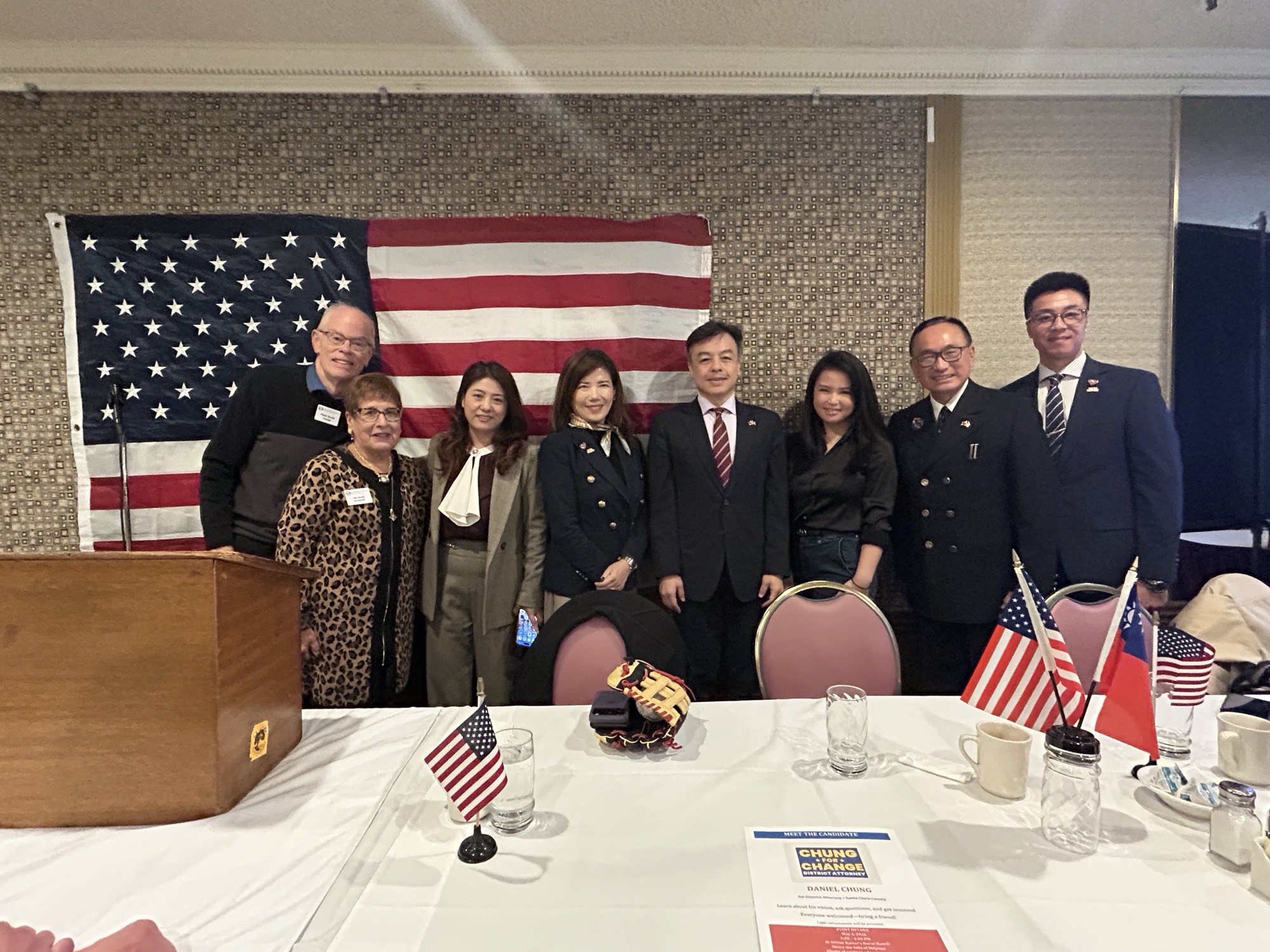
What happens on the other side of the Pacific Ocean impacts the United States, a Taiwanese diplomat said during a presentation to a Republican group in California on April 22.
“Taiwan is committed to working with its partners to build a trusted, resilient, and integrated supply chain,” said Wu Chih-hsiang, director general of the Taipei Economic and Cultural Office (TECO) in San Francisco.
Wu made the remarks during a presentation on U.S.–Taiwan relations to the Silicon Valley Association of Conservative Republicans. TECO is Taiwan’s de facto embassy in the United States.
Wu said that the locations known as the first island chain should serve as a “shield of democracy” to counter China’s military threats, economic coercion, and political influence.
The concept of the island chain was introduced by the U.S. government in 1951 during the Korean War. The first island chain stretches from Japan to Taiwan, through the Philippines, and down to Borneo. It serves as a maritime barrier enclosing the East Asian coastline and curbing Chinese naval access to the Pacific.
“Taiwan was established in 1911, and the People’s Republic of China was established in 1949. China has never set foot on Taiwan, so the claim that Taiwan is part of China is simply not true,” Wu said.
Wu pointed out that Taiwan is a key player in the semiconductor supply chain for the United States, and that more than one-third of the world’s container ships pass through the Taiwan Strait each year. However, Chinese Communist Party (CCP) leader Xi Jinping has expressed an ambition to potentially annex Taiwan by 2027.
Wu cited routine Chinese military exercises around Taiwan as examples of the security threats facing the island.
He also mentioned that an official visit by Taiwanese President Lai Ching-te to the Kingdom of Eswatini was recently postponed due to interference from the Chinese communist regime.
According to a statement issued by the Taiwanese president’s office, Lai was originally scheduled to depart Taiwan on April 22 for Eswatini. However, under intense pressure from Beijing, three African countries along the charter flight’s route abruptly canceled previously approved flight permits. The three countries were Seychelles, Mauritius, and Madagascar.
The president’s office stated: “The Republic of China [Taiwan] is a sovereign nation. Taiwan is a Taiwan of the world, and the 23 million people of Taiwan have every right to engage with the world. No country has the right to obstruct Taiwan, and none will ultimately succeed in doing so.”
In an interview with The Epoch Times following his presentation, Wu condemned the Chinese regime’s coercive measures used to interfere with Taiwan’s relations with other countries.
“The Chinese Communist Party has extended the same methods it uses to suppress the Chinese people domestically to oppressing other countries, which is a complete violation of international law,” Wu said. “This approach will only provoke stronger backlash from the international community and Taiwan.”
During his speech, Wu also criticized the CCP’s use of transnational repression against Taiwan in the United States. He mentioned that California State Assemblyman Tri Ta recently received a letter from the Chinese consulate in San Francisco demanding that Ta refrain from involvement in diplomatic affairs between Taiwan and the United States.
After receiving the letter, Ta issued a public statement strongly condemning the consulate’s intimidation tactics.
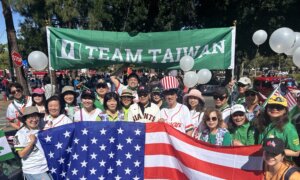
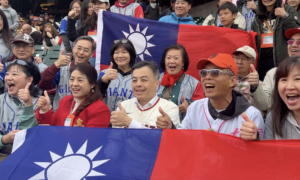
More than 100 people attended the meeting on April 22, many of whom were Taiwanese Americans living in California.