Grit is overrated. The people who quietly outperform, outlast, stick to their goals, and outlive their peers aren’t running on discipline alone.
When effort connects to what matters most, sacrifice turns into devotion. Psychologists call this value-based persistence: pushing on because it reflects your core values or beliefs, turning hard work into something that truly matters. It’s not about toughing it out. It’s about knowing, deeply, why you showed up in the first place.
Why Devotion Feels Different
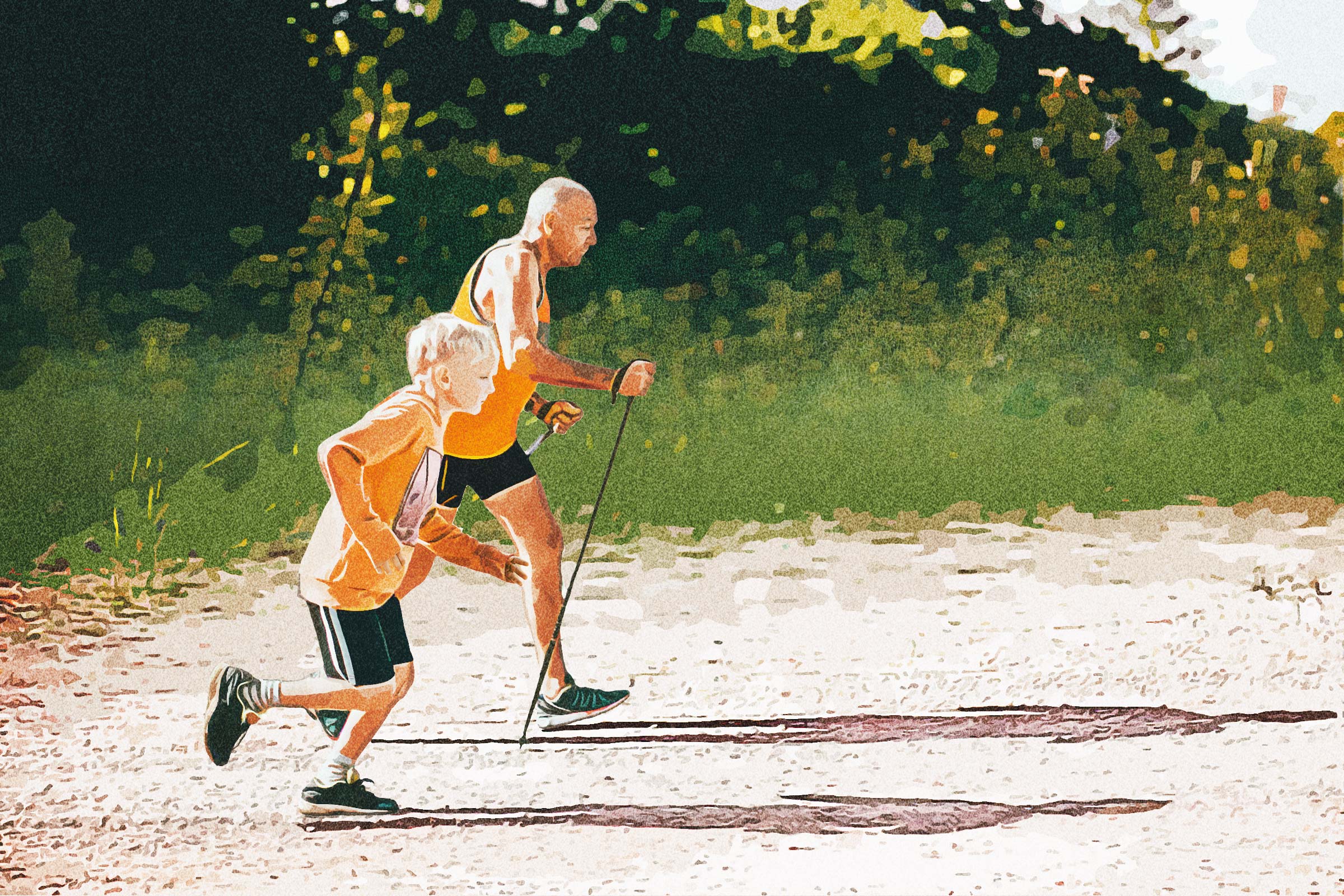
To some, a grandparent hitting the gym at dawn might look like a sacrifice—a trade of precious sleep for sweat and strain. However, for the grandparent, it’s an act of devotion, rooted in the belief that staying strong means keeping up with the grandkids.
Likewise, a retiree volunteering every week at the local food bank may seem to be giving up leisure time. Yet when the effort arises from a deep value of community and giving back, it stops feeling like duty and becomes purpose in motion.
The distinction sits at the heart of lasting persistence. People who thrive under pressure are not always those who push the hardest. They’re the ones whose effort aligns with what they deeply value and believe. For them, discipline is not just effort—it is aligned with their identity. Doing hard things becomes easier when they are framed with a positive purpose.
Nir Eyal, a behavior design expert and author of “Beyond Belief,” has spent years studying why some people transform struggle into meaning while others are crushed by it. His conclusion is that pain itself is neutral. It’s our beliefs that give it meaning.
“Our beliefs filter our perception of the external world,” Eyal told The Epoch Times in an email. “They sculpt our emotions, alter how our bodies respond, and even change our moment-to-moment experience of being alive. We feel what we believe.”
That concept helps explain why chosen hardship can feel so different from forced hardship. When the mind labels a task as a burden, the body follows with tension, resistance, and fatigue. When the mind labels the same task as devotion, the strain still exists, but it has a meaningful direction.
“Pain is just a signal,” Eyal said. “Suffering is the interpretation of that signal.”
A nurse who stays after a punishing shift may be tired, but if the work is tied to care and service, the tiredness does not tell the whole story. A parent waking before sunrise may feel the inconvenience, but also the love. The suffering is not erased—it is transformed by purpose.
“If our beliefs determine what we feel, then we can consciously design our own experiences from the inside out,” Eyal said.
That is not a promise that every challenge will become pleasant. It is a reminder that meaning changes the emotional texture of effort. When we choose our trade-offs intentionally, we are not just enduring them—we are authoring them.
How Meaning Strengthens Health
A compelling body of research exists for living with meaning-driven effort. Longitudinal
studies have repeatedly found that a stronger sense of purpose predicts better outcomes over time. People with a clear sense of meaning in their lives tend to live longer, make healthier choices, and keep their minds sharper as they age. In simple terms, purpose supports better physical and mental health over time.
“Aging is inevitable,” Eyal noted. “But how our bodies experience the passage of time depends on the beliefs that drive our actions.”
The mechanism is partly behavioral. People with purpose often stay active, sleep better, and show up more consistently for the habits that matter.
When struggle is reframed as building something worthwhile, stress feels lighter and motivation lasts longer. The person who walks because he “should” may eventually stop. The person who walks to stay strong for family or to keep his mind clear into old age makes the habit stick. Instead of asking, “Why am I doing this?” we can ask, “What am I building through this?” Purpose turns healthy actions into lasting change.
Research suggests that people with a strong sense of purpose show lower mortality rates, better exercise habits, and stronger cognitive health as they age.
‘I Have to’ Versus ‘I Want to’
Saying “I have to” frames effort as obligation and kills motivation—it feels forced and heavy. “I want to” frames effort as choice, and sparks energy. A small language shift changes how long you keep going and how you feel.
Psychologists call this reframe mental contrasting—you picture a desired future goal while acknowledging the real obstacles in the way. Research has shown that mental contrasting drives stronger commitment than optimism alone. It works because it’s honest and because it forces you to connect the effort to the outcome.
Eyal describes motivation as a triangle of belief, benefit, and behavior. You begin by believing that something is possible. Then, once you see the payoff, that sense of reward sparks the action. Finally, the experience confirms the belief and strengthens the loop.
“A limiting belief is defined as a belief that either saps motivation or increases suffering,” he said. “A liberating belief is a belief that supplies motivation or decreases suffering.”
Take a runner training for a half-marathon. She may not really love some of the miles, but if running stands for health or a personal promise, it feels like a commitment to improve—not a sweaty punishment.
This framework also helps explain why avoidance backfires. Trauma survivors, for example, often avoid pain to feel safe, Eyal said.
“Anxiety about being retraumatized leads to avoidance,“ he said. ”Avoidance provides short-term relief, and relief teaches the brain that avoidance is the only safe option.”
Real agency grows the opposite way: by repeatedly staying present with effort, discomfort, and challenge.
The more we see ourselves surviving hard things, the less threatening they become.
Turning Positive Belief Into Habit
Understanding these concepts is one thing. Building them into daily life is another.
Ritual is the bridge between belief and behavior—a regular, repeatable structure that reconnects you to what matters, Eyal said.
“Ritual creates regular opportunities to embody our better selves,” he said. “Whether we do this weekly or daily, ritual creates a rhythm that changes how people live.”
The best habits are small and simple—a morning prayer, an evening walk, or a quick post-work reset. Research supports positive prayer practices.
“Prayer practices generate measurable improvements in well-being, regardless of one’s faith,” Eyal said.
The formality doesn’t matter—the sincerity does.
3 Practical Starting Points
- Name Your Why: Connect the effort to core values and beliefs, such as health, family, or faith. Clarity fuels staying power, which makes the effort easier to sustain.
- Shift Your Words: Change “I have to” to “I choose to.” It flips burden into ownership. A simple language shift can change the emotional charge of a task. “I have to go to the gym” feels different from “I’m choosing to treat my body well so I can enjoy life.”
- Add Small Rituals: Lay out running shoes and activewear at night, or say a quick prayer after you brush your teeth. Repetition builds the habit.
The broader lesson is not that doing hard things becomes easy. The lesson is that hard things become more livable when they are tied to meaning. When we believe in what we do and why we do it, sacrifice feels less like suffering and more like devotion. Devotion, it turns out, is far more durable than discipline.