
The most beautiful piece of fruit you'll eat this year will probably also be the least satisfying. That’s not a coincidence.
As fruit production scaled globally, growers increasingly bred varieties that could withstand long shipping distances, sit longer on shelves, and appear uniform and enticing, often at the expense of the complex sugars and aromatic compounds that give fruit its signature flavor.
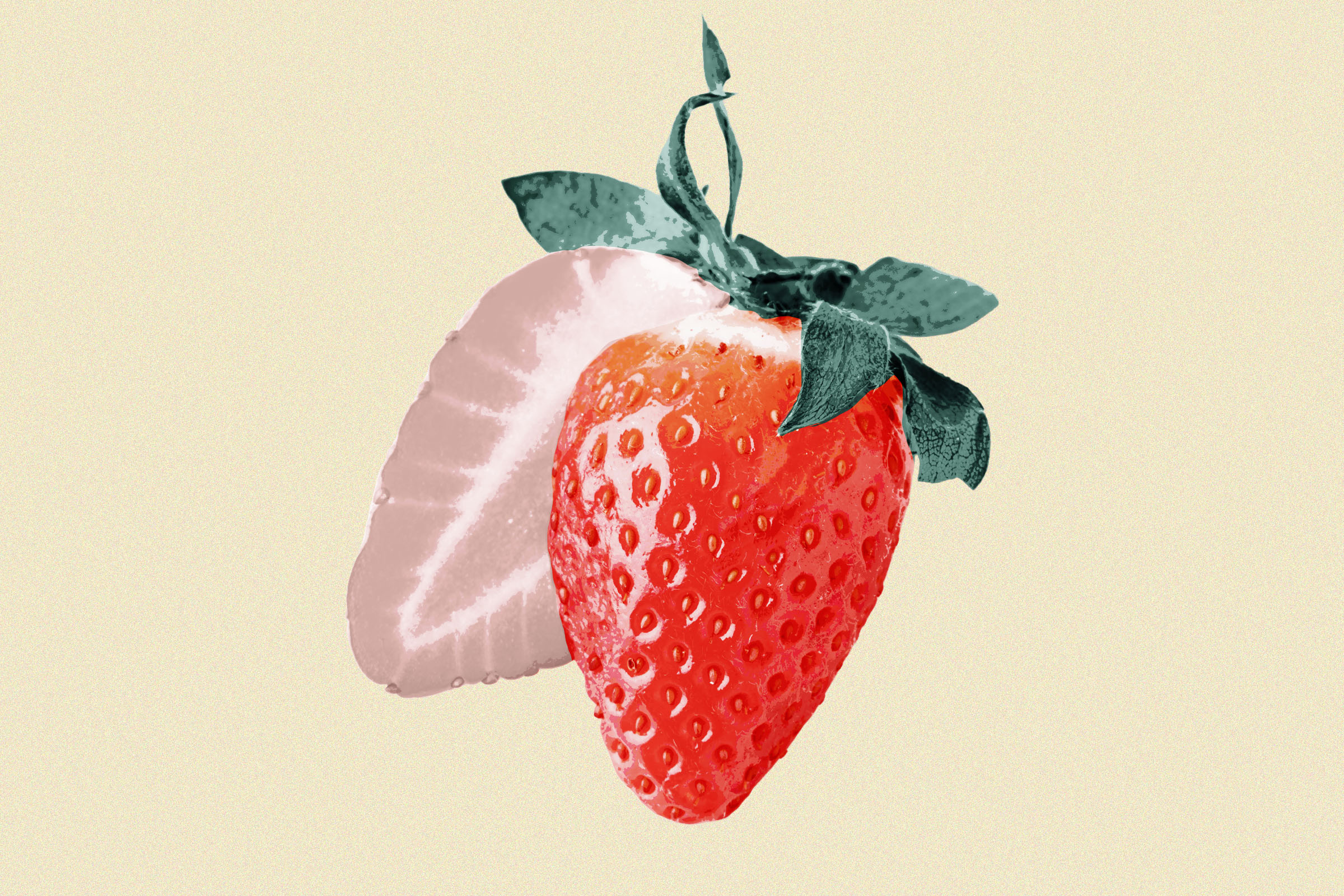
The strawberry shining up at you through the clamshell container wasn’t grown to taste good. It was grown to travel well, photograph well, and survive the supply chain. Flavor wasn’t part of the plan.
“We’re always searching for that perfect strawberry,” Paul Avellino, regenerative gardener and founder of Avellino Farms, told The Epoch Times.
Picked Too Soon
Strawberries picked early are firmer and better suited for shipping, but they do not develop the same flavor, texture, or overall quality as fruit ripened on the plant.
The result is essentially a tradeoff between durability and flavor. It may turn red—with some help from ethylene gas—but that color is cosmetic. The sweetness, the aroma, and the juice develop on the plant, and once you sever that connection, you can’t get them back.
“When you pick a strawberry, it stops producing sugar,” Taylor Wallace, who holds a doctorate in food science and nutrition, told The Epoch Times. The fruit is picked up early and shipped long distances. Ethylene gas is used to turn them red, but that doesn’t restore the flavor, he said.
What happens after picking further compounds the problem. A 2026 review published in the Journal of Agriculture and Technology found that cold storage slows the natural processes that cause fruits to ripen and spoil, extending shelf life and maintaining appearance and texture.
More advanced methods, such as controlled or modified atmosphere storage, can further extend freshness, although improper conditions can introduce problems such as chilling injury or off-flavors.
“You can’t expect an apple that’s been shipped halfway across the country and picked months ago to be delicious,” Avellino said.
Bred for the Shelf, Not the Palate
The industry’s prioritization of appearance isn’t arbitrary; it follows the consumer.
A 2024 study published in Foods found that appearance is the strongest driver of strawberry purchasing decisions, ahead of health benefits and taste, while brand is the least important.
Growers are, in a sense, giving shoppers exactly what they ask for at the point of sale. The problem is that what looks good and what tastes good have been decoupled.
“We breed strawberries for shelf life, size, and firmness so they can survive shipping,” Wallace said.
Some varieties are chosen simply because they produce more fruit per plant, prioritizing yield and uniformity.
“A lot of that is presentation,” Avellino said. “They want to fill those plastic clamshells up.”
Wallace said: “But you get a more watered-down, less flavorful fruit.”
A 2021 study published in Horticulture Research analyzed more than 100 different varieties and breeding lines over seven years, combining consumer taste panels with chemical profiling.
Although sugars played a key role in perceived sweetness, specific volatile aroma compounds were equally significant. Models that accounted for both predicted consumer preference more accurately than sugar-only models, showing that aroma compounds are a major driver of how sweet strawberries taste to us.
Farming practices further complicate the flavor profile. A 2023 study published in the Journal of Agricultural and Food Chemistry found that some fungicides can have a negative effect on strawberry flavor by reducing sugars, while also increasing acidity and changing aroma compounds.
What Bioengineered Fruit Means for Your Nutrition
Modern fruits have also declined in nutrients.
A 2024 review published in Foods suggests that the nutritional quality of fruits has declined over the past several decades because of high-yield farming, soil degradation, chemical agriculture, and a shift away from traditional nutrient-dense varieties.
“Using industrial fertilizers, you’re not going to get the same product as if you had living soil,” Avellino said.
A 2021 analysis of UK food composition over the past 60 years found significant declines in key minerals in fruits, including iron, copper, and sodium. Drops in nutrition are likely attributed to modern crop varieties, soil degradation, and industrial farming practices.
“Modern farming and storage practices can influence certain nutrients, particularly vitamin C and phytochemicals,” Michelle Routhenstein, a registered dietitian, told The Epoch Times. “The biggest factors are how the fruit is grown, when it is harvested, and how long it is stored.”
Cold storage can preserve nutritional quality to a degree, especially by slowing vitamin loss, but some nutrients still decline over time, while minerals and fiber remain relatively stable.
How to Get the Best-Tasting Fruit
Fruit tastes best when it’s harvested at peak ripeness, which typically only happens during its natural growing season.
“You can’t expect the most beautiful tasting produce out of season,” Avellino said. “Trying to eat berries when it’s not berry season is counterproductive.”
Local produce shortens the distance from farm to plate, which means that the fruit can stay on the plant longer and that sugars, aromas, and flavor compounds can fully develop.
Frozen fruit is a strong alternative when fresh, out-of-season fruit falls short. It’s often picked at peak ripeness and flash-frozen to preserve both flavor and nutrients better than its fresh, long-haul counterpart.
At the store, trust your nose over your eyes. A strong, sweet scent, vibrant color, and slight softness are usually key indicators of ripeness, far more honest signals than a glossy, uniform surface.
Routhenstein suggests prioritizing more perishable fruits, such as berries, sooner after purchase, refrigerating most types, and avoiding cutting fruit until just before eating, since exposure to air and light can trigger browning and accelerate the breakdown of sensitive antioxidants, such as vitamin C and carotenoids.
Any fruit is better than no fruit, and conventionally grown produce still provides important nutrients and health benefits. However, if you’ve ever wondered why a perfect-looking strawberry shining at you through the clamshell tastes like nothing, it’s not your imagination.