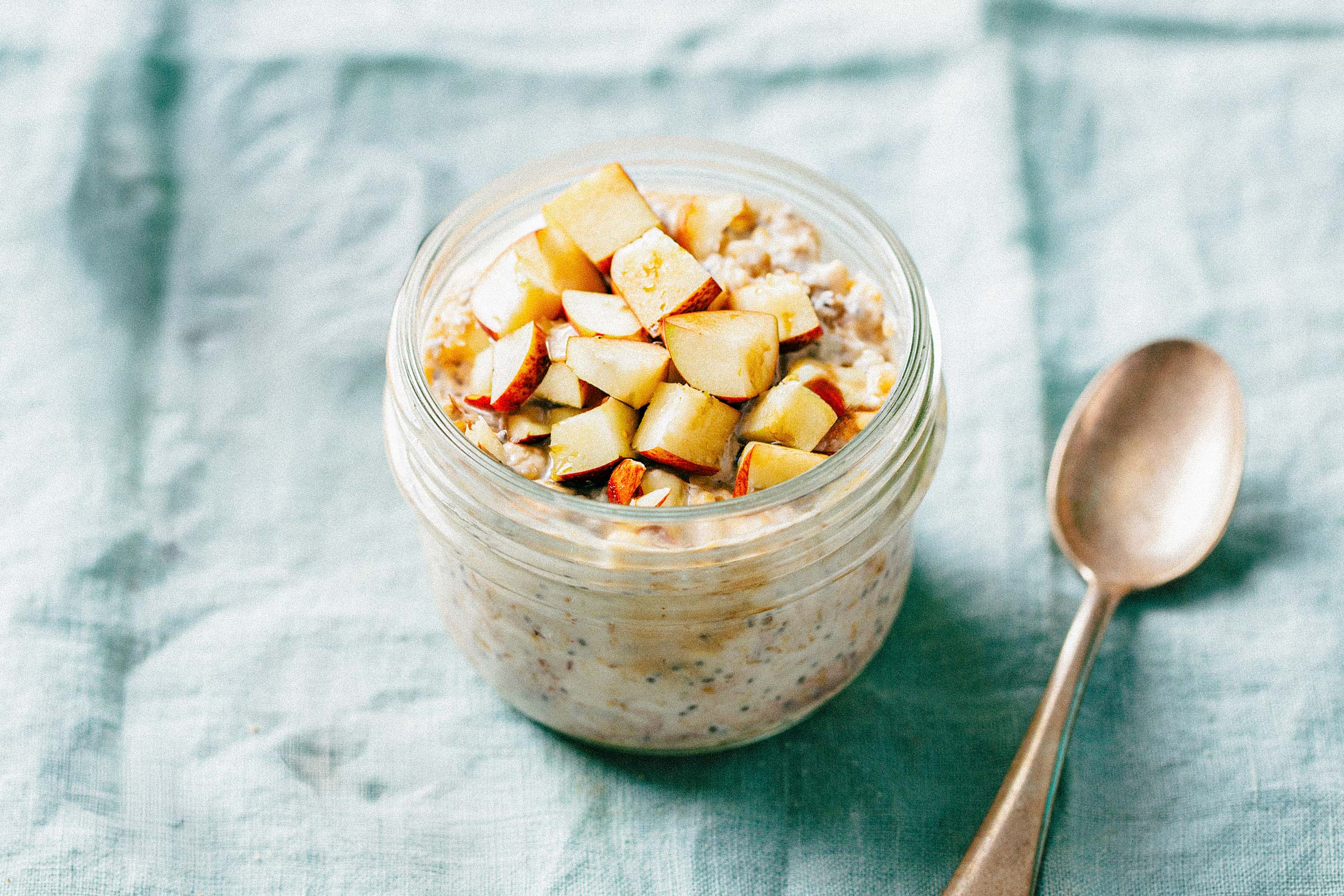
On a film set, between takes, there isn’t time for a sit-down breakfast. That’s why Jason Walsh, a performance trainer who works with Hollywood stars, often recommends overnight oats to clients who are short on time. Prepared the night before and waiting in the fridge, they’re an easy way to have something ready to eat in the morning.
“Overnight oats are one of the rare meals that deliver a huge nutritional punch,” Walsh told The Epoch Times.
When the morning rush hits, having a balanced, antioxidant-rich meal removes every excuse to skip breakfast.
The Power of Oats
One of the main benefits of oats is the fact that they’re high in beta-glucan, a type of soluble fiber that forms a thick gel in the gut. The gel
slows the rate at which carbohydrates are absorbed, helping reduce blood sugar and insulin spikes after a meal. Beta-glucan is also the
main active compound in oats linked to cholesterol-lowering and antidiabetic effects.
In one study, 37 people with Type 2 diabetes were given 5 grams of beta-glucan per day for 12 weeks (a typical bowl of oats contains about 3 grams of beta-glucan). By the end of the study, the average blood sugar levels over two or three months, insulin levels, and levels of C-peptide, a marker linked to inflammation, had all decreased.
Beta-glucan also plays an important role in gut health. As a soluble fiber, it adds bulk to stool, improving consistency and supporting regular bowel movements. When beta-glucan is fermented by gut bacteria, it produces short-chain fatty acids that nourish beneficial microbes and support a healthy gut environment.
“The benefits are worth the minimal time investment,” Walsh said.
Overnight Versus Cooked Oats
Soaking and cooking affect oats in slightly different ways.
Cooking softens the starch, making oats easier to digest and helping release beta-glucan.
Soaking helps break down phytic acid, a compound in grains that can bind to minerals, making minerals such as iron, zinc, magnesium, and calcium more absorbable, Olivia Malonda, a Mediterranean lifestyle expert, told The Epoch Times.
Walsh said cold soaking also increases resistant starch—a type of starch that has less effect on blood sugar and feeds beneficial bacteria in the gut.
When it comes to practicality, overnight oats have a clear edge.
“No stove, no standing over the pot,” Walsh said. “Five minutes the night before, and breakfast is done.”
Building a Balanced Bowl
Oats are a strong base, but what you add to them completes the meal.
“Overnight oats are a healthy breakfast, but only if they’re built correctly,” Nikkiey Stott, certified coach and pro bodybuilder, told The Epoch Times. Oats by themselves are fine, a good source of complex carbohydrates, she added.
“By incorporating protein and healthy fats, you create a meal that keeps you fuller for longer while stabilizing blood sugar,” she said.
A simple base starts with 1/2 cup rolled oats and 1/2 to 2/3 cup milk or water, Angel Planells, registered dietitian nutritionist, told The Epoch Times.
“For extra protein, add 1/4 cup Greek yogurt and to thicken the mixture and boost omega-3 intake, stir in one tablespoon of chia seeds,” he said.
Soaking time also matters. Let the oats sit in the fridge for at least six hours—eight is ideal. In the morning, stir and adjust the liquid if needed, and add fresh fruit, nut butter, or extra seeds.
Rolled oats tend to work best, steel-cut oats require more liquid and a longer soaking time, and quick oats often soften too much, Planells said.
Overnight oats can usually be stored in the fridge for up to three to four days in an airtight container, although they’re typically at their best within the first couple days. People with celiac disease need gluten-free oats, and those with sensitive digestion or following a low-carb diet may prefer other breakfast options.
5 Flavor Combinations for Variety
Finally, a variety of flavors is key if you want to eat overnight oats regularly.
“If you’re not looking forward to your breakfast, you’re unlikely to stick with it,” Walsh said.
Planells offered a few go-to pairings to keep things interesting:
- Peanut Butter and Banana: Peanut butter, fresh banana slices, a sprinkle of cinnamon, and a pinch of salt.
- Apple Pie: Grated apple with cinnamon and nutmeg, finished with chopped pecans.
- Mocha Oats: Unsweetened cocoa powder blended with espresso or cold brew, plus almond butter.
- Carrot Cake: Grated carrot, raisins, cinnamon, vanilla, and chopped walnuts.
- Savory Twist: Plain oats prepared with milk or broth, topped with a soft-boiled egg, sliced avocado, and seasoning.
The combination of complex carbohydrates and fiber, along with optional protein additions such as Greek yogurt, protein powder, or nut butter, provides steady, lasting fuel.
“Overnight oats continue to trend, and for good reason,” Planells said.