Want to have more disease-free years in your life?
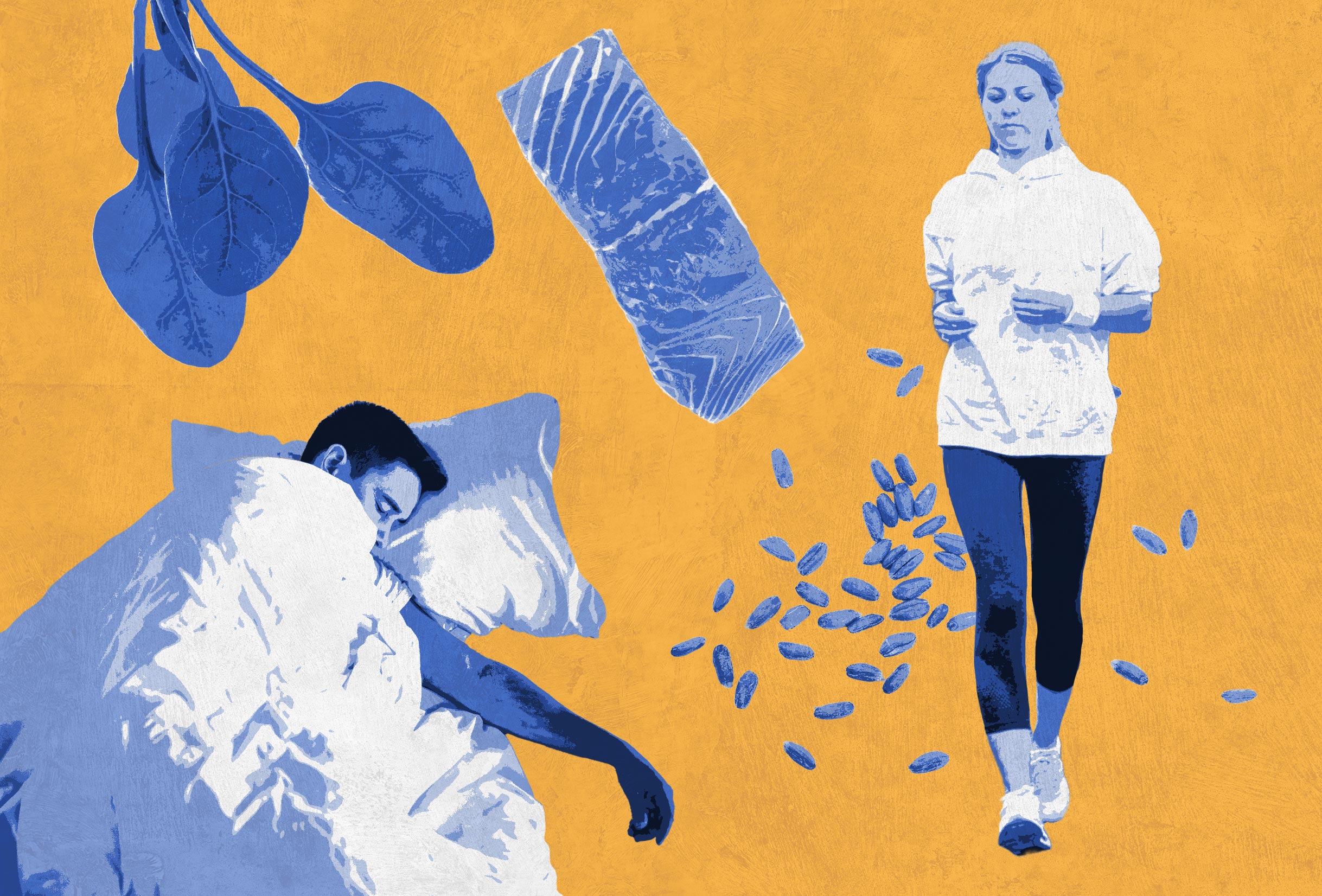
A study published in eClinicalMedicine followed nearly 60,000 adults and found that the key may lie in a few everyday habits—some so small they take only a few extra minutes per day. Small differences in how participants slept, moved, and ate were linked to living longer and healthier lives.
What the Study Found
The study explored what happens when sleep, physical activity, and nutrition are improved together rather than in isolation. Activity and sleep were tracked using wearable devices and diet was assessed with questionnaires. Participants were followed for several years, with analyses adjusting for other factors to determine how these behaviors together influenced lifespan and health span, or the number of years lived free from major chronic diseases.
Although each of these habits is known to affect how long and how well we live, they are usually studied on their own. When the factors were examined alone, large changes were needed to see meaningful improvements. However, when these behaviors were combined, the overall “dose” needed for improvements was substantially lower.
For example, physical activity on its own has been associated with about two additional years of lifespan among people reporting very high levels of activity.
Sleep also showed benefits when examined on its own. Sleeping about eight hours compared with five hours per day was associated with a maximum gain of about four additional years of lifespan and health span.
However, when these behaviors were combined, something changed—much smaller improvements were needed to see meaningful gains.
To gain one additional year of lifespan, a combined dose of only five extra minutes of sleep per day, two minutes of moderate-to-vigorous physical activity per day, and about half a serving of vegetables or 1 1/2 servings of whole grains per day were sufficient.
The largest gains came from combining high physical activity (40 to 100 minutes of moderate-to-vigorous activity per day), moderate sleep (seven to eight hours per night), and a high-quality diet (regularly including vegetables, fruit, whole grains, and fish). Together, these factors were associated with an additional nine years of lifespan and health span, compared with the group with the worst habits.
“This isn’t just about living longer; it’s about nearly a decade more of life free from chronic disease,” Dr. Sunil Kumar, a lifestyle medicine physician, told The Epoch Times.
Making small changes offers a practical and sustainable way to improve both lifespan and health span, especially for people who may lack the time, motivation, or financial resources to make major lifestyle changes.
“This study reinforces that lifestyle medicine is not ‘alternative’—it is a compelling, evidence-based intervention for chronic disease prevention,” he said.
Why the Combination Matters
Sleep, movement, and nutrition are not three separate levers. They are
interconnected systems that affect many processes in the body, including energy use, metabolism, inflammation, and hormonal regulation.
Sleep regulates hormones such as leptin and ghrelin, which control appetite and motivation. Without adequate sleep, hunger rises and the drive to exercise drops. Movement, in turn, improves sleep quality and insulin sensitivity. Nutrition provides the raw materials for cellular repair and immune function, supporting good sleep and sustained energy for exercise. When these three factors improve together, the benefits compound, Kumar said.
“Sleep, physical activity, and nutrition operate through synergy,” he said.
Dr. Sulagna Misra, an integrative medical doctor, told The Epoch Times that most people separate these three things. They might see a sleep doctor, a physical therapist, and a dietitian. She described the conventional approach as “organ-based” care—seeing a sleep doctor here, a dietitian there.
“What I try to do instead is help my patients see that sleep, movement, and nutrition are actually one conversation the body is having with itself—or ‘whole-istic’ care,” she said.
When sleep is disrupted, the body cannot repair itself, regulate hormones, or process emotions. When nutrition is poor or not properly absorbed, the fuel tank is running on empty. When movement is absent, joints, metabolism, and even cognition slow down.
“And none of these issues really show up in isolation,” Misra added.
From Theory to Real Life
The findings are not purely academic. Kumar said he sees the impact directly in surgical outcomes.
“As an anesthesiologist with over 20 years in the [National Health Service], I’ve observed that patients who recover best from surgery are those who sleep well, move regularly, and eat well,” he said.
The clinical application, known as “prehabilitation,” involves optimizing these factors before surgery to reduce complications and shorten hospital stays, he said.
The same principle applies to physician burnout.
“When health care professionals, often sleep-deprived and sedentary, make modest changes in these three areas, the transformation in their resilience and clinical performance is remarkable,” he said. “In my coaching with physicians facing burnout, addressing sleep first, then layering in movement and nutrition, accelerates recovery in ways single-factor interventions cannot match.”
Keep Going
Kumar offered some practical tips. Start small, and start with sleep—it’s the foundation.
Better sleep leads to better food choices and more energy, making movement easier. From there, stack habits—attach a new behavior to an existing one, such as taking a 10-minute walk after lunch.
“Remember, consistency matters more than intensity: Three 10-minute walks are as valuable as one 30-minute session,” he said.
Nick Koemel, research fellow at the University of Sydney and author of the eClinicalMedicine study, told The Epoch Times, “It’s useful to reflect on daily routines and identify where small tweaks may be possible.”
This could be as simple as taking the stairs instead of the elevator, adding an extra serving of vegetables or fruit to daily meals, or going to bed five to 10 minutes earlier, he said.
Misra offered a useful reframe for those prone to comparison: “Start where you are, not where you think you should be—or where someone else thinks you should be.”
For when the inevitable setback comes, Kumar’s advice is straightforward: Expect setbacks and restart without guilt.
“Behavior change isn’t linear,” he said.