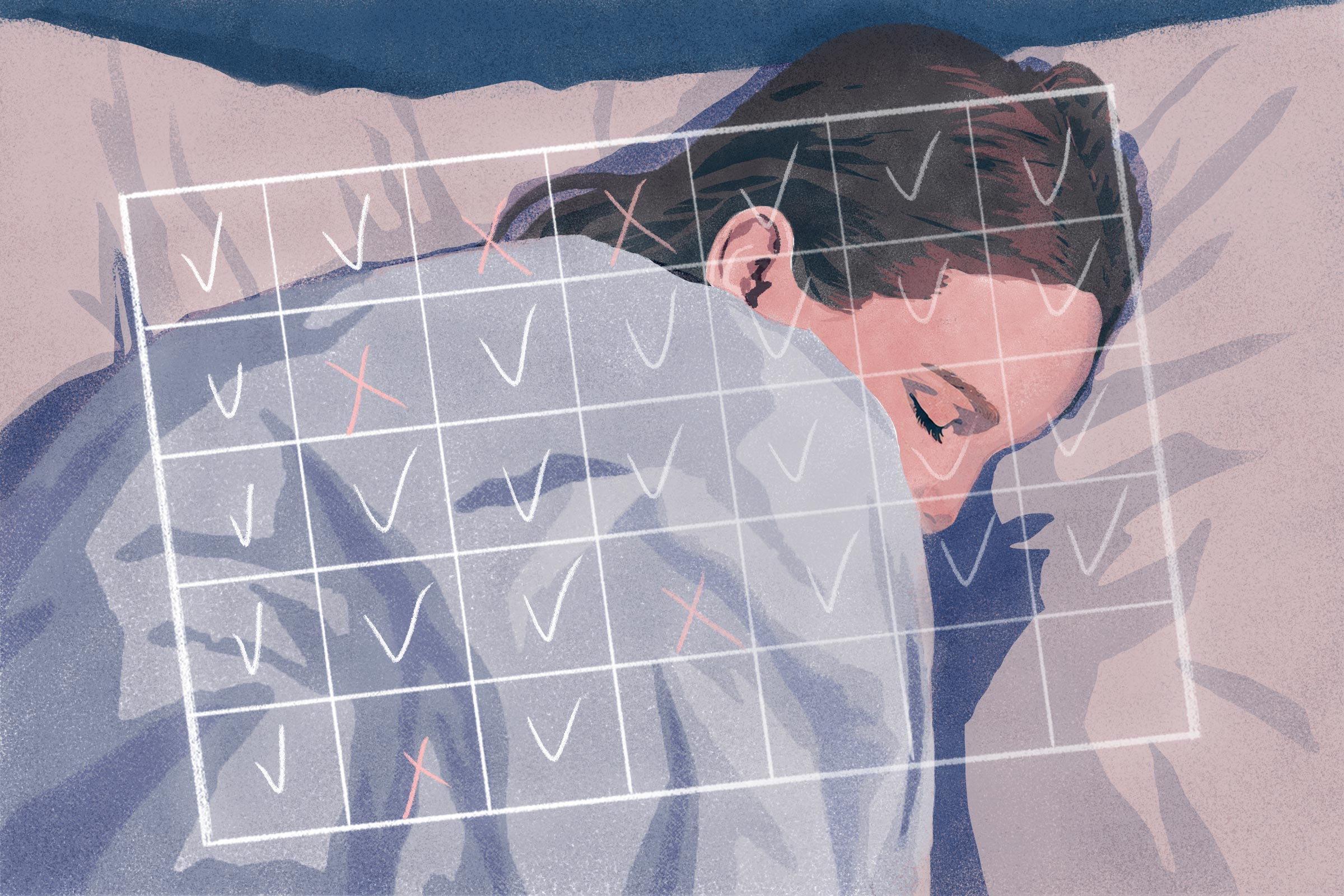

Nearly 39,000 people spent a month doing four unglamorous things, all in the name of sleep science. There were no melatonin gummies or strict bedtimes involved—but a significant number of them slept more consistently than they had in years.
The study, published in Sleep, found that simple daily habits anchored to the body’s natural rhythm can measurably improve sleep consistency. The findings align with a growing body of independent research.
What Happened During the Study?
The 38,838 people who agreed to participate in a 31-day challenge were encouraged to adopt any or all of four daily practices aimed at supporting circadian alignment:
- Spend at least 10 minutes in natural sunlight soon after waking up (or 20 minutes on cloudy days)
- Eat within a 12-hour window and fast the rest of the day
- Complete three to five weekly sessions of Zone 2 cardiovascular training—moderate-intensity exercise that raises the heart rate to about 60 percent to 70 percent of maximum
- Do five minutes daily of breathwork, such as the physiological sigh: two quick inhalations followed by a longer exhalation
Data was collected using the WHOOP Strap, a wrist-worn device that continuously tracks sleep and heart rate. It’s worth noting that WHOOP, Inc., funded the study.
Although not everyone followed the habits consistently, a sizable portion engaged in each behavior at least half of the time.
By the end of the 31 days, participants who consistently practiced the four habits showed small but statistically significant improvements in sleep consistency, as well as lower resting heart rates and improved heart rate variability, a measure of how efficiently the nervous system shifts between stress and recovery.
“A healthy heart is constantly adjusting its rhythm in response to breathing, movement, emotions, and environmental cues,” Dr. Priyal Modi, an integrative doctor and functional breathwork practitioner, who was not involved in the study, told The Epoch Times.
A higher heart rate variability generally reflects greater flexibility of the autonomic nervous system, meaning the body can shift more easily out of stress states and into recovery.
Dr. Muhammad Usama, a triple-board-certified sleep and obesity physician, who was also not involved in the study, told The Epoch Times that the study has limitations, as it was not a randomized trial and the participants were self-selected WHOOP users.
However, “the study points in the right direction,” he said.
The 4 Habits
The four habits in the challenge target the body’s circadian rhythm from different angles.
Morning sunlight exposure helps align circadian rhythms, signaling to the body when it’s daytime.
Exposing the eyes to natural sunlight within an hour of waking activates the suprachiasmatic nucleus—the brain’s internal body clock—telling your body to produce cortisol and suppress melatonin. This hormonal shift helps your body wake up fully and supports more consistent sleep at night.
Zone 2 exercise supports sleep through several overlapping mechanisms. Physical activity reduces circulating stress hormones, lowering anxiety and making it easier to fall asleep.
“In general, when stress hormones are low, sleep improves, particularly for those who struggle with initial insomnia or sleep onset,” Jaz Robbins, a licensed psychologist and a visiting clinical professor at Pepperdine University, told The Epoch Times.
Exercise also increases melatonin production, which helps regulate sleep cycles and establish a steadier nightly decline in body temperature, further improving sleep quality. Moderate-intensity activity is typically most beneficial. Vigorous exercise close to bedtime may interfere with sleep.
Breathing exercises offer a natural way to promote relaxation. By regulating the autonomic nervous system, breathwork helps the body transition into a restful state.
“The physiological sigh—a double inhale followed by a slow, extended exhale—is a naturally occurring breathing pattern the body uses to regulate stress and reset breathing,” Modi said.
This pattern reopens collapsed air sacs in the lungs and enhances carbon dioxide regulation, making it a fast, low-effort tool for reducing acute stress before sleep, she said.
Nose breathing, more generally, is also worth cultivating.
“I would recommend practicing breathing in and out of the nose gently and slowly,” Dr. Louise Oliver, a general practitioner and specialist in functional breathing, told The Epoch Times. “Breathing through the nose is how the body is naturally designed to breathe.”
Finally, time-restricted eating is the most nuanced of the four. Confining meals to a consistent window each day can serve as a secondary circadian signal, reinforcing the body’s internal clock. Longer gaps between meals cause the body to shift from using glucose to using stored fat for energy, and the associated hormonal changes may further support stable daily rhythms.
Finishing your last meal a few hours before bed can also make sleep more comfortable by reducing the chance of acid reflux and giving the body time to wind down, Amy Bragagnini, a registered dietitian nutritionist, told The Epoch Times.
“If your body isn’t having to devote energy and resources to food digestion while you sleep, it can focus on other important duties,” she said. “The result is often experienced as a deeper, more restful sleep experience.”
However, research on time-restricted eating is mixed. Although some studies suggest that fasting windows longer than 14 hours over at least eight weeks can improve sleep in people with circadian disruptions, they may also negatively affect sleep efficiency or duration in others.
“Time-restricted eating is not for everyone,” Bragagnini said.
Patients undergoing cancer treatment, for example, may already struggle to meet nutrition needs, and restricting eating times could increase the risk of malnutrition.
Sleep Consistency
The key improvements among study participants were driven by consistent sleep.
Sleep consistency—going to bed and waking around the same time each day—is a stronger predictor of long-term health outcomes than sleep duration alone.
When sleep timing is irregular, the body’s internal clock has to keep recalibrating, which can disrupt hormone, metabolic, and cardiovascular function.
Research suggests that irregular sleep timing is associated with increased risk of metabolic dysfunction and cardiovascular disease and that sleep consistency is a stronger predictor of all-cause mortality than sleep duration.
“Getting seven hours matters,” Usama said. “But getting those seven hours on a wildly shifting schedule is not the same as getting them on a stable one.”
Measures such as resting heart rate, respiratory rate, and heart rate variability are influenced by the regularity of sleep patterns. Consistent sleep stabilizes the circadian rhythm, allowing these physiological processes to follow predictable patterns and supporting more effective activation of the parasympathetic nervous system during sleep, particularly in the deeper, restorative stages. Over time, this is reflected in better overnight recovery and healthier long-term outcomes.
The American Academy of Sleep Medicine suggests that healthy sleep includes adequate duration, good quality, appropriate timing, regularity, and the absence of sleep disorders. Regularity is the dimension many people never think to measure.
“Sleep consistency is often the most overlooked part of sleep health,” Usama said, “and it may predict some long-term health outcomes as strongly as, or even more strongly than, sleep duration alone.”
Getting Started
None of the four habits requires significant time or any equipment. The best approach is to start with whichever fits most naturally into your existing routine.
Start your day by stepping outside for a short walk to get some natural sunlight. If that’s not possible, simply have breakfast or your morning coffee or tea outdoors.
Choose a moderate-intensity cardio activity three times per week, such as a brisk walk, an easy jog, or comfortable cycling. Doing it in the morning can give you the added benefit of sunlight.
Practice a few minutes of breathing exercises or physiological sighs in the hour before bed. It can help the nervous system transition from the stimulation of the day to a restful state. Short sessions during the day are also helpful, as they reduce accumulated stress and make falling asleep easier, Modi said.
Finally, time-restricted eating requires planning.
“Since you won’t have as much time available to eat, you will have to work a little harder to make sure you can take in all your essential nutrients in a more condensed time frame,” Bragagnini said.
These habits work, Usama said, because they give the body what it’s constantly seeking: predictability.
“The four habits are powerful anchors for a more stable body clock,” he said.
A stable body clock may be the most underrated health metric most of us aren’t tracking.