Strength, endurance, and ease of movement, or lack thereof, can make us feel young or old. Other factors certainly play a role, but these are the most significant. If you have all three, you will likely feel youthful and invigorated. Lose enough of them and you can start feeling old. To make matters worse, when you feel old, you might struggle to perform the exercises that can improve all of these areas.
My mission is to help you feel stronger and younger, so let’s get to work.
5 Exercises to Help You Feel Younger
The less you move, the stiffer you get—the stiffer you get, the less you move. Effective exercises for this conundrum include those that promote strength and endurance—of course. Let’s also stir in a good measure of flexibility and fast movement to get you moving comfortably rather than becoming more and more constrained over time.
My patients tolerate these exercises well and generally demonstrate excellent gains in all three critical areas, but I recommend that you speak with your health care provider to ensure that they are appropriate for you.
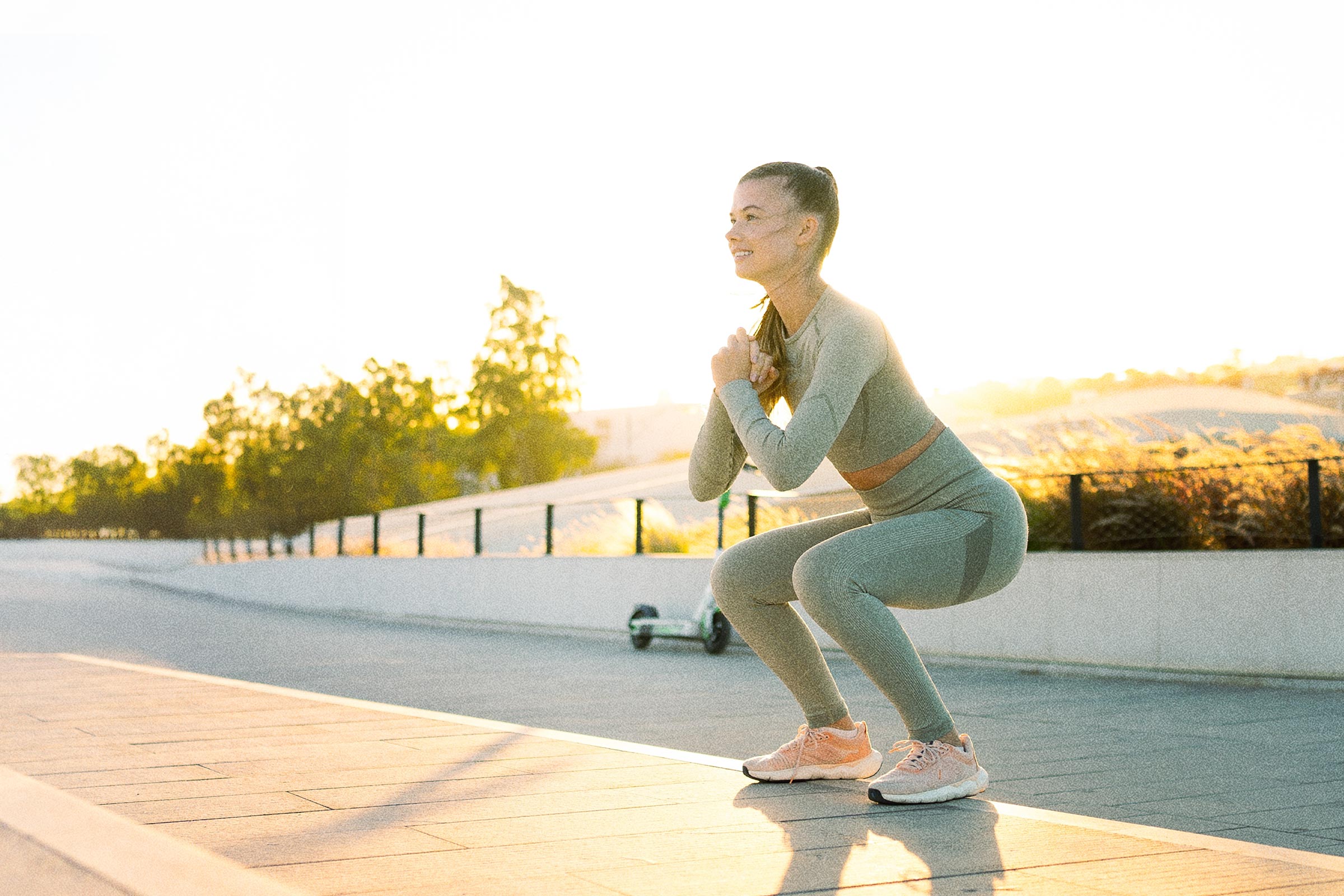
1. Bodyweight Squat
The exercise doctor is in, and the first thing he’s prescribing is the bodyweight squat. Why? Because it’s awesome, that’s why.
What It Does: The bodyweight squat dials in heavily and directly on both the gluteal muscles of your bottom and the quadriceps muscles on the front of your thighs. It also gives loving regard to hip flexion.
Why I Like It: I’m a big fan of the classic movements, and the bodyweight squat is one of them. Like other exercises in this routine, it targets several aspects at once: flexibility, strength, and movement in space.
Step 1: Stand with your feet hip-width apart.
Step 2: Keeping your trunk upright and your head up, slowly bend your hips and knees as you move into a squatting position. Be sure to sit back into the movement to help keep your knees from moving too far out in front of your toes.
Step 3: Once you reach 90 degrees of hip and knee flexion, slowly rise back up. Lowering down and going back to standing counts as one repetition. Try to perform three sets of 12 repetitions.
Modifications: Can’t squat to 90 degrees of hip and knee flexion? Just go down as far as you can. If you struggle with balance, stand next to a counter or piece of furniture to stabilize your movements.
2. Side Lunge
One common trend I’ve noticed when folks start getting weak and inflexible is that they almost universally begin losing lateral movement and hip flexibility. While still capable of walking, picking items up from the floor or moving into or out of a sitting position can pose considerable challenges. Lateral stepping ability decreases, and a sense of stiffness is ever present. The side lunge is the hero we need to rescue us from a potentially bad situation.
What It Does: Because of its lateral movements, the side lunge challenges one leg at a time and introduces great flexibility.
Why I Like It: In addition to improving strength and flexibility, the lateral nature of the movement also works on balance.
Step 1: Stand with your feet about 1 foot apart.
Step 2: Keeping your trunk upright and your head up, step straight to the right approximately 3 feet and bend your knee and hip until you reach 90 degrees of flexion. While you do this, keep your left knee straight and your left foot flat on the ground. Return to standing before repeating the movement on the other side. If you prefer, you can do all sets on one side and then the other.
Step 3: Moving down into a lateral lunge and then returning to standing counts as one repetition. Try to perform three sets of 12 repetitions, feeling free to modify sets and repetitions to suit your needs.
Modifications: If you can’t reach 90 degrees of hip and knee flexion during the lunge, just do what you can at first, and you will get stronger over time. Stand next to something stable if you struggle to maintain your balance.
3. High Knees Exercise
While the bodyweight squat and side lunges focus on lowering down into squatting movements, this exercise focuses on bringing your legs up while standing tall.
What It Does: The high knees exercise helps supercharge your hip flexors.
Why I Like It: This exercise is a fast-paced movement that carries an aerobic component in addition to strengthening. Also, stronger hip flexors generally equal fewer trips and falls.
Step 1: Stand with your feet approximately 1 foot apart.
Step 2: Run in place, bringing your knees as high up as you can. I suggest starting with a jog and then moving into a run if you can. However, instead of a low run, keep bringing your knees up as high as you can with each step. Be sure to swing your arms with the movement to get the best overall benefit.
Step 3: Try to perform three 60-second sets, modifying sets and times to suit your needs.
Modifications: If jogging or running is too much, slow down to marching steps, but be sure to continue bringing those knees up high. If you can’t lift your legs high or demonstrate less ability with one leg versus the other, just do whatever you can do. You will still benefit.
4. Single-Leg Skater Jump
A fast, dynamic hopping motion, the single-leg skater jump moves things into high gear. Unlike the more hydraulic movement of the squats, this one involves fast side-to-side stepping.
What It Does: The skater jump works on balance and leg strength, to be sure, but the biggest emphasis here is the energetic movement component.
Why I Like It: Do these regularly, and you’ll put a spring back in your steps. If you want assured, confident movement, you’ve got to put some work in on faster exercises, and the skater jump is just the thing. The single-leg stance during the hops is the frosting on the cake for balance building.
Step 1: Stand with your arms by your sides and your feet approximately 1 foot apart.
Step 2: Hop approximately 2 feet to the right. However, instead of landing on both feet, land on your right foot and keep your left foot from touching the floor. Let it swing behind you to absorb your momentum.
Step 3: Hop back to the left, landing on your left foot and keeping your right foot in the air.
Step 4: Try to perform three one-minute sets.
Modifications: If you can’t make big hops, make little ones. If you can’t hop at all, practice stepping side to side—just be sure to keep one foot in the air as you do. If you want more of a challenge, increase the distance you hop and/or increase the amount of time you do each set.
5. Cross-Over Jack
OK, crank up the music, because it’s time to dance. Well, it’s not a dance move, exactly, but if you put music to it, it isn’t half bad. Seriously, this movement is fun once you get the hang of it. It’s a jumping jacks variation, which explains its effectiveness.
What It Does: While the last exercise focused on fast lateral movements, this movement works on front-to-back movements of your feet. It’s also fast, and made even better by the rhythmic placement of your feet into a tandem, one-foot-in-front-of-the-other pattern.
Why I Like It: This exercise is great for coordinating arm and leg movements, and is superb for refining footwork.
Step 1: Stand with your feet side by side, approximately 3 feet apart, and your arms by your sides.
Step 2: Initiate movement by hopping and bringing your feet together, but not side by side. Instead, place your right foot in front of the left, like you would if you were standing on a tightrope. At the same time, bring your arms straight forward and up. Your arms should move at the same time that your feet move into position. An alternative way to move the arms is to extend them out to the side.
Step 3: Immediately return your arms and feet to the starting position, and then repeat the movement. This time, however, move the left foot to the front and move the right foot behind it. Be sure to move your arms up or out again when you do. Don’t overthink this exercise. It’s actually easy to do, and you’ll grow comfortable with it almost immediately.
Step 4: Try to perform three sets of one minute each.
Modifications: If you can, cross your legs even farther than one behind the other when you hop. If you struggle with the leg crosses, modify your foot movement so that you bring your feet in only as far as you can, or move your feet into the standard side-to-side, in-and-out jumping pattern.
Note: The model is doing the second version of arms out to the sides.
Even when we’re relatively young, life can make us feel old beyond our years. To maintain or regain strength, endurance, and ease of movement, I recommend performing this routine at least three times per week for optimal benefits at any age—don’t wait until you’re old.
I hope that this routine brings a sparkle to both your body and your mind.
About the fitness model: Aerowenn Hunter is a health editor and fitness model for The Epoch Times. Vibrant in her 60s, she’s an accredited yoga therapist who has dedicated three decades to teaching yoga.