If there’s one thing my years as a therapist have taught me, it’s that the human body is much stronger and more resilient than we often think. The body’s ability to both heal and adapt is impressive to witness.
I have evaluated patients who initially can’t sit up in bed and can barely roll from side to side, only to discharge them two months later, laughing and joking with them as they walk out the front door.
I have also come to appreciate the creativity I encounter in the world of rehabilitation. We have to tailor our treatment approaches to each patient, and although some may share a similar clinical presentation, they differ enough that their rehabilitation courses will be unique.
Coming to our aid are a host of exercises and activities that help us therapists do our jobs, including simulated home activities, task modifications, adaptive devices, and physical movements that engage patients’ muscles in creative, efficient ways.
5 Exercises That Creatively Engage Your Muscles
The following exercises use compound movements that engage multiple muscle groups at once, improving your coordination, balance, and overall functional capacity. Although they may seem intimidating or complex at first, I encourage you to try them because your body is a fast learner, and I'd be willing to bet that you are too.
These exercises have historically worked well for my patients, but I encourage you to consult your medical practitioner to make sure they are right for you.
1. Overhead Weighted March
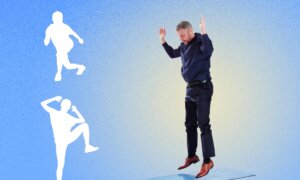
The overhead weighted march magnifies the standard static march by adding a weight above your head. Holding a weight high increases the complexity and the challenge of the exercise. Your core muscles will jump right in to keep everything stable, becoming stronger in the process.
Step 1: Pick up a weight with your right hand and bring it over your head.
Step 2: March, alternating knees up and down at approximately one march per second. March for 30 seconds, then repeat with your left hand holding the weight above your head.
Step 3: Performing the march for 30 seconds with one hand in the air counts as one set. Try to perform three sets per side, alternating sides as you go.
Modifications: Only use a weight that you can handle. If you can’t hold your arm overhead, at least keep it at shoulder height. Stand by a supportive surface if balance is a challenge. Want to increase the challenge? Speed up the march while maintaining control.
Why I Like It: Holding a weight high changes your center of balance, encouraging muscles that normally don’t participate in this exercise to join the fun. It also enhances the cardiovascular component of the exercise, boosting your overall strength and resilience. You might be surprised at how fast you tire out performing this exercise—it will work you.
2. Overhead Kettlebell Eccentric Press
While some exercises emphasize a full flexion movement followed by a full extension movement and a brief rest, this one provides a contraction followed by a return to a lower, yet still active, contracted position. This makes your muscles work harder and can get you stronger faster.
Step 1: Hold weights in both hands while standing or sitting with your shoulders and elbows at 90 degrees of flexion, with the weights pointing upward.
Step 2: Slowly push the weights straight up overhead. Once you finish pushing all the way up, slowly lower them back down to the starting position.
Step 3: Pushing up and then lowering back down counts as one repetition. Try to perform three sets of 12 repetitions, and feel free to modify the sets and repetitions as you see fit.
Modifications: If you can’t push the weights all the way up, just push as far as you can. You can increase the weight to make the exercise more challenging.
Why I Like It: Characterized by unrelenting muscle contractions, the overhead kettlebell eccentric press is an intense shoulder-focused exercise.
3. Kettlebell Hammer Curl
I’m a big fan of standard hammer curls, and using kettlebells makes it even better. Using kettlebells can increase the effectiveness of the task by forcing our hands to grip the weights such that they can’t swivel around.
Practice Tip: Only use weights that you can comfortably control. Keep your elbows by your sides to stabilize the exercise during repetitions.
Step 1: Hold a kettlebell in each hand, with your arms to your sides.
Step 2: Initiate movement by slowly bending your elbows and bringing the weights straight up toward your shoulders. As you do, be sure to keep the weights suspended out in front of your hands—don’t let them pivot.
Step 3: Curling the weights up toward your shoulders then lowering them counts as one repetition. Try to perform three sets of 12 repetitions. You can modify sets and repetitions as you see fit.
Why I Like It: Have you ever wished you had a firmer grip? This exercise can help with that. Kettlebell hammer curls are effective for strengthening muscles around the elbow and work exquisitely for the forearm muscles.
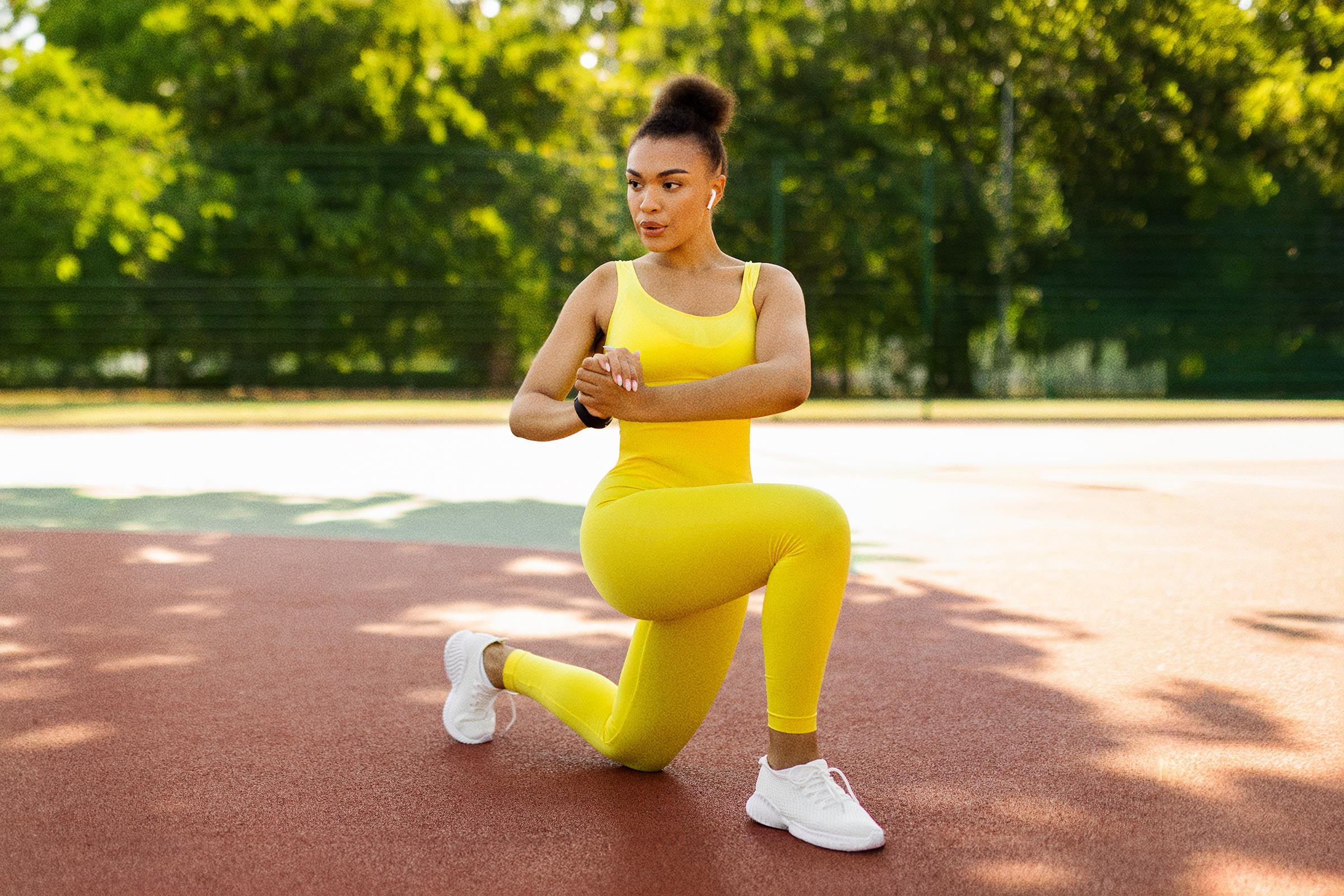
4. Curtsey Lunge
“Curtsey” may sound cutesy, but this crossover lunge is a real exercise, one that goes beyond the regular lunge movements. The curtsey lunge introduces several collateral benefits to the regular lunge, including enhanced balance, increased core musculature demands, and excellent hip mobility.
Step 1: Stand with your feet side by side and hip-width apart.
Step 2: Step your right foot behind your left leg, and move it to the left as far as you can. Then lower into a squat, allowing your right knee to touch the ground. Return to standing and repeat the movement with your left foot.
Step 3: Moving into a squat and then returning to standing counts as one repetition. Try to perform three sets of 10 repetitions per side.
Modifications: Hold onto a countertop or piece of furniture for balance and to help complete the movement. Only go down as far as you comfortably can, because this exercise significantly stretches the front of your hips. It might feel tricky or awkward at first, but it becomes easier with practice.
Why I Like It: The curtsey lunge is an intense, unique exercise that challenges balance, strength, and flexibility in a single movement. Not to mention that you can perform this pro-level exercise right in your own home.
5. Chair Squat to Overhead Press
The already wonderful chair squat meets overhead compound movement in this exercise. Focusing on your shoulders, glutes, and quadriceps, the chair squat to overhead press does heavy work in a short amount of time.
Step 1: Sit near the front of a stable chair, holding weights in both hands at shoulder height.
Step 2: Move from sitting to standing, and once you’re standing, push the weights straight up overhead.
Step 3: Lower the weights back down to shoulder height and slowly move back into sitting position.
Step 4: Rising all the way up and then sitting back down counts as one repetition. Try to perform three sets of 12 repetitions, feeling free to modify sets and repetitions to suit your needs.
Modifications: If you can’t push the weights up high overhead, just push them up as far as you can. In therapy, I routinely have patients who can only push the weight up a few inches, and it is still effective.
Why I Like It: The overhead component adds a cardiovascular boost and increases the balance challenge of the exercise.
Combined, these exercises can work your muscles in creative and coordinated ways, making the most out of the movements and helping you grow strong and fit. I recommend performing them at least three times a week, and five times a week for optimal results. I hope you find them helpful.
About the fitness model: Aerowenn Hunter is a health editor and fitness model for The Epoch Times. Vibrant in her 60s, she’s an accredited yoga therapist who has dedicated three decades to teaching yoga.