
Exercise Safety Tips
- Wear proper athletic shoes and socks to help protect your feet and joints.
- Warm up for three to five minutes—such as by marching in place—before starting, and stretch afterward to reduce muscle tension.
- Avoid performing HIIT if you have any of the following conditions: cardiovascular disease, joint injuries, chronic arthritis, severe obesity, metabolic syndrome, or if you are pregnant or have a history of anemia or hypoglycemia.
- Stop exercising immediately and rest if you feel any discomfort during the workout.
10-Minute HIIT Routine
Follow the guided video below to complete this 10-minute HIIT routine:
Exercise 1: Jumping Jacks
Stand with your feet shoulder-width apart. Jump your feet out to the sides as you bring your hands together overhead, then return to the starting position. This movement quickly elevates the heart rate, improves cardiovascular endurance, and strengthens the calves, thighs, shoulders, and core while enhancing overall coordination.
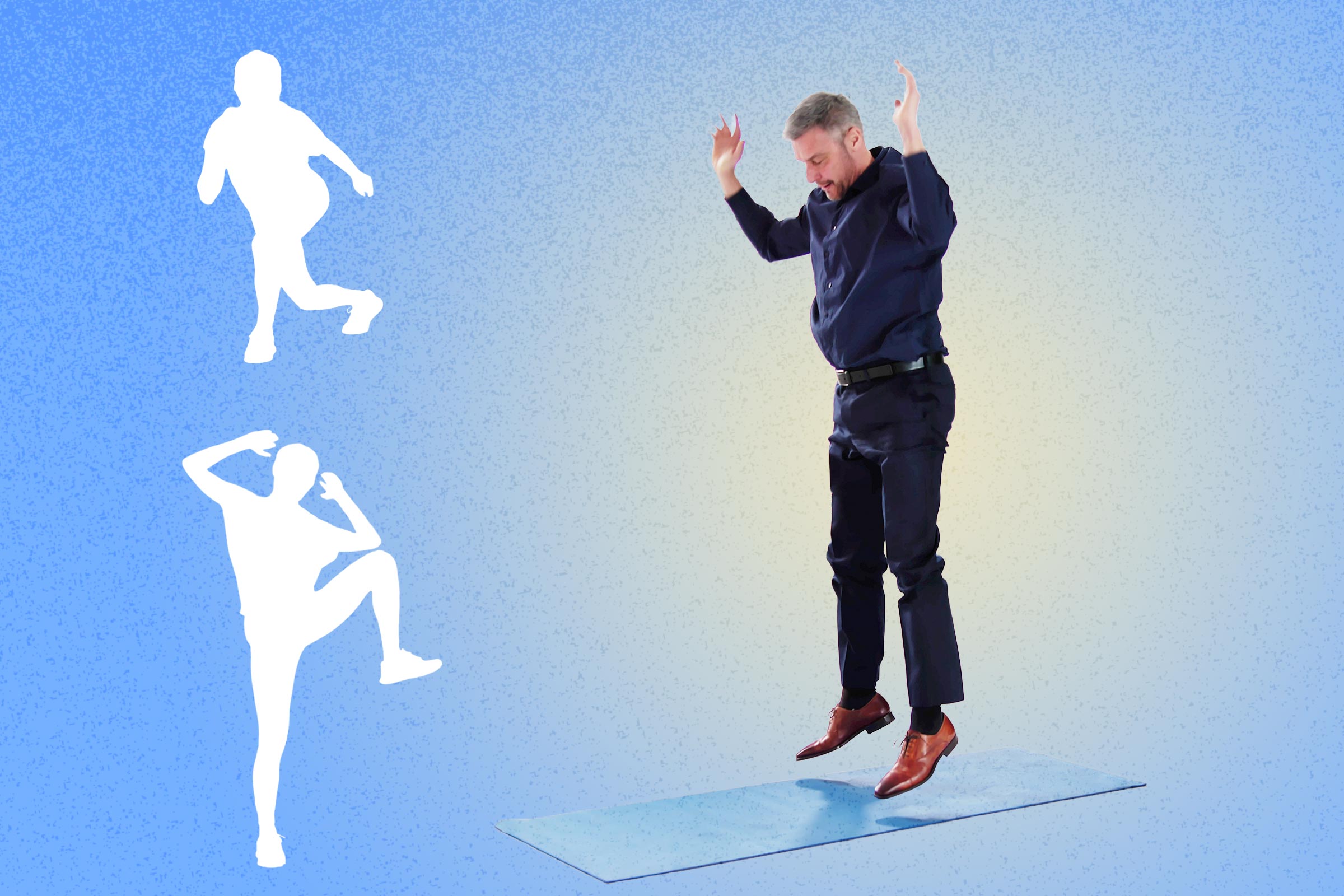
Exercise 2: High Knees With Clapping
Lift one leg and clap your hands underneath the raised knee. Alternate sides. This exercise activates the hip flexors, quadriceps, and abdominal muscles, improves balance and coordination, and further boosts heart rate.
Exercise 3: Jump Left and Right
Hop sideways from one foot to the other, shifting your weight as you move left and right. This movement strengthens the ankles, calves, and stabilizing leg muscles while improving lateral agility and balance.
Exercise 4: Standing Crunches
Lift one knee toward your torso while bringing your hands down to meet the movement. As your foot returns to the floor, raise your hands overhead. Alternate legs. This exercise engages the abdominal muscles and obliques, strengthens the hip flexors, and improves coordination between the upper and lower body.
Exercise 5: Skaters
Cross one leg behind the other and lightly tap your back foot to the floor. As you do this, bend your supporting leg slightly and shift your hips back. Alternate sides in a skating motion. This movement targets the glutes, hamstrings, and outer thighs, improves balance and hip stability, and builds lower-body strength.
Exercise 6: Side Crunches
Place your hands beside your head. Lift one leg out to the side, drawing the knee upward toward the elbow on the same side. This exercise strengthens the oblique muscles, improves trunk control, and supports spinal stability.
Exercise 7: Squat Jacks
Start with your feet shoulder-width apart. Jump your feet out to the sides as you bring your hands together overhead, then jump your feet back together and lower into a squat. This dynamic movement strengthens the glutes, quadriceps, and hamstrings while significantly increasing heart rate and improving lower-body power.
Exercise 8: Hip Hinge Left
Step your left foot forward and shift your weight onto it, lifting both arms overhead. Tap your left foot back and hinge your hips backward as you bend the knee and lower your hands. Keep your hips level. This exercise strengthens the glutes and hamstrings, reinforces proper hip-hinge mechanics, and improves balance.
Exercise 9: Butt Kicks
Quickly kick your heels back toward your glutes, alternating legs. This exercise activates the hamstrings, improves knee mobility, and maintains an elevated heart rate for cardiovascular benefit.
Exercise 10: Hip Hinge Right
Step your right foot forward and shift your weight onto it, lifting both arms overhead. Tap your right foot back and hinge your hips backward as you bend the knee and lower your hands. Keep your hips level. This exercise helps balance strength and coordination between both legs while continuing to engage the posterior-chain muscles and improve joint stability.
Exercise 11: Kicks
Lift one leg across your body with the knee bent, reaching your opposite hand toward the ankle. Alternate sides. This exercise engages the core, hip flexors, and inner thighs while improving flexibility, balance, and coordination.
Exercise 12: Stretch
Stand tall and fold forward toward your legs. As you reach your limit, drop into a squat and gently round your upper back. Straighten your legs, slowly rise, and extend your arms overhead to stretch your back. This sequence releases tension in the back, hips, and legs, improves spinal mobility, and promotes relaxation after high-intensity exercise.