Strong core muscles not only help maintain good posture but are also key to protecting the spine and preventing injuries. For sports novices, learning how to properly engage the abdominal and gluteal muscles is often one of the most difficult skills to master. There are three exercises you can do to help boost core muscle strength.
Many common posture problems—such as shrugging shoulders, hunchbacks, and neck humps—are actually related to core weakness. When the core muscles cannot engage properly, the body will find other muscles to compensate. This can lead to poor posture, pain, or injury in the affected areas.
For example, when doing sit-ups or crunches, a weak core may cause someone to use the neck for support, leading to neck pain. Prolonged sitting can also lead to “gluteal amnesia,” a condition where the gluteal muscles become inactive and stop engaging properly. This results in excess force being placed on the knees, which may lead to knee pain, lower back pain, and difficulty with movements like bending and standing.
2 Key Points to Reduce Pain
To reduce physical discomfort, start by improving two core lifestyle habits:
Interrupt long periods of sitting: Staying in one position for too long can cause muscles to become stiff and weak, which is often the root cause of pain. Get up and move around every 40 minutes to stretch and reactivate your muscles.
Maintain correct posture: Poor posture often results from muscular imbalances. Join a posture adjustment course early on to establish proper movement patterns with a coach’s guide. Once those are in place, core training can help prevent overcompensation and worsening misalignment.
3 Ways to Train Core Strength
To improve posture and reduce soreness, use the following movements to correctly train your abdominal and gluteal muscles:
1. Abdominal Breathing: Build a Strong Foundation
Many people have weak cores and rely on chest breathing. Learning abdominal breathing is the first step in core training. It helps stabilize the core, prevent back-arching during prone exercises, and support steady breathing during workouts.
Step 1: Lie flat on the ground with your lower back pressed firmly to the ground.
Step 2: Inhale deeply, allowing your abdomen—not your chest—to rise.
Step 3: Exhale fully, pressing your abdomen down toward the floor as all the air leaves your body.
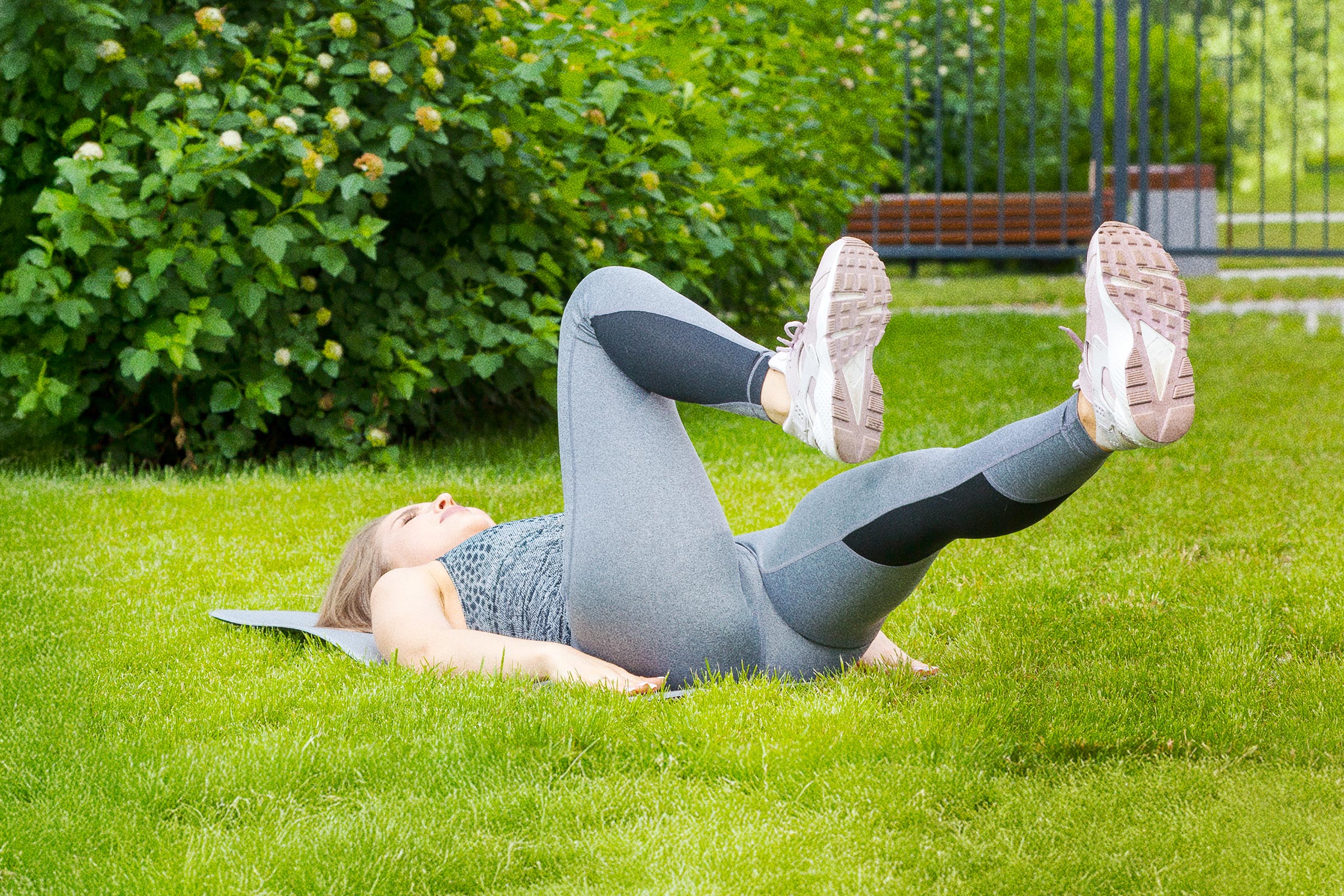
2. Deadbug Variations: Target Core Control
The dead bug is an efficient core-strengthening exercise. Try these three variations:
Variation 1: Dead bug–legs only
Step 1: Lie flat on the ground. Press your lower back firmly to the floor and engage your core.
Step 2: Lift your feet, bend your knees, and position your thighs and calves at a 90-degree angle.
Step 3: Slowly extend one foot forward, then return to the starting position in step 2. Keep your abdomen engaged and your back pressed into the ground.
Variation 2: Dead bug–arms only
Step 1: Lie flat with your lower back on the floor. Bend your knees and plant your feet flat.
Step 2: Raise both arms 90 degrees so they are perpendicular to your body.
Step 3: Extend one arm behind your head, return to the starting position, and repeat on the other side. Keep your abdomen engaged and your spine pressed against the floor. If your back arches, it may indicate thoracic tightness.
Variation 3: Basic dead bug
Step 1: Lie flat on the floor with your lower back pressed down.
Step 2: Raise both arms and legs, keeping arms at 90 degrees to your body and thighs at 90 degrees to your calves.
Step 3: Extend one arm and the opposite leg simultaneously toward the ground. Return to the starting position and alternate sides. Keep your lower abdomen engaged and your back firmly pressed to the ground.
3. Hip Bridges: Activate Your Glutes
The hip bridge is a foundational move to counter gluteal amnesia and build lower-body stability.
Variation 1: Basic hip bridge
Step 1: Lie flat on the floor. Place your feet shoulder-width apart and engage your core.
Step 2: As you exhale, squeeze your gluteal muscles and lift your hips off the ground, forming a straight line from shoulders to knees.
Step 3: Inhale and slowly lower your hips back to the floor.
Advanced tip: To increase difficulty, perform repeated bridges without fully lowering your hips to the ground.
Variation 2: Single-leg hip bridge
Step 1: Lie flat on the floor. Bend and lift one leg. Plant the other foot flat to maintain balance.
Step 2: Exhale while tightening the gluteal muscles to raise your hips, maintaining a straight line through your torso.
Step 3: Inhale and slowly return your hips to the ground.
Gradually practicing breathing, abdominal, and hip movements can help improve posture and relieve muscle aches. Over time, the exercises also lay a solid foundation for long-term health and mobility in older age.