Maintaining good posture can be challenging, especially as we age or when we have jobs that require us to sit or stand in certain positions. Poor postural habits tend to magnify over time, making the road back to your best postural health even more difficult. Worse, the more your posture degrades, the more pain you can experience in your day-to-day routines and the greater the chance you have of experiencing a diminished quality of life.
Let’s work on that posture by strengthening the muscles involved in postural support.
5 Exercises to Help You Stand Tall
The benefits of good posture reach beyond cutting a dashing figure. A strong and upright posture reduces strain on your joints, alleviates back pain, boosts energy levels and overall well-being, and also helps you age with grace.
These exercises work well with my patients, and I believe they will be beneficial for you as well. However, I suggest consulting with your medical provider to make sure they are suitable for your needs.
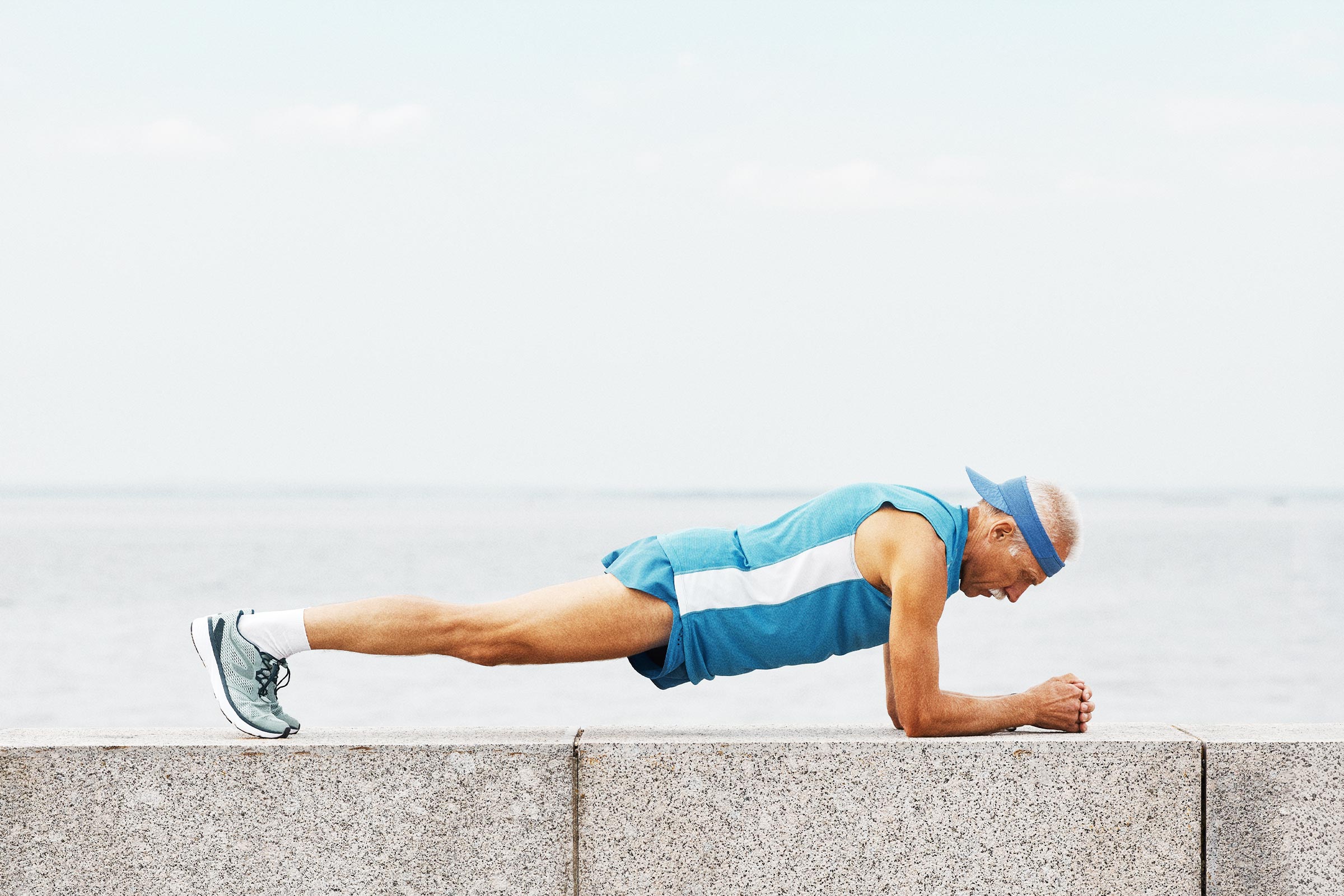
1. Dolphin Plank
The plank is a straightforward movement that nets great gains in core strength. Though difficult to perform for very long, its benefits are long-lasting.
Step 1: Lie face down on the floor. Come up onto your forearms, with your upper arms straight up and down, and place your toes on the floor.
Step 2: Engage your core to rise off the floor. Your entire body should be off the ground and as straight as possible from your shoulders to your feet.
Step 3: Hold this position for 30 seconds, which can be quite challenging. Thirty seconds counts as one set—try performing three sets.
Modifications: If the 30-second hold is too challenging at first, perform it for as long as you can and then rest on your stomach until you regain your strength. Planking is effective even if you can only hold it for a few seconds, and you will get stronger quickly. You can also perform a plank with your knees lightly touching the floor if needed. The key is to keep your core engaged to the same degree as when your knees are off the floor.
Increase the Challenge: Enter into a full plank by coming all the way up onto your hands with your elbows fully extended, but not locked, while maintaining a straight trunk.
Why I Like It: Core is king with this dolphin plank, and given that your core is the foundation of movement, you can’t get enough core strengthening.
2. Bird Dog
Bird dog is a dynamic exercise that strengthens the muscles that support an upright posture, reducing slouching and back pain for overall body alignment. It also helps refine coordination between the upper and lower body.
Step 1: Start on your hands and knees on a supportive surface, looking at the floor.
Step 2: Slowly bring your left arm and right leg up at the same time until your limbs are straight out and horizontal to the floor—this is the bird-dog position.
Step 3: Next, bend your left elbow and right knee and bring them toward each other until they touch.
Step 4: Return to the bird-dog pose. Touching your elbow and knee together counts as one repetition. Try to perform three sets of 12 repetitions per side. You can alternate sides or perform all repetitions on one side before switching.
Modification: If you struggle to bring your arms and hands straight out, simply raise them as far as possible.
Why I Like It: The bird-dog pose is a great dynamic exercise for the posterior muscles of the body.
3. Glute Bridge
The glute bridge is no more complicated than lifting your hips off the floor, but this seemingly simple activity carries a great deal of benefit for your core musculature.
Step 1: Lie on a firm, supportive surface with your arms to your sides and your hands palm down. Bend your knees until your feet are flat on the surface.
Step 2: Slowly bring your hips up off the floor until your entire trunk is straight. Don’t let your back sag or arch—you want a straight line from your shoulders to your knees. Hold for five seconds before slowly lowering back down. Rising up and then lowering back down counts as one repetition. Try to complete 12 repetitions per set and three sets total.
Modification: Can’t move all the way up? Just move up as far as you can and you’ll still get a great workout.
Why I Like It: The glute bridge strengthens core muscles in general, and it’s great for your lower back. I’ve used this exercise often, and it always pays off.
4. Dead Bug
The dead bug is a fun and highly effective exercise. The arm and leg movements, combined with the fact that it’s performed in a supine position, provide excellent engagement for your abdominal muscles.
Step 1: Lie on a firm, supportive surface and extend your arms straight up toward the ceiling, so your shoulders are at 90 degrees of flexion. Bend your hips and knees to a 90-degree angle, so your feet are off the ground.
Step 2: Slowly lower your right arm straight backward toward the floor while simultaneously extending your left knee and bringing your left leg down toward the floor. The end position is when your arm either touches the floor or moves back as far as it can, with your opposite leg extended fully and your heel almost touching the floor.
Step 3: Return your right arm and left leg to the start position while simultaneously repeating the movements with your left arm and right leg—one arm and leg will move up, while the other arm and leg move down.
Step 4: With each arm/leg movement counting as one repetition, try to perform three sets of 20 repetitions, resting between sets.
Modification: Can’t move your arms and legs very far? Just move them as far as you can.
Why I Like It: Two words: abdominal muscles. It certainly works on the sum of your core musculature, but gives extra love to your abdominals.
5. Standing Alphabet
The standing alphabet exercise is sneaky. You might be tempted to dismiss it, but it’s a lot more complicated than it looks and much more beneficial than you might expect. Performed on one foot, it challenges your balance and engages the muscles you use to keep your trunk upright and maintain your balance overall.
Step 1: Stand with your right foot extended and your knee straight. Lift your foot off the ground and gently point your toes. Note: Pointing your toes firmly can provoke a cramp in your calf muscles.
Step 2: Begin writing the alphabet in the air with your toes, making the letters about a foot tall. For the best benefit, use your legs to perform most of the movement instead of holding your leg still and only using your foot. Take approximately two to three seconds to write each letter—don’t rush—and be sure to keep those legs moving.
Step 3: Completing the alphabet beginning to end counts as one set; try to perform two sets per leg.
Modifications: Stand next to something you can hold onto if you can’t balance on one foot. Decrease the size of the letters or words if you struggle to perform them at the regular size.
Why I Like It: The standing alphabet is a fun exercise that you can expand into words, names, and even sentences. It’s also a superb exercise for balance and postural muscles.
Together, these exercises can help power up your postural muscles, which can increase your quality of life and safety during daily activities. I suggest performing them at least three times a week, and potentially every day for optimal benefit. I hope you find them beneficial.
About the Fitness Model: Aerowenn Hunter is a health editor and fitness model for The Epoch Times. Vibrant in her 60s, she’s an accredited yoga therapist who has dedicated three decades to teaching yoga.