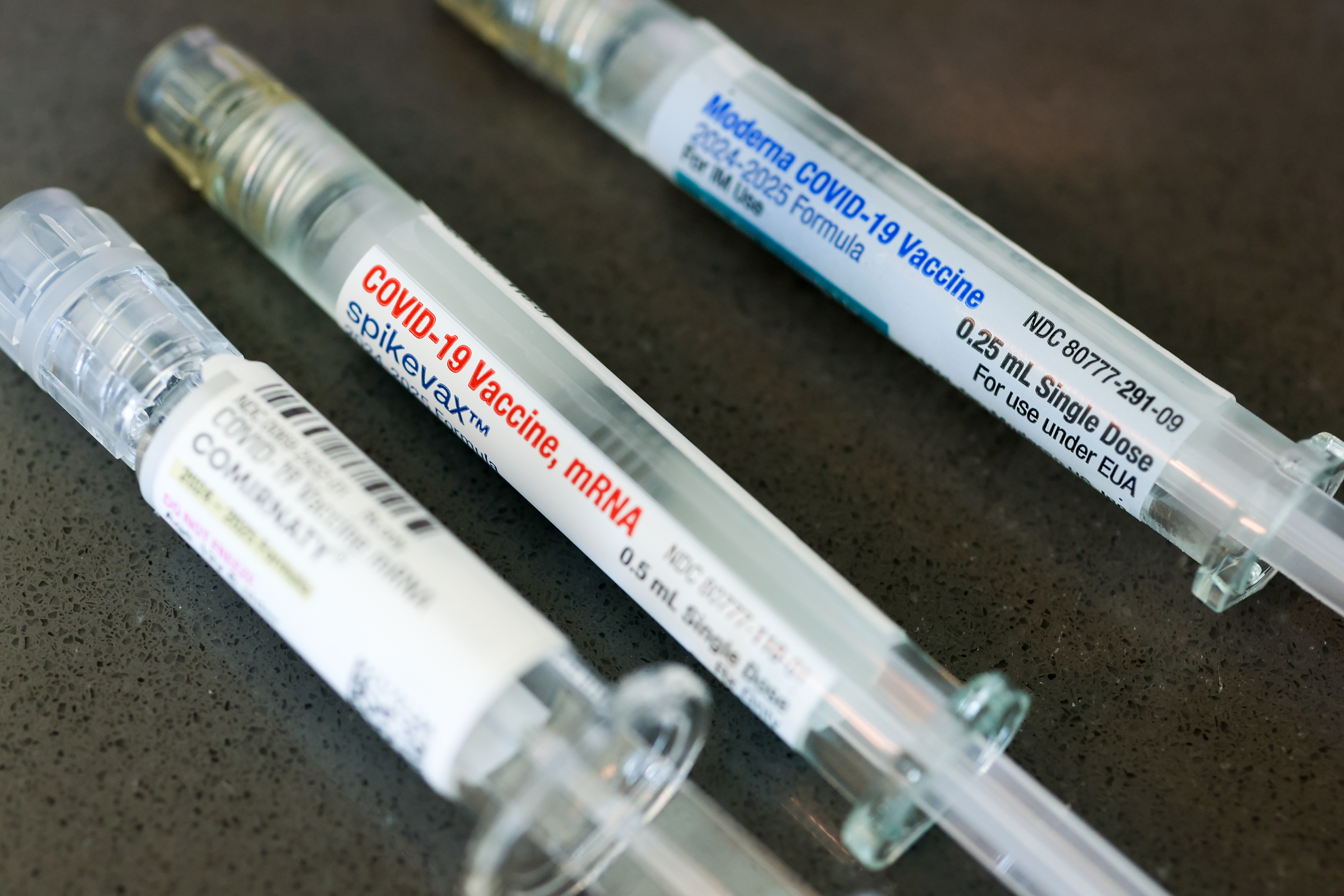

Myocarditis from COVID-19 vaccines is caused by two chemicals acting together, according to a new Stanford study published on Dec. 10.
“As a cardiologist, we get asked all the time, ‘How exactly does [the vaccine cause myocarditis?]’” Dr. Joseph Wu, the study’s lead author and director of the Stanford Cardiovascular Institute, told The Epoch Times. “We thought it was a very important scientific and clinical question to spend resources [on] and tackle.”
When an mRNA vaccine is given, immune cells release a surge of cytokines called CXCL10 and IFN-gamma, which damage heart muscles and cause immune cells to enter the injury site.
The study, published in Science Translational Medicine, was done in human cells and mice.
Previous studies have also shown these two chemicals to be high in people injured by the mRNA vaccines.
A 2-Step Process
Myocarditis from the vaccine is caused through a two-step process, the study authors wrote.
When administering the Pfizer and Moderna vaccines to human cells, the first immune cells to encounter the vaccine, called macrophages, release CXCL10 to recruit more immune cells to the area.
In the second phase, more specialized cells come to the area, releasing IFN-gamma in response, and it’s these two chemicals together that directly injure heart cells. This damage encourages more inflammatory cells to enter the heart, causing myocarditis.
Wu said that the immune cells are likely releasing these two chemicals because they detect foreign mRNA from the vaccines.
Mice given the vaccine experience heart damage, a rise in these two chemicals, as well as higher levels of inflammation in other organs, such as the liver and kidneys.
Wu noted that they had to use higher concentrations of the mRNA vaccine than what a person would get per dose in the study. Therefore, the reactions may be more severe than what is observed in real life.
“These two cytokines cause inflammation to the blood vessels. They could cause inflammation to the heart,” Wu said, adding that they can also cause inflammation in other areas such as the muscles and joints, which may be why some people experience joint and muscle pains.
He said that myocarditis from COVID-19 vaccinations is rare and that the viral infection is of greater concern.
Soy as Prophylactic
Giving mice a dose of genistein—a natural plant compound from soybeans—ahead of vaccination blocked the heart damage from happening while still allowing the vaccine to do its job.
Mice that were given genistein continued to release antiviral signals in their bodies when given the vaccine, which indicates that their immune systems recognized the vaccine.
Genistein is anti-inflammatory and acts like estrogen inside the body. Since myocarditis primarily affects young men, Wu said that they thought estrogen, a female hormone, may be protective against myocarditis.
“But we can’t be giving estrogen to boys, right? So here we give genistein, which is a weak phytoestrogen—plant-based estrogen, very weak,” he said.
Dr. Joseph Varon, a professor at the University of Houston College of Medicine and president of the Independent Medical Alliance, told The Epoch Times that the study allows for a medical option in which damage from the vaccine can be prevented.
Still Searching for the Root Cause
The study only explored one potential cause of myocarditis from COVID-19 vaccinations, Wu said, which is myocarditis caused by an inflammatory response to the vaccine.
Other studies have also speculated on other causes of myocarditis from vaccination. One potential reason is autoimmunity, which occurs when the body’s immune system mistakenly attacks itself. Because the spike protein produced by the COVID-19 mRNA vaccine has certain features that are the same as those in human proteins, when the immune system attacks these spike proteins, some of the antibodies it produces may also attack the body’s own tissues. This can lead to attacks on the heart and result in myocarditis.
Further research has also speculated about other causes of myocarditis from vaccination, such as spike proteins made from the vaccine causing damage or hormone-driven reasons.
Cardiologist Dr. Peter McCullough said that the study did not look into why mRNA vaccines could cause the release of chemicals, such as the presence of mRNA and spike proteins, which he considers to be the root cause of myocarditis from vaccinations.
Previous studies have detected the presence of mRNA and spike proteins in the heart tissues of people who suffered from myocarditis post-vaccination.